

Starbucks can sell China, not the China risk
Is this how the coffee giant preserves its place in an important but increasingly difficult market?
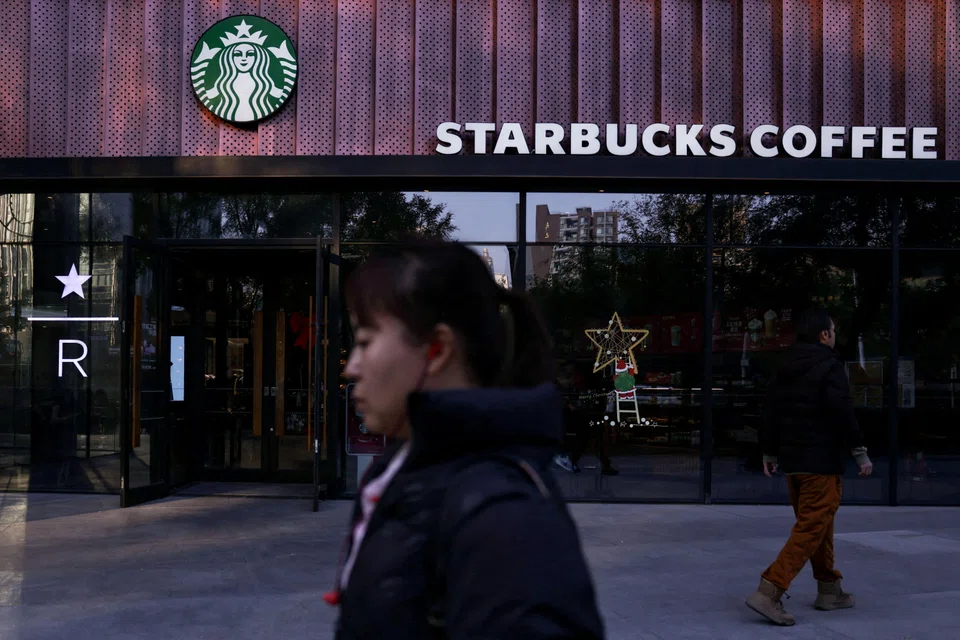
STARBUCKS’ decision to revive its business in China by giving up majority control to a local partner looks increasingly like an astute way of operating when commercial pressure and political risk collide.
A US congressman called on the coffee giant in October to shutter two newly opened cafes in Urumqi, capital of the far-western autonomous region of Xinjiang, citing allegations of genocide in the controversial territory.
Having agreed to sell a 60 per cent stake in its Chinese business to private-equity firm Boyu Capital in 2025, Starbucks has reduced its exposure to such criticism, even if it cannot escape it entirely.
A 2022 United Nations report found evidence of “serious human rights violations” against Uyghurs and other predominantly Muslim minorities, some of which may constitute crimes against humanity. Beijing has repeatedly rejected the charges.
The allegations, which are routinely censored, have done little to deter a tourism boom.
The Starbucks outlets that opened at the end of September, one at the Grand Bazaar and the other at the airport, appear to be taking advantage of that bonanza. Trips to the territory more than doubled in 2023 from a pandemic low.
In the two years since, visits by domestic and overseas travellers have risen more than 20 per cent, while tourism-related spending expanded about 25 per cent. The growth is impressive against the backdrop of a tepid economy and tough job market.
The authorities have been eager to capitalise on the appeal of a region that, due to its border with Central Asia, has a culture distinct from the rest of China. They are touting everything from alpine lakes to snow-capped mountains and historic Silk Road towns.
It helps that Xinjiang is the birthplace of one of China’s top actresses, Dilraba Dilmurat, an ethnic Uyghur. Another local celebrity, Tong Liya, has appeared in promotional campaigns.
Starbucks is a latecomer to Xinjiang.
Domestic rival Luckin Coffee, which overtook the Seattle-based chain by number of outlets in China three years ago, established a foothold in 2024 by opening about a dozen outlets in Urumqi.
KFC, owned by Yum China, has been there for more than 20 years, while McDonald’s arrived in 2020.
There is a parallel between the three American brands. For commercial reasons, they have all overhauled their operations, giving local management control of the business. Yum China was spun off from US-based Yum! Brands a decade ago.
McDonald’s sold its controlling stake in the mainland and Hong Kong operations to a group of investors led by state-owned conglomerate Citic in 2017.
While both restructured well before the relationship between Beijing and Washington deteriorated, the current set-ups now look more prescient than ever and work as a useful hedge against increasingly fraught relations.
Shift in strategy
There is no doubt that Starbucks had to make a change.
Even though it helped convert China from a nation of tea drinkers to coffee lovers after opening an outlet in the commercial district of Beijing in 1999, the brand eventually succumbed to the rise of home-grown competition from the likes of Luckin and Cotti Coffee.
The resulting price war dented profitability and its 40 per cent market share during the boom years. Revenue growth has moderated since peaking in 2021, even as the number of outlets continues to grow.
Since taking the operational reins earlier in 2026, Boyu – backed by Alvin Jiang, the grandson of former Chinese president Jiang Zemin – has implemented a strategy that translates to “a thousand faces for a thousand stores”, giving outlets more flexibility to tailor their offerings to local tastes.
In Urumqi, Starbucks incorporated traditional architectural elements and regional flavours such as pomegranate.
Despite ceding control, though, there is a limit on how much distance Starbucks can put between itself and its Chinese operations. It still owns 40 per cent of the business and Washington should still hold it accountable for decisions made under its brand.
A marketing debacle in neighbouring South Korea in May put the Seattle headquarters under pressure, even though the coffee giant sold its entire stake in the business five years ago and remains involved only as a licensing partner.
For many consumer businesses, local majority ownership combined with brand licensing offers a more sustainable growth model.
This is especially the case with Starbucks, which has challenges to tackle back home as part of CEO Brian Niccol’s turnaround to improving profitability.
Surrendering full control in China may well be what allows Western brands to preserve their place in an important but increasingly difficult market. BLOOMBERG
TRENDING NOW

If Europe goes to war, the fallout will be felt in East Asia

Indonesia stocks suffer worst plunge in nearly 30 years as MSCI proposes standalone status

Keppel seeks US$1 billion for Vietnam investments as it joins country’s international financial centre
Philippines’ FDI slowdown exposes uneven investment prospects across S-E Asia

