

Tariffs, geopolitical tension and a US$800 billion deal: World Economic Forum 2026
Businesses batten down at Davos as global policy uncertainty reaches two-decade high
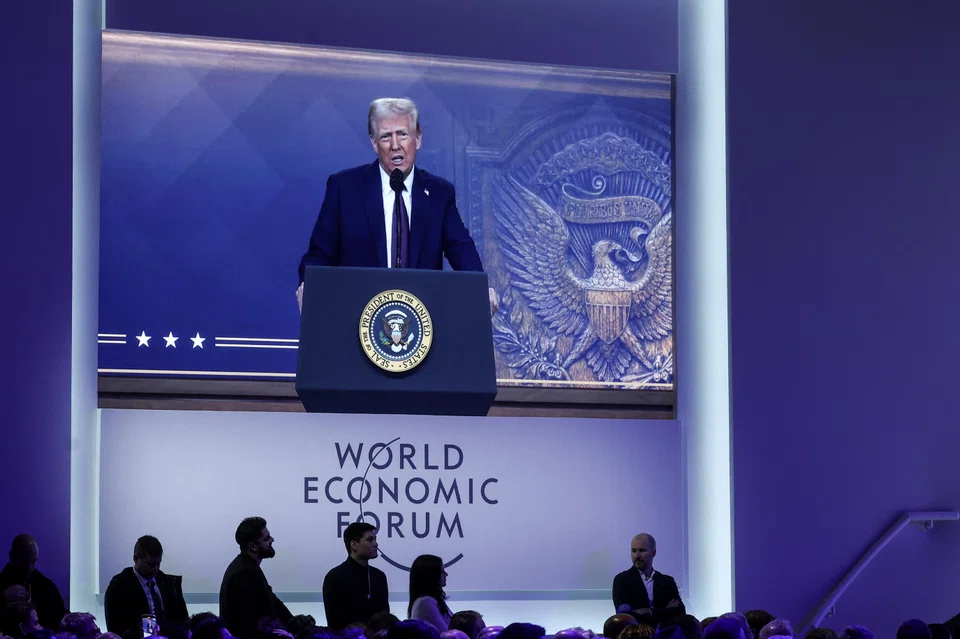
A HALLMARK of US President Donald Trump’s political career has been his avowed opposition to “globalism”. Yet, one of his paradoxes is how much he enjoys attending Davos, the annual meeting of the World Economic Forum (WEF), which starts on Jan 19.
Joining him is a high-level delegation including Treasury Secretary Scott Bessent, Commerce Secretary Howard Lutnick, Energy Secretary Chris Wright, US Trade Representative Jamieson Greer, Special Envoy Steve Witkoff and tech czar David Sacks.
Trump has become the proverbial fox in the henhouse at WEF with his “America First” mantra, forcing business elites to adjust to the significant changes his second presidency is bringing. During the billionaire’s two terms, the US has increasingly turned from a global rule-maker to a nation undermining the post-1945 system it helped create.
TRENDING NOW

DBS, OCBC, UOB rout lops billions off STI as inflation, rate concerns spook investors

Grab CEO’s wife Chloe Tong on life with Anthony Tan and finding her purpose
OCBC sheds S$8 billion in value as shares close nearly 6% down; analysts cautious on banks
Deal between tycoon friends sparks scrutiny of Philippine power sector

