

Trump’s deal with Xi is missing what Obama had – a foundation
Beyond soybeans and tariffs, the avoidance of discussion on the two sides’ flashpoints shows the truce is merely transactional
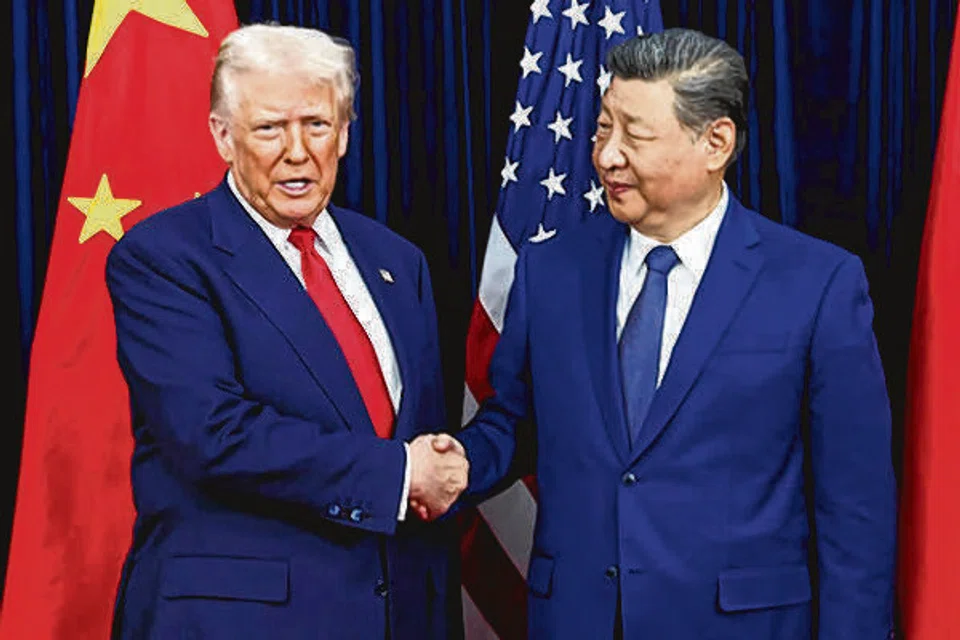
US PRESIDENT Donald Trump has long been prone to hyperbole. However, his evaluation that the meeting last week with Chinese counterpart Xi Jinping was a “12 out of 10” that will lead to “everlasting peace” was a remarkably optimistic assessment, even by his standards.
To be sure, an agreement was reached at that South Korea session, on the sidelines of the Asia Pacific Economic Cooperation summit, to de-escalate tensions in the two leaders’ first face-to-face meeting since the pandemic. Trump dropped his threat to impose 100 per cent tariffs on Chinese goods, froze fees on Chinese-made ships docking at US ports, in addition to lowering the fentanyl tariff. Xi, on his part, backtracked on plans to further tighten export limits on rare-earth metals, and pledged to purchase more US agricultural products, including soybeans.
Yet, just as important as what was agreed, what was not discussed in any substantive way is interesting too. Take the example of China’s large purchases of Russian oil, and the possibility of the US targeting major Chinese oil refiners and trading firms, the so-called “shadow fleet” carrying Russian crude to foreign markets, or the Chinese banks handling these transactions.
The omission is striking, given Trump’s recent decisions to raise US tariffs on India because of its purchase of Russian oil. Also, his decision to raise US sanctions on two Russian oil firms: Rosneft and Lukoil. Trump’s decision not to substantively discuss this issue with Xi indicates that – for now – he places higher priority on stabilising US-China ties.
No strategic breakthrough
While the temporary truce is generally welcome news, it is not a strategic breakthrough, and may not last the full year proposed. Volatility in the G2 relationship will likely continue with key implications for the business landscape, including regular changes in tariffs and the wider regulatory environment, probably meaning that more firms will move from just-in-time, supply-chain models to just-in-case or diversified-sourcing strategies.
In reality, bilateral relations are probably now stuck, for at least the short to medium term, in freeze-thaw cycles. Each side will probably play to its strengths, such as in semiconductors for the US, and rare earths for China, with periodic escalation.
This time is different
This instability is rooted in a fundamental shift in the US approach. During Barack Obama’s presidency from 2009 to 2017, and to a lesser degree, that of Joe Biden from 2021 to 2025, by contrast, there were more foundations of bilateral stability. In those periods, Washington tended to pursue a strategy that promoted cooperation on softer issues like climate change, while seeking constructive engagement on vexed, harder issues such as South China Sea security tensions.
However, the dynamics of the bilateral relationship have changed significantly in the post-pandemic period. For all that Biden sought to dial down some of the first Trump administration’s overt hostility to China, he reversed relatively few of those 2017 to 2021 policies.
A further challenge is that Trump is much less interested in the soft power agenda than Obama and Biden were. There is little prospect, for instance, of the type of US-China bilateral climate agreement in 2014, agreed between Xi and Obama, that became the precursor to the 2015 Paris global climate deal.
Moreover, while Trump is quite often warm in his rhetoric towards Xi, personally, it is clear that he genuinely believes China is a major threat to the US. This is not only true on the economic front, but also the security domain too: much of the US president’s anti-Beijing rhetoric appears to be based on a conviction that China represents the primary threat to US interests globally.
In this challenging context, Trump is placing much emphasis on his personal skills in negotiation to put US-China relations on a more solid footing. Yet, despite his high optimism on this front, it is by no means certain that Beijing will play ball with Washington. For a start, it is unclear how much personal chemistry Trump and Xi really have.
During the Obama presidency, the fact that bilateral relations remained generally cordial reflected, in part, the personal commitment of Obama and Xi to G2 stability. Both recognised the super-priority of the relationship, and Xi even outlined his desire to fundamentally redevelop a new type of great power relationship with the US to try to avoid the conflictual great power patterns of the past, an audacious goal that always lacked any obvious definition.
“This instability is rooted in a fundamental shift in the US approach... Trump is much less interested in the soft power agenda than Obama and Biden were.”
In-built hazards
Part of the reason for these retaliation and de-escalation cycles lie in the in-built hazards in the US-China bilateral landscape that could cause significant tensions in coming years. This includes US legislation such as the Hong Kong Human Rights and Democracy Act. This Bill, which has infuriated Beijing as an “intervention” in its internal affairs, requires an annual check on whether Hong Kong has sufficient political autonomy from China to qualify for the continued special US trading consideration that enhances its status as a world financial centre, creating a regular mechanism around which tensions could coalesce.
While economic and security fundamentals will largely determine the course of ties in coming years, the personal chemistry between the Washington and Beijing teams – or its absence – could also be key. The importance of this personal-level factor has been shown already during the Trump administration, with the president’s erratic nature sometimes accentuating the natural volatility in bilateral ties, especially with his tariff agenda.
With the two sides a long distance from each other on many key issues, the possibility seems far away of any new comprehensive framework, or grand bargain, to underpin a renewed basis for bilateral relations in the remainder of Trump’s term of office to 2029. This is despite the fact that such a framework could have a broader, positive effect on international relations.
An unlikely grand bargain
To be sure, a US-China grand bargain cannot be completely ruled out, especially if Trump’s visit to Beijing next year goes especially well. If this unexpectedly happens, it would show that the direction of Washington’s bilateral relations with Beijing need not inevitably be a force for greater global tension, and that there is still capacity to evolve a strategic partnership to help underpin ties. If such a deal can be pulled off, it would also provide for greater overall stability in the world economy and limit damage to the creaking international trade system, which risks being undermined further by major US-China spats.
However, for the foreseeable future, this scenario is unlikely. More probable are continuing cycles of de-escalation, such as the one that just played out, with later retaliation that would continue to bring volatility for business in the global economic and political landscape.
The writer is an associate at LSE IDEAS at the London School of Economics
TRENDING NOW
Prima to move out of historic Keppel Road flour mill building in 2028

Grab CEO’s wife Chloe Tong on life with Anthony Tan and finding her purpose
OCBC sheds S$8 billion in value as shares close nearly 6% down; analysts cautious on banks

As Asia’s food delivery giants rejig the pie, who will win the market?

