US-Israeli strikes on Iran: a reckoning with no clear ending
The joint military attacks have created a political vacuum and could create further hardship on the ground
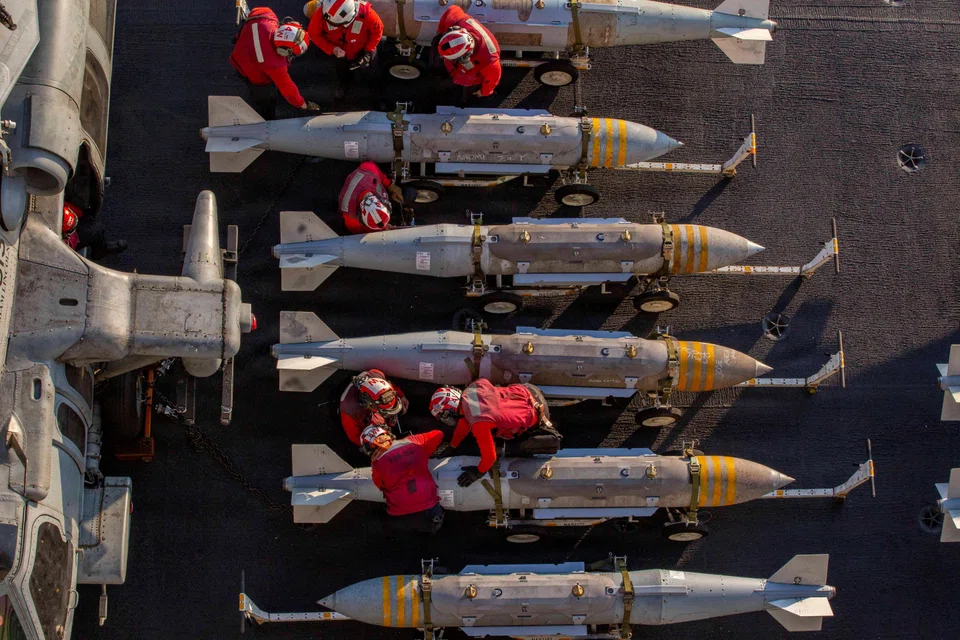
IN THE early hours of Saturday (Feb 28), the US and Israel launched one of the most consequential military operations that the Middle East has seen in decades.
Code-named Operation Epic Fury by the Pentagon and Operation Roaring Lion by the Israel Defense Forces, the joint strikes targeted Iran’s military infrastructure, nuclear programme and, ultimately, its head of state – killing Supreme Leader Ayatollah Ali Khamenei, the man who had shaped the Islamic Republic for more than three decades.
The world woke up to a different Middle East. The question now is whether it is a safer one.
The case for action – and its limits
Supporters of the strikes will point to a long and sobering record of Iranian conduct: the funding of proxy militias from Lebanon to Yemen, the sustained pursuit of nuclear enrichment despite repeated warnings, and the violent suppression of the mass protests that erupted across Iran in late December 2025 – the largest since the 1979 revolution.
US President Donald Trump, in his early morning address, framed the operation as a matter of imminent necessity, saying the objective was to defend the American people by eliminating threats from the Iranian regime.
There is a coherent strategic logic to that argument. Israel had already weakened Iran’s regional proxies – Hamas in Gaza and Hizbollah in Lebanon – and a militarily degraded Iran presented what many in Washington and Tel Aviv saw as a narrow window of opportunity.
With mass domestic unrest gripping Teheran and the Revolutionary Guard stretched thin, the conditions for a decisive blow may never have seemed more favourable.
Yet, even on its own terms, that logic has significant gaps.
Just two days before the strikes, Oman Foreign Minister Sayyid Badr Al Busaidi announced that Iran had agreed to reduce its stockpile of enriched uranium to effectively unrefined levels – a meaningful concession by any measure. A second round of nuclear talks had been scheduled for Geneva.
Striking in that diplomatic moment does not simply interrupt a negotiation; it raises a harder question: Was diplomacy ever truly the goal?
The costs already visible
Whatever the strategic calculus, the human ledger is already troubling. Iranian state media reported that an Israeli strike hit a girls’ elementary school in the southern city of Minab, killing dozens of young students.
Iran’s retaliatory missile salvos – aimed at 27 US military bases across the region, as well as targets in Israel, Qatar, the United Arab Emirates, Bahrain and Kuwait – have pulled multiple countries into a conflict they did not choose and did not start.
United Nations Secretary-General Antonio Guterres warned of “a chain of events that no one can control in the most volatile region of the world”. That warning should not be dismissed as diplomatic boilerplate.
The 2003 invasion of Iraq – also framed as a pre-emptive strike against a dangerous regime – offers a cautionary lesson about the distance between toppling a government and shaping what follows.
The succession question
Ayatollah Khamenei’s death creates a constitutional void that Iran’s government has moved quickly to paper over, but the underlying political reality is far more fragile.
The country enters this moment already convulsed by economic crisis, a collapsing currency, and a population that had been taking to the streets in extraordinary numbers. Some Iranians – including members of the diaspora – have welcomed the strikes, hoping they will accelerate the end of a regime they despise.
But hope for liberation and the experience of sustained bombardment are very different things. Genuine political transformation is difficult to cultivate amid chaos, destruction and the nationalist fury that foreign military action so often ignites, even against unpopular governments.
History suggests that populations under attack tend to rally, however briefly, around the state – even one they had been protesting weeks before.
What comes next
The immediate task for US and Israeli planners is managing escalation.
Iran has struck back across the region and, while most attacks appear to have been intercepted, the Fifth Fleet’s base in Bahrain took a direct hit. If American soldiers die in significant numbers, the pressure to escalate further will be immense – potentially drawing the conflict beyond Iran’s borders in ways that are difficult to contain.
In the longer term, the world will be watching whether this operation accelerates or forecloses the prospect of a stable, post-Islamic Republic of Iran.
The Trump administration has spoken openly of regime change; what it has not articulated is what it envisions filling the vacuum. That is not a secondary concern. It is, in many respects, the only question that ultimately matters.
Operation Epic Fury may well have shattered the Islamic Republic’s security architecture. What it has not done – what military force alone can never do – is answer the question of what comes next. For the Iranian people and for a region already bearing the weight of years of conflict, that answer will determine everything.