

When every phone becomes a satellite phone, what happens to Asia’s telcos?
From Japan to the Philippines, the mobile ‘dead zone’ is becoming a wholesale product
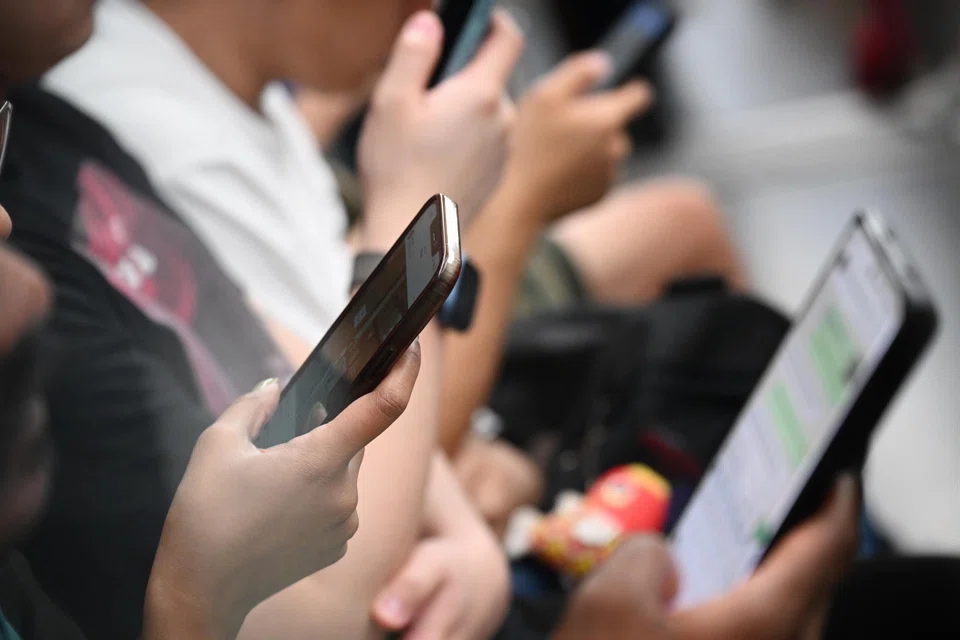
BEYOND the reach of a cell tower, a smartphone used to become a camera, map and not much else. In Japan this spring, more smartphones began “looking” up.
The country’s largest telecommunications company NTT Docomo switched on satellite messaging in April 2026. By July, five million customers had connected at least once.
No dish, special handset or visit to a shop was required. The service was available at no extra charge on dozens of phone models.
The number is striking, but the lack of ceremony matters more: satellite connectivity arrived as a feature, not a separate device.
KDDI had already reached the same conclusion a year earlier.
Although its terrestrial network covered nearly the entire population of Japan, it reached little more than half the country’s land area. To fill the gap, it launched satellite coverage in April 2025.
SoftBank, too, offered a tiered roll-out of its direct-to-device service in April 2026.
With Japan’s three established mobile operators now offering satellite-to-phone service, direct-to-device connectivity has crossed from demonstration to mass product.
For now, the experience remains modest: messages, location sharing and a limited set of apps.
Yet, even this basic service changes an old assumption about the mobile business: coverage no longer has to end where the last viable tower does.
The most expensive signal
Mobile economics rewards density.
Put a tower in a city, and thousands of people may pay to use it; put one on a mountain or a distant coastline, and the investment becomes much harder to justify.
A rural cell site can earn 10 times less than an urban one, while costing roughly twice as much to build and run.
Until now, closing that gap meant accepting poor returns, relying on public subsidies or leaving the territory uncovered.
Satellite service introduces another choice. Instead of building the final tower, an operator can buy the missing signal.
The Philippines offers an early glimpse of what this shift looks like.
Globe Telecom now sells 30-day prepaid satellite passes from 99 pesos (US$5.72), reaching customers beyond its terrestrial network.
A dead zone that once demanded construction has become a wholesale purchasing decision.
For telcos, the appeal is obvious: wider coverage without more towers.
However, the risk is becoming dependent on the satellite company that provides the service, especially once customers expect it. Who will then control the price and the customer relationship?
Why telcos still have leverage
Today, most direct-to-cell services still use a local operator’s licensed frequencies, which makes telcos valuable partners.
That gives telcos particular leverage in Asia, where every market has its own spectrum rules and regulatory approvals.
The leverage may not last indefinitely, though.
In the US, SpaceX has agreed to pay about US$19.6 billion for EchoStar spectrum in a transaction expected to close in 2027.
Owning those airwaves would reduce its dependence on a US mobile partner. The lesson for Asian operators is that their bargaining power has a shelf life.
Some are cultivating alternatives. Several major carriers have backed AST SpaceMobile as an operator-aligned counterweight to Starlink, although repeated delays reflect the risk of waiting for a second network.
Meanwhile, Amazon’s agreement to acquire Globalstar and power satellite services for supported Apple devices shows how the handset can become another route around the operator.
Three paths now lead into the same dead zone: a satellite partner, a carrier-backed constellation and the phone itself.
Each adjusts a little more control over pricing, service and the customer relationship.
Telcos have seen this pattern before. Text messaging once generated about US$120 billion a year before Internet messaging hollowed it out. Nobody in the industry needs that story explained twice.
Asia’s early decision
With its archipelagos, mountains and long coastlines, Asia is where satellite coverage is most useful.
It is also where the limitations are clearest.
In the developing parts of the Asia-Pacific, only about 3 per cent of people remain outside mobile broadband coverage, while 47 per cent live within coverage but still do not use mobile Internet.
Satellites can make remote coverage cheaper but cannot create purchasing power or digital demand.
Where they can make a difference is at the expensive edge of the network. To capture that value, operators need contracts that preserve predictable wholesale pricing, service standards, reciprocal roaming, customer data and billing.
Negotiating scale helps. Veon, which runs networks from Ukraine to Pakistan, signed a non-exclusive agreement with Starlink that could eventually reach 150 million customers.
Some planned rural towers will not be needed, now that the same coverage can be bought from orbit.
Handled well, satellite reach can do more than provide free emergency messaging.
It can support paid roaming, resilience for businesses and communities, and wider coverage without the old capital burden.
Handled passively, it becomes a service that the telco distributes, while somebody else sets the economics.
The view from Singapore
Singapore itself has little need for satellite coverage. Singtel, however, is exposed to this need through its businesses elsewhere in the region.
Globe already offers the service in the Philippines. In Australia, Optus signed with Starlink in 2023, while Telstra already offers satellite texting. Indonesia has yet to write its rules.
Each market will strike a different balance between telcos and satellite providers.
Towers will continue to carry almost all urban traffic. What changes is the outer edge of the network: a small share of customers but a stubborn share of cost.
Operators that treat satellite coverage as one more product to distribute will gain reach but little differentiation, while those that keep their spectrum and customer relationships can turn a cost centre into an asset.
The sky is already part of the network. Who pays rent to whom is being settled now, and Asia is where the answer will show first.
The writer is a Singapore-based deep-tech investor and a board adviser to the SMART Innovation Centre and a European energy group. He was previously chief strategy and operations officer at Acronis.
TRENDING NOW
S$8 billion wiped off OCBC value as shares slide 5.8% in heavy trade

Grab CEO’s wife Chloe Tong on life with Anthony Tan and finding her purpose

Brookfield denies accusation it cut Soilbuild out of Mapletree deal
8 public officers referred to police over property buys near unannounced MRT stations: Chan Chun Sing

