

Why China’s firms opt for a Singapore-based strategic core with ‘limbs’ in South-east Asia
A distributed headquarters model is finding favour with Chinese businesses operating in the region
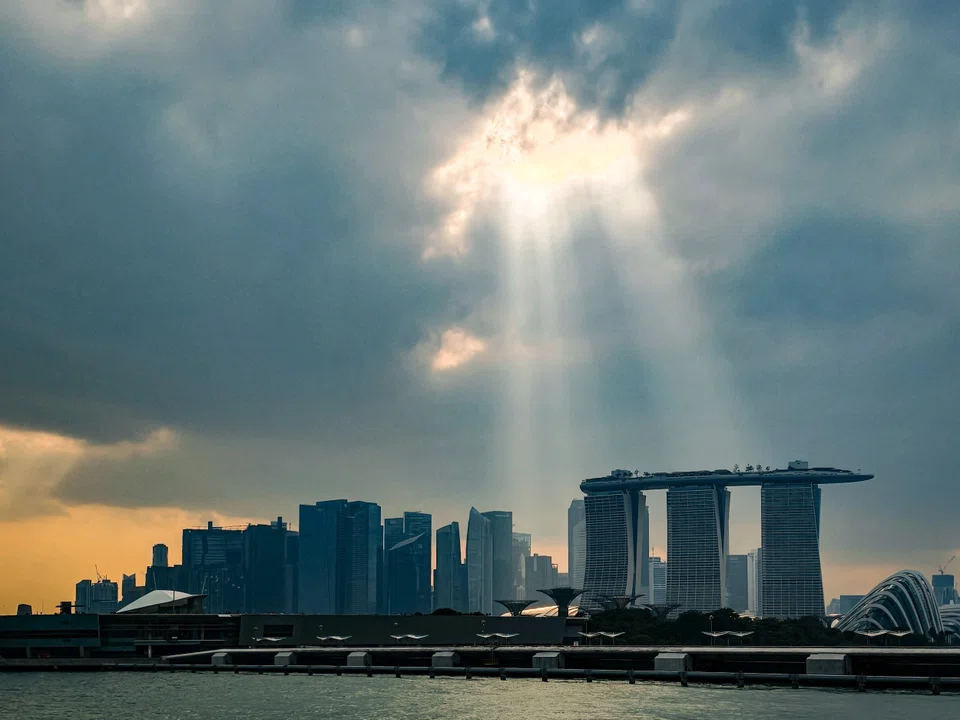
CHINESE companies are doing far more in South-east Asia than selling goods. They are building factories, supply chains and local teams. That raises a question with long-term consequences: where should the regional headquarters sit?
Choosing the cheapest city – or copying a competitor – is rarely enough. The location affects access to customers, suppliers and talent as well as compliance costs and the ability to run several markets from one base.
Singapore remains the strongest all-round choice for many asset-light businesses. Its transport links, legal and financial systems, business network and stability are hard to match. It is also expensive.
Our research suggests a more sensible model for many Chinese companies is to keep a strategic core in Singapore while placing day-to-day operations in lower-cost hubs elsewhere in South-east Asia.
Four factors, not one city ranking
When selecting a headquarters city, four concerns matter. Each company will address them differently.
- The connectivity-cost trade-off
Singapore sits on major shipping and aviation routes and has reliable digital infrastructure. That helps a small management team cover several countries, stay close to clients and work with international carriers.
Luckin Coffee, for instance, has made Singapore its South-east Asian operations hub, using the city to coordinate supply chains and regional brand management while reaching nearby Asean markets. One office can serve as a practical base for a much wider region.
The price difference is stark. JLL’s fourth-quarter 2025 data put average Grade A office rents in Singapore’s Central Business District at about US$9.32 per square foot per month, against US$1.49 in Kuala Lumpur.
Singapore works best for a lean office doing high-value work, not for warehouses or large support teams.
- From following clients to expanding markets
Service companies such as logistics providers, law firms and consultants often follow existing clients abroad, setting up nearby so they can respond quickly and protect those relationships.
Access to banks, auditors, technology firms and shipping lines also makes the work easier.
Over time, the headquarters can become more than a client-service outpost. Singapore’s multinational community, professional advisers and bilingual talent give companies a base from which to find new customers across the region.
Haidilao followed a similar path. Its Singapore headquarters established in 2012 first supported a business built around ethnic Chinese customers and tourists from China. Singapore’s diverse consumer base then helped the hotpot chain reach a broader audience.
By 2025, Haidilao was operating in more than 10 countries across Asia, North America and Europe.
- The value of institutional capabilities
Singapore’s common-law system, convertible currency, banks and advisers make it a practical base for contracts, financing, disputes and treasury work. This matters when a company earns money in several currencies or signs contracts across many jurisdictions.
Tax matters, but less than it once did. Singapore’s headline corporate income tax rate is 17 per cent, and companies qualifying for the International Headquarters Award may pay a lower rate on eligible income.
The Organisation for Economic Co-operation and Development Pillar Two, however, sets a 15 per cent minimum effective rate for multinational groups with annual consolidated revenue of at least 750 million euros (US$847.3 million).
That leaves less room for tax breaks and weakens some of Singapore’s appeal to the largest groups.
Dyson’s move to Singapore in 2019 illustrated the city’s draw. The British multinational company gained a stable legal and financial base in Asia, while the city’s trust and family-office rules also suited its founder’s longer-term wealth planning.
- Stability in an uncertain world
Trade restrictions, technology controls and geopolitical tensions have also made business continuity part of the location decision. Singapore’s stable government and broad commercial ties make it a credible base for managing different markets.
However, there are limits. A Singapore company does not hide its ultimate ownership or avoid foreign-investment, data-security or national-security reviews elsewhere. The benefit is a predictable operating base, not a way around scrutiny.
ByteDance is a clear example. Thousands of staff, including TikTok’s CEO Chew Shou Zi, are based in Singapore, its global second headquarters.
Singapore has not spared TikTok from regulatory pressure, but it has given senior management a stable place from which to deal with it.
A Singapore brain with regional operating limbs
The four tests point to one conclusion: a company can value Singapore without putting every regional function there. Worldwide Logistics (WL) shows what this looks like in practice.
The Chinese cross-border logistics group opened its international operations headquarters in Singapore in 2016. The office handles financial settlement and cross-border business development, keeping key decision-makers close to customers, carriers and advisers.
The rest of the work is spread out. Thailand hosts an industrial operations hub and Malaysia a shared-service centre. Warehousing, execution and back-office tasks stay closer to operating markets and lower-cost labour, while Singapore keeps the functions that benefit most from its business environment.
By the end of 2025, the group had offices in 18 cities across seven South-east Asian countries with about 250 regional employees. WL’s local work ranges from customs clearance for photovoltaic components in Indonesia to inland-port links for furniture clusters in Vietnam and Malaysia.
The network costs more to coordinate, but maturing digital systems have kept that cost manageable.
The group’s freight flows also show how far the model has developed. WL serves more than 2,600 multinational blue-chip customers.
By October 2025, its South-east Asia-US freight volume was 1.3 times its China-US volume. Singapore now supports trade across several regions, not only between China and South-east Asia.
An intelligent division of labour
Singapore is ideal for treasury, legal and compliance work, strategy, senior management and international business development.
Shared services may fit Kuala Lumpur better, while manufacturing-related work may sit in Thailand or Vietnam. A company focused on Indonesian consumers may need to be based in Jakarta.
Still, there is no fixed formula. A young company may start with one modest base; a larger group can split strategy, finance and operations across several countries.
For many Chinese companies, the practical answer is a “centralised strategic core, distributed operational limbs” model: keep strategy, finance, compliance and senior decisions in Singapore; place production, shared services and front-line work closer to the relevant markets.
The critical question is how intelligently the regional organisation divides its work.
Opportunities for Singapore firms
This distributed model creates opportunities for Singapore’s law firms, consultancies, tax advisers and accountants.
Services could span regional structuring, cross-border tax coordination, and group compliance and governance. They could also include coordination of projects across Asean markets and advising on regional treasury and talent management.
Advisers combining knowledge of Chinese parent-company governance, Singapore’s legal and tax frameworks, and regulations across Asean would be well-placed to meet demand for integrated advice across the region.
Both writers are from Cheung Kong Graduate School of Business (CKGSB) in Beijing, China. Li Wei is professor of economics, associate dean for Asia and Oceania, and director of the case research department. Chen Jian is assistant director of the case research department.
This article is adapted from the CKGSB case study Worldwide Logistics: Why Singapore for International Headquarters. AI tools were used in translation and editing before submission.
TRENDING NOW

S$8 billion wiped off OCBC value as shares slide 5.8% in heavy trade

Grab CEO’s wife Chloe Tong on life with Anthony Tan and finding her purpose

Brookfield denies accusation it cut Soilbuild out of Mapletree deal
8 public officers referred to police over property buys near unannounced MRT stations: Chan Chun Sing

