

Winter Olympics 2026 beset with business and geopolitical controversies
As the Winter Games unfold, business and geopolitical friction is distracting from the sporting action
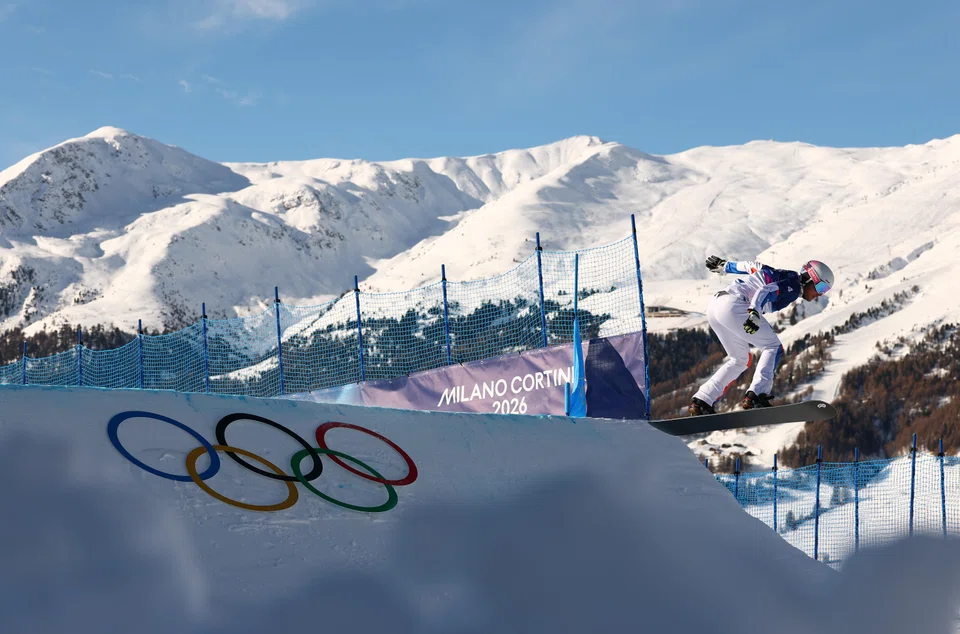
MANY countries still believe that hosting major sporting contests commands significant prestige. However, that assessment is being tested by the logistical and political turbulence surrounding the Milano-Cortina Winter Olympics, which opened on Feb 6 in Italy.
While the sporting side of the tournament has so far proceeded relatively smoothly – barring the eye-catching technical cheating allegations in ski jumping – the event has faced a catalogue of wider challenges.
These range from sponsorship controversies to alleged Russian cyberattacks. US Vice-President JD Vance, there as a guest of honour, was booed at the opening ceremony amid the contentious presence of US immigration and customs enforcement (ICE) agents at the event.
On the business front, non-governmental organisations (NGOs) such as Greenpeace have urged the Olympic organisers to cut ties with Italian oil major, Eni, a premium sponsor of the big event, on the grounds that the company’s fossil-fuel operations are undermining the very snow-dependent sports the Games celebrate.
Geopolitically, Foreign Minister Antonio Tajani claimed that Italy recently foiled “Russian origin” cyberattacks targeting the Winter Olympics. Websites linked to the Olympics, hotels in host town Cortina d’Ampezzo, and foreign ministry facilities, including an embassy in Washington, were reportedly targeted.
These revelations come despite International Olympic Committee (IOC) President Kirsty Coventry and Federation Fifa President Gianni Infantino recently raising the possibility of reinstating Russia into key international sporting events.
Coventry even hinted that the nation could be reinstated for the 2028 Olympics in Los Angeles, saying sport should be “neutral ground”.
Since Moscow’s 2022 invasion of Ukraine, Russia has been largely excluded from the Games, although 13 Russian athletes were granted eligibility for the 2026 Winter Olympics; Russian clubs remain suspended from football competitions by Fifa and Uefa.
The games have also drawn fire for Vance’s presence. Beyond the boos at the opening ceremony, hundreds of protesters reportedly rallied on Feb 9, chanting slogans, blowing whistles and setting off flares to oppose US ICE agents’ presence on Italian soil.
Milan Mayor Giuseppe Sala called ICE “a militia that kills”, declaring the agents unwelcome. Even former Italian prime minister Giuseppe Conte, who forged a relatively close populist-driven relationship with Trump from 2018 to 2021, when they simultaneously served in office, has slammed the move as a violation of Italy’s national sovereignty and democratic security practices.
To de-escalate the situation, US officials stressed that ICE agents will provide only advisory support under Italian authority, focus on transnational threats to the Olympics, and be based within diplomatic facilities.
The cost of prestige
While many Italians have expressed pride in hosting the Olympics, the event is only the latest contest beset by the massive challenges associated with such tournaments, including huge operating and security costs as well as business, political and wider risks.
The Italian Games follow the 2022 Beijing Winter Olympics, which were stifled by stringent anti-Covid restrictions and a diplomatic boycott by countries, including the US, UK and Australia, over human rights in Xinjiang.
Xinjiang was also at the heart of NGOs’ move to target brands which endorsed or sponsored those Olympics.
The Tokyo Summer Olympics endured a costly year-long postponement from the original date in 2020 because of the health risks posed by Covid-19.
The Brazil Summer Olympics of 2016 was another stark example of the pitfalls of hosting such major sporting events. When Rio won the bid in 2009, the Brazilian economy was booming and the country was basking in enhanced international prestige as a leading emerging market within the Brics group of nations.
In 2016, however, Brazil was mired in the impeachment of then-president Dilma Roussef, and a crushing recession which forced significant spending cuts to the Olympic budget.
Public health fears also peaked as more than 100 prominent medical experts petitioned the World Health Organization to postpone or move the Games due to the Zika outbreak.
Interest still high from future host nations
Despite the evidence that these events rarely provide a sustained economic boost – often leaving behind “white elephant” facilities – interest remains high.
Switzerland and Canada are exploring bids for the 2038 Winter Olympics, following the French Alps in 2030 and Utah in 2034. Cities like Ahmedabad, Doha, Istanbul and Santiago are vying for the 2036 Summer Olympics, following Los Angeles in 2028 and Brisbane in 2032.
A growing list of states has also expressed interest in bidding for massive sporting events like the 2038 Fifa World Cup.
For the foreseeable future, the perception of national prestige continues to supersede the operational challenges and risks of staging such events. However, the Italian experience may yet shift the sentiment in a different direction.
The writer is an associate at LSE IDEAS at the London School of Economics
TRENDING NOW
Once staunchly pro-China, Malaysian Chinese businesses are now distancing themselves from Beijing

Grab CEO’s wife Chloe Tong on life with Anthony Tan and finding her purpose

Could stablecoins be the future of money?
ST Engineering opens tech-focused aircraft maintenance facility in Changi; to create over 500 jobs

