

Working on my own terms
We are never obliged to remain the people our careers required us to be

AT 76, I still look forward to having something meaningful to do each day.
My golden years give me greater freedom to choose how I spend my time, be it by contributing through work, sharing what I have learnt, serving the community or enjoying the people and pursuits that enrich my life.
Recently, my Raffles Institution cohort celebrated the 60 years since completing our O levels in 1966. Many schoolmates have retired and are enjoying travel, family life and community service.
I am among the few who continue to work. Our paths differ, but we all face a worthwhile question: How do we make these years fulfilling?
A fulfilling life need not include paid work, a board appointment or a crowded diary. It can be found in caring for family, pursuing a new hobby, joining a community group or being a dependable mentor.
What matters is that the individual remains interested in life and connected to others.
Work with a different purpose
At this stage, work is less about earning money and more about engaging my mind and putting my experience to good use.
Board discussions and advisory assignments require me to listen carefully, question assumptions and consider unfamiliar problems. They are a form of mental gymnastics I enjoy, and I hope such stimulating intellectual challenges will keep dementia at bay.
My corporate roles also connect me with people across countries, industries and generations. Experience gives me a perspective to offer, though I do not assume to have all the answers. Younger colleagues often help me see fresh possibilities.
Having spent more than 30 years as a CEO, technopreneur and private investor, including my tenure as vice-president and managing director for the Asia-Pacific at Compaq, I have helped businesses with listings, mergers, accelerated growth and turnarounds.
These experiences have value beyond the positions I once held. The lessons learnt from difficult decisions, mistakes and setbacks can help others navigate their own challenges. Our usefulness does not end when our formal careers do.
Share what experience has taught us
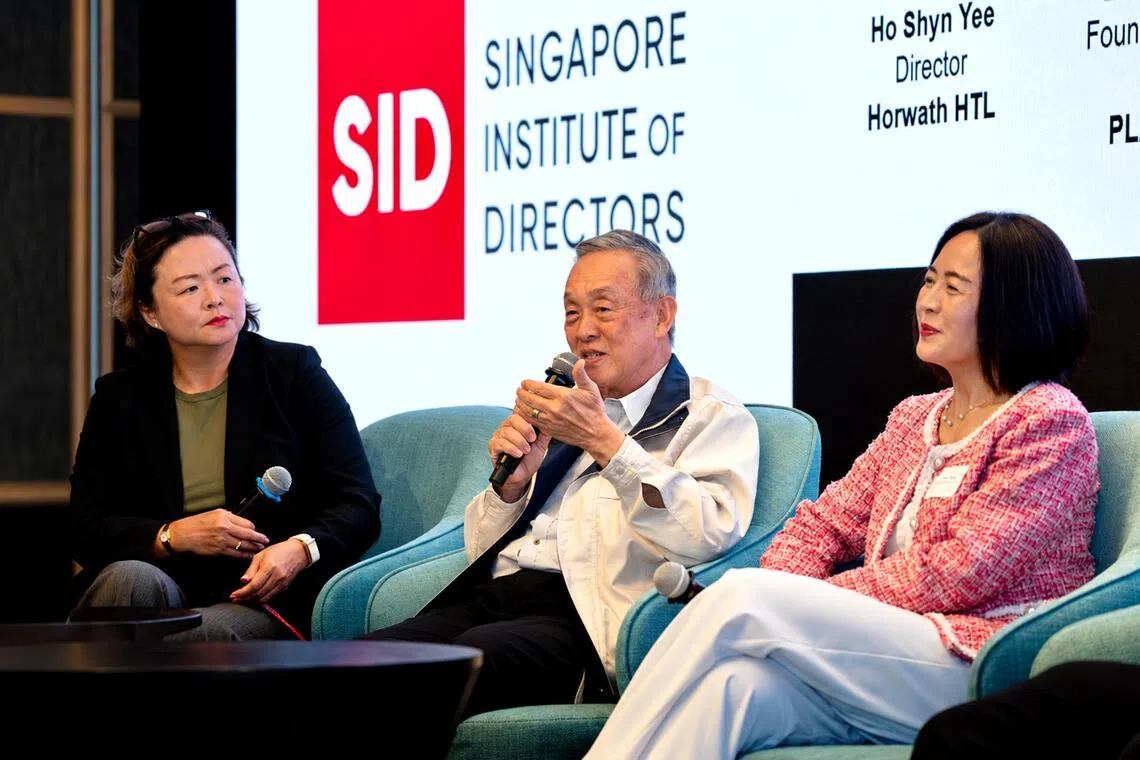
Teaching entrepreneurship and leadership at the National University of Singapore, alongside mentoring members of the Singapore Institute of Directors and other professional networks, have allowed me to pass on some of these lessons. Knowledge accumulated over five decades should be passed on.
Mentoring is a rewarding way for seniors to contribute, and it need not happen through a formal programme. We can help a young colleague think through a career decision or encourage someone recovering from a setback. Sometimes, attentive listening is more useful than advice.
Learning also flows both ways. Younger people bring fresh perspectives and introduce unfamiliar technologies. Seniors should remain willing to learn and ask for help.
Find fulfilment in service
Public and community service have brought me deep fulfilment.
Through my mediation work with the State Courts and community centres, I have helped people resolve disputes in business and with family and neighbours.
When parties reach a settlement, I feel privileged to have helped them find a way forward – a reminder to be grateful for the peace in my own life.
I also served as a Justice of the Peace for 15 years and continue to solemnise marriages. Helping couples begin their journey together is a joy; it gives me an opportunity to share advice drawn from my former leadership roles at the National Family Council and the Centre for Fathering.
Service is open to all of us. A senior need not chair an organisation to make a difference. Reading with a child, visiting someone who lives alone or calling a withdrawn friend can be a meaningful contribution. We can all give the gift of time.
Discover new interests
Writing has enabled me to turn reflections into something useful to others. I have authored six books – including Golden Nuggets, an anthology of stories by seniors – which have collectively raised more than S$3 million for charities.
But we do not need to publish a book to preserve our stories; recording these tales or sharing memories with grandchildren leaves a precious inheritance.

Another source of pleasure is birding, which I took up five years ago after a slipped disc led me to give up golf. It has brought me to local spots like Kranji Marshes and overseas locations in search of unfamiliar species.
My camera now accompanies me on business trips to cities from London to Shanghai, and I go birding whenever time permits.
Birding has taught me to slow down and enjoy discovery. For other seniors, that delight may come from painting, cooking or learning about artificial intelligence.
We are never obliged to remain the people our careers required us to be.
Plan for the next chapter
Staying active requires judgment. Health, mobility and finances differ. During illness or recovery, participation may take a quieter form: a telephone conversation, reading or light activity with a friend.
Accepting help can make continued engagement possible.
We must also be willing to let go of roles that no longer fit. Saying “yes” to purpose sometimes requires saying “no” to more activity, ensuring we make time for relationships that are central to the lives we enjoy. Making time for my wife, children, children-in-law and grandchildren is as worthwhile as any professional achievement.
Earlier as an engineering student, I developed a life plan with three stages.
In Plan A, I would work for others and for money. In my current Plan B, I let others and money work for me, giving me greater freedom to choose my contributions.
In Plan C, which I intend to move towards at 80, I hope to devote more time to two areas spelled with a capital “C” – Church and Charity – and less to the smaller “c” – corporate commitments – while retaining selected engagements where I can be useful.
Crucially, the plan can evolve. Its value is that it encourages me to think deliberately about how I want to live.
The average lifespan of a Singaporean man is 84 years. Theoretically, I have eight more years to live, but that is not a given. I prefer to treat that uncertainty as a reason to appreciate today.
For seniors wondering where to begin, choose one manageable step: contact a friend, explore a hobby, learn something unfamiliar or offer an hour of help. Each is a reason to look forward to tomorrow.
I share my journey to encourage active, joyful ageing. There is still much to enjoy, discover and contribute. “No time” should never be an excuse to pursue a worthwhile purpose.
If I can have a vertical take-off from the short runway ahead of me, I will seize it to enjoy my life to the fullest.
For these reasons, retirement is not in my vocabulary.
The writer is the former vice-president and managing director of Compaq Computer Asia-Pacific. He is also a board member, senior advisor, adjunct professor and mediator.
Switching Lanes is a column exploring the diverse realities of life after a full-time career. From finding fresh purpose to savouring newfound freedom, we are redefining retirement.
Have a perspective to share? Write to btletter@sph.com.sg with the subject, Switching Lanes.
TRENDING NOW

What shattered Crystal Jade? How the culinary empire shrank from 120 to just 9 outlets

SGX gold-linked counters lose their shine as the precious metal hits one-year low

‘The next 40 years’: SingLand CEO Jonathan Eu on remaking Marina Square

Alibaba sued for allegedly hiding ties to suspected spy Alice Huang from Megaspeed

