

China home price slump drags on despite latest stimulus push
Authorities are seeking to end a real estate downturn that has dragged on economic growth for years
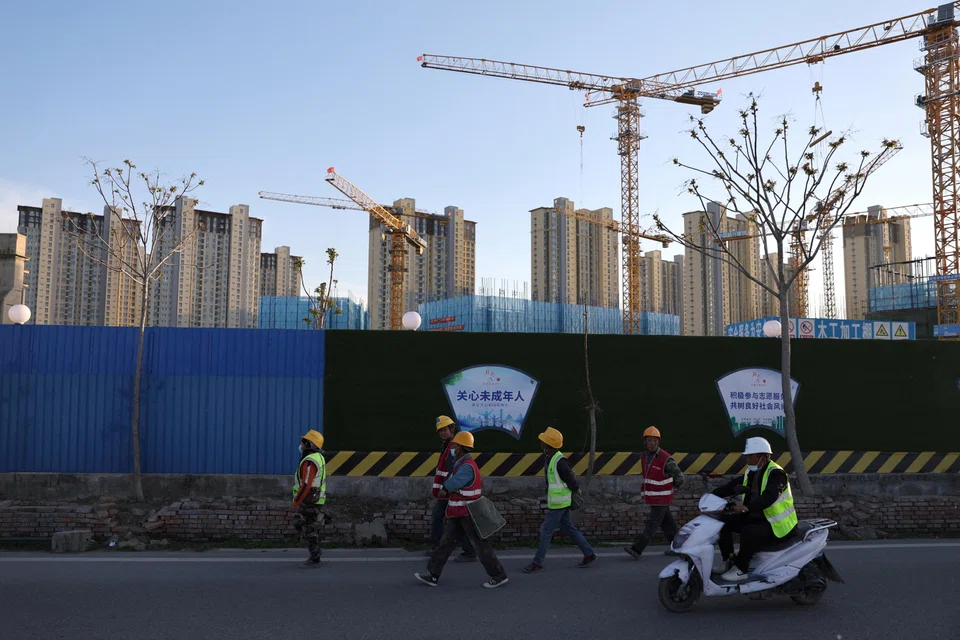
CHINA’S residential prices continued to fall in October, raising questions over how much the latest stimulus measures will lift the sagging market.
New-home prices in 70 cities, excluding state-subsidised housing, dropped 0.15 per cent from September, when they slid 0.14 per cent, figures from the National Bureau of Statistics showed on Monday (Nov 16).
Resale home values, which are subject to less government intervention, decreased 0.24 per cent, easing slightly from 0.26 per cent a month earlier.
Chinese authorities are seeking to end a real estate slump that has dragged on economic growth for more than five years, prompting policymakers to roll out fresh support measures.
Yet, even after the latest round of stimulus, China’s unprecedented property crisis reached another flashpoint in October as Zhuhai Huafa, one of the country’s largest local-government-owned conglomerates, struggled with debt payments.
China unveiled mortgage subsidies and changes to bank lending policies in September, stepping up efforts to bolster an economy that is losing momentum.

The package aimed to ease the financial burden on lower-income households, including new urban residents, recent graduates and rank-and-file workers.
Still, the latest housing stimulus had only a modest impact on sales during last month’s traditionally busy holiday season.
A price recovery in major cities showed signs of waning. Home prices in first-tier cities rose 0.05 per cent in October, slower than the 0.13 per cent increase a month earlier, the figures showed. Shenzhen had a 0.1 per cent gain, compared with 0.3 per cent in September.


China has adopted a targeted approach to stimulus as it deploys support to meet its annual economic growth target of 4.5 to 5 per cent. The narrow scope of the housing package reflects policymakers’ desire to stabilise the economy without resorting to broad fiscal expansion.
Growth weakens
Other figures released Monday showed economic growth weakened across the board, with retail sales and industrial output missing expectations.
Property investment slumped almost 22 per cent in the first 10 months of the year, and residential property sales dropped 14 per cent.
Meanwhile, credit stress continues to ripple through state-linked developers. Huafa missed payments on trust products and has been asking banks for loan extensions, people familiar with the matter said last month. The company has blamed the property downturn for its recent profitability swings.
The strain underscores how China’s years-long real estate debt woes are still spreading despite pockets of market stabilisation.
“China’s new-home sales are set to keep falling through 2029, in our scenario, as persistent low-tier weakness pressures developers’ revenue and margins,” Bloomberg Intelligence analysts Kristy Hung and Kingsley Chan wrote in a recent report. BLOOMBERG
Decoding Asia newsletter: your guide to navigating Asia in a new global order. Sign up here to get Decoding Asia newsletter. Delivered to your inbox. Free.
Share with us your feedback on BT's products and services
TRENDING NOW

Ex-Nvidia CEO Jensen Huang carried a secret for more than a year. It led to his downfall

South-east Asia has lost Nvidia’s best salesman

Demand, tech capabilities position Apac and AI as Skyscanner’s next growth frontiers: CEO Bryan Batista

Jensen Huang discusses comeback as Nvidia CEO with allies: report

