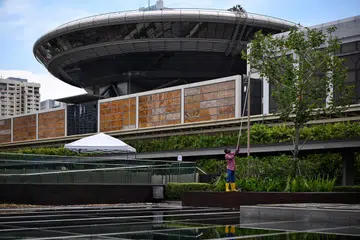
Construction at Su Baolin’s Sentosa Cove villa stalled as money-laundering probe continues


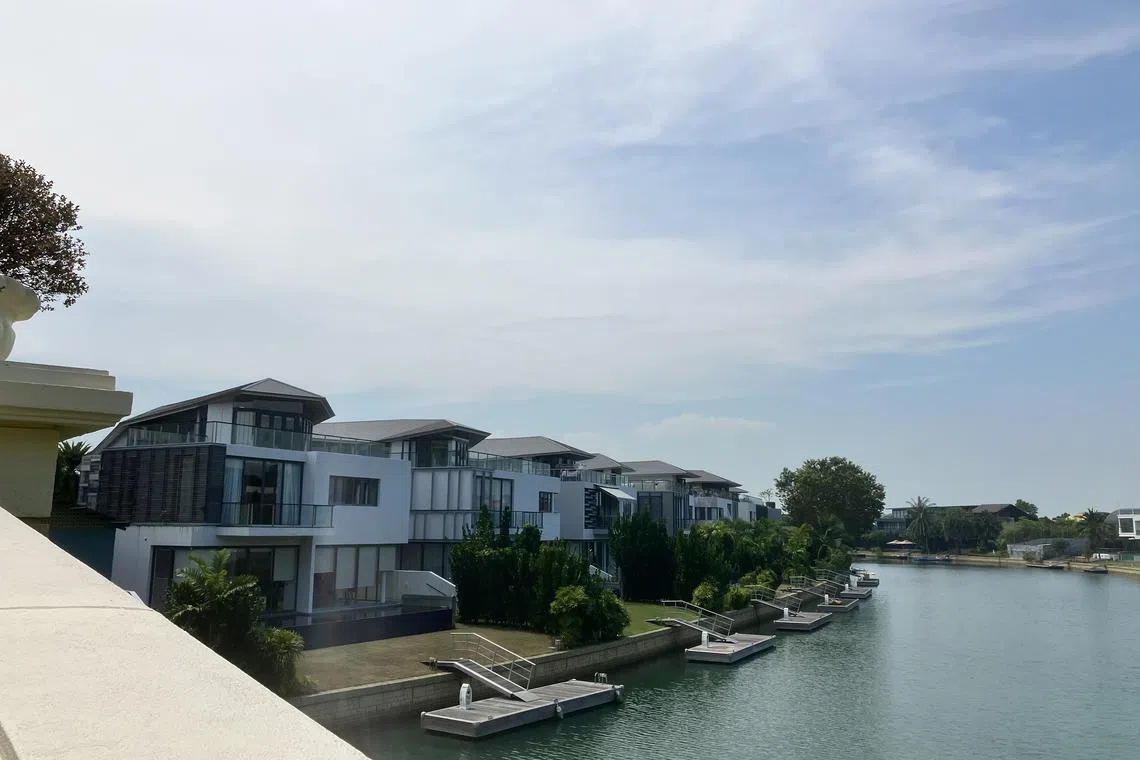
WORK on a sea-facing Sentosa Cove bungalow owned by Su Baolin is in limbo, in light of the prohibition-of-disposal order on the property.
Su, 41, is one of 10 individuals arrested in Singapore’s largest anti-money-laundering case.
He had submitted plans to build a two-storey detached house with a swimming pool, before his arrest in August.
The Cambodian national was granted a permit to carry out building works by the Building and Construction Authority (BCA) in May, and the project was expected to be completed by the second quarter of 2025.
Su had purchased the property in March 2021 for slightly over S$39.33 million from tycoon Lim Chin Huat.
Located on a 1,816.3 square-metre plot of land along Ocean Drive, it offers unblocked sea views and faces Marina Bay Sands.

The Business Times (BT) understands the existing house was demolished sometime prior to August 2023.
The prohibition-of-disposal order on the property means it cannot be sold, but it is unclear if previously approved renovation works can continue.
Complications include payments for construction work and whether workers can access the site.
A source close to the matter, who spoke on condition of anonymity, said construction works stopped about two-and-a-half months ago.
He would not say whether payment for work is still being made.
The builder handling the work is a company called Jiaxing Builders. Its director is one Jiang Xiaomin.
Checks by BT found that Jiang is also listed as a director and shareholder of Sentosa Project, a general contractor company that was incorporated in June this year.
The other shareholder of Sentosa Project is Su.
Su served as a director of Sentosa Project for one day, on Jun 1, 2023, before Jiang took over.
A BCA spokesman told BT in September that, based on its records, Sentosa Project was neither a licensed builder nor registered under the Contractors Registration System.
BCA said it had not received or approved any building plan submissions by Sentosa Project, and that it was not aware of any building works carried out by the company.
Lawyers BT spoke to said it is unlikely that renovation works on Su’s Ocean Drive property can continue, but that this would depend on the specific prohibition-of-disposal order that was meted out.
Prohibition-of-disposal orders were issued on 152 properties as part of the S$2.8 billion money-laundering case, with eight of them being Sentosa Cove landed homes.
Mona Oei, managing director of Golden Law, said: “Once this order has been dealt to the original owner of the property, the asset is effectively confiscated by the state. As such, even if the original owner of the asset has obtained approval to carry out renovation works, the confiscation by the state supersedes that approval.”
Cory Wong, director at Invictus Law, said keys to the property would probably also have to be handed over, although this is subject to how the court order is worded.
“Just like if it’s a restraint order for cash or luxury goods, the physical items are kept by the authorities,” he added.
Victoria Ting, associate director at Setia Law, said, however, that renovation or construction works “do not affect the title of the property” and therefore should not be restrained under a prohibition-of-disposal order.
Su and his wife, Ma Ning, have properties worth more than S$57 million and vehicles worth S$4.9 million – all of which have been seized or prevented from being sold.
Their bank accounts, with funds of S$33.7 million, have been frozen, according to a police affidavit made in September.
When asked whether accused persons are able to have access to frozen funds for living expenses, Ting said they could apply to the court for a release of funds for limited purposes, such as the payment of basic expenses such as food, rent, mortgage and professional fees.
“The court will only permit release where a minimum threshold of necessity is met,” she added. “The accused will need to be able to demonstrate that the sum is necessary solely for the permitted purpose.”
Even if an accused party is able to make payment, however, a contractor may not wish to continue accepting payments from an individual against whom adverse news has been widely reported, in relation to alleged financial crime, Ting said.
Alan Cheong, Savills Singapore’s executive director of research and consultancy, said that even if no stop work order has been issued, the contractor may not want to continue works because there is a high chance he may not get paid.
Additional work could change the value of the property, he noted.
Still, a new owner may not want to carry on with the stalled project.
Sentosa Cove was developed and marketed as a destination for foreigners seeking to buy landed properties in Singapore.
Foreigners wishing to buy a landed home in Singapore must get approval from the Singapore Land Authority, and this approval is generally granted for Sentosa Cove purchases.
Buying sentiment for homes in Sentosa Cove has recently taken a hit, however, due to a large hike in the Additional Buyer’s Stamp Duty (ABSD) for foreigners, as well as increased due diligence on buyers’ source of funds following the anti-money-laundering probe.
Su, who is facing two charges of forgery, will return to court on Nov 15 for a bail review.