FairPrice, Sheng Siong in fine fettle even as Giant shrinks footprint
Supermarkets are key anchor tenants for mall landlords. As at September, there are 161 FairPrice outlets; Sheng Siong has over 70 stores

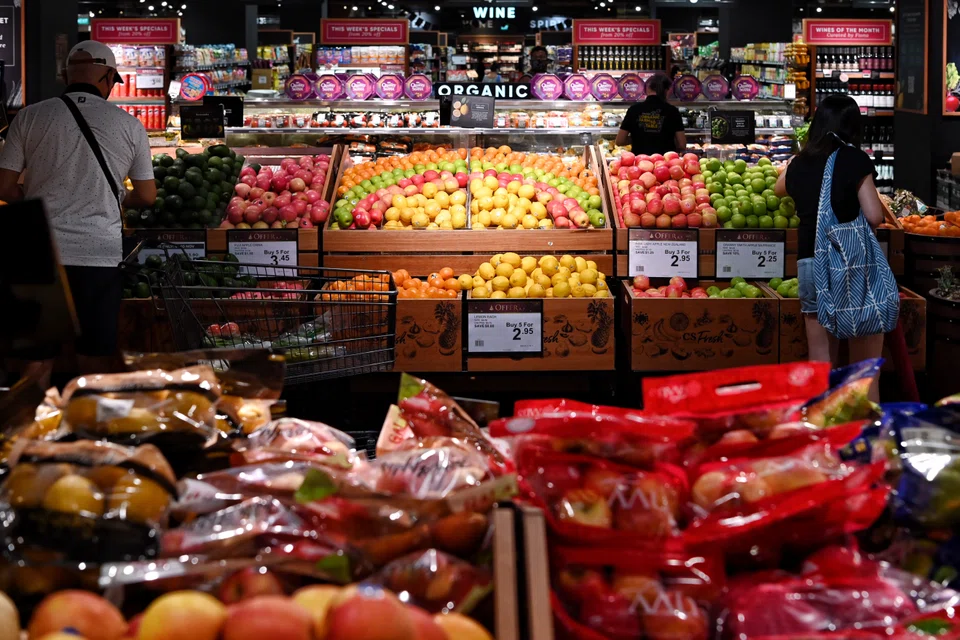
SUPERMARKET players are continuing to grow their physical footprint in Singapore, opening more stores in the face of stiff competition among physical stores and from online grocers.
News of supermarket chain Giant closing stores is seen by market watchers not as a symptom of decline in the grocery business, but a sign of the retailer withdrawing from one segment and training its focus on another.
Giant closed nine stores in a span of six months this year, leaving the chain with 45 outlets here as at September, down from 53 in February, based on an earlier media report.
Meanwhile, rivals FairPrice and Sheng Siong are expanding.
As at September, there are 161 FairPrice outlets across the island (including its higher-end Finest stores and FairPrice Xtra hypermarkets) – six outlets more than in 2023, said a FairPrice Group spokesperson.
Sheng Siong, which set its sights firmly on the budget market, operates 74 stores, and is growing fast.
In its latest earnings statement for H1, the company said it opened two new stores and expanded the retail area of one store in the first half of FY2024, and opened another two outlets in July. Sheng Siong also tendered for three new stores, and plans to bid for seven more outlets at Housing and Development Board (HDB) tenders in H2.
The big players have opened more physical stores even as online grocery retail grows more entrenched among consumers. Newer entrants such as Chinese player Scarlett and Japanese retailer Don Don Donki are also eyeing market share.
Rising retail sales receipts and more store openings point to groceries continuing to be a staple of household spending, despite inflation and higher goods and services tax curbing the buying power of consumers.
Stable income for malls
Supermarkets are also seen as providing stable income for mall landlords. Major grocery players are key anchor tenants which draw repeat consumers.
At CapitaLand Integrated Commercial Trust’s major suburban malls Tampines Mall and Junction 8, supermarket tenants’ share of gross rental income (excluding turnover rent) has risen over the last 10 years.
At Tampines Mall, the supermarket category contribution rose from 5.6 per cent as at December 2013, to 6 per cent at end-2018, to 6.3 per cent in 2023. For Junction 8, the category contribution similarly rose from 5 per cent in 2013, to 5.5 per cent in 2018, to 6 per cent in 2023.
In total, the number of brick-and-mortar supermarket stores grew steadily over the last decade – from 441 stores in 2014 to 691 outlets as at end-2023.
“There is a trajectory of growth for supermarkets in Singapore,” said Lau Kong Cheen, associate professor and head of programme for marketing at Singapore University of Social Sciences’ (SUSS) School of Business.
Current retail sales data shows that the supermarket and hypermarket sectors are growing, at 2.5 per cent month on month and 1.8 per cent year on year in July. In comparison, total retail sales (excluding motor sales) fell 2.3 per cent on year in July, extending a 3.1 per cent decline in the previous month.
“Store closures happen for various reasons, such as resource allocation, operational focus and lease expiration, and this is part of how businesses adapt to market conditions,” a spokesperson from Giant’s parent DFI Retail Group told The Business Times.
DFI said it will continue to operate Giant stores in both hypermarket and supermarket formats here for now. In July, it opened a store in the new HDB estate of Tengah.
But the group has begun a strategic turn towards the higher end of the Singapore grocery market, a niche it serves with its CS Fresh label supermarkets, and the higher margin ready-to-eat segment.
DFI Retail Group owns other brands such as Cold Storage, Jason’s Deli, Maxim’s, 7-Eleven and Guardian.
Competition from online players
The supermarket scene here is dominated by three main players – FairPrice, DFI and Sheng Siong, with FairPrice leading the market with a 35 per cent share, based on data from Statista.
Since the pandemic, online grocery platforms have become “grounded with their presence” in Singapore, said JLL’s senior director for retail Lee Siew Ling.
“They have the advantage of convenience and range of products, allowing customers to shop from the comfort of their homes. This is especially so for non-perishable items. As these platforms continue to improve on the speed and quality of delivery to end-customers, they pose a growing competition to supermarkets,” Lee added.
Although online grocers such as Lazada’s Redmart and Amazon Fresh may seem to cannibalise physical supermarket store sales, the impact appears relatively less significant than in other industries.
Data from SingStat showed that the online proportion for supermarket sales is about 12.9 per cent as at July 2024, up from 8 to 9 per cent pre-Covid, but less than the high of 14.8 per cent in July 2022.
In contrast, online sales for the computer and telecoms equipment sector are 49.4 per cent of all sales in that sector, and amount to 31.8 per cent for furniture and household equipment in the latest update.
“This shows the stickiness of consumers still preferring physical grocery shopping,” said Tricia Song, CBRE’s head of research for Singapore and South-east Asia.
While anecdotal evidence points to Singaporeans favouring Johor for their grocery shopping, JLL’s Lee sees this as “an option” for customers, due to the favourable currency exchange rates and the possibility of having a day trip away from Singapore.
The local supermarket scene is still dominated by a few strong and dominant chains as foreign players try to make inroads, said CBRE’s head of retail services Joan Chen.
“Foreign entrants are facing greater challenges breaking through the perceived barriers to entry, compared to the level of threats that they are able to pose to the incumbents,” she said.
“For these foreign entrants that have been able to gain a foothold, they have mostly adopted a strategy of differentiating themselves to complement the incumbent players, rather than seek to replace them.
An example is Don Don Donki, which offers different options from what is usually available in other supermarkets, she said.
As for FairPrice, SUSS’ Prof Lau expects the chain to be in “every segment of the market”, as it targets the public; FairPrice Finest targets the premium segment, and FairPrice Xtra competes in the hypermarket category. Cheers competes against 7-Eleven in the convenience category.