

Far East Hospitality’s Arthur Kiong looks back on 4 decades in the hotel industry
He says the sector has provided him with more opportunities than he dared to dream of

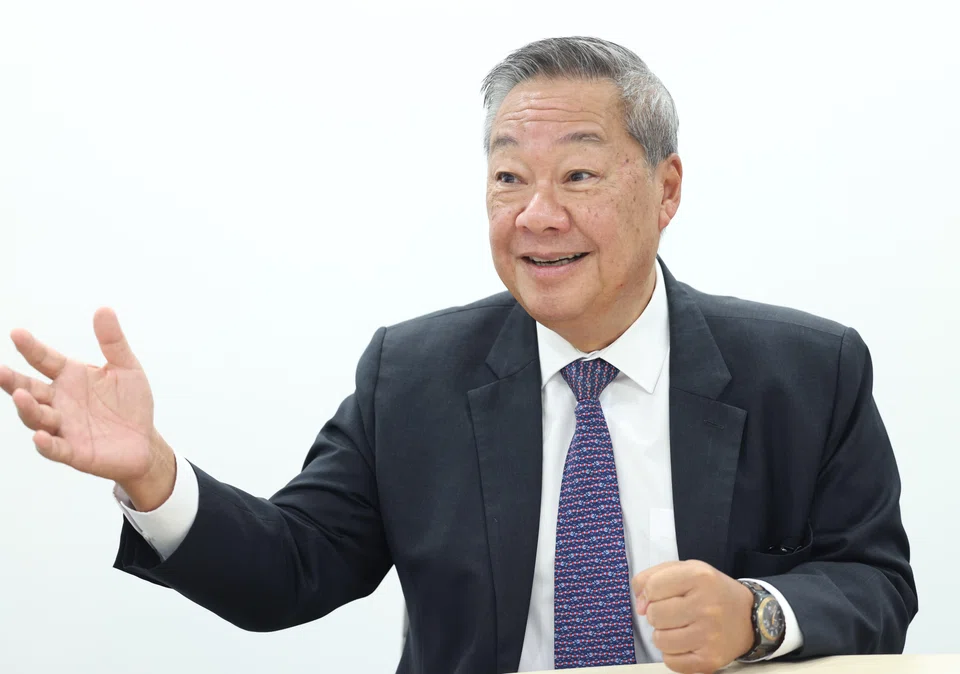
[SINGAPORE] One of Singapore’s most well-known hoteliers, Arthur Kiong, 65, began his career as a radio DJ, rubbing shoulders with celebrities and being invited to the best parties.
When he gave up his glamorous job in 1983 to learn how to serve, cook and clean in hospitality school Shatec, it was a “tremendous sacrifice”, he said in an interview with The Business Times.
“Being a radio personality, I was able to create a world of experience for my listeners. And I thought to myself, if the audio medium itself can create a world of imagination and excite people or enrage people, or help people feel a sense of melancholy… think of what one can do if (they) can influence sight and smell and touch and taste.
“That’s what the hospitality world offers, right? Hospitality is (about) creating memorable experiences for guests.”
Since then, Kiong has spent four decades in the hotel industry, where he has held senior roles in luxury hotels including the Mandarin Oriental in Hong Kong and The Ritz-Carlton in New York City.
The hospitality veteran, who is now managing director of Far East Hospitality, the hospitality arm of Far East Orchard, said: “One of the reasons why one (goes) into the hospitality industry is you want to live a full life. To live a full life, you need to be able to make a decent amount of money, because you need to save and to start a family. But the other portion that is important to live a good life is to have wonderful experiences.
“What if you can do a job that pays you decent money, but you (can) travel and see the world and (have) all these wonderful experiences… as part and parcel of making a living?”
A pivotal moment for Kiong was when he joined Mandarin Oriental in 1991 as director of sales and worked with colleagues of other nationalities who were “the best in (their) craft”.
The French were highly regarded for their culinary talent; the Germans, known for their precision, were the best housekeepers; and the British had “impeccable manners”, he quipped.
After asking himself what he, as a Singaporean, could bring to the table, he concluded that Singaporeans were “the best managers in the world”.
He said: “The Singaporean brings to the table unwavering integrity (and) critical thinking applied towards the limitations we are under. We not only learn how to overcome those limitations, but we (also) learn to embrace those limitations, and then we turn those limitations into an advantage.”
Back in the day, it was “very acceptable” for hoteliers to gratify customers or business partners by offering them special rates or gifts, Kiong noted.
“Nobody batted an eyelid. But as a Singaporean, we don’t do that.
“We administer, we manage, and we need to have a basis and justification on how rates are being contracted and how entertainment justifications are being recorded. I brought in a great deal of discipline in that regard.”
A flair for marketing
After becoming director of sales marketing at The Ritz-Carlton in 1995, Kiong recalled how his goal was to help the Singapore hotel become the “prize leader” in the luxury market.
He said: “I had the opportunity to come up with very creative ideas to fill up the (rooms) and position the hotel.”
For instance, realising how influential secretaries were in deciding where their bosses and top clients would stay when visiting Singapore, Kiong decided to throw a Secretaries’ Day celebration they would not forget.
As guests arrived, they were invited to have a cocktail and embark on an art tour of the hotel, to see its extensive collection including works by David Hockney and Frank Nicholson, he said.
For the event, which was held at The Ritz-Carlton’s all-day dining restaurant, he arranged for five cabinets to be built to house the most desirable ladies’ handbags and Cartier’s Tank Francaise.
The secretaries were invited to pick a key during lunch and if their key opened the cabinet, they could take home the prize within, Kiong said.
He added: “It was kind of a Cinderella concept, because you (had to) see which key fit... It really fired the imagination, rather than what everybody else was doing, which was a buffet, lunch and lucky draw. This (was) a lucky draw, but it was done in a very different way.”
Originally, Kiong’s team had planned to fill 240 seats, but an additional 600 attendees turned up, which led to the hotel opening up a ballroom to accommodate the guests.
The whole experience was curated such that guests left with the impression of how “wonderful” the hotel was, he said.
Taking risks
By the mid-1990s, Kiong had made a name for himself internationally.
An advertisement he oversaw for The Ritz-Carlton’s opening in New York, depicting the Statue of Liberty raising both hands in exultation and welcoming the return of the hospitality brand to the city, garnered significant attention after it ran in The New Yorker in 2001.
The Sep 11 attacks had just occurred and the hotel’s senior executives, fearing the advertisement was in poor taste, rushed to pull the advertisement from major publications but one still “slipped through”, Kiong said.
“When I saw it, oh my god, you know? And the switchboard of The Ritz-Carlton lit up like a Christmas tree when people saw the ad.
“They called (and) wanted to speak to the president, and they said unanimously: ‘How could you have thought of an ad so brilliant? This is so brilliant because it shows that America stands defiant in the face of terrorism – that we will not be cowed and that liberty will prevail.’”
While he acknowledged it was “incredibly fortuitous”, the experience taught Kiong two lessons.
He said: “In life, we have to believe in our own convictions – but believing in your own convictions, you tend to have to pay a very heavy price. The second lesson is, despite your absolute best intentions, the outcomes in life (are) not up to you.”
Another unexpected challenge Kiong encountered was the Covid-19 pandemic.
He quickly decided that some of Far East Hospitality’s hotels should be converted into quarantine facilities to provide a much-needed revenue source, while others pivoted to capture the staycation market.
“To decide quickly (was) important because it meant that you had crossed over and you were channelling your resources towards turning your hotels to operate them as quarantine facilities. (This) is a different mindset than (if) you’re thinking to do or not to do.”
He added: “And frankly speaking, fail fail lah; it’s a pandemic for goodness’ sake, so let’s give it our best shot. And it turned out really well for us.”
Giving back
Reflecting on his 40-year journey in the hotel industry, Kiong recalled how his first role was as a greeter at the Prego restaurant in The Westin Stamford.
He said: “To start from that and work through the (ranks)... how Singaporean talent counts in an international field should bring hope and aspiration to a lot of young Singaporeans.
“This industry has provided me with more opportunities than I dared to dream of and I’m very grateful.”
While he is stepping down from his position as managing director of Far East Hospitality on Dec 31, Kiong plans to continue contributing to the industry.
He said: “I (am) looking forward to how I can use the immense opportunity and experience I’ve had bestowed (on) me to help the younger generation.”
TRENDING NOW

Inside Singapore’s government team that kills its own products
Once staunchly pro-China, Malaysian Chinese businesses are now distancing themselves from Beijing
Cliff Tan has 7 million followers and a 4-month waitlist. Why won’t he expand his business?
Grab CEO’s wife Chloe Tong on life with Anthony Tan and finding her purpose

