Prime retail rents seen rising further in 2026 with tenant demand firm amid tight supply
Market watchers expect increases of between 1% and 4%, with city centre malls likely outperforming suburban centres

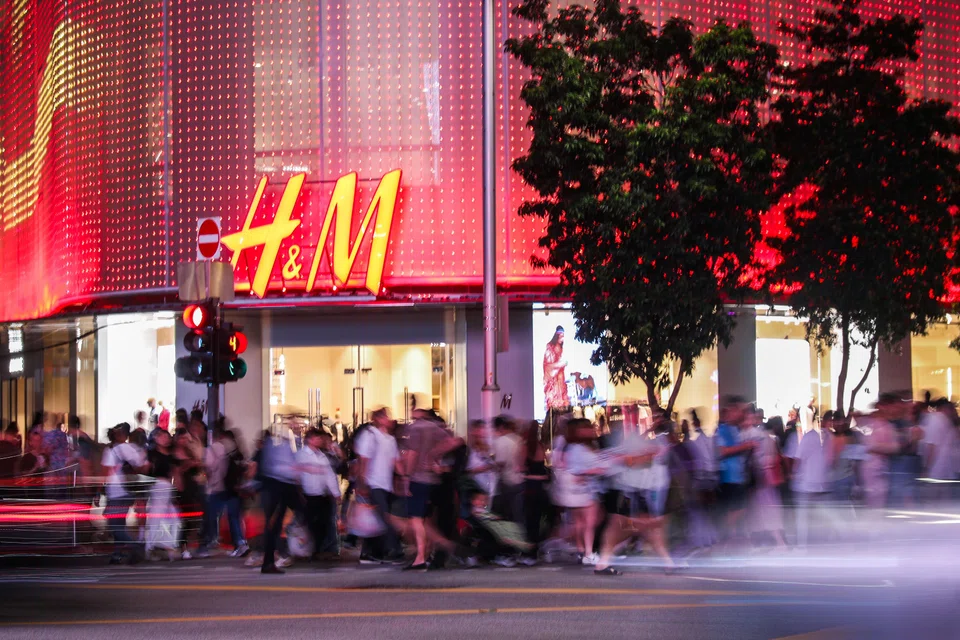
[SINGAPORE] Prime and suburban retail rents are expected to continue rising next year, as landlords of flagship properties retain pricing power even as operators contend with high costs.
While signs point to an increasing undertow of tenant churn, demand for prime retail space is being held up by waves of new openings from brands looking for premium spots.
Market watchers’ estimates for prime retail rent increases next year range from between 1 and 4 per cent in 2026, with city centre malls likely outperforming suburban centres as landlords with high occupancy maintain an edge.
Average rents for prime Orchard Road malls may climb 3 per cent year on year in 2026, while prime suburban mall rent could rise 1 to 2 per cent, said Alan Cheong, Savills Singapore executive director of research and consultancy.
He expects both Orchard Road and suburban rents to grow 1 to 2 per cent in 2025.
Orchard Road malls benefit from recovering tourist arrivals and spending, while suburban malls face headwinds from outbound travel and cross-border shopping in Malaysia, he added.
Cushman & Wakefield (C&W) forecasts Orchard and suburban prime retail rents will gain 1.5 to 2.5 per cent in 2026, supported by limited vacant space in tier-1 malls typically owned by real estate investment trusts (Reits).
C&W expects 2025 to close with Orchard Road rents up between 1 and 2 per cent, and suburban rents to rise 0.5 to 1.5 per cent.

2025 in review
Central region retail rents rose 0.9 per cent quarter on quarter in the third quarter of 2025, extending gains from the previous quarter, according to data from the Urban Redevelopment Authority (URA).
For the first nine months of 2025, the URA central region retail rental index rose 1.3 per cent, and is expected to finish the year around 2 per cent up, said Ethan Hsu, head of retail at Knight Frank Singapore.
Occupancy as at Q3 2025 stood at 93.1 per cent. According to CBRE, islandwide occupancy is “normalising” from a decade-high of 94 per cent in Q4 2024.
Tricia Song, CBRE head of research for South-east Asia, said that despite cost pressures and consolidation, there is strong demand for prime retail space from new entrants and existing players seeking expansion.
Still, Savills Singapore’s executive director of retail and lifestyle, Sulian Tan-Wijaya noted that many new players target the same handful of city and select suburban malls.
Chua Yang Liang, JLL’s head of research and consultancy for South-east Asia, expects suburban malls to record the strongest 2025 rental gains due to their non-discretionary retail mix.
Difficult trading conditions in the market may however put a ceiling on rent growth.
Knight Frank’s Hsu said operators “continue to face elevated labour, utility and material costs, dampening their ability to absorb further rental increases and placing a natural ceiling on growth”.
“High costs and competition contributed to several high-profile closures this year. “This has prompted a more conservative approach to expansion, capital expenditure and store network optimisation,” he added.
“Churn will be most pronounced among independent operators, weaker-margin brands, and undifferentiated mass-market retailers. Prime districts may see turnover as landlords refine tenant mixes, while suburban malls face pressure among smaller operators with tight margins.”
Core city submarkets – particularly downtown – posted the strongest rental momentum in 2025.
CBRE’s Song said prime rents in City Hall/Marina Centre rose 4 per cent year on year, supported by retailer confidence in tourism recovery and normalised office attendance.
Hsu said visitor traffic to the city centre was boosted by a packed events calendar and regional tourism, bringing a flow of affluent leisure and business visitors to support retail sales and high demand for prime frontage.
Tenant sales
Tenant sales remained relatively stable in 2025, although performance varied by segment.
Song noted that overall retail sales excluding motor vehicles have grown steadily year on year since July, aided by improved consumer sentiment amid better-than-expected GDP growth and a resilient labour market.
In October, retail sales excluding motor vehicles grew 3.7 per cent, up from September’s revised 1.8 per cent, according to the Singapore Department of Statistics.
Still, CBRE’s head of retail Joan Chen said year-end festive spending, such as at 11.11 and Black Friday sales, is expected to be subdued compared with the past one to two years due to a high volume of outbound travel and a strong Singapore dollar limiting inbound tourist spending.
JLL’s Chua added that consumers are likely to shop more selectively, seeking value and promotions, with only modest spending gains amid economic uncertainty.
Savills’ Tan-Wijaya noted that strong tourist arrivals and steady spending in the luxury sector should lift Christmas and year-end spending, particularly for watches, jewellery, gifts and restaurants.
The luxury market is recovering after two challenging years, led by watch and jewellery lines from Richemont Luxury’s Cartier and Van Cleef & Arpels, and is expected to improve further in 2026 with more visitors from China, she said.
Hsu noted, however, that department stores and mass-market retail lagged, as online competition eroded footfall and margins.
Reshaping tenant mix
Landlords are retuning tenant mix to boost traffic and support rents in their properties.
Hsu said Chinese F&B entrants remain influential, though expansion has moderated as they continue to use Singapore as a regional test bed. Meanwhile, Japanese, Korean and American chains are expanding selectively.
“The market is moving past rapid footprint expansion toward quality, strategy and differentiation,” said Hsu. “Landlords are increasingly prioritising concepts that drive sustained traffic and elevate brand positioning within the mall ecosystem.”
Retail Reits reported healthy net property income (NPI) growth and rental reversions in their latest earnings.
CapitaLand Integrated Commercial Trust ( CICT ), Singapore’s largest landlord with 21 retail and office assets, posted 9M2025 revenue of S$455.4 million, up 3.6 per cent year on year, and NPI of S$327.2 million, up 3.7 per cent.
On average, CICT recorded positive rental reversion of 7.8 per cent, driven by new leases from F&B, fashion, as well beauty and health. Occupancy remained high at 98.7 per cent, with tenant retention at 80 per cent.
DBS Group Research’s Geraldine Wong said CICT is on track to beat expectations for full-year distribution per unit (DPU), noting plans to subdivide and sublet the 38,000 square feet space in Tampines Mall, formerly occupied by Isetan, at higher rents.
Suburban retail Reit Frasers Centrepoint Trust ( FCT ) posted 10.8 per cent revenue growth to S$389.6 million in FY2025, with NPI up 9.7 per cent at S$278 million and DPU up 0.6 per cent at S$0.12113.
Growth came from its Northpoint City South Wing acquisition, contributions from revamped malls and resilient operating performance.
FCT’s portfolio maintained 98.1 per cent committed occupancy, with 7.8 per cent rental reversion. Tenant occupancy cost stood at 16.1 per cent, leaving room for further growth, said the Reit manager.
RHB analyst Vijay Natarajan expects both CICT and FCT to post higher distributable income in FY2026 and FY2027, supporting dividend yields of around 5 per cent.
Growing investor appetite
JLL’s Chua said retail assets have stayed on institutional investors’ radar, driven by the positive carry between asset yield and funding cost.
According to CBRE, capitalisation rates for prime Orchard Road retail range from 4.25 to 4.75 per cent, compared to suburban retail at 4.35 to 4.85 per cent.
Retail asset yields are above Grade A offices but below leasehold industrial and prime logistics assets, CBRE data showed.
Notable deals include Elegant Group’s S$809 million purchase of The Clementi Mall, FCT’s Northpoint City South Wing acquisition for S$1.13 billion, and Lendlease Reit’s purchase of a 70 per cent stake in PLQ Mall for S$619.5 million.
Michael Tay, CBRE Singapore advisory deputy managing director and head of capital markets, said that despite concerns over future competition from Johor-Singapore Special Economic Zone, investors remain confident in suburban retail due to resilient local catchments, supported by non-discretionary lifestyle-driven consumption and demand from new concepts.
Limited supply – at least until 2028 – is supporting rents and valuations, said Terry Wong, Colliers Singapore head of capital markets.
A boost in supply is expected to come on stream in 2028, from projects such as Bukit V Mall, The Skywaters, and the redevelopments of Tanglin Shopping Centre and Comcentre.
C&W forecasts annual additions of 300,000 sq ft from 2026 to 2029, below the historical average of 800,000 sq ft a year.
“This supply-demand imbalance is expected to sustain strong transaction appetite, intensify competition for quality assets and place upward pressure on pricing for defensive retail properties,” said Colliers’ Wong.