Singapore flexi-work down from pandemic peak; employers still offering it have retention edge
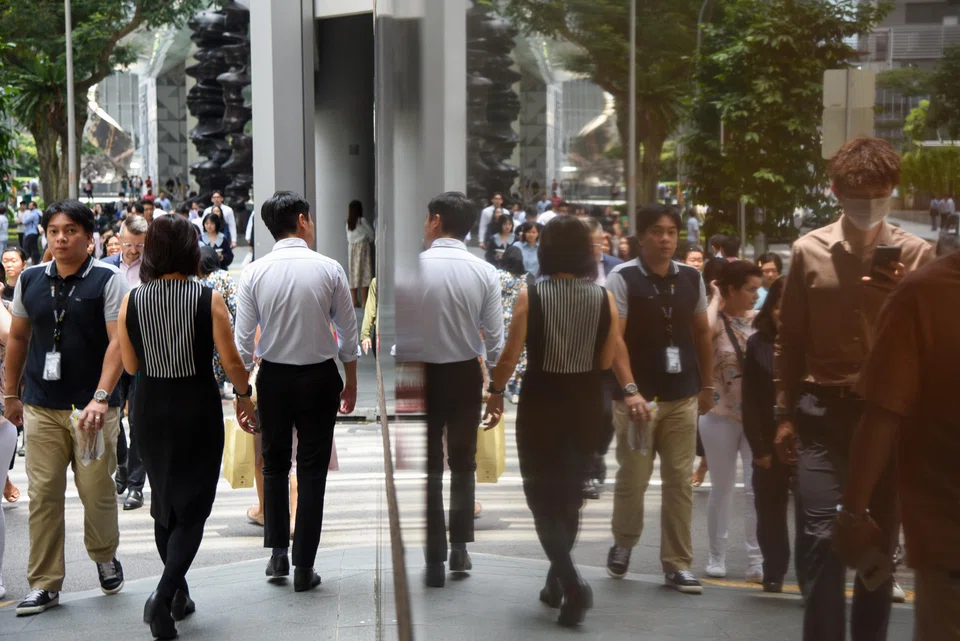
OFFERING remote work remains a competitive advantage for employers post-pandemic – but the prevalence of such arrangements has decreased in Singapore, statistics show.
This is even as tripartite guidelines on flexible work arrangements (FWAs) are to be released later this year, though these go beyond remote work to include options such as flexible shift timings and flexible workloads.
FWAs are becoming normalised after Covid-19 pushed more companies to adopt them, said National Trades Union Congress (NTUC) assistant secretary-general Yeo Wan Ling. “We foresee that FWAs would be an important factor for companies to attract and retain talent.”
In an EY survey last November, the wish for greater workplace flexibility was among the top three reasons that employees in Singapore gave for wanting to leave their current jobs. The survey covered 17,050 employees, including 250 from Singapore.
Similarly, HSBC’s annual employee sentiment survey found that flexible working was a key driver for employee satisfaction, said head of human resources of HSBC Singapore, Mukul Anand.
“We allow most of our people to have flexible work arrangements where they are not required to be in office all the time,” he said.
HSBC tracks how often employees are in the office as part of collecting data on office occupancy levels, and has acted on this data to adopt hot-desking. It also offers job sharing and staggered hours based on employees’ individual needs. (*see amendment note)
Not for everyone
Yet, remote working is not uniformly widespread, even when possible. A study released on Feb 16 by recruitment firm Hays found that multinational corporations (MNCs) were far more likely to offer work-from-home arrangements than local companies.
In its survey of 1,175 skilled professionals in Singapore, nearly half of those working for local companies had to be in the office five days a week, compared with under 30 per cent of those working in MNCs.
For MNC employees, a majority did not need to be in the office for more than three days a week.
Ministry of Manpower figures show that after 2021, the share of companies offering remote work began to fall – though remaining well above pre-Covid levels.
In 2022, about a third of companies offered scheduled teleworking, down from a peak of 60 per cent in 2021. This was still much higher than the pre-Covid figure of around 7 per cent in 2019.
For non-scheduled teleworking, 37.1 per cent of companies offered this in 2022, down slightly from the 2021 peak of 45 per cent – and double the 2019 figure of 16.4 per cent.
Local cardboard design agency Paper Carpenter has shortened its working hours compared with before the pandemic, but requires employees to work from the office five days a week.
Said founder Adrian Chua: “The open office allows for better communication among colleagues, especially if urgent attention is needed, and being away from distractions at home encourages work productivity.”
Even if a company manages to attract and retain talent through offering FWAs, productivity could be affected in the long run if FWAs are not properly managed, he added.
Keeping track
Large firms elsewhere have made headlines for tracking how often employees come to office, including Citigroup, JPMorgan and EY in the United Kingdom.
Both Citigroup and JPMorgan also track attendance in their Singapore offices. Citi allows employees to work remotely up to two days per week; at JPMorgan, flexible working arrangements depend on roles.
Even employers that allow remote work still encourage face-to-face contact. Prudential Singapore does not require employees to work from the office, but recommends that they return twice a week for meetings and team collaborations, said chief human resources officer Neetha Nair.
“Ultimately, employees and their managers discuss and agree on the FWAs that allow them to best deliver business requirements,” said Nair. Prudential also provides co-working spaces across Singapore for its employees.
Since last December, International Workplace Group has seen uptake rise by over 30 per cent for its flexible workspaces outside the Central Business District, said regional director of growth Elizabeth Fuller.
“The hybrid approach provides the benefits of remote work, such as increased flexibility and reduced commuting time, while still maintaining a connection to the physical workplace for collaboration and team building,” added Fuller.
EY in Singapore does not track how often employees come in, but encourages them to do so to collaborate on certain projects for efficiency, said EY Asean regional managing partner Liew Nam Soon.
While EY’s survey does show that flexible working is important to Singapore employees, it is just one of many factors that attract and retain talent, he added. “To that end, employers should also seek to create holistic work experiences beyond just providing flexible work arrangements.”
Smaller employers are taking other approaches to track work. At creative agency The Shuffle Collective, employee work is tracked by deliverables and the time taken to produce them. Staff usually go to the office for only administrative matters or client meetings.
Said founder Rishi Varman: “Given the creative sphere, inspiration can strike anywhere and it’s important to acknowledge that it’s the kind of work that cannot be bound by working hours and spaces strictly.”
Similarly, JAB Design tracks how long its teams spend on projects using an online cloud system, for better accountability to both its clients and the company, said business development director William Phua.
Beyond work-from-home
Human resources company Remote offers flexible work timings, with chief executive officer Job van der Voort noting that the company’s global workforce makes it nearly impossible to standardise work hours.
Said Van der Voort: “When employees have flexibility, they are better able to balance their work and personal responsibilities more effectively, leading to increased job satisfaction and productivity.”
He added that flexible shift timings can enable working parents and those with caregiving responsibilities to participate fully in the workforce.
In conversations with 42,000 workers, NTUC found that balancing caregiving responsibilities was a top concern, said Yeo.
FWAs remain important for work-life harmony, for caregivers and for senior workers, she added. “With normalisation of FWAs, companies will stand to lose in the talent war should they not have the proper processes put in place for FWA requests and the subsequent evaluation.”
*Amendment note: An earlier version of this story incorrectly stated that HSBC does not track how often individual employees are in the office. HSBC does track individual employee data to determine office occupancy levels.