

Singapore PMI edges up to 50.6 in February, but Gulf conflict fuels oil uncertainty
The Purchasing Managers’ Index for the electronics sector grows by 0.2 point to 51.3

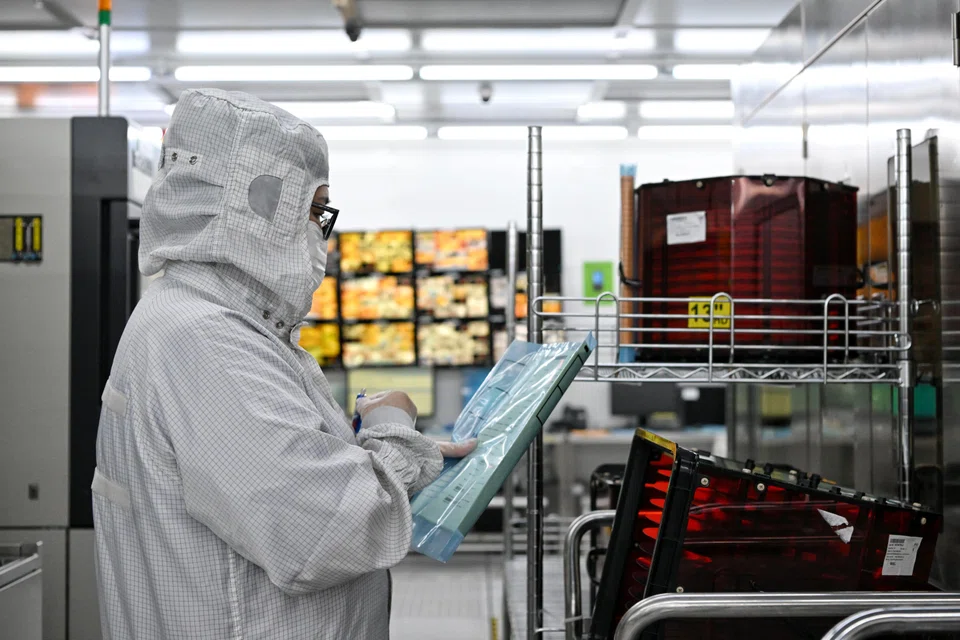
[SINGAPORE] Factory activity in Singapore grew modestly in February, supported by stronger new orders and exports, but escalating tensions in the Middle East and higher oil prices have raised fresh supply-side risks.
The Purchasing Managers’ Index (PMI) edged up 0.1 point from January to 50.6 last month, data from the Singapore Institute of Purchasing and Materials Management (SIPMM) showed on Monday (Mar 2). This marks the seventh straight month of expansion. A reading above 50 indicates expansion, while one below 50 indicates decline.
Within manufacturing, the PMI for the lynchpin electronics sector likewise grew by 0.2 point to 51.3, marking the ninth consecutive month of expansion.
However, the overall PMI signalled some moderation in activity. Factory output and input purchases expanded at a slower pace, while the supplier deliveries index contracted for the second straight month – after two months of moderation – pointing to longer delivery lead times.
At the same time, input prices, order backlogs and future business rose at a faster pace, even as imports grew more slowly.
The finished goods index returned to expansion, while the future business index remained in expansion for the fourth straight month, signalling sustained business optimism.
Within the electronics sector, activity continued to strengthen, with growth supported by faster expansions in new orders, new exports, factory output and employment, even as input purchases rose at a slower pace.
DBS senior economist Chua Han Teng said that electronics continued to outperform non-technology clusters across several sub-indices, adding that this “highlights the continued optimism among Singapore’s electronics firms”.
He added that electronics growth will likely remain a key pillar supporting overall manufacturing expansion, underpinned by sustained global artificial intelligence (AI)-related tailwinds and demand for the city-state’s memory chips and server products.
US-Iran tensions raise supply-side risks
Stephen Poh, executive director of SIPMM, said that the latest readings point to a resilient outlook for the manufacturing sector, supported by sustained demand from the electronics and semiconductor cluster.
“However, escalating military tensions between the United States and Iran have heightened global geopolitical risks and driven oil prices higher,” he added.
OCBC chief economist Selena Ling noted that the conflict has heightened supply-side risks, particularly amid concerns over the effective closure of the Strait of Hormuz, which handles about one-fifth of global energy trade.
Brent crude has rallied above US$82 a barrel – its highest since January 2025 – reigniting fears of stagflation, said Ling. She added that while the Opec+ group of oil producers is set to raise output next month, the situation “is still very fluid”.
The duration and breadth of the conflict, Ling pointed out, will determine how long oil prices stay elevated, with potential spillover effects on supply chains and trade flows.
“Historically, the impact of Middle East conflicts tend to be sharp and frontloaded, but had relatively short-lived impact,” she said, referencing the 1990 Gulf war, 2003 Iraq war and the 2019 attacks on oil processing facilities operated by Saudi Aramco.
“That said, there were other occasions like the (Yom Kippur war and Iranian revolution in the 1970s) when oil prices stayed elevated for a longer period due to production losses.”
Despite resilient AI-related demand, DBS’ Chua added that prolonged tensions risk not only lifting energy costs but also that of shipping, while disrupting supply chains for Singapore manufacturers.
Regional trends
Most regional economies remained in expansion territory in February, with momentum strengthening across several markets.
Thailand’s PMI rebounded to 53.5 from January’s five-month low of 52.7, and Indonesia’s reading rose to 53.8 from 52.6. Vietnam posted the strongest print among its peers, climbing to a four-month high of 54.3 from 52.5.
Bucking the trend was Malaysia, where the PMI slipped back into contraction at 49.3, down from January’s 20-month high of 50.2.
TRENDING NOW

LTA proposes combining car COE categories, adding rebate-surcharge system

StarHub to acquire MyRepublic’s mobile business amid ongoing telco consolidation

DBS, OCBC, UOB rout lops billions off STI as inflation, rate concerns spook investors

Grab CEO’s wife Chloe Tong on life with Anthony Tan and finding her purpose

