Four challenges facing Singapore’s incoming PM
Lawrence Wong will have to navigate both global tensions and domestic issues

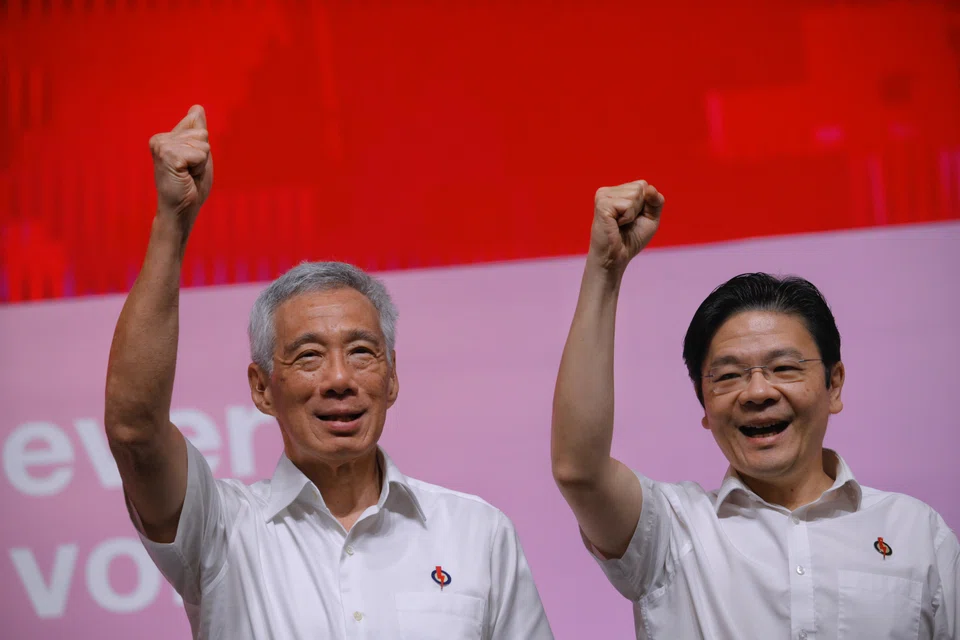
COME Wednesday (May 15), Singapore will welcome its first prime minister born after independence. Deputy Prime Minister Lawrence Wong will succeed Prime Minister Lee Hsien Loong, who has been at the helm for nearly 20 years.
While some may say that Wong has big shoes to fill, Institute of Policy Studies (IPS) senior research fellow Gillian Koh noted that he has not only been a career civil servant and in government since 2011, but was also PM Lee’s principal private secretary.
“This means that he will have been exposed to the foreign parties that PM Lee interacted with over a span of decades when you add up his experience,” she said. “He will have crafted policy and speeches for his principal, heard how these have to be tuned just right for (the) government and Singapore.”
Most watchers expect policy continuity when Wong takes over, not least as PM Lee will remain in government as senior minister.
Nonetheless, Wong will have to grapple with both geopolitical uncertainty and domestic challenges. The Business Times (BT) explores four key challenges facing Singapore’s fourth prime minister.
Navigating geopolitics
Singapore’s leadership transition occurs at a time of increasing complexity in geopolitics. A key challenge for Wong is managing the city-state’s relationships with both great powers and close neighbours.
Over the last decade, relations between the United States and China have been frosty at best, worsened by former US president Donald Trump’s declaration of a trade war in early 2018. This is part of a broader backlash against globalisation and free trade, long considered Singapore’s lifeblood.
PM Lee has been able to maintain a cordial relationship with both superpowers, noted Maybank’s regional co-head of macro research Chua Hak Bin. “Maintaining that delicate balance and constructive relationship with both the US and China in an increasingly fragmented world will be the big challenge for his successor DPM Lawrence Wong.”
As a small country, Singapore must be a “consummate diplomat”, while demonstrating the relevance of small states in international politics, said Eugene Tan, law don at the Singapore Management University.
In a recent interview with The Economist, Wong described the nation as “pro-Singapore”, rather than pro-America or pro-China. But even “pro-Singapore decisions” could be interpreted as taking sides, noted Prof Tan.
“So a key challenge is that even when we take sides, we have to be clear that the great powers recognise the principled basis of our decision,” he said.
The city-state may not have the luxury of “sitting on the fence” if its core interests are at stake. Singapore’s position may be aligned with one power on certain issues, but with the other power on others, he added. “The imperative is to remain ‘on side’ with the great powers even when we take sides.”
IPS’ Dr Koh noted that the “pro-Singapore” stance amid great power rivalry is not new, with “a well-established ‘operating system’ to draw upon as it is reinterpreted with changing external circumstances”.
What is different, however, is Singaporeans’ increasing interest in foreign policy. “Hence, the challenge is syncing up the increasingly interested local population into this ‘operating system’, even as foreign parties or powers try to influence the minds of locals directly through social media and cable TV as well as international organisations.”
“This actually constitutes a key challenge for Wong,” she said, giving the example of local interest in Israel’s war in Gaza.
Such foreign issues are “a different order of difficulty”, she added. Foreign influence or interference may be motivated by interests that Singapore cannot control, or have a dynamic that the Republic cannot influence alone.
With the baton being passed on, other countries also may want to test the new leadership on foreign policy issues, as well as Wong’s standing, strength and support at home, PM Lee warned in a final interview before the handover.
“We must expect that some probing will come, and we must be ready to respond, not in a harsh way, but quietly to stand our ground,” he said.
Dr Koh added that Wong will have to help Singaporeans understand what is at stake, and why it is in the country’s interest to take certain approaches to geopolitical issues and trade policy.
Inclusive economic growth
On the economic front, Singapore is in a position of strength, as a trusted business hub and with an economy well-supported by growth engines in a diverse range of industries, analysts said.
In the past two decades, the economy has grown 2.3 times in real terms under PM Lee. It has maintained a strong manufacturing base while finding new growth drivers in the biomedical, semiconductor and precision engineering clusters.
“Singapore is now in a strong position to leverage on the shifts and reconfiguration of manufacturing supply chains away from China,” Maybank’s Dr Chua said.
Even so, “effortless growth” will no longer be achievable given resource limitations and the maturing economy, as Wong has warned several times.
The way forward, he told The Economist, is to push the productivity and innovation frontier to “justify the premium” associated with doing business in Singapore and to continue attracting “cutting-edge investments”.
Beyond keeping Singapore competitive and attractive to investors, the incoming prime minister will also have to contend with an ageing workforce and record-low total fertility rate. This necessitates a continued reliance on foreign labour – but this flow must be carefully managed, with immigration still a hot-button issue.
Economic growth remains “non-negotiable”, Wong told Parliament over a year ago. But such growth must be inclusive.
This was stressed in the Forward Singapore (Forward SG) report, the culmination of a 16-month consultation exercise by the new leadership that engaged 200,000 citizens.
It outlines plans to improve social mobility: uplifting vulnerable families; reducing wage gaps between white-collar and blue-collar workers; and embracing a wider definition of success.
“We seek a more inclusive Singapore Dream – one where we value every individual, support them in their diverse aspirations and pathways, and celebrate their achievements and successes together,” said the report.
One of Wong’s priorities will thus be “how to redefine success under his ambitious Forward Singapore plan, which seeks to revitalise the nation’s social compact, without affecting the imperative for Singapore to continue to be economically competitive and relevant”, said Prof Tan.
The challenge is to get the majority of Singaporeans to buy into this idea, with stronger social cohesion and trust in the government, he added.
Long-term planning
One of seven key policy shifts in the Forward SG report is investing in a “shared tomorrow” to keep Singapore liveable.
This requires tackling long-term challenges: managing land limitations, fighting climate change and ensuring food and water security.
Limited land, for instance, means that land-use planning must be continually reviewed, balancing between economic development and affordable, equitable public housing.
Meanwhile, the climate crisis will pose significant challenges for Singapore, which is especially vulnerable to rising sea levels.
Environmental sustainability is an “existential priority”, yet Singapore’s net-zero targets are difficult to achieve without international cooperation and partnerships between the government and industry, noted the Forward SG report.
Increased natural disasters and erratic weather patterns brought by climate change also threaten Singapore’s water and food security.
All these priorities have to be tackled even as Singapore continues to uphold fiscal prudence.
In other words, the government has to ensure there are sufficient revenues to cover the increase in spending without having to impose a high tax burden.
Political change
The 4G leadership transition does not end with the handover on Wednesday. Instead, that marks the start of a new priority for Wong: how to manage the pace of political change so that the ruling People’s Action Party (PAP) remains the dominant political force, said Prof Tan.
“One-party dominance in Singapore is weakening, but the challenge for the PAP leadership is to slow down the process and, perhaps, even to have the occasional strengthening of the PAP’s dominance at general elections.”
Watchers expect Wong’s government to extend the consultative approach that PM Lee fostered during his tenure.
“The real question is how different the consultative style under Wong will be,” said Prof Tan. “Clearly, Wong has to evolve his government’s consultative approach and impress upon Singaporeans that his approach is fit for purpose.”
With a large proportion of the electorate under 35, Wong will need to appeal to Singaporeans not just through traditional bread and butter issues, but also more ideological and fundamental issues such as social equity and climate change, said Nydia Ngiow, managing director of strategic advisory firm BowerGroupAsia.
“The reliance on social media, both as a platform for the ruling party to convey messages and how the electorate communicates and increasingly receives news, will subject Wong and his 4G colleagues to greater accountability that they will need to be prepared for,” she said.