Insect food players see mixed results a year after government approval
Whole-insect snacks are proving more popular than powders or restaurant dishes, with players pivoting to match consumer tastes
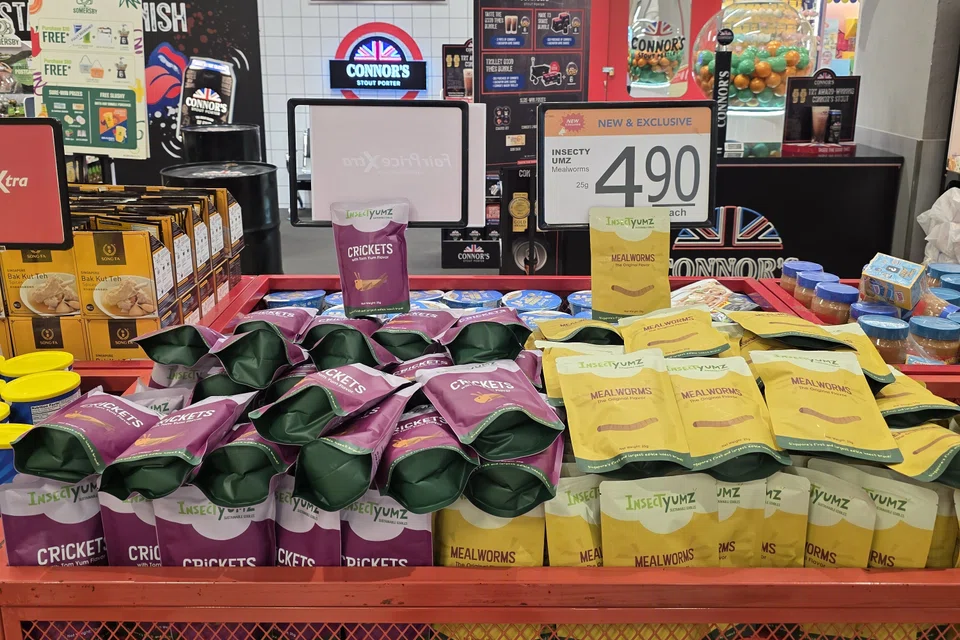
[SINGAPORE] Just over a year since the government approved insect consumption, businesses offering insect-based food have seen mixed results, with snacks appearing to gain the most traction among Singaporean consumers.
In particular, whole dried insects are more popular than snacks made from insect flour, such as cricket chips, said Javier Yip, founder of importer and distributor Insect Food.
“They want to really eat the whole insect. The cricket chips don’t look like an insect and don’t taste like one,” he added.
In July last year, the Singapore Food Agency (SFA) approved 16 species of insects for human consumption, including various species of crickets, mealworms, grasshoppers, locusts and silkworms.
Several local companies and overseas entrants aimed to offer a range of insect food, from bug snacks and cricket protein powder to restaurant dishes that included insects.
But a year on, the varied consumer response has caused some players to tweak their offerings.
Bringing insects to supermarkets
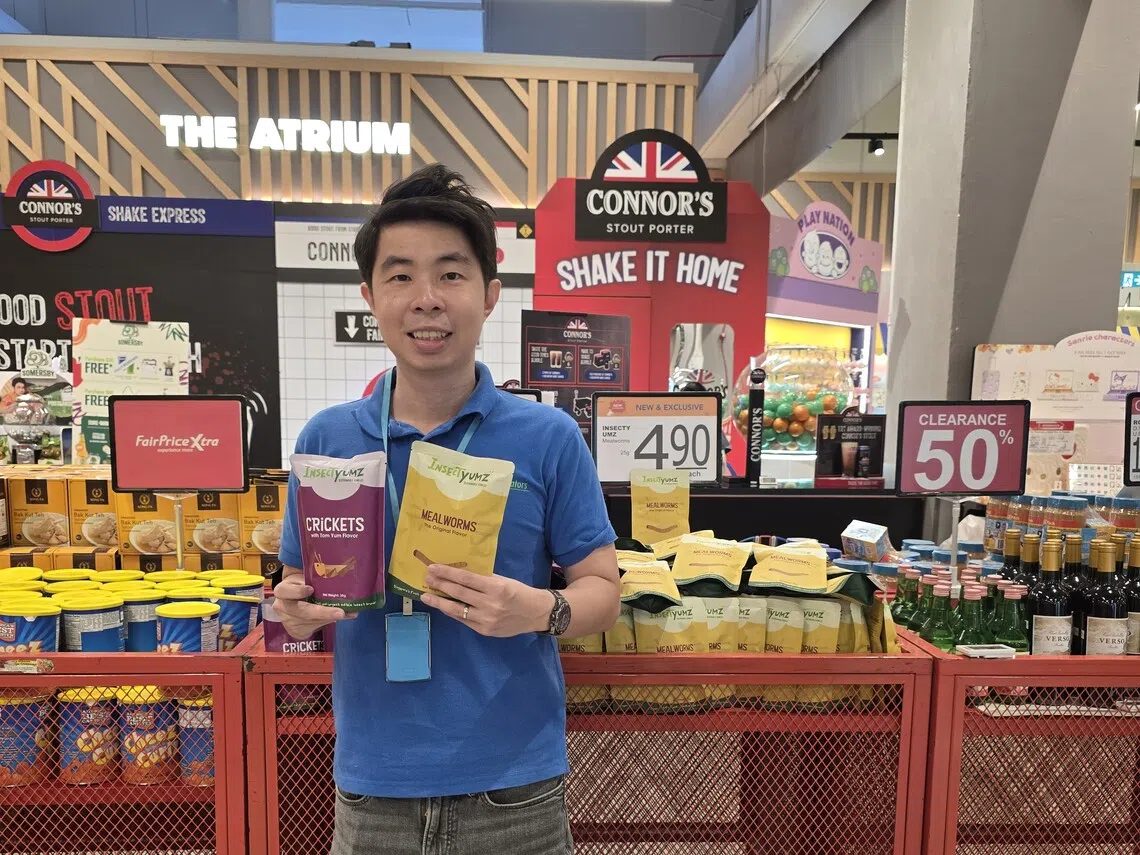
Yip developed an interest in the use of insects as food after trying them in the 1990s as a teenager; this led him to start Insect Food in 2023. He launched its first brand, Insectyumz, in July 2024, on the very day that SFA approved insects for human consumption.
Insect Food’s aim is to normalise insect consumption in Singapore by bringing its products to what Yip called the “big three” supermarket chains: Sheng Siong, FairPrice and Cold Storage.
The company initially planned to introduce a range of insect food, including high-protein cricket powder, cricket chips and whole dried insects of various flavours.
It started by selling these products on its website and e-commerce platforms.
But the powder did not sell well. Consumers “need to do something” with the powder, such as mixing it with yogurt or using it as baking flour, noted Yip. In contrast, snacks can be eaten immediately.
The cricket chips were not bestsellers either, as people want to see the entire insect out of curiosity, he noted. “When we showcase (products at) our booth… Singaporeans want to see the whole thing.”
He decided to launch snacks with the “two most basic” insects – mealworms and crickets – in supermarkets, while continuing to offer the full range of products online.
In December 2024, Insect Food rolled out snack packs of whole dried mealworms in Sheng Siong. The first batch of 3,500 packets sold out within three weeks.
In 2025, the company progressively launched the mealworms as well as tom yum-flavoured cricket snacks in Sheng Siong, FairPrice and Cold Storage. Sold at S$4.90 per packet, the two products are now available at more than 200 supermarket outlets.
Yip said sales have been steady, at 400 to 500 packets per day, with buyers mainly being those aged below 60 who “can accept insects as a source of food”.
The crickets and mealworms in these products are sourced from Thai and South Korean insect farms that comply with SFA requirements.
Insect Food’s revenue has reached about S$70,000 since March, and is projected to hit S$100,000 by the end of this year.
Yip acknowledged that some consumers want to try insect-based snacks only once and may not buy again, but noted that Singapore’s population is about six million – allowing for plenty of first-timer buyers.
Visitors may also be keen to try his insect snacks, as Singapore’s reputation means that they know “for sure it is safe”, he added.
Tough crawl into Singapore

One of Insect Food’s suppliers was Vietnam-based Rec Rec, a manufacturer of cricket-based products, which, like Insect Food’s cricket chips, have not quite taken off here.
Rec Rec is supplied by sister company CricketOne, which provides cricket-based ingredients to food manufacturers worldwide.
After SFA’s approval last July, the companies hoped to introduce their cricket protein concentrate, cricket protein powder and cricket crackers to Singapore.
“Whenever we have a new product, we are always trying to offer it to the Singapore market,” said co-founder Bicky Nguyen, adding that this is because Vietnam and Singapore have similarities in culture and cuisine.
Rec Rec shipped 13,500 units of its crackers to Insect Food, which sold them from September 2024 to May this year, via its website and Shopee.
But the crackers “were moving very slowly”, said Yip, who is no longer importing them.
Nguyen said Rec Rec has yet to find another local partner with sufficient capacity to perform tasks such as restocking its products and holding market awareness campaigns.
Still, she intends to keep trying, and is introducing more cricket-based consumer products here.
In August, Rec Rec shipped a small quantity of its latest product – cricket protein instant ramen – to Singapore, for events and catering services.
CricketOne’s cricket protein concentrate and cricket protein powder, however, remain unavailable here due to a lack of demand from local food ingredient distributors.
Singapore has a limited number of food manufacturers, and finding the right ingredient distributor is necessary for working with the manufacturers, said Nguyen.
“I would say that bringing the final product to consumers is easier,” she added.
From crab toppings to curry puffs

Insects have been a harder sell in restaurants. Last July, Chinese restaurant chain House of Seafood aimed to roll out 30 dishes featuring insects at its Punggol outlet, with most of these using insects as toppings on items such as crab and sushi.
Now, these insect dishes are on a separate menu that customers must request specifically, and must be booked in advance.
When insect toppings are added to regular dishes, there is no additional charge, said chief executive officer Francis Ng.
This is because there is “so little” demand that any extra cost would discourage customers from ordering, he explained. “I help the government to promote the nutrition effects of insect protein.”
The number of calls asking for insect dishes has fallen from eight to 10 per week last year, to just one or two per month now.
Consumers have forgotten about insect food, he said. “The media attention is not there and government agencies are not promoting this.”
Realising that insect dishes were not promising, Ng shifted his focus to the “more scalable” business of offering curry puffs with insects as ingredients.
Dishes such as crab are “big-ticket items” that are not eaten every day, but this is not true for curry puffs, he said.
House of Seafood began developing an insect-featuring curry puff together with Hong Lim Curry Puff in July 2024. The restaurant grinds crickets into powder and supplies it to the curry-puff chain, which then incorporates it into the curry-puff dough.
Initially, the curry puff was available only at House of Seafood. Six months ago, after seeing falling demand for insect dishes, Ng decided to also offer the insect curry puff at Hong Lim Curry Puff’s stores.
However, Hong Lim Curry Puff’s chief growth and operating officer Victoria Loh said the insect curry puff is not on the official menu and is available only if pre-ordered a few days in advance.
Hong Lim Curry Puff accepts only pre-orders of at least 50 pieces, because it is “not worth the cost” to make a smaller batch.
Priced at S$3 per piece, some 200 to 300 insect curry puffs are sold every quarter, mainly for special occasions such as birthday parties, said Loh.
“Whenever there are news articles talking about it, more demand will come in,” she said. “Then after that, it goes quiet.”