

MaNaDr’s low prices could have encouraged too-brief teleconsultations: doctors
Smaller medical fees mean reduced takings for doctors, which may have caused them to prioritise volume over clinical standards

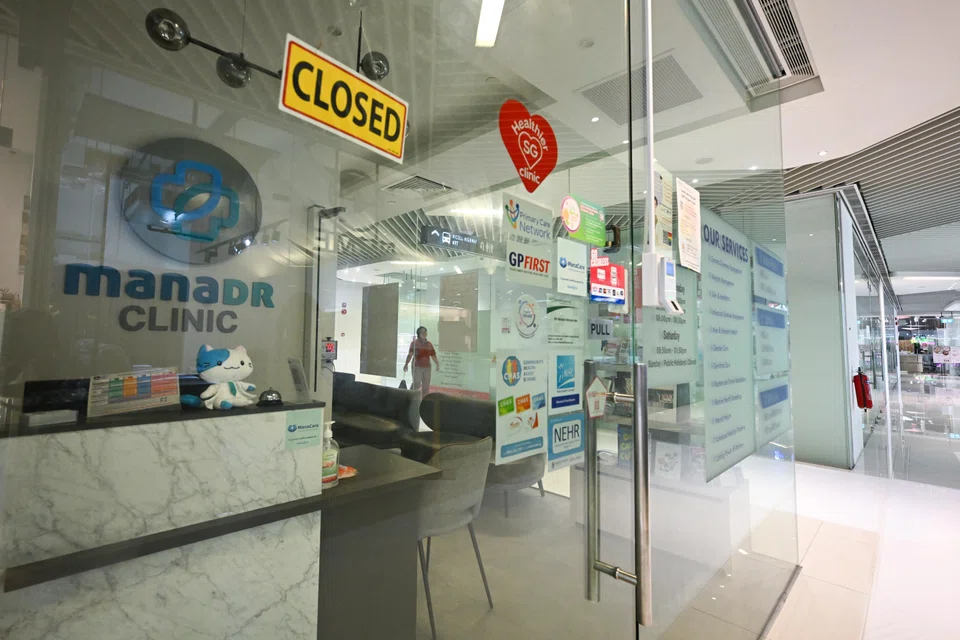
THE extremely brief consultations provided by MaNaDr Clinic – which is set to get its licence revoked – might have been incentivised by the telehealth platform’s low-price business model, said doctors.
Low prices would have meant low fees for doctors on the platform, possibly pushing them to prioritise volume over quality, physicians told The Business Times.
On Oct 24, the Ministry of Health (MOH) said that it would revoke MaNaDr’s licence, citing the clinic’s inability to deliver outpatient services in a clinically and ethically appropriate manner.
This was after investigations revealed that MaNaDr conducted teleconsultations as brief as one minute, often followed by the issuance of medical certificates (MCs).
MaNaDr’s consultations were priced from S$8.20, lower than the typical S$20 to S$25 charged at physical clinics.
Gastroenterologist Desmond Wai said that such a low-price model effectively pressures doctors to see many patients within a short timeframe.
“Most proper consultations would take at least 10 minutes,” he pointed out. But due to the difference in pricing, a doctor giving 10-minute teleconsultations would earn significantly less than what they could make in a clinic.
“(Patients) cannot expect to pay (only) S$8.20 if (they) want the consultation to be up to standard; the price of teleconsults will likely have to go up,” said Dr Wai.
MOH said that 41 doctors who conducted teleconsultations on the platform – some of whom were locums – would be referred to the Singapore Medical Council for possible inquiries into professional misconduct.
Locum doctors work on short-term contracts across different healthcare facilities, rather than holding permanent positions.
MaNaDr’s low-cost model is financially unsustainable for such doctors, said general practitioner and locum doctor Au Kah Kay.
Locums in physical clinics typically earn about S$100 per hour, with rates increasing during busy periods.
In contrast, those working for telemedicine providers are generally compensated on a per-case basis, with the platform taking a commission from each consultation – similar to ride-hailing services.
“I’m not sure how much (the locums) take from the S$8.20 (at MaNaDr), but it’s peanuts,” said Dr Au.
“It’s peanuts considering the professional risk the locum is taking – just a few dollars per case, which hardly makes it worthwhile.”
Systemic concerns
TSMP Law’s joint managing partner Stefanie Yuen Thio noted that the remote nature of telemedicine makes it more vulnerable to misuse.
“I’ve heard empirical tales that some employees specifically choose certain telemedicine chains to consult, as getting an MC requires only moments on a call,” she said.
“When the vocational responsibility gets sacrificed for the profit margin, patients and society as a whole suffer.”
She added: “I’m glad MOH is looking into this and actively doing spot checks to stop unethical practices.”
Telemedicine players said that they already had safeguards in place before MaNaDr’s lapses were flagged in August.
Doctor Anywhere – one of Singapore’s largest telehealth platforms with over one million users – said it has not needed to make changes to its standard operating procedures.
Its existing processes include providing doctors with access to patients’ medical histories, which enables them to spot patterns of frequent consultations and flag concerns to a governance team for review.
The platform also maintains an “accountability framework” with regular performance evaluations of doctors based on patient feedback; quality checks; and audits to ensure consistent care.
Similarly, Sean Low, chief executive of telehealth operator Ordinary Folk, did not have to alter his company’s practices after the incident.
The company’s model includes a mandatory patient screening of up to 20 questions before each consultation; pharmacist-led follow-ups for complex cases; and continuity of care by assigning patients to the same doctor for follow-ups.
TRENDING NOW
Once staunchly pro-China, Malaysian Chinese businesses are now distancing themselves from Beijing

Inside Singapore’s government team that kills its own products

Johor’s investment boom is real, but actual contribution from JS-SEZ unclear

Inside F1: How ‘reactive’ DHL acted quickly to fit Malaysia race just before Singapore’s

