Mixed views on how much Singapore-China visa exemption will boost tourism
Elysia Tan &
Benicia Tan
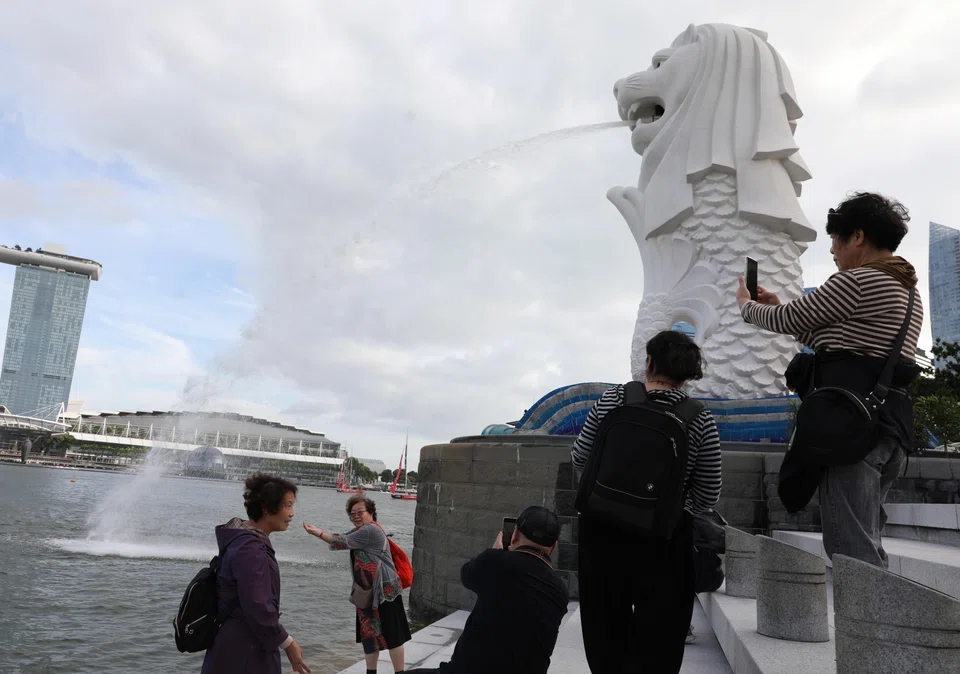
CHINESE tourists are showing more interest in visiting Singapore, ahead of a mutual visa exemption that starts on Feb 9, said travel companies.
But the extent of the boost to arrivals remains to be seen, as Singapore’s high-cost reputation is still a barrier.
In the hour after the Jan 25 announcement, searches for Singapore tourism products on Trip.com’s China platform increased by more than 14 times from the previous day, said Trip.com Singapore’s general manager Edmund Ong.
Even before the announcement, as at Jan 24, bookings by Chinese travellers to Singapore for the Chinese New Year (CNY) period were up more than 14 times year on year.
The festival is between Feb 10 and 24 this year.
Interest has been rising since both countries announced that the arrangement was in the works – though without a start date – early last December, said industry players.
To date in January 2024, air ticket bookings on corporate travel management company FCM Travel’s platform were already about 40 per cent higher than in the year-ago period, noted Calvin Xie, general manager of FCM Travel Greater China.
January’s numbers last year were supported by the early CNY holiday, he added.
EU Holidays has similarly seen an increase in enquiries from its Chinese partners since December, with travellers seeking joint tour packages to Singapore and Malaysia – where Chinese tourists are also visa-exempt.
EU Holidays plans to launch these tours in March and expects “a vast increase” in customers from China of at least 50 per cent, compared with the corresponding period before the exemption, said Richard Lim, product manager at the tour agency’s inbound travel department.
He expects a pick-up from March, and a surge during the summer holidays in June.
Said Trip.com’s Ong: “Traditionally, the peak travel periods for Chinese travellers include the long holidays such as the Labour Day Golden Week in May, Chinese New Year, and the National Day Golden Week in October.”
By reducing “the friction in travel”, the visa exemption also facilitates trips made at short notice, such as to attend concerts, visit friends, or attend meetings and conventions, he added.
Jesper Palmqvist, area director for Asia-Pacific at hotel industry research firm STR, said that the visa exemption could support inbound tourism, as it cuts out a step and lowers costs.
After a long period of domestic travel, China tourists may now be more keen to go abroad, he noted, adding that the effects may take a while to show up as the Chinese “do book pretty last-minute”.
Still, the impact of visa-free travel could prove limited. While tourism growth may pick up slightly, “it won’t bring everything from zero to 100”, said Palmqvist.
Singapore’s reputation as a high-cost destination and China’s weakening economy might deter Chinese tourists, said Savills’ executive director of research and consultancy Alan Cheong.
He explained: “Quite a few Chinese nationals are worried about their jobs, or they may not want to spend too much time vacationing.”
Stanley Foo, chief executive officer of Oriental Travel and Tours, similarly expects the visa arrangement to have “little to insignificant impact” as airfare and hotel prices remain prohibitive.
China travellers who do start making Singapore travel plans are likely to do so only after the CNY season, he pointed out.
Tourism players also differed on whom the agreement might affect.
EU’s Lim and STR’s Palmqvist expect a boost for leisure travel, especially by families.
FCM’s Xie thinks business trips to Singapore could rise, noting that companies in China have not cut back on travel.
But Savills’ Cheong said: “I think if you need to do business, (the need to get a) visa has never been an issue.”
He sees the exemption as more relevant to those who have relatives and friends in Singapore, particularly given the long 30-day duration.
Even if Chinese tourists return, however, their spending could be muted, noted Palmqvist. While luxury travel will remain steady, most travellers will look to spend less, as spending power decreases and hotel rates are still “increasing crazily”.
China also has visa-free arrangements with Singapore’s neighbours such as Thailand and Malaysia. Rather than seeing this as competition, it could boost travel to Singapore as travellers visit multiple countries in one trip, industry players said.
Oriental Travel and Tours’ Foo said that some may stop over in Singapore for two to three days before heading to Thailand, for instance.
EU’s Lim noted that such combined trips have been attractive to travellers from China.