Policy changes, construction demand push commercial vehicle COE premiums to new record
Big infrastructure projects and changing policy keep Category C high, which could disadvantage smaller players

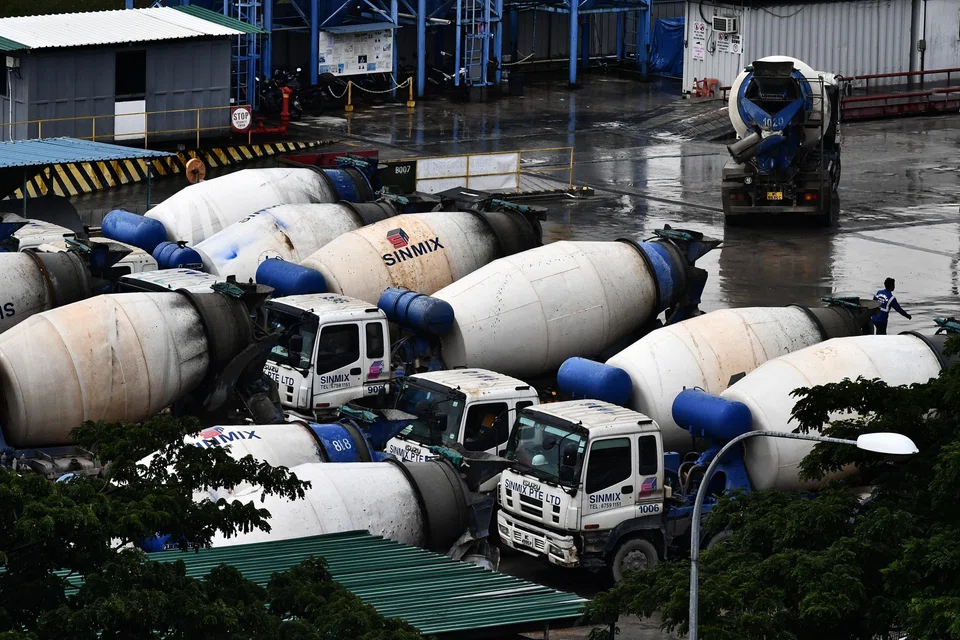
[SINGAPORE] Strong demand for commercial vehicles (CVs) spurred by the logistics and construction sectors, as well as changing bidding dynamics on policy shifts, are among the factors that have driven Certificate of Entitlement (COE) premiums to a new record.
Timothy Wong, principal at consultancy Roland Berger, said the rising demand for CVs, especially heavier ones, has been spurred by infrastructure development needs and commercial demands.
The COE premium for Category C – used for CVs – reached a new record of S$92,223 on Wednesday (May 20), eclipsing the previous high of S$91,101 set in March 2023.
Jolts to the system
CVs include light, heavy and very heavy goods vehicles, as well as buses.
The introduction of the Heavy Vehicle Zero Emissions Scheme (HVZES) is fuelling demand for electric heavy vehicles (EHVs).
BT reported in April that registrations of such vehicles increased 10 times year on year in the first two months of 2026.
The scheme, which began this year, gives S$40,000 per EHV and up to S$30,000 for an accompanying charger.
Sky-high diesel prices have also fuelled this shift. Diesel has risen to a range of S$4.32 to S$4.48 per litre, from S$2.57 to S$2.66 in February before the Iran conflict began.
Increasing demand aside, other policy factors have also increased the intensity of COE bidding.
Ryan Woon, CEO of EcoSwift, the agent for Sany CVs, noted that the Category C premium has been on a general uptrend since early 2025. He attributed this to the end of the Early Turnover Scheme (ETS).
Introduced in 2013, the scheme encouraged owners of existing CVs to replace older models with newer, less pollutive ones. A COE rebate was offered, while carrying over the COE lifespan of the existing vehicle to the new one and adding a bonus lifespan.
ETS for light CVs ended in March 2025, and for all other CVs in December 2025.
More intense COE bidding
“In 2025, when it was announced that ETS was to be discontinued and will be replaced by the HVZES, many rushed to purchase diesel vehicles using the ETS method as they were still not ready for electric trucks,” Woon said.
Buyers were concerned that HVZES would cause COE premiums to skyrocket and sought to register more CVs before 2026.
This meant that a smaller COE quota would follow, as more vehicles remained in the population rather than exiting the system and allowing space for new vehicles.
The COE quota, announced every three months, is made up mostly of de-registrations from the preceding period.
Woon said that with ETS no longer an avenue for replacing vehicles, COE bidding has become more competitive. It is buyers with the HVZES incentive who “have additional muscle to flex in bidding exercises to secure their COEs”, he added.
At the same time, a significant proportion of CVs are approaching the end of their 10-year COE lifespan, and will need replacement or renewal.
Land Transport Authority data indicated that there are 30,403 CVs are in the age groups of more than eight but less than nine years old, and more than nine but less than 10 years old.
Vehicles in these age groups make up the two largest proportions of the total 143,042 CV population, or 21.5 per cent in total.
“In 2015 to 2017, most CVs were replaced using ETS,” Woon said. “In 2025, we have reached the next cycle of fleet replacements; and it will continue until 2027 – only this time we don’t have the ETS option.”
Boom town on construction
Observers also pointed to Singapore’s growing economy and large-scale infrastructure projects feeding demand for CVs.
“Logistics, last mile delivery, construction and manufacturing sectors have grown robustly, requiring fleet expansion and replacement,” said Roland Berger’s Wong. “Infrastructure development and e-commerce growth have also contributed to increased demand.”
In 2025, Singapore’s preliminary actual construction demand reached S$50.5 billion, up from S$44.2 billion in 2024. The Building and Construction Authority said that it is expected to remain steady between S$47 billion and S$53 billion in 2026.
Construction in particular could be driving demand for heavier, more expensive CVs.
Ron Lim, head of sales and marketing at Nissan authorised agent Tan Chong Motor, said that there has been “strong demand for heavy and very heavy goods vehicles on the back of huge infrastructure and construction projects”.
Heavy CVs made up 67 per cent of CV registration for the period January to April this year, he noted.
Wong said that major projects – including Changi Airport’s Terminal 5, housing developments and MRT expansion – require heavy vehicles, which have no substitutes. These include prime movers, concrete mixers and larger lorries used to transport workers and materials.
“This creates ‘must-have’ demand, leading operators to bid aggressively regardless of COE price levels,” he added.
Smaller players squeezed out?
Indeed, entities that need to fulfil major commercial contracts will have the means and the motivation to secure COEs at higher premiums – and this could mean smaller players are disadvantaged.
“The revenue-generating capacity of heavier vehicles allows them to absorb higher premiums,” said Wong. “As a result, COE costs represent a relatively smaller proportion of total vehicle economics for heavier CVs compared to lighter ones.”
For example, discounting the COE cost, a prime mover costs around S$250,000 compared to around S$35,000 for a small van.
Observers expressed concern that with new dynamics pushing COE premiums higher and taking CV costs along with them, smaller outfits could be at a disadvantage when securing transport.
Tan Chong’s Lim noted that the cost of light goods vehicles – which include vans and small lorries – have increased by as much as 20 per cent on COE premium alone.
It is “likely a matter of time” before such costs are passed on to customers, he said. “For some smaller SMEs or sole proprietors, the higher COE will just add to the slew of cost increases they are grappling with.”
Wong said that commercial operators are now facing a “double whammy” of high COE premiums and surging diesel prices.
“These combined spikes have increased – or will increase – the cost of vehicle ownership and daily operations, squeezing business margins and forcing price hikes for transport and delivery,” he added.
“Ultimately, these costs are passed down, triggering a new wave of inflation for consumers.”