


Taking music concerts into the metaverse
Bernadette Toh
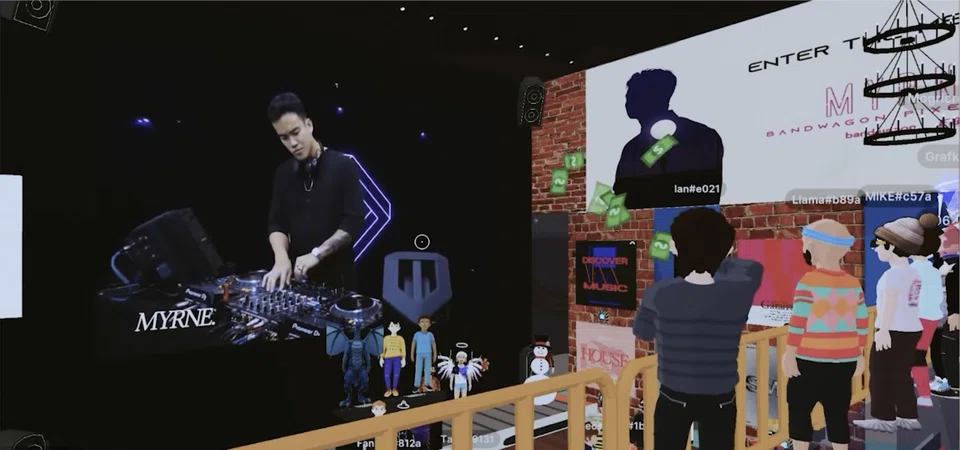
CONCERTS are no longer just offline affairs, with local music media company Bandwagon bringing them to the metaverse too.
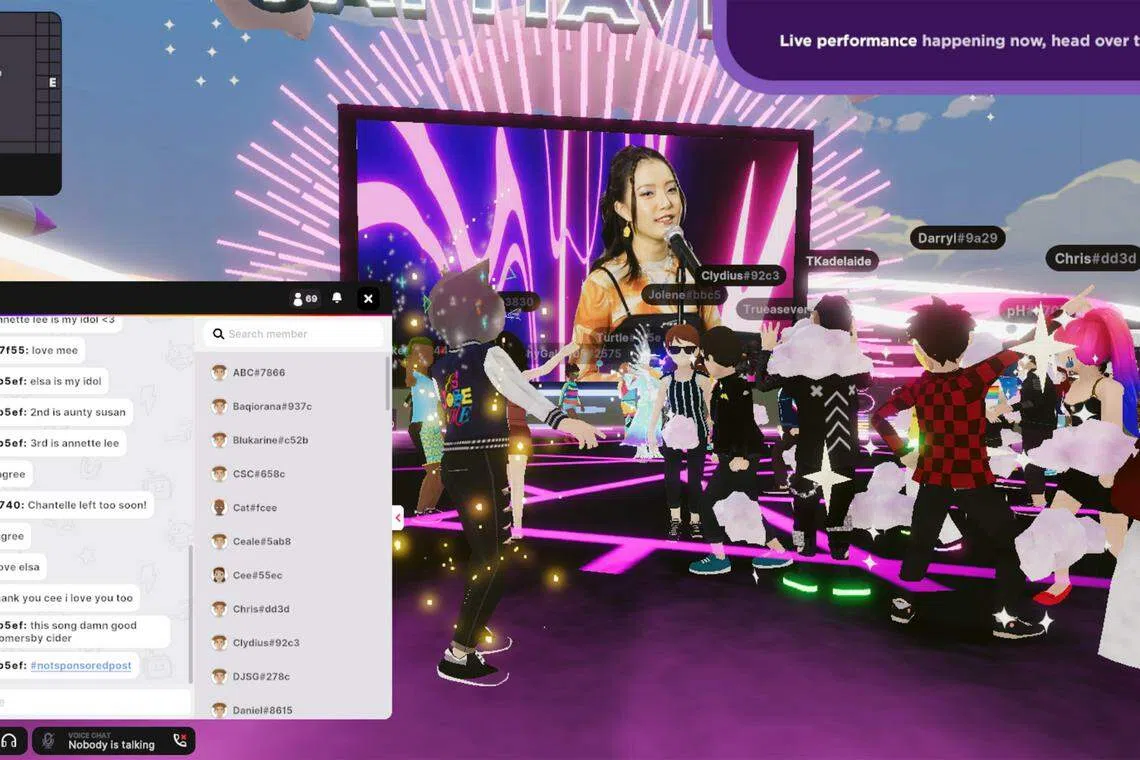
Artistes’ performances are livestreamed on a digital stage, while attendees create their own avatars and watch the concert on their computers, with no need for virtual reality headsets.
The idea for these digital concerts arose when Covid-19 hit. The company’s three businesses were Bandwagon Media, which promotes artistes in Asia; Bandwagon Live, which organises music events in the region; and Bandwagon Labs, which explores how tech can be applied to entertainment.
With the pandemic making physical events impossible, Bandwagon needed an alternative business: digital events. In 2021, a unit was created within Bandwagon Labs to design and build the metaverse elements required for virtual concerts.
Into the metaverse
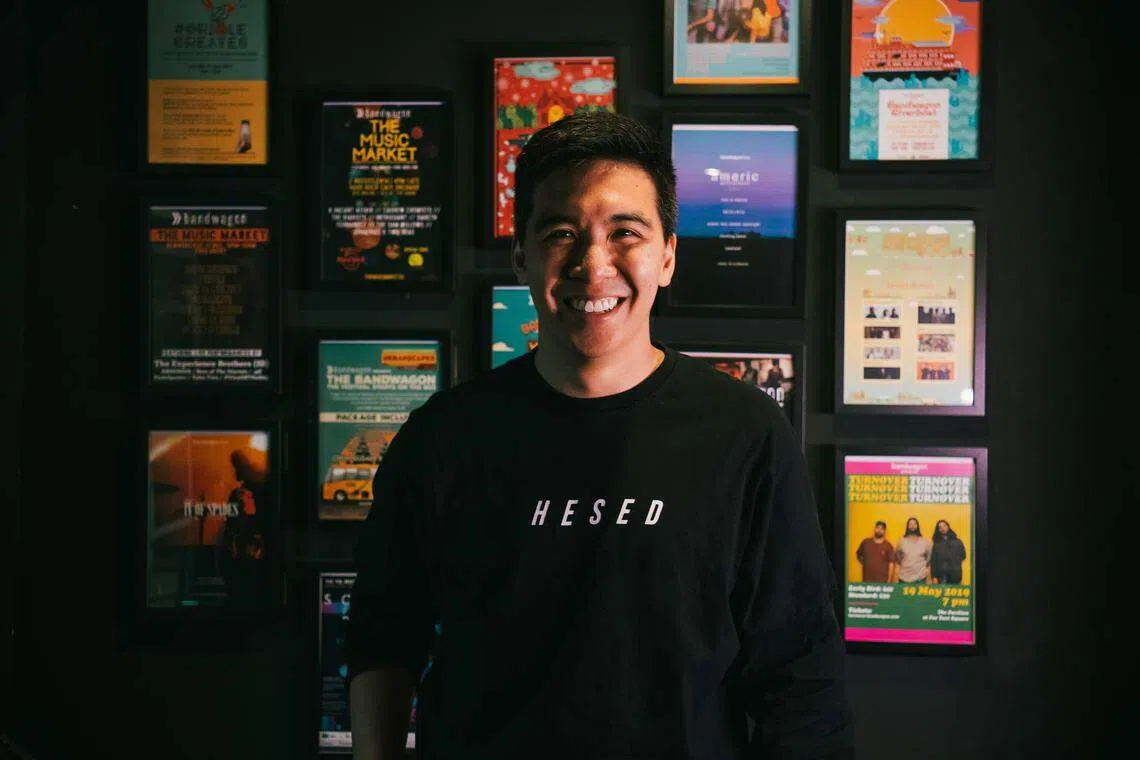
Bandwagon founder Clarence Chan’s own interest in cryptocurrencies and blockchain-reliant Web 3.0 was what sparked the idea of hosting live entertainment in the metaverse.
The entire process, from brainstorming to launch, took less than a year. In January 2022, Bandwagon organised its first free metaverse event, Bandwagon Pixel Party, featuring Singaporean DJ MYRNE. It attracted over 250 attendees, above the prevailing 100-participant limit for physical events then.
Since then, Bandwagon has built up its experience and events portfolio by holding free monthly metaverse parties, with an average of 250 to 500 attendees per show.
The idea is to attract brands to commission Bandwagon to produce such metaverse events. Said Chan: “Soon, brands started inquiring... if we could do something similar for them.”
At property developer CapitaLand’s CapitaVerse concert this April, 2,000 attendees were entertained by YouTube personality Annette Lee and several DJs from nightlife group Zouk. This was CapitaLand’s second metaverse event produced by Bandwagon.
Ups and downs
Getting into the metaverse was not easy. Hiring tech talent was difficult due to their scarcity, and some team members had to pick up new skill sets such as coding.
Meanwhile, the business remains limited. The metaverse is not yet at a point of mass adoption, and is still “exploratory” for most brands, said Chan.
Noting that bigger brands are the ones reaching out to Bandwagon for metaverse projects, he acknowledged that smaller brands do not have the budget to do so.
Web 3.0 is also seen as risky in Singapore, with crypto crashes and government warnings causing hesitancy in adopting the metaverse, Chan said.
But he remains optimistic, adding: “We are still early in the game. Intrinsically, many brands know (the metaverse) is going to be important in the coming years.”
In all of 2022, Bandwagon held just one brand-commissioned event: CapitaLand’s first CapitaVerse. This year, the second edition of CapitaVerse has been held; three more events are in the works for clients that include an art organisation and a global food brand.
As at end-June, which marks the first nine months of its financial year, Bandwagon Labs accounts for 50 per cent of the company’s revenue, up from 12 per cent in FY2022.
Overall revenue for the first nine months is already 25 per cent higher than full-year revenue for the previous financial year ended Sep 30, 2022.
One-stop shop
With physical concerts back as the pandemic recedes, Bandwagon is continuing to develop its media and live event businesses. Bandwagon Media and Bandwagon Live now account for 30 per cent and 20 per cent of revenue, respectively.
Recent live events include public transport company SMRT’s music festival PLAYfiesta SG and Marina Bay Sands’ Chinese New Year concert.
There is also synergy across the three verticals, said Chan. For a music event in the metaverse, Bandwagon Live books the artistes, while the Media team creates content to promote the show.
The Labs team handles the digital stage’s design, coding, non-fungible tokens (NFTs) as event-related collectibles, streaming and analytics.
“With all these done in-house by us, (our clients) do not need to go to three separate agencies to handle each part,” Chan said. “We are a one-stop shop for them.”
While demand for physical concerts will remain, the metaverse can enhance the artist-fan connection, he said. “This could be in the form of limited digital collectibles, identification of superfans, mini-games and community building in the metaverse.”
Bandwagon is also resuming events and artiste promotion across the region, supported by team members based in Singapore, the Philippines and Indonesia, as well as freelancers in five other markets.
Its media department creates daily content on music news, artiste features and interview translations, with a worldwide readership of about 400,000.
Not just a passing fad
Even though physical events are back, Bandwagon is doubling down on the metaverse. It aims to launch its own “lightweight” metaverse, BW Land, in the second half of the year.
So far, attendees of Bandwagon’s metaverse parties have needed a crypto wallet and could only attend via computers. In contrast, users will be able to access BW Land from their mobile phones and without needing a crypto wallet.
Bandwagon is also on track to get ISO certification for cybersecurity, attesting to good practices in protecting users’ data. The company provides insurance coverage for NFTs and the metaverse, to shield users from financial losses incurred due to data breaches or theft.
In the meantime, Bandwagon plans to promote the metaverse to the masses through its events, while catering to the active Web 3.0 community by building more digital metaverse infrastructure.
Despite dwindling interest in the virtual realm, Chan believes the metaverse is here to stay, adding: “People thought the Internet would be a passing fad too.”
TRENDING NOW

Could stablecoins be the future of money?

Once staunchly pro-China, Malaysian Chinese businesses are now distancing themselves from Beijing
Vietnam’s data-centre investment rush faces reality check on power and site constraints
‘My grandfather’s legacy’: Sherman Kwek lays out three-year plan for CDL to drive returns

