


With tech for fact-checking to cancer care, Singapore startups aim beyond home
As the Republic turns 61, The Business Times profiles three companies tackling global challenges
 Add BT as a preferred source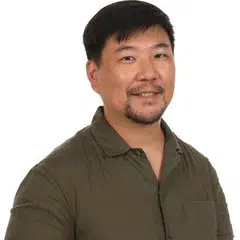

[SINGAPORE] From verifying information and improving cancer research to transforming rehabilitation, Singapore startups are tackling niche global challenges with technologies developed at home.
To mark Singapore’s 61st National Day, The Business Times profiles three companies at JTC Corp’s LaunchPad @ one-north building that are operating in markets far beyond the Republic.
Earlier this year, JTC unveiled a refreshed master plan for LaunchPad, including integrated startup community Kampong AI, as part of efforts to strengthen the precinct as a hub for innovation.
AI Seer’s search for the truth
Before founding AI Seer in 2019, Dennis Yap spent years conducting due diligence on entrepreneurs across roles in both the private and public sectors.
The work repeatedly exposed him to a familiar problem: bold claims that did not always stand up to scrutiny. One such episode led him to found AI Seer, a lean company with just three full-time employees.
Yap said the name reflects his ambition to build a “truth-seeking AI (artificial intelligence)” – technology that can “see more than people”, whether by detecting deception cues or verifying information.
He recalled having to evaluate a Singaporean founder who claimed to have dropped out of Stanford University after receiving a Thiel Fellowship, shared a room with one of Reddit’s co-founders, and sold his first startup to Yahoo co-founder Jerry Yang.
Impressive as those claims were, Yap felt “something was off”.
He dug deeper, including through contacts familiar with the fellowship that was founded by entrepreneur and venture capitalist Peter Thiel, but was unable to substantiate the claims.
SEE ALSO

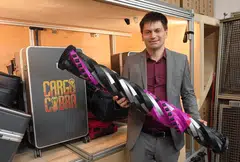


“Some entrepreneurs believe in ‘fake it till you make it’, to the point where they have lost all sense of what’s factually correct,” said Yap. “Other people are simply much more casual with the truth than others.”
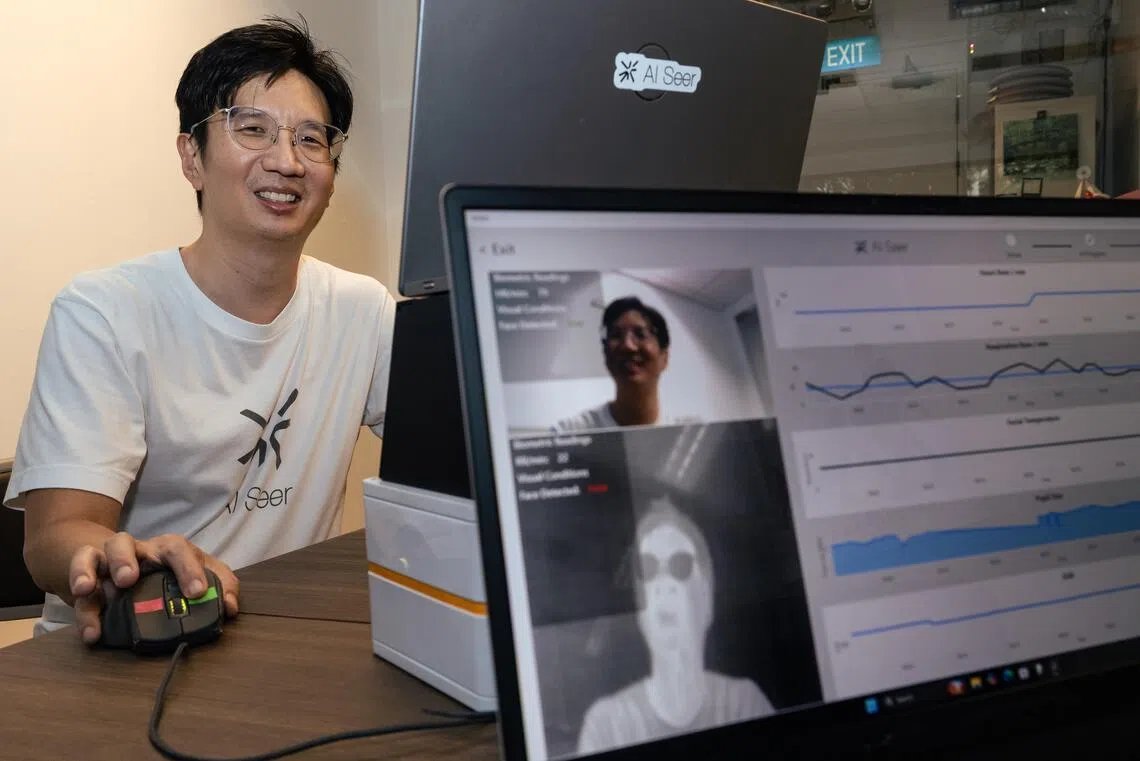
Today, AI Seer has three products. The first, the Multi-Spectral Reality Detector (MSRD), is essentially a contactless polygraph.
Developed with collaborators from the National University of Singapore and the Agency for Science, Technology and Research’s (A*Star) Institute for Infocomm Research, it uses infrared and thermal imaging to analyse facial expressions and body language for deception cues.
Yap said the system – patented in Taiwan, with a US patent pending – allowed the startup to generate its first revenue stream through pilot programmes and minimum viable product sales to home affairs and defence-related customers.
He declined to disclose his customers’ names, citing confidentiality, though he added that MSRD was lab-tested in Singapore and field-trialled by Taiwan’s Central Police University.
The company’s flagship product is Facticity.AI, a multimedia fact-checking platform that is patented in the US and Taiwan.
Yap noted that, unlike conventional generative AI models, Facticity was designed to verify rather than generate information. To do so, it cross-references claims against multiple sources and returns the references behind its conclusions.
During a US presidential debate in 2024, Facticity checked almost 250 claims in near real time, an effort highlighted by Time magazine when it included the platform in its list of best inventions of that year.
AI Seer’s founder added that the company welcomes independent scrutiny and is careful not to overstate its capabilities, arguing that “one overclaim from a fact-checking company would cost (it) everything”.
Its latest offering, ArAIstotle, builds on Facticity by performing fact-checks in real time, allowing users to verify claims as they are made, rather than afterwards.
Yet, Yap acknowledged that verification is fundamentally harder than generation.
“It’s adversarial, and the adversary improves every month. We are in an arms race where the other side gets the same model upgrades we do.”
Still, he believes that the need for trustworthy verification tools will only grow as AI-generated content becomes more pervasive.
“Generative AI has collapsed the cost of producing convincing falsehoods, while the cost of verifying anything has barely moved,” he noted.
“Newsrooms and fact-checkers, however dedicated, cannot scale to match machine-generated content. So verification itself has to (be at) machine-speed.”
For Yap, that effort is one that Singapore is aptly positioned to contribute to.
He credits the Republic’s deep-tech ecosystem, including JTC LaunchPad, with helping AI Seer grow from an idea into a commercial venture.
The experience reinforced his belief that Singapore is well-placed to build technologies centred on trust.
Ultimately, he hopes AI Seer’s technology will one day carry a “built in Singapore” stamp as it helps people around the world separate fact from fiction.
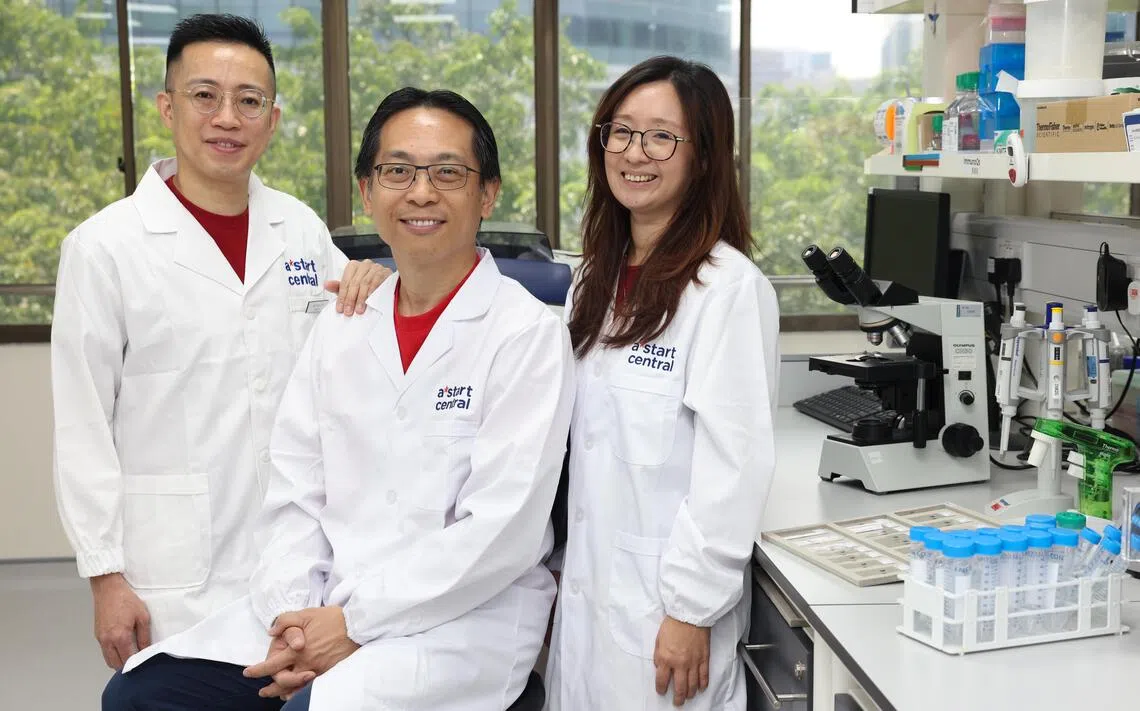
ImmunoQs maps the future of cancer data
As AI reshapes industries, it is also spawning new niches within biotech – and Singapore startup ImmunoQs wants to corner one of them: turning oversized tissue-image data into something clinicians and drug companies can actually use.
Spun off from A*Star in 2022, ImmunoQs has built a platform that helps clinicians and pharmaceutical firms analyse spatial tissue images.
These images are typically produced using ultra-high-resolution scanning technology that can generate files of up to 200 gigabytes, and can cost tens of thousands of dollars to produce. Many hospitals, however, lack the tools to properly view or analyse files of that size once they have them.
The company’s technology allows users to visualise, manage and analyse this data online, while a separate service arm carries out deeper analysis for clients that lack in-house bioinformatics teams.
A third arm, run out of its own lab, helps clients generate higher-quality images in the first place.
ImmunoQs focuses on analysing cancer tissue images, where spatial data is increasingly used to help determine which patients are likely to benefit from immunotherapy.
This is especially significant given that only around 20 per cent of patients typically respond to such treatment. Without this data, clinicians have had to rely on broader, less-precise methods to select patients, said chief executive officer Loo Lit-Hsin.
What this has meant is that many patients have gone through costly treatment, with bills running up as high as S$300,000 in some instances, without seeing any benefit.
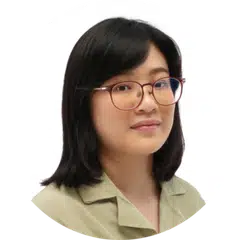
“One way to deal with that is to have a marker that can help the clinician decide whether this patient is eligible, or will (benefit) from immunotherapy,” said Dr Loo.
This is where ImmunoQs’ platform comes in. It analyses spatial images to map the entire tumour microenvironment – what the immune cells and tumour cells are doing – helping clinicians identify such predictive markers, explained chief operations officer Joey Lee.
While the AI industry’s spotlight tends to fall on compute and models, ImmunoQs has deliberately staked its claim on data instead.
“Data is really the foundation for building AI. It’s not just data – it’s usable, structured data,” noted Lee.
The company sees an opportunity to build what it calls a “spatial data hub” for the region.
“We hope… all the Asian data can come in, and then we can be able to leverage all this Asian data to really do something different,” Lee added, noting that many existing cancer therapies were developed for Western populations and are less suited to cancers more prevalent in Asia, such as liver, gastric and nasopharyngeal cancers.
The founding team consists of Dr Loo and Lee, both former Bioinformatics Institute scientists, alongside chief commercial officer Jeffrey Lim and scientific adviser Joe Yeong, who both came from the Institute of Molecular and Cell Biology.
The startup began operating in 2023, after the team spent roughly a year setting up the business.
Because the founders had already been working with collaborators on similar problems at A*Star, ImmunoQs had paying customers from its very first day of operations.
That early traction has translated into rapid growth. Revenue came in at roughly S$230,000 to S$240,000 in its first year, more than doubled to around S$580,000 in 2025, and the company is targeting another doubling this year.
Crucially, ImmunoQs has done this without external funding. “We don’t borrow money,” said Dr Loo, adding that the company is already profitable.
Its largest customers are Singapore General Hospital, National Cancer Centre Singapore and the National University Hospital’s National University Cancer Institute, though it also counts users in South Korea, Hong Kong, Malaysia and the US.
ImmunoQs’ biggest constraint now is not capital but people, with the company competing for AI talent against tech giants offering far higher salaries.
It has leaned on SGInnovate’s Helix Immersion Programme and Summation programme to find interns and trainees.
The firm is based at JTC’s LaunchPad, where subsidised facilities and networking events – including a heavily discounted booth at industry trade shows – have helped it stretch a lean budget.
On the prospect of a public listing or sale to a bigger company, Dr Loo is open to these, but remains cautious. “It depends on what they offer,” he said.
For now, the company remains focused on entrenching its niche in Asia-Pacific spatial data before looking further afield.

DancingMind reimagines rehabilitation
Put household items back in place in a messy living room. Help your pet escape a maze. Plan your route for a busy day out.
These are immersive virtual reality (VR) exercises in healthtech startup DancingMind’s software, used to train people in areas such as memory, attention and decision-making.
As users do the exercises, the system tracks their movements, response times and mistakes. It then recommends suitable programmes, tailoring therapy to each user’s progress.
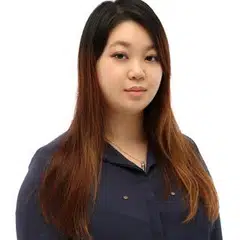
Partly inspired by her mother’s background in medicine, Jennifer Zhang founded the company in 2017 to develop an affordable, accessible and more efficient VR-based solution for manpower-intensive cognitive training and physiotherapy, especially for dementia and stroke patients.
For that, she interviewed therapists and rehabilitation doctors to identify healthcare needs that technology could address.
She then thought: “Why not just build a minimum viable product myself?”
And that is exactly what she did. In 2018, Zhang took the prototype to nursing homes and hospitals, securing DancingMind’s first contract with a local nursing home about six months after development began.
The startup has since secured paid contracts with more than 70 per cent of Singapore’s restructured hospitals, typically across two or three departments at each hospital.
It also works with around 30 to 40 other organisations, including active ageing centres and community care providers.
Therapy begins with an assessment of a user’s health priorities. The system then recommends suitable exercises from a collection of between 80 and 100, with each targeting particular skills.
Zhang chose VR because its immersive environment can keep patients more engaged than conventional screen-based exercises, while encouraging greater cognitive or physical exertion. The portable headsets also allow facilities to conduct group therapy with less reliance on manpower.
But she does not see VR as a replacement for real-world activity.
“Our hope is not that you are stuck doing VR-based things all the time. We hope to bring (users) to a level where they can do a lot of real-life activities,” she said.
DancingMind’s client retention rate is between 70 and 80 per cent. The startup became profitable in its 2025 financial year, and expects an improvement in 2026.
Much of its growth has come through word of mouth, as healthcare staff introduce its technology to new workplaces when they change jobs.
“We started off with one nursing home. People move, and they bring us to the next place,” Zhang noted.
Today, DancingMind’s programmes are expanding to tackle other issues and groups, with early intervention therapy for children with special needs being one focus.
It is also now testing a redesigned face cushion that fits inside the VR headset. By collecting electrical signals from the brain, it allows the system to adjust an exercise’s difficulty in real time without requiring users to wear another device.
The company is expanding beyond Singapore as well.
It entered the UK in 2019 and has since worked with four National Health Service trusts and three care homes.
Zhang chose the UK because its regionally organised public healthcare system and mix of public and private care homes resemble Singapore’s.
DancingMind is now aiming to roll out projects in China and the US over the next few years. Beyond their size, both markets appealed to her because healthcare providers there were more willing to invest in technology and innovation, added Zhang.
The startup hopes to enter China with Singapore partners that have healthcare assets there. In the US, it is seeking regulatory approval while adapting its technology for local users.
Zhang wants DancingMind to reach patients on a far-larger scale, whether it expands organically or through partnerships with pharmaceutical and wearable-technology companies.
“The main point is to benefit many, many more people,” she said. “Right now, we work with thousands of people, but we would love to roll it out to hundreds of thousands or even more.”
Decoding Asia newsletter: your guide to navigating Asia in a new global order. Sign up here to get Decoding Asia newsletter. Delivered to your inbox. Free.
Copyright SPH Media. All rights reserved.
TRENDING NOW

Asia-Pacific aviation: is up really the only way?

Russia’s ‘pivot to Asia’ takes a turn as it prioritises ties with isolated regimes over bigger economies
Why disciplined stewardship matters when managing wealth in uncertain markets

More than 15,000 sign up for national accounting body’s AI programme in two months

