Sustainability concerns will shape Singapore’s priorities in attracting investments: EDB chairman
Carbon-intensive manufacturing investments, for instance, will not be suitable

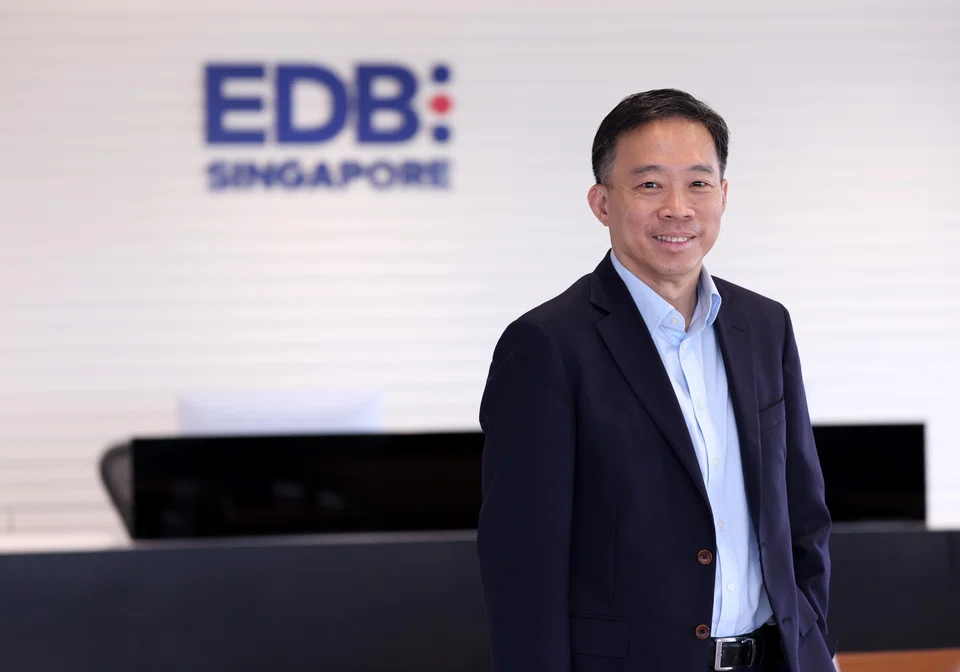
THE Republic’s priorities in attracting investments are being reshaped by the city-state’s sustainability commitments, said Singapore Economic Development Board (EDB) chairman Png Cheong Boon in a recent interview.
“As we work towards our net-zero targets, it means that investments that are less sustainable would not be suitable for Singapore,” he told The Business Times.
Singapore is committed to peaking national carbon emissions by 2030 and achieving net-zero emissions by 2050, he noted. This means companies here “must also embrace greater sustainability and move towards having a lower carbon footprint”.
“These realities and considerations will shape our priorities when attracting investments,” he said.
While EDB hopes to draw investments that are “knowledge and innovation intensive”, such projects must not only be in “key sectors that have high growth opportunities”, but also be aligned with the transition to a low-carbon economy.
Png did not give examples, but BT understands that steel and glass manufacturing, for instance, would be heavily carbon intensive.
More than half of the fixed asset investment (FAI) commitments that Singapore drew last year were in the semiconductor industry, followed by biomedical manufacturing at 16.5 per cent, EDB’s annual year in review showed on Feb 6.
Powering growth
EDB is also eyeing “new growth areas” such as precision medicine, artificial intelligence (AI) and sustainable products and services, Png said.
Some such projects have already been secured. Last year, British-Swedish drugmaker AstraZeneca announced a US$1.5 billion manufacturing facility for antibody drug conjugates, its first such plant in Singapore. Meanwhile, a multi-agency effort secured 26 AI centres of excellence from both digital native and industrial companies.
“We want to attract activities that ensure we remain a critical part of global value chains which play to Singapore’s strengths, would be hard for others to replicate, and would continue to be relevant to the global economy in future,” Png said.
Yet, powering these activities is an issue, as the Republic is “renewable energy-challenged”. Beyond renewables, Singapore must tap a variety of solutions to achieve its net-zero goals, including decarbonising, reducing emissions and increasing energy efficiency, he said.
The good news is that multinational corporations (MNCs) themselves are keen to cut emissions.
“Global companies see it as a plus that Singapore is willing to partner with the industry to try out new solutions, as part of our climate commitments,” he said. “It gives them the confidence and assurance that they can work together with us on their decarbonisation journey.”
Such confidence and assurance is part of Singapore’s overall value proposition, he added. And this value proposition must be strengthened, to stay competitive and attract new investments.
This is as EDB expects “significant headwinds” from geopolitical and macroeconomic uncertainties, alongside economic nationalism and trade frictions.
Developed countries are increasingly doling out goodies to woo strategic investments. Singapore’s new Refundable Investment Credit – expected to mitigate the impact of global minimum tax rules – should strengthen the Republic’s suite of incentives, said Png.
But he stressed that Singapore does not compete on incentives alone. Its competitive advantage still lies in its political stability, global connectivity and business-friendly environment.
“In Singapore, companies are confident of being able to execute their investment plans, while operating with certainty and little disruption,” he said.
What MNCs bring
MNC investments also bring opportunities for local companies, Png noted. Many local enterprises have grown to become regional and global players themselves through partnerships with MNCs.
He cited the example of Sunningdale Tech, which began supplying American medtech firm Illumina in 2009.
“Sunningdale has also expanded its suite of MNC customers in the healthcare, consumer and automotive sectors, to the point that it now taps other Singapore companies to procure materials, packaging and moulds as part of servicing its MNC customers,” Png said.
EDB and Enterprise Singapore intend to do more to foster such collaborations. The challenge lies in identifying common interests and needs that MNCs and local businesses are willing to explore together, he said.
“For MNCs, it is about setting aside time and resources to drive the partnership. For local enterprises, it is usually about the ability to set aside resources and time to upgrade their capabilities to collaborate with the MNC.”
Meanwhile, MNCs continue to create good jobs, he added. Last year’s FAI commitments are expected to create 18,700 jobs over the next five years, with almost two-thirds projected to have a gross monthly wage above S$5,000.
“Various factors” behind job cuts
Yet, high-profile layoffs also grabbed headlines last year, particularly by Dyson, Samsung and Epson.
Asked if such layoffs would affect commitments that MNCs may have made to EDB, Png only replied: “As Singapore’s cost structure and capabilities change over time, we will be less competitive for some activities and more suitable for others.”
He added that retrenchments could be due to various factors and may happen at any time in the firms’ journey, whether soon after their inception or years later.
“Companies are also often affected by macroeconomic factors and demand changes, forcing them to review their footprints and prioritise resources from time to time,” he said.
“Therefore, companies would adjust their activities and consequently their employment, in order to stay competitive in Singapore and globally.”
He added that when layoffs happen, EDB works with the companies, the relevant government agencies and the unions to help affected workers find other suitable roles.