

From teaching secondary school physics to launching satellites into space
Even while creating the new frontier of space tech, this educator at heart is shaping the future generation of space systems engineers.

SAT across from a couple of Ministry of Education (MOE) scholarship interviewers was Mark Lim Jian Wei, with his A Level result slip laid on the table between them.
From the get-go, he knew he wanted to be a physics teacher. His goal was to inspire kids to create innovations that make a meaningful impact, because he felt he could only do so much on his own.
So when the interviewers asked what he wanted to teach, he replied: Physics. They pointed at his results and said: "But out of all your grades, you did the worst in physics."
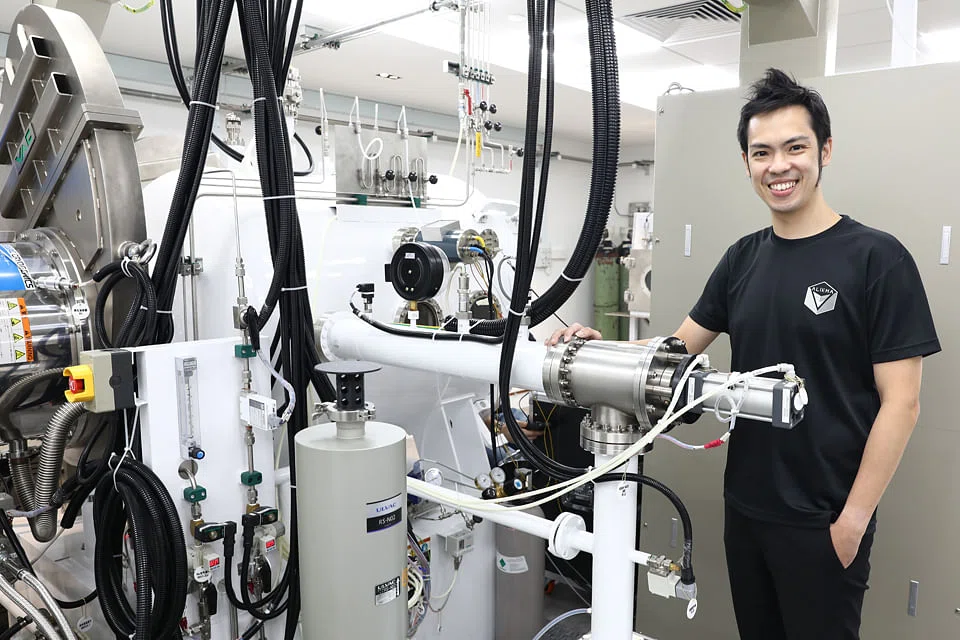
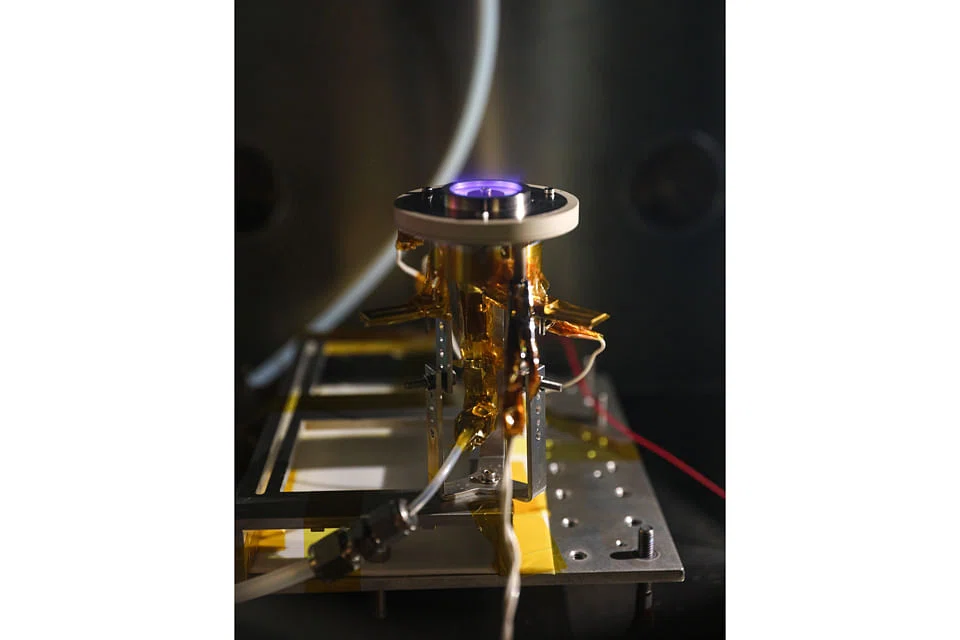
Lim, now 34, candidly recounts the story from his laboratory in Changi Business Park, surrounded by equipment for a satellite propulsion system that was successfully launched into space last January.
Lim is the co-founder and chief executive officer of Aliena, a space tech startup spun off from the Nanyang Technological University (NTU) in 2018, shortly after he completed his PhD in plasma physics.
In 2019, Aliena raised US$1.1 million in seed funding led by Cap Vista, the investment arm of the Defence Science and Technology Agency.
Today, the company is raising a US$10 million Series A round by the second quarter of the year, says Lim. The funds will go into creating very low earth orbit (VLEO) satellites, which soar about 500 km lower than the typical satellite.
The VLEO satellite will capture very high resolution images of the earth to provide data analysis for a wide range of terrestrial industries including maritime, aviation, oil and gas, and defence.
Aliena's satellite will be the first of its kind in Singapore when it launches into space in 2024. Only 2 have been launched in the world, each by the Japanese and European space agencies.
Commercial demand
While doing his PhD research at the Space Propulsion Centre in NTU, Lim met a fellow PhD candidate George-Cristian Potrivitu, who would be Aliena's co-founder and chief technology officer.
The duo worked on a system hardware for a nano-satellite propulsion system when they realised there would be commercial demand from satellite companies.
Today, Aliena continues to make engines that fuel and manoeuvre small satellites in orbit, and is working to develop its own line of satellites to mine and analyse earth's data.
Its propulsion system sells for about US$150,000 to US$285,000 - a fraction of the US$2.2 million price tag that other market players charge, says Lim.
Since the company launched its first engine on Jan 14, it has been fielding offers from satellite companies in the US, Europe and Singapore.
Lim was awarded the MOE scholarship for his undergraduate studies at the National Institute of Education at NTU. However, during his course, he developed a taste for research that led him to pursue a part-time master's degree while teaching full-time.
After graduation in 2013, he was a physics teacher in Dunman High School for 2 years. A typical day started at 6 am. He would teach classes till 6 pm, run to the lab to conduct experiments till midnight, grade his students' work and plan lessons till 2 am, sleep at 3 am, and the cycle would repeat.
"It was very tiring," he admits. "I planned every single second to a tee and there was no time to zone out. I was always learning something, and during long commutes I would put on a podcast."
He practices these habits till today as his days have only gotten busier. On top of running a company, Lim lends his time to NTU as a research scientist leading the deployment of renewable energy generation systems.
He is also an executive council member at the Institute of Physics Singapore and an advisory committee member at his alma mater, Bukit Batok Secondary School.
As an educator and self-confessed "late bloomer" in his schooling days, he recognises the challenges that both students and public servants face in neighbourhood schools and commits to supporting his alma mater with his connections so that its students will find meaning and purpose in their careers.
"If we believe that every school is a good school, we have to understand the culture and background that the kids grew up in and destroy the stigmas that may cause them to shortchange themselves."
His experience as an educator and researcher also equipped him with the ability to explain concepts to crowds of differing ability groups, which came in handy when communicating with Aliena's stakeholders, customers and potential investors.
Educator at heart
To focus on his company, Lim left teaching in 2019 after 10 years in the civil service.
"Naturally, I still feel very much like an educator at heart. Leaving the teaching service was one of the hardest things that I had to do because there was so much purpose in what I was doing," he shares.
"However, I still do feel that I'm contributing towards talent development in a different capacity today with the numerous interns that we take in from various institutes of higher learning - giving them the opportunities to do what they can't do within their schools."
To date, Lim and his team have trained 20 interns who joined Aliena without prior background in space systems engineering or plasma physics.
He fondly recalls an intern from NUS High School who proposed to build a piece of equipment for S$20,000 that would otherwise cost US$500,000 if Aliena bought it off the shelf.
"I told him: 'We don't have a budget set aside for this development but you know what, you can have my personal credit card to work with and deliver this to me in 60 days'."
With guidance from Aliena's team he accomplished it - coming in under budget at S$12,000 - and the equipment now fills the satellite orbiting in space.
Says Lim: "Many of our engineers have gone on to pursue higher degrees in space systems engineering after being inspired at Aliena.
"Nothing brings me greater joy in knowing that we've inspired another generation of engineers to discover their passions and to pursue their dreams."


