

One in two food delivery riders want CPF contributions; some fear it may backfire

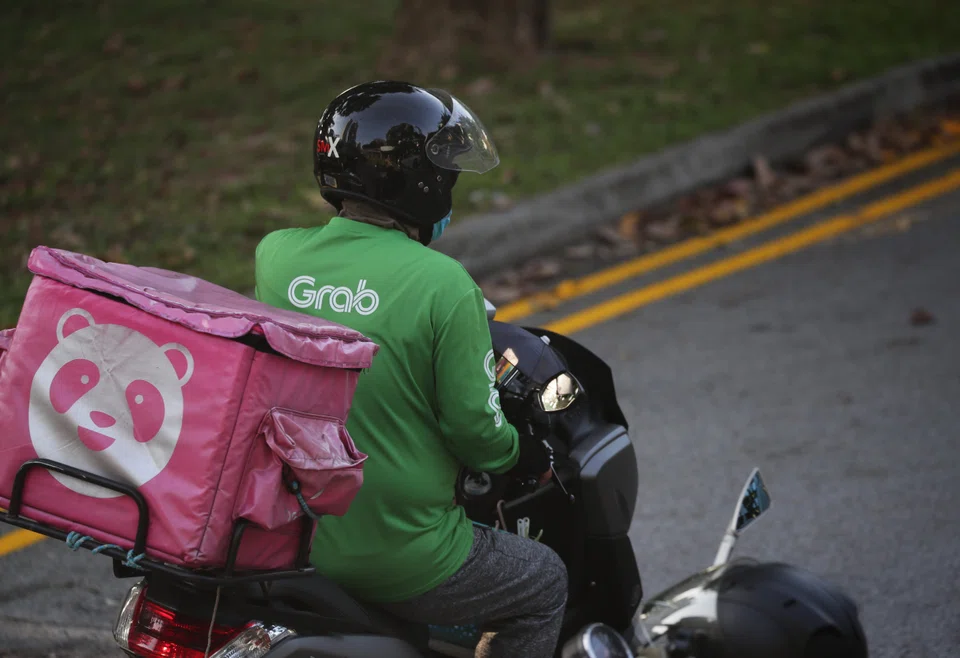
AMID heightened debate over gig worker protections and their impact on tech business models, a new study from the Institute of Policy Studies (IPS) in Singapore has found about half of food delivery riders wanted Central Provident Fund (CPF) contributions.
Some who did not were worried the platforms, which include Grab, Deliveroo and foodpanda, would find ways to obtain those funds from the riders’ earnings to make their share of employer-contributions to CPF.
This finding is at odds with a survey released in March by the three major platforms, which said that 61 per cent of their riders did not want CPF contributions deducted from earnings.
“It could indicate more awareness among delivery workers about the usefulness of CPF not just for their future retirement, but also for housing and healthcare,” said Dr Mathew Mathews, principal research fellow and head of Social Lab at IPS.
He highlighted that the IPS survey question was phrased to ask if riders wanted CPF contribution where they and the platform company will both make a contribution.
“This makes it probably clearer to respondents that the CPF contribution is not just a deduction of their income for savings, but also represents a top-up from the platform,” said Dr Mathews in response to The Business Times.
“The fact is that the major hesitation among those who did not want CPF contributions was that it would impact take-home earnings; a finding which was well reflected in our study as well.”
The research also flagged concerns about the vulnerability of riders to accidents. Those who earn more from food delivery are more likely to have been in at least one accident requiring medical attention, while 38.3 per cent who rode for 51 hours and above a week have met with at least one accident. This finding echoed a straw poll at a recent dialogue between platform workers and members of the advisory committee for these workers.
The research comes amid a significant migration of people towards gig work over the past years. About 60 per cent of food delivery riders joined the gig economy during the Covid-19 pandemic, according to the March survey by the platforms.
But the surge in riders has also led to worries over earnings, as the growth in riders outpace food delivery demand.
“This increase in competitiveness, coupled with the decrease in incentives provided by food delivery platforms, has also led to riders having concerns about earning enough from food delivery work to cover the increasing cost of living,” the authors of the IPS paper wrote.
Only a quarter of riders have enough savings to take care of their personal and their family’s needs for the next three to six months if they stopped working. This comes even as some ride faster than normally allowed to earn more money, increasing the likelihood of accidents.
The majority of riders were not satisfied with or were not aware of the benefits platforms provide to riders. Under a third were satisfied with the medical benefits provided by the platform they mainly used.
About 75 per cent of riders are open to contributing to retirement funds, healthcare saving plans, and unemployment insurance in addition to making CPF contributions, which the authors said demonstrated a widespread openness for social protection among food delivery riders.
However, if riders had to choose between income and protection, 62.9 per cent said they would rather choose to receive a higher income from food delivery in exchange for poorer social protection.
“If something like CPF is going to be expected, then there must also be ways to make sure things can be done transparently; that platform companies will not be able to use what is meant for riders – the actual fair wages – to pay off the employers’ component,” added Dr Mathews.
TRENDING NOW
Could stablecoins be the future of money?
Once staunchly pro-China, Malaysian Chinese businesses are now distancing themselves from Beijing

Vietnam’s data-centre investment rush faces reality check on power and site constraints

‘My grandfather’s legacy’: Sherman Kwek lays out three-year plan for CDL to drive returns

