TikTok deal gives Tokopedia a third chance at success

Claudia Chong
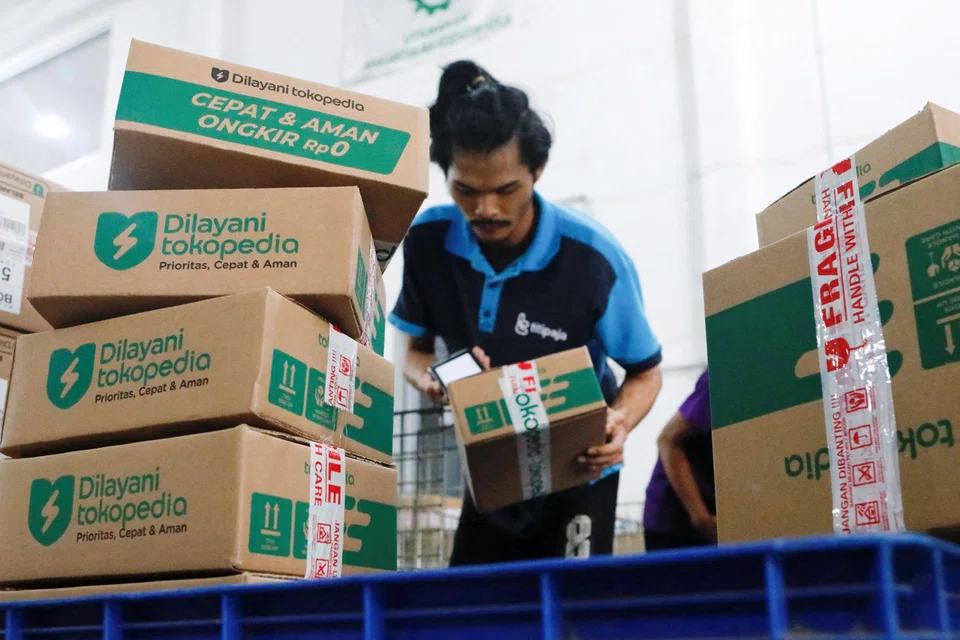
AFTER several quarters of share price decline, Indonesia’s biggest tech company GoTo has found a way to boost its languishing e-commerce unit.
On Dec 11, the group, which is listed on the Indonesia Stock Exchange, announced that it was effectively ceding operational control of Tokopedia to social media giant TikTok.
Tokopedia and TikTok Shop Indonesia will merge under the Tokopedia name. TikTok will take a 75.01 per cent stake in the resulting entity, with GoTo owning the rest.
To kickstart the combination, Tokopedia will pay US$340 million to take over the business contracts and exclusive rights to operate TikTok Shop in Indonesia. The company will also issue new shares to TikTok for US$840 million.
TikTok is committing to investing a further US$1 billion in the new Tokopedia, through a US$1 billion promissory note.
For TikTok Shop, the blockbuster deal is the comeback that the industry has been holding its breath for. But the merits of the partnership for Tokopedia is an aspect that is sorely underappreciated.
Tokopedia has been in an existential crisis for some time now. Founded 14 years ago in Jakarta, the company was once the top online marketplace in Indonesia before it lost its crown to Singapore-headquartered Shopee.
Second lease of life fails
In 2021, Tokopedia joined forces with local champion Gojek in the hopes of creating a giant large enough to take on regional rivals Grab and Sea. The merger was Indonesia’s largest business deal, and allowed the combined entity to go public at a valuation of US$28 billion the following year.
With businesses across e-commerce, on-demand transport, food delivery and financial services, the ambitious move was meant to lift both Gojek and Tokopedia’s prospects and make them more attractive to investors.
Instead, investor confidence in the company waned.
GoTo has now lost about 76 per cent of its market value since its initial public offering, in part due to adverse macroeconomic conditions and a dearth of easy money.
In October, GoTo shares fell as much as 19 per cent in a day after investors were spooked by Tokopedia founder William Tanuwijaya’s sell-off of US$1.7 million worth of shares due to “urgent personal needs”.
With the market turning its back on loss-making tech stocks, the group promised investors it will hit positive adjusted earnings before interest, tax, depreciation and amortisation (Ebitda) by this year. But instead of contributing significant synergistic value, Tokopedia ended up weighing on the group’s profitability.
Despite heavy spending on incentives over the years to attract today’s base of 18 million monthly active users, the e-commerce unit remains loss-making. In the third quarter ended September 2023, Tokopedia booked negative adjusted Ebitda of 222 billion rupiah (S$19.1 million).
Gross revenue from the unit has been falling since Q4 2022, while gross transaction value (GTV) – the value of goods and services exchanged on the platform – has been sliding as well. In Q3, Tokopedia recorded three back-to-back quarters of year-on-year GTV decline.
To be sure, Tokopedia’s profitability has seen some improvement after efforts by the group to slash costs and focus on more important customer segments. Its contribution margin, a measure of the business’ unit economics, rose from 7.7 per cent in Q1 to 18.8 per cent in Q3.
But when set against Sea’s success in turning in a net profit and TikTok Shop’s explosive growth, the Indonesian player’s prospects dim materially.
GoTo’s cash reserves have been depleting as well. As at Q3, its cash and equivalents had fallen 17.9 per cent over nine months to 24.6 trillion rupiah, and it is unlikely that it can easily raise more money at favourable terms in this climate. In comparison, Sea had US$3.2 billion in cash and equivalents in Q3.
By ceding operational control of Tokopedia to TikTok, GoTo is handing the reins over to a high-growth player with a stable of private equity investors ready to fund it.
Jefferies analysts noted that TikTok Shop’s total online transaction value trebled to US$6 billion this year before its ban in Indonesia – a milestone that took 10 years for Tokopedia to reach.
Unconventional arrangement
GoTo CEO Patrick Walujo has said that the TikTok deal was struck to avoid further losses in market share for Tokopedia.
In an investor call on Dec 14, he said TikTok Shop more than doubled its market share to 11 per cent this year. Tokopedia’s share shrank to 23 per cent from 28 per cent in the same time.
According to a Nomura report, Walujo clarified GoTo will receive recurring income through consultation fees. Crucially, any further funding in Tokopedia by TikTok will not result in any dilution of GoTo’s 24.99 per cent stake.
All things considered, it is a rather sweet deal for Indonesia’s ecosystem. The country’s administration has never been subtle about the lengths it will go to to protect domestic interests.
Indonesia’s ban of e-commerce transactions on social media platforms was swift and conveniently crafted to target TikTok Shop, which cannot afford to lose one of its biggest markets.
Industry watchers have also speculated that the government was involved in engineering the deal between TikTok and an ailing local champion in Tokopedia.
They may not be off the mark, considering that many among the ranks of GoTo’s board and management have tight links to the administration.
In one fell swoop, the trajectory of the deal has set the tone for TikTok’s regulated growth in Indonesia and Tokopedia’s third chance at success.
“We were going to lose even more market share if we didn’t do anything,” Walujo explained during the Dec 14 investor call. “Once we combine, we have a very high chance to become the No 1 player in a much bigger market.”