Has China become uninvestable?
Chinese equities have priced in bearish sentiments; better economic data is needed to support asset prices
OPTIMISM about China’s reopening at the start of 2023 has fizzled out since the second quarter.
Issues ranging from high youth unemployment, to pressures in the real estate sector and lacklustre demand for China exports have eroded investor confidence, leading to a sell-off and underperformance of Chinese equities.
To date, most of the gains from the initial reopening have been wiped out. Coupled with the ongoing geopolitical tensions between China and the Western economies, many investors wonder if China has become uninvestable.
Economic tell-tale signs
Poor investor sentiment is understandable. The manufacturing and export sectors have been badly hit by the global economic slowdown post-Covid, while the domestic economy struggles to live up to the reopening hype. The consumer sector is mired in deflation with July’s Consumer Price Index (CPI) at -0.3 per cent year on year. The consumer confidence index has also been on a downtrend since February 2021.
In terms of policy, Beijing’s crackdown on private enterprises across a wide range of industries including technology, finance, entertainment and private education, has severely rocked the corporate world. The years-long anti-corruption campaign has also led to lassitude among officials who are fearful of getting entangled in corruption charges.
Despite China’s recent repeated pledges to enhance support for private companies to bolster recovery, anxiety remains, reflecting a collective lack of confidence in the country’s leadership and policies.
Another area of concern is real estate, which contributes about 30 per cent to China’s gross domestic product, making it the single largest contributor to the world’s second-largest economy. There seems to be a vicious interplay between consumer sentiment and the property market.
Since the government crackdown on heavily indebted real estate developers to reduce risk in 2020, the slump in the property market has persisted. Though housing starts are around 50 per cent lower than their 2021 peak, property sales have yet to see any meaningful recovery, fuelling deeper concerns among China-watchers.
In addition, prolonged months of lockdown before 2023 killed household mortgage borrowing. New bank loans in July 2023 tumbled to the lowest level since late-2009, as fewer homeowners take up new mortgages. Due to its outsized share of the economy, the housing market deserves urgent attention and additional measures to stem the downward spiral.
As Chinese policymakers are always concerned about overall national debt, any forthcoming stimulus will typically be too little, too late. Drip-feed policy actions, for example, the 20 basis points cumulative cut in Loan Prime Rate in June and July will not move the needle. China’s bite-sized lowering of mortgage rates will likely have little impact in attracting new home buyers.
While China’s credit impulse (measured by total social financing) post-lockdown has been positive, it has not led to much increase in home sales, although it had been more positive for vehicular sales.
Interestingly, despite fears of an “uninvestable” China, recent travellers to the country will notice minimal signs of interruption in social and business activities. Metro ridership and urban traffic are near all-time highs. Popular restaurants are filled, tourist spots are packed, and public concerns about Covid symptoms are nearly non-existent.
While youth unemployment remains an issue, the labour market has improved significantly. Satellite images tracking vehicular parking movement at retail malls stayed positive.
To sum it up, UOB compiled a “China economic activity composite index” that aggregated high-frequency, daily activity levels of road congestion (in 100 Chinese cities), subway traffic (in 10 major cities), port congestion (in Hong Kong, Guangdong, Shanghai, and Zhejiang), box office revenue, international air traffic (number of operated flights), and Yicai high-frequency economic activity index. The index shows that Chinese consumption has been strong and sustained.
In fact, looking at visitor arrivals to Singapore, one can have a good sense of the return to normalcy. July 2023 data shows global visitor arrivals reached 1.42 million, and Chinese visitors accounted for 16 per cent. The peak was in July 2019 when Chinese visitors accounted for 22 per cent out of 1.8 million total global visitor arrivals in Singapore. Still, arrivals from China are an encouraging sign of recovery.
Two-speed economy
Currently, Chinese equity prices have priced in bearish investor sentiment, with domestic A shares stabilising and overseas-listed stocks beginning to outperform the emerging markets benchmark. July’s Politburo meeting has shown some promising signs that things may improve at the margin, alluded to by the dropping of the catchphrase “property is for living not for speculation”. This tagline was used since 2016, and the ensuing set of policies crushed the industry.
While this can help to reassure investors and prevent further sell-offs, better economic data will still be needed to support asset prices. China’s K-shaped economic reopening has essentially created a two-speed economy – solid consumption growth versus weak external and property sectors.
The tussle between commentators with bearish narratives and investors who are sniffing out opportunities in a low equity valuation environment will intensify.
In fact, a tactical trading opportunity for China equities has surfaced. Some of the more beaten-down privately owned enterprises, such as the Internet sector, could recover. Many are extremely cash rich with no net debt, and trade at significant valuation discounts.
The longer-term corporate sector trajectory, and thus equities’ fortunes, could remain uncertain. The Chinese government will have to balance between re-incentivising the private sector without reigniting the social ills such as corruption or the winner-takes-all inequality of the past. Such balancing acts could be the reasons why Chinese policy directions seem to be confusing and even contradictory at times.
While the interplay between geopolitics, economics, and government policies in China could get discouraging, there are also opportunities.
One of the biggest trends is the adoption of electric vehicles (EVs). Back in 2017 when I was last in Beijing, I was impressed by the many electric delivery motorcycles and buses plying the roads. Strong government incentives had promoted the manufacturing and consumption of EVs.
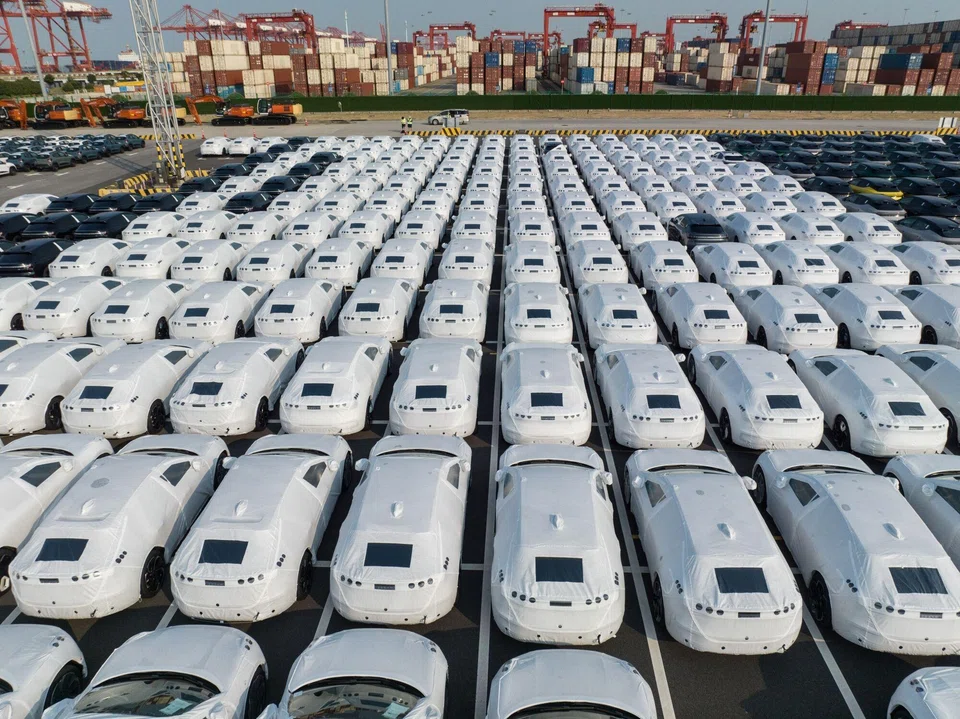
EV sales have increased sevenfold since Covid, and currently account for nearly 35 per cent of China’s automobile sales, compared to just 5 per cent two years ago. In the first quarter of 2023, EV sales rose by close to 30 per cent year on year, and could hit a record eight million units for the full year.
Chinese domestic brands strongly dominate EV sales; other global brands are losing their allure as premium and superior products in the Chinese domestic market. The explosive increase in vehicle exports in recent years is a clear testimony of Chinese automakers’ innovation and dramatic improvement in competitiveness. Other industries show similar bursts of growth, such as alternative energy, automation, and some high-tech hardware sectors like drone technology, photovoltaics and quantum sensors.
Indeed, targeted Chinese industrial policies have resulted in China becoming the world’s largest producer, consumer and exporter of EVs, accounting for two-thirds of global EV battery production, as well as about 80 per cent of global solar panel production. China is on track to surpass Japan as the world’s largest auto exporter in 2023, after edging out Germany last year.
While China will continue to face cyclical and geopolitical headwinds, the coordinated policies and drive for excellence in the economy will still offer pockets of opportunities for savvy investors. China’s economic and innovative contributions to the world will make Chinese assets too valuable to ignore.
The writer is investment strategist, UOB