

Investing playbook under Trump 2.0: Addressing concerns over tariffs and DeepSeek’s impact
A new approach is required for this multistage ‘infinite game’, as the changing world order disrupts traditional rules of engagement
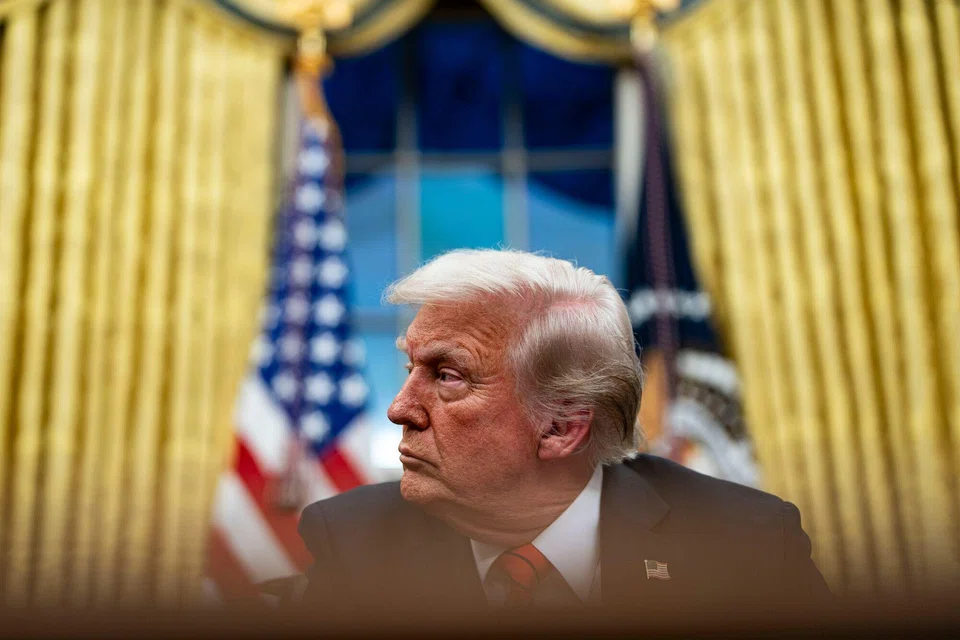
IN THE era of Trump 2.0, the resting heart rate for uncertainty is elevated as we foresee idiosyncratic outcomes from the policy decisions of the current administration. Given the unpredictability of the next four years, it is critical for investors to maintain a level-headed, sure-footed approach to implement one’s own investment philosophy.
Since US President Donald Trump’s inauguration on Jan 20, there has been a flurry of executive orders, rapid-fire policy manoeuvres across immigration, defence and trade policies. The heightened policy and implementation risks could dampen growth for economies and disrupt companies around the world.
The financial markets’ rollercoaster ride at the start of 2025 were driven by two main areas of concern.
Tariffs 2.0
Tariffs are the first concern.
Trump has said: “Tariff is the most beautiful word in the dictionary”. In addition to existing tariffs, his opening salvo of tax announcements on America’s major trade partners escalated trade tensions earlier than expected. Canada and Mexico were hit with 25 per cent, and China 10 per cent.
Tariffs and counter-tariffs are expected to dominate headlines, even if the imminent 25 per cent import tariffs on Canada and Mexico were paused for 30 days to accommodate further negotiations.
For China, the US Trade Representative is due to report on the state of US-China trade relations by Apr 1. In response, China’s targeted tariffs on US$14 billion worth of goods (including US energy exports, farm equipment and automotive goods) of between 10 and 15 per cent took effect on Feb 10.
China has launched antitrust probes on US companies and imposed rare earth export restrictions, which impede defence-related, solar panel and electric vehicle production.
On Feb 9, President Trump further said that he will impose 25 per cent tariffs on steel and aluminium imports and will announce further reciprocal tariffs on many countries. This will trigger a reset of major relationships, destabilise current business norms, with downside risks for domestic and global economies and markets.
If tariff threats are fully enacted, affected countries will face growth pressures, while mounting US inflation risks may keep yields high and the US dollar strong in the early stages of Trump 2.0.
Even though a strong greenback could blunt the edge of import tariffs, inflationary concerns may limit the US Federal Reserve’s ability to cut interest rates.
In equities, tariffs will affect the consumer, energy and industrials sectors most directly. Pronounced and prolonged tariffs could present downside risks to S&P 500 earnings per share estimates and valuation multiples.
However, President Trump’s domestic agenda may support corporate growth, especially as fundamentals remain solid, as seen in this latest reporting season.
In fixed income, interest rate volatility will affect bond portfolios with longer durations, and credit spreads may widen for bonds issued by countries such as Mexico and Canada.
In China, domestically focused companies with foreign-exchange hedges should fare better, while hardware, semiconductor and electric vehicle battery manufacturers will be hurt by new trade tariffs.
DeepSeek’s AI disruption
The disruption of artificial intelligence (AI) by DeepSeek is the second area of concern.
The rapid developments in the AI space linked to Chinese startup DeepSeek’s lower-cost R1 model raised concerns that future large language models will be developed with fewer AI graphics processing units from Nvidia; lower capital expenditure from hyperscalers; reduced need for a massive energy build-out in the US.
This also raised the risk of an even stronger set of US sanctions on China that could weigh on the sector.
We believe that cheaper access to AI can be characterised as the Jevons paradox – that lower cost technology could herald market expansion – will simply spark realignment in the technology sector.
This shift could span semiconductors and their manufacturing equipment, application-specific integrated circuits, foundries and software companies.
Investors will grapple with refreshed capital expenditure assumptions, supply chain vulnerabilities and technical differentiation among ecosystem players.
Investors’ 2025 playbook: an infinite game
A new investor playbook is required for this multistage “infinite game” as the changing world order disrupts traditional rules of engagement.
We utilise a framework under the acronym “Marquee” to describe our holistic approach towards investment.
- M: Macroeconomic framework for determining insights on global growth, inflation, interest rates, return expectations and risk factors.
- A: Asset allocation models derived from rigorous analysis of risk and investment factors. Robust portfolio optimisation is applied to single-asset and multi-asset portfolios to achieve long-term risk-adjusted investment performance.
- R: Research-driven approach for investment strategy, selection of equities, fixed income and alternatives, based on in-house analyst coverage and reputable external research partners.
- Q: Seeking quality investments through qualitative and quantitative analysis. In essence, exposure to enduring business models that are resilient in the midst of rapid change.
- U: Understanding and managing risks as a crucial component of portfolio management through investment compliance, identification and management of portfolio risks and stress tests.
- E: Evolving “supertrends”, which are structural drivers for financial markets and business models in the medium term. Investments can be future-proofed through exposure to such structural trends.
- E: Environmental, social and governance factors feature strongly in our investment decisions, including research of investee companies, identification of climate risks and exposure to potential beneficiaries of the energy transition.
We have identified five “supertrends”, which we believe will shape the economic and business landscape in the next five years, and have already started playing out in 2025.
One theme, which we call The Changing World Order, has been catalysed by tariff-related tit-for-tat among US, China, Canada, Mexico and possibly soon, Europe.
This dovetails with a rethink about asset allocation in an environment with heightened uncertainty. We expect the risk premia in equities and fixed income to remain high in H1 2025, as markets navigate the policy backdrop of tariffs, taxes and inflationary concerns from Trump 2.0.
Although equities may experience a consolidation phase, Trump’s pro-growth focus and healthy corporate fundamentals support our overweight position in US equities. We also favour Asia ex-Japan equities, with a preference for Hong Kong/China, Singapore, Indonesia, the Philippines and India.
In fixed income, we maintain a more defensive positioning, favouring short-dated and intermediate maturities, as credit spreads across both developed markets and emerging markets corporates remain tight by historical standards.
Within multi-asset portfolios, private markets, hedge funds and structured products can diversify portfolios, while gold is an effective hedge against the risks of resurgent inflation and concerns over fiscal sustainability.
Another theme, AI #IRL (in real life), speaks to our conviction on the long-term trajectory of AI innovation and highlights a research-driven approach in identifying gainers and losers of wider AI adoption.
In addition, the next generation of power and renewable energy supply chain needs to build resilience.
Yet another theme, Living 2.0, describes the impact of changing demographics on the fiscal burdens on governments, as well as the consumption and savings patterns of households.
The writer is global chief investment officer, Bank of Singapore
TRENDING NOW

Once staunchly pro-China, Malaysian Chinese businesses are now distancing themselves from Beijing

New launch or resale unit? Here’s a guide for homebuyers
The lesser-known prospects in the Asian chipmaking supply chain

Cliff Tan has 7 million followers and a 4-month waitlist. Why won’t he expand his business?

