

The Formula 1 mindset that can help investors go further
Fuel investments with discipline and consistency, and do not overreact to the ‘engine’ noise of the market
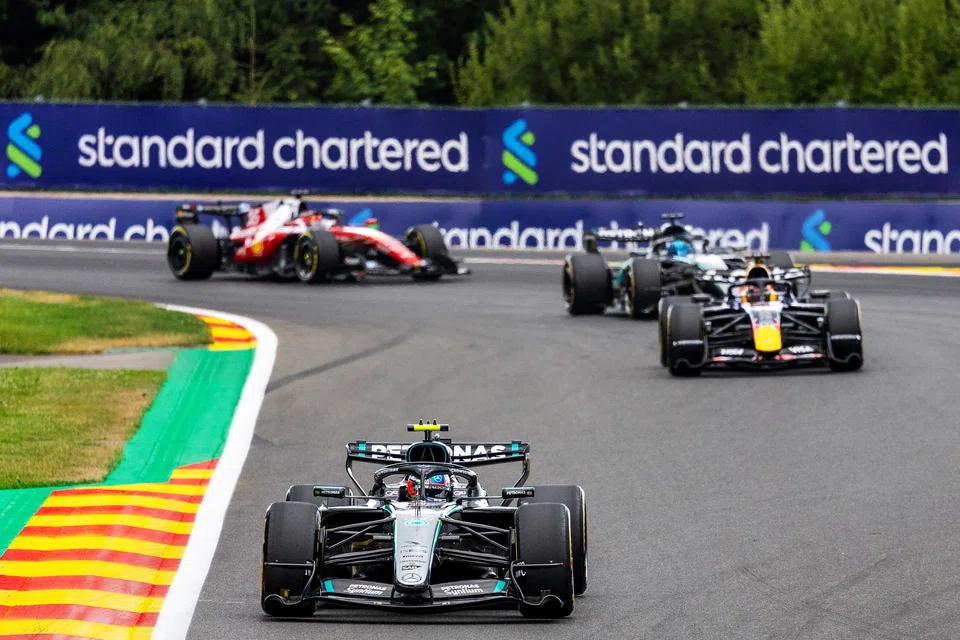
TO MY mind, investing is just as fiercely competitive as Formula 1, where teams invest a huge amount of money – capped at US$215 million this season – to develop competitive cars.
Track conditions matter, making some cars more competitive on one weekend than on another. This creates opportunities for different drivers to win races throughout the season. But in the end, there can only be one champion.
The investment landscape operates in much the same way. Countless asset managers and hedge funds invest vast sums of money in an attempt to deliver outsized returns. But, as with F1, few manage to consistently outperform the market over the long run.
A case in point is the legendary investor Warren Buffett who famously placed a bet with a US hedge fund manager that a low-cost US equity exchange-traded fund would outperform any five funds chosen over a 10-year period starting in 2008, after fees were taken into account.
The result was a clean sweep. Not only did the ETF outperform the average hedge fund performance, but none of the selected hedge funds was able to beat it.
If institutional players with significant resources struggle, the lesson for individual investors is even clearer. Just as you would not expect someone to turn up at Singapore’s Marina Bay circuit with a car they built at home on weekends, why would you expect to outperform markets with far more limited resources than professional investors?
Of course, you might succeed over a short time period when your investment stars align, but doing so consistently has similar odds to winning the F1 championship.
However, unlike in F1, this is not where the conversation ends. There is a different path to victory in investing, built not on raw speed, but on discipline and time.
Human nature versus market reality
If you are among the top 4 per cent of F1 drivers in raw pace with an exceptional team of experts backing you, you stand a strong chance of winning the championship.
However, being in the top 4 per cent of investors does not require innate natural talent nor split-second instincts.
While beating the market as a whole is daunting, outperforming your fellow investors is far more achievable – provided you have the discipline they lack.
You may ask: Why are the two different? Because investors are human and often fall prey to behavioural biases that erode long-term investment performance.
Behavioural biases can play out in many ways. Overconfidence leads people to believe they can time markets effectively: buying before markets rise and selling before they fall.
Meanwhile, recency bias causes investors to feel more comfortable investing only after something has gone up – chasing returns or succumbing to the fear of missing out and then buying at elevated levels.
These two biases generally lead investors to significantly underperform a buy-and-hold approach. Morningstar’s annual Mind the Gap report estimates the difference between the performance of investors relative to the performance of the underlying funds.
The 2026 report released in August places the investor underperformance at 1.2 per cent. This might not sound like a lot, but compounding actually makes it staggering.
For instance, our long-term expected return for global equities is 7 per cent. If you invest US$1,000 at this rate of return for 40 years, it will be worth nearly US$15,000. At 5.8 per cent (accounting for average investor underperformance), this falls to around US$9,500, or over one-third less.
Crucially, this analysis ignores money sitting on the sidelines, which suggests the absolute performance gap is even higher. There is indeed a lot of money sitting on the sidelines in the form of deposits. This is costly.
Using 12-month interbank Singdollar deposit rates, the absolute return would have averaged 1.6 per cent since 2000. However, this is lower than the average inflation rate, meaning the real value, or purchasing power, of the deposits would be more than 9 per cent lower after a 25-year period.
But, of course we know that in reality, the situation for retail investors would be significantly worse. I used interbank rates, which are currently 1.67 per cent – good luck trying to get that as a retail investor.
When caution becomes your biggest risk
The driving equivalent of the difference between investing in fixed deposits and investing in equities over the long term would be one car driving under a speed limiter while the other cars race at normal speeds. You go backwards in the pack very quickly, and the lost ground is permanent.
The mentality of holding excessive cash is the equivalent of running wet tyres on a dry track just in case it rains. If a storm hits, you would look prudent and be safe, but under normal racing conditions, the wet tyres would overheat and ultimately fail which would leave you behind.
Therefore, it is important to fuel your investments with discipline and consistency. Try not to overreact to the “engine” noise of market bubbles, recessions or booms. There will always be something to worry about.
If anything, tilt towards another classic Buffett adage: “Be greedy when others are fearful”. If you can maintain this frame of mind and invest even when things seem to be falling apart around you, you should be able to win your investing version of the F1 championship.
The writer is global chief investment officer at Standard Chartered Bank’s wealth solutions unit
TRENDING NOW

DBS, OCBC, UOB rout lops billions off STI as inflation, rate concerns spook investors

Grab CEO’s wife Chloe Tong on life with Anthony Tan and finding her purpose
OCBC sheds S$8 billion in value as shares close nearly 6% down; analysts cautious on banks

Deal between tycoon friends sparks scrutiny of Philippine power sector

