The real AI bottleneck isn’t chips. It’s power
Electricity use is rising because the global economy is becoming more digital and electrified at the same time
MOST of the attention on artificial intelligence has focused on chips: who makes them, who can buy enough of them, and which companies will win the race to build the largest models. That focus made sense in the early phase of the AI buildout.
But it may be causing investors to look past the industry’s next defining challenge.
The binding constraint on how fast AI can scale is no longer semiconductor supply. It is electricity. Nvidia CEO Jensen Huang has been direct about this.
At a Stanford lecture, he said the energy needed for computing could ultimately run to roughly a thousand times what is available today – a figure he ties to the shift from on-demand computing toward continuous, always-on AI agents.
Separately, asked in an interview with podcaster Joe Rogan late last year whether energy had become AI’s biggest constraint, he did not hesitate: It is the bottleneck, not chip supply, that will determine how far and how fast the industry can scale.
The scale of individual AI queries adds to the picture, even if the precise multiple is debated. Public estimates of how much more energy a single AI query consumes compared with a standard web search vary widely, from roughly double to more than ten times, depending on model size and methodology.
Google’s own disclosure is more precise for its own product. The company reported in August 2025 that a typical AI-generated text response consumes a fraction of a watt-hour.
Fractional differences look small in isolation, but multiplied across the scale at which AI agents are now expected to run – continuously, across millions of simultaneous tasks – the arithmetic becomes difficult to ignore. Data centre demand is growing faster than the grid that has to supply it.
This matters for investors because it changes where the durable opportunity in AI actually sits. The obvious winners so far have been the chipmakers and the hyperscalers building the data centres. Both remain important.
But the layer of the AI stack now facing the tightest constraint is energy. Constraints, not enthusiasm, usually determine where the next phase of capital flows.
Demand is changing structurally, not cyclically
Electricity consumption is rising because the global economy is becoming more digital, more electrified, and more power-intensive at the same time. AI data centres are emerging as a new category of demand that behaves like baseload – large, continuous and unforgiving of interruption.
Electric vehicles, electric heating and broader electrification of transport and industry are adding to that load independently of AI altogether. This is not a temporary spike. It is a structural shift in how much electricity modern economies require simply to function.
Understood this way, energy security is no longer just a question of securing oil and gas. It is no longer a single-variable question but a multi-layered challenge.
Reliable access to hydrocarbons still matters. Fossil fuels remain the anchor of the global energy system, and periods of geopolitical disruption can still move commodity prices and near-term earnings for traditional energy companies.
But hydrocarbons alone do not solve the AI power problem. Even abundant fuel supplies cannot guarantee resilience if the electricity system built on top of them cannot generate, move and manage power reliably.
Built for a different era
That is the deeper issue. Much of the world’s power infrastructure is ageing and was designed for one-way flows from large, centralised plants to passive end users.
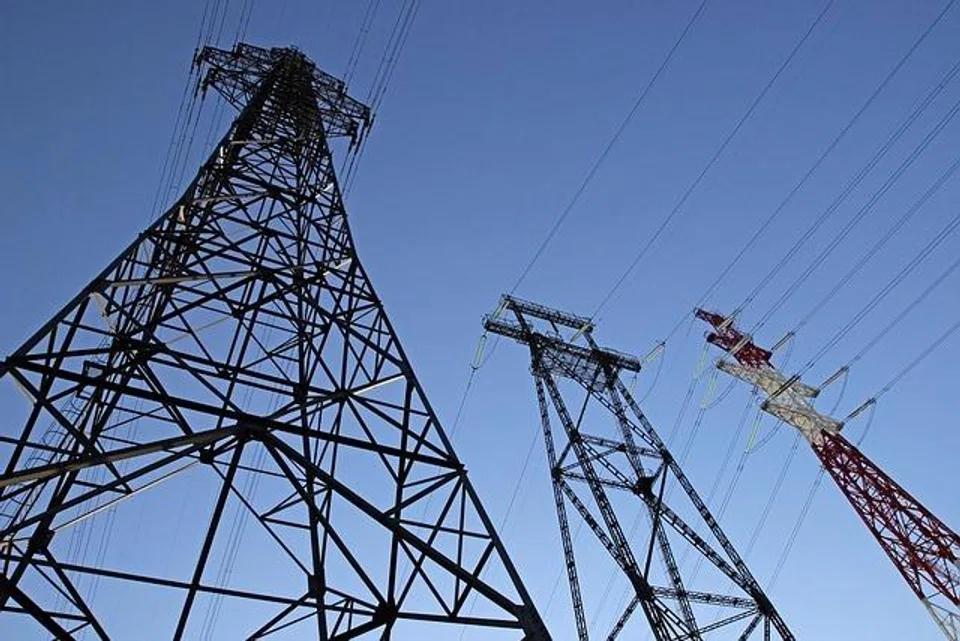
It is poorly suited to a system with distributed renewables, two-way flows, digital load management, and the kind of volatile, high-density demand spikes that AI data centres create. Transmission projects are slow, capital intensive, and frequently constrained by permitting challenges and politics, which means bottlenecks can persist even where demand is rising fast and visibly.
New-generation capacity is part of the answer, but utilities alone are unlikely to fund and deliver all of it. Independent power producers are playing a growing role in financing and building new capacity across technologies, reflecting a broader decentralisation of the power system.
Battery storage helps too. It can be deployed faster than major grid upgrades and respond almost instantly to changes in supply and demand. But it is not a substitute for network expansion or dispatchable generation.
Smart grids, digital sensors and automation are necessary to handle variable renewable output and more complex load patterns, but digitalisation alone does not solve a physical capacity problem.
Looking beyond the obvious winners
The practical implication is that the AI investment case should not stop at chips and hyperscalers. The more durable opportunity lies in the assets and businesses that make the underlying energy system function under this new load.
That includes integrated oil majors with the scale, balance-sheet strength and diversified cash flow; refiners sitting at critical bottlenecks in the value chain; and energy service providers positioned to benefit from renewed upstream and infrastructure capital expenditure.
It also includes utilities, grid operators, transmission businesses, storage providers and, in select markets, nuclear or uranium exposure, where investors want direct exposure to the revival of dependable, low-carbon baseload power.
One reason this theme matters is that equity markets may still underappreciate the structural importance of energy.
In many major indices, the sector remains far smaller than during earlier energy crises despite the fact that energy security, electrification and infrastructure renewal are now back at the centre of policy and capital allocation.
Underinvestment in both traditional energy and the infrastructure that supports it has increased vulnerability to shocks.
AI demand is simply the latest, and possibly largest, source of pressure on a system that was already stretched.
Following the flow of power
The sensible response is not to choose between traditional energy and new infrastructure, but to hold both – deliberately.
Near-term resilience is more likely to come from traditional hydrocarbons, particularly where supply stays tight and geopolitical risk premia remain elevated. Medium to long-term opportunity is more likely to come from infrastructure buildout, grid modernisation, storage and diversified generation.
The broader lesson for investors is this. The AI trade was never only about who builds the smartest model or the fastest chip. It is increasingly about who can keep the lights on while that model runs.
Energy security, once a question about barrels of oil, is now equally a question about wires, transformers and grid capacity. The investment opportunity in AI’s next phase lies not only in the intelligence itself, but in the physical system required to power it.
The writer is chief investment officer, DBS Bank