


Dad and Mum’s home will always be their children’s home. The reverse is not necessarily true.
Is Chinese director Bian Zhuo’s debut feature Green Lake yet another familiar family melodrama? Shuwen, an elderly widower in Kunming, takes turns staying with his three daughters, Shuzhen, Shujuan and Shulin. Each has children with troubles of their own. It is not that father and daughters lack love for one another; they simply love too hard. The children have grown up, their father has grown old, and now they are the ones telling him what to do. They even oppose his new romance with Lao Wu.
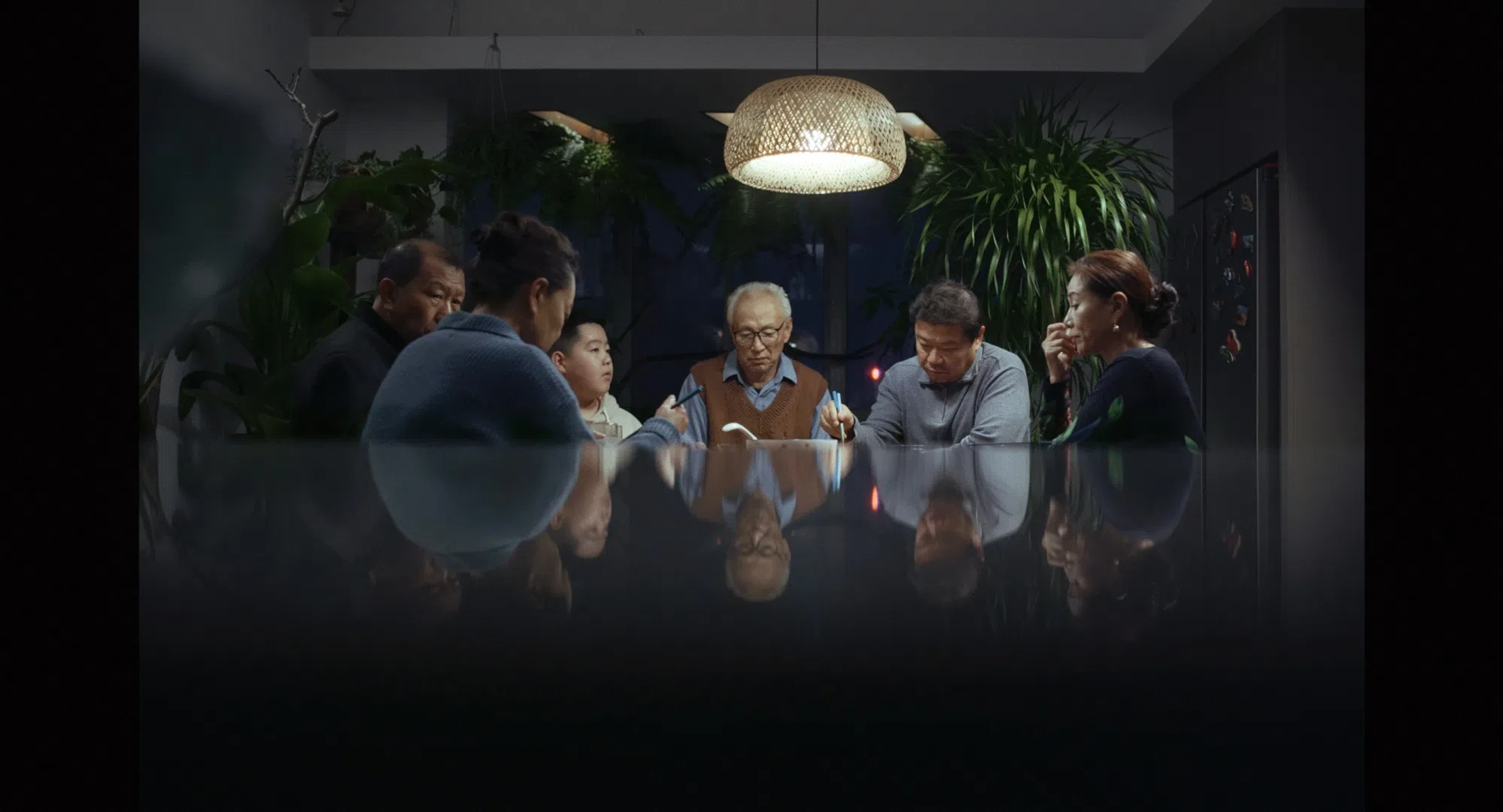
The eldest, Shuzhen, is the most overbearing. The moment her father steps through the door, she urges him to take off his shoes and coat. Shuwen asks whether he needs disinfecting too, and she actually picks up a spray bottle and sprays his coat. Yet when she discovers that he has been taken advantage of at mahjong, she demands his phone to call the other player. Never mind that the person is her elder: “Anyone who bullies my dad will have me to answer to!” Shuwen, who a moment earlier looked embarrassed and wished his daughter would stop interfering, cannot help smiling as he listens.
Seeing ourselves and our families
The three daughters complain that their father will not listen, only to find their own children just as difficult to manage. Shuzhen’s daughter Qianqian registers her marriage without telling the family, then brings her already cash-strapped new husband home to inform her grandfather and parents. Shuzhen’s response is brisk and blunt: “Get divorced tomorrow!” The well-off Shulin, meanwhile, is determined that her academically gifted son Xiaoyu should get into Stanford University. Xiaoyu finally breaks down in tears in the car and admits he has been rejected. “Why is everything I do wrong? Why do I have to get in?” When Shuwen was young, he too was a poor scholar whom his future wife’s family thought had no prospects. Decades later, ideas of what is “for your own good” and what counts as “a promising future” keep changing. Yet the urge to plan the next generation’s lives in the name of love passes from one generation to the next.
Shujuan represents another familiar type: she has so thoroughly indulged her secondary-school son that he has become an overweight food lover with no interest in studying. But when she sees two young thugs robbing him at knifepoint, her maternal instincts take over. Every bit as fierce as her elder sister, she chases them down the street with her large handbag, beating them until they beg for mercy.
For all their sharp tongues, though, this family has soft hearts. Shuzhen and Qianqian, who keep putting up the door-god images the wrong way round, arrive separately to clean Shuwen’s old home. Shuzhen nags her daughter for not knowing how to mop, snatches the mop from her, then falls. It turns out she hurt her foot during an earlier argument with Qianqian at home but ignored the injury. Still talking back to her mother, Qianqian books her a medical appointment and all but hauls her off to see the doctor. The diagnosis is a fracture.
Perhaps anyone who grew up in an Asian family will recognise something of themselves and their own family in Shuwen’s household. Any one of these characters or storylines could sustain a prime-time soap opera. Bian Zhuo refuses that approach, instead finding feeling in everyday activities such as eating, soaking feet and dyeing hair. After an argument, the camera suddenly leaves the people behind, showing only sky, branches and distant mountains, allowing the emotions to dissipate on their own. It recalls the texture of everyday life in the films of Yasujiro Ozu, the Japanese director known for his portrayals of ordinary people.
A camera that keeps its distance
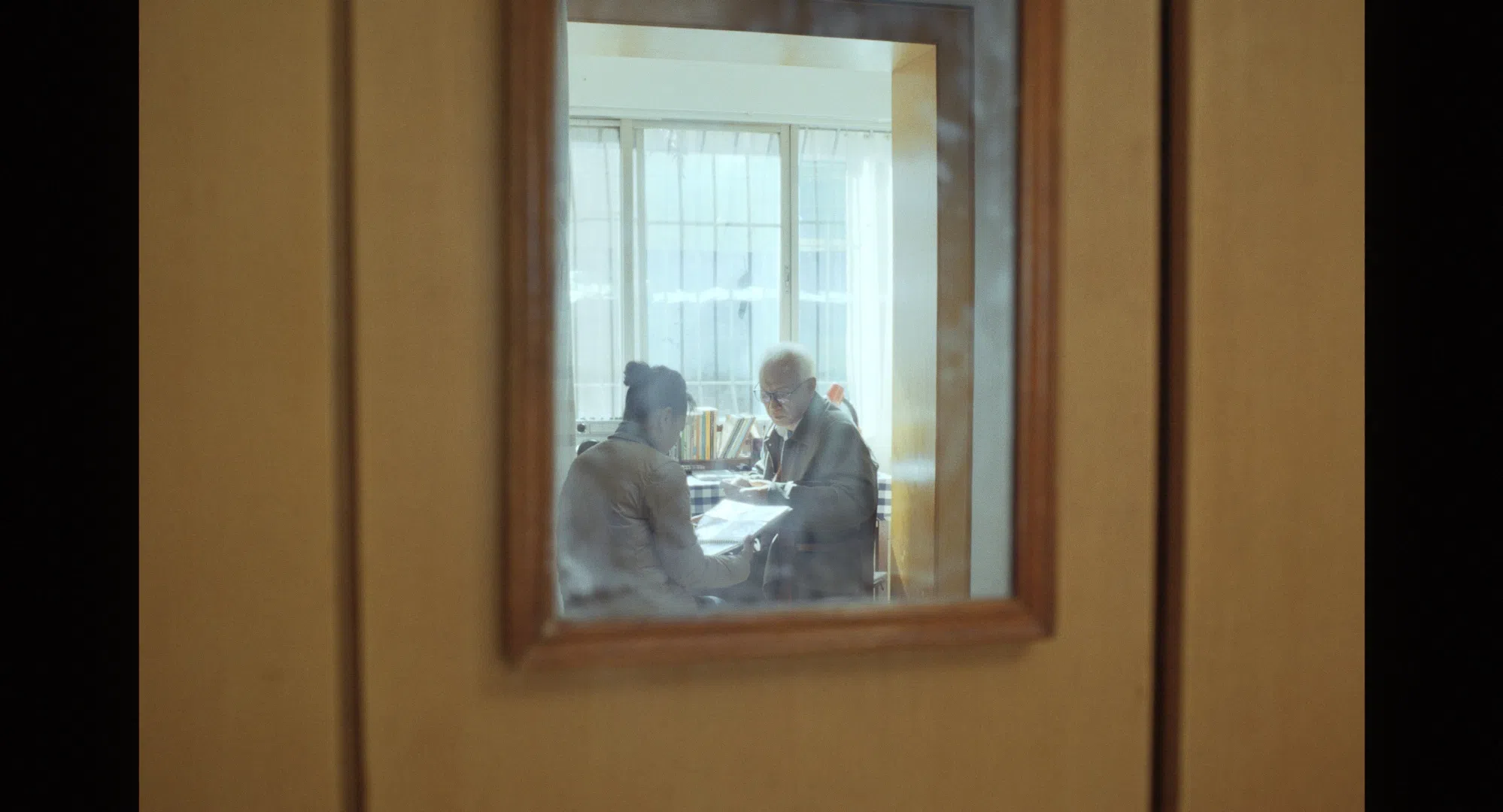
Hou Hsiao-hsien’s influence can be felt in the distance between camera and characters. When Qianqian’s marriage behind her mother’s back brings the family to an impasse, the camera remains calmly in place. Her father gets up and leaves without the camera even showing his face. Qianqian goes from leaning forward expectantly to sinking back against the sofa in disappointment. Only when her grandfather Shuwen finally sits beside her do her eyes light up again. The characters’ inner feelings need not be spelt out; they emerge through positions, glances and pauses. The film contains many such long takes, with the camera always keeping a little distance.
That “little distance” is often created by a succession of frames. Whether Shuwen is alone in his room or talking to his daughters and granddaughter, the characters are often framed by doorways, windows, mirrors and elements in the foreground and background. Sometimes a single shot contains several frames nested within one another. Even in their own homes, the characters seem always to be viewed through something. Yet to read these frames solely as the constraints of family relationships would be too simple.
What repeatedly opens up these frames is Green Lake Park in central Kunming. Shuwen spends time by the lake, meeting Lao Wu, playing mahjong with old friends, or gazing out at the water alone as he thinks of his late wife. At one point, a mahjong companion remarks matter-of-factly: “At our age, a stay in intensive care is a one-way ticket.” The camera then slowly pans out from the frame of a pavilion to the open lake. People and flocks of birds come and go, and the water is never the same, yet Green Lake is always there. It holds time not through untroubled stillness, but through ceaseless change. Its surface is full of reflections, shimmering light and overlapping images, the real mingling with the illusory, much as Shuwen’s life seems both real and dreamlike when he looks back on it. Are the images captured by a camera any different?
Frames can separate people — and preserve them
Later, the film even lets its characters pick up a camera themselves. Shuwen’s old friend Qigeng and his wife come to Kunming to see him after 30 years apart. Granddaughter Xiaoyi is making a documentary about her grandparents. When Shuwen’s grandson Xiaoyu asks why she stands so far away, she replies: “You need a little distance to get everything in. But if you’re too far away, you can’t hear clearly.” It sounds almost like a reminder Bian Zhuo is giving himself. Green Lake draws on his maternal grandfather’s diaries. Stand too close and all you see are a family’s petty squabbles; step back a little and you can see their whole lives. But retreat too far and you can no longer hear the things only family members understand.
And so those earlier frames acquire another meaning. Xiaoyi says her grandmother actually wears a wig, and has worn it for so long that even she has begun to lose sight of what is real and what is not. “Once it’s recorded, it becomes real.” Xiaoyu counters: “That’s still deceiving yourself and others.” But Xiaoyi knows that her grandmother, who has cancer, has little time left. A camera cannot keep someone alive, but it can hold someone who is about to disappear within a frame. The film’s many frames now become camera frames: they can separate people, but they can also preserve them.
In the end, Shuwen too returns to his memories. At a wedding, the young groom promises to hold his bride’s hand for ever, and Shuwen’s eyes redden. The film cuts to a close-up of two aged hands clasped together beside Green Lake, before his late wife appears beside him. “I just had a dream.” “What did you dream about?” “A whole lifetime.” In the next shot, though, Shuwen is merely asleep in a car. Is the dream real? Are the memories real? Or is the later life we have just watched itself a dream? Someone is gone, but the ripples on the lake remain. Perhaps this is how Green Lake preserves a lifetime.
The Singapore Chinese Film Festival will run from 26 to 29 November at Golden Village VivoCity. Green Lake screens on Saturday (28 November) at 5pm. Tickets: bit.ly/4BIwDsd.
