


Singapore’s manufacturing output grew 6.1% year on year in October, driven by precision engineering and electronics. This was up from September’s 5% growth and well above market expectations of 2.2%.
Economists expect demand related to artificial intelligence (AI) to continue supporting Singapore’s manufacturing activity in the short term. In the longer term, however, factors such as tighter US regulation of AI, higher trade tariff barriers and rising global interest rates could put pressure on the sector’s growth.
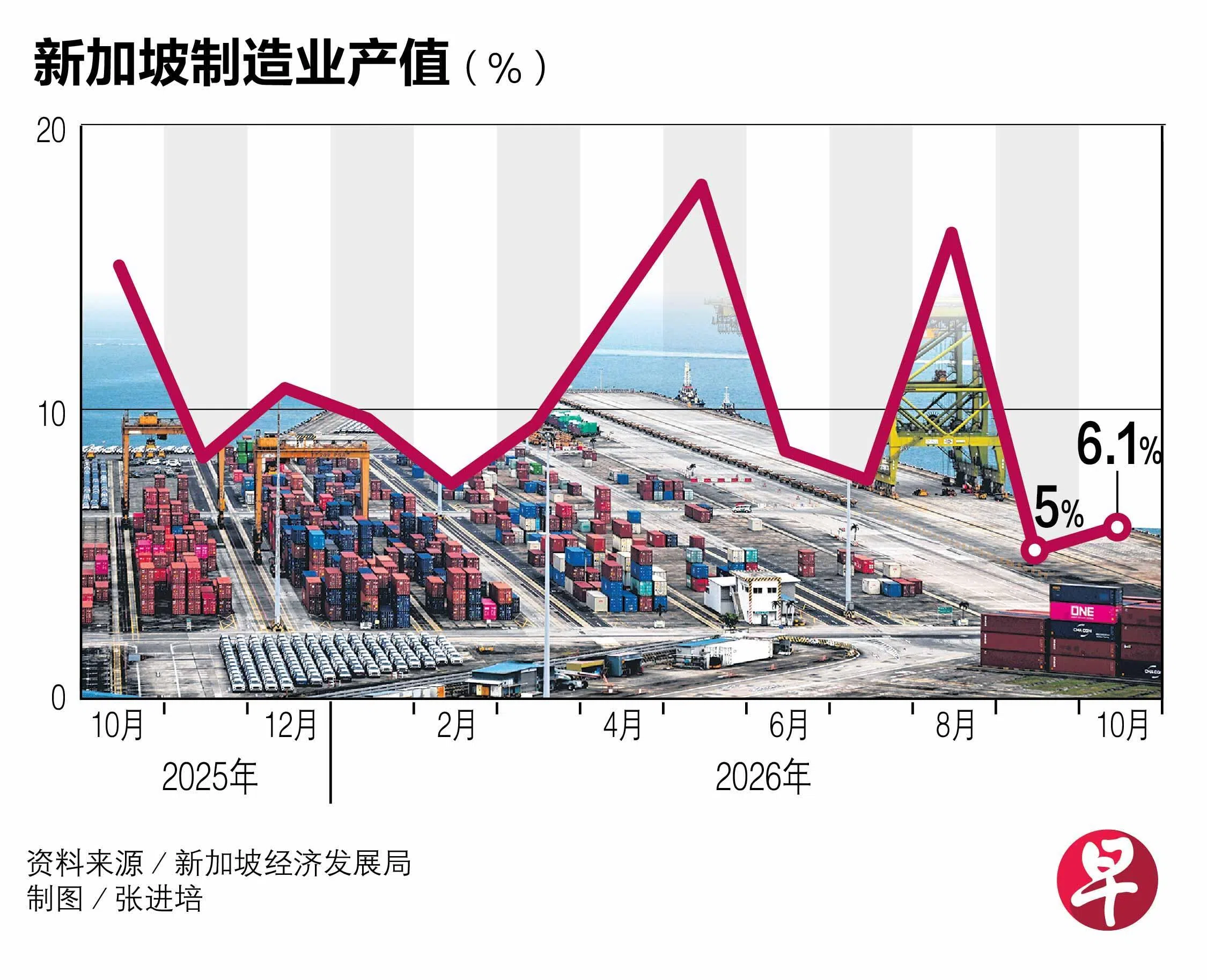
Excluding biomedical manufacturing, output rose 12.1% year on year in October, according to preliminary data released by the Singapore Economic Development Board (EDB) on Thursday (26 November).
Precision engineering was the strongest-performing cluster, with output rising 54.1% year on year, mainly thanks to higher production of semiconductor equipment in the machinery and systems segment. The precision modules and components segment also grew, supported by increased output of industrial rubber products and precision metal components, among other products.
Electronics followed with growth of 6.6% year on year. All its segments expanded, mainly on the back of rising AI-related demand.
Chemicals also performs well, with output up 4.4% year on year
Chemicals also performed well, with output rising 4.4% year on year, driven mainly by higher production of industrial gases, chemicals and food additives in the specialties segment. The petroleum segment also recorded higher output of refined products. In contrast, petrochemicals output fell amid weak demand and disruptions to feedstock supplies.
General manufacturing output edged up 0.5% year on year, supported mainly by increased production in the food, beverages and tobacco segment.
Meanwhile, biomedical manufacturing output fell 35.8% year on year as production of biological products in the pharmaceuticals segment declined. Transport engineering output also fell 5.3%, mainly owing to reduced shipyard activity and weak production of oil and gas field equipment in the marine and offshore engineering segment.
On a seasonally adjusted basis, manufacturing output rose 7.1% month on month in October, reversing September’s 3.2% decline. Excluding biomedical manufacturing, output grew 7.3% month on month in October.
Manufacturing output also rose 10.1% year on year in the first 10 months of this year.
RHB raises full-year growth forecast to 10%
Looking ahead to the end of the year, Chua Han Teng, Senior Economist, DBS Bank Ltd, remains positive about Singapore’s manufacturing outlook. He expects the sector, particularly semiconductors, to maintain its growth momentum as US hyperscale cloud service providers press ahead with building AI infrastructure.
Following strong growth in manufacturing output in the first 10 months of this year, RHB's Group Chief Economist Barnabas Gan has raised his forecast for Singapore’s full-year manufacturing output growth to 10%. The revision is in line with RHB’s recent decision to raise its forecast for Singapore’s full-year economic growth to 6%.
Going into 2027, Chua believes that while AI development will continue to drive growth in Singapore’s manufacturing sector, the overall pace of expansion may moderate. He also cautioned that the global AI development cycle faces multiple risks, including rising interest rates and further tightening of US regulation of the AI sector.
UOB associate economist Jester Koh also noted that Singapore’s manufacturing sector will continue to benefit from AI-related support in the first half of next year. In the second half, however, the momentum from AI could weaken as hyperscale cloud service providers slow their capital spending.
