


What does it mean to be Peranakan Chinese? What objects and cultural practices belong “exclusively” to Peranakan Chinese and their descendants? Must their everyday lives and customs be confined to a particular definition?
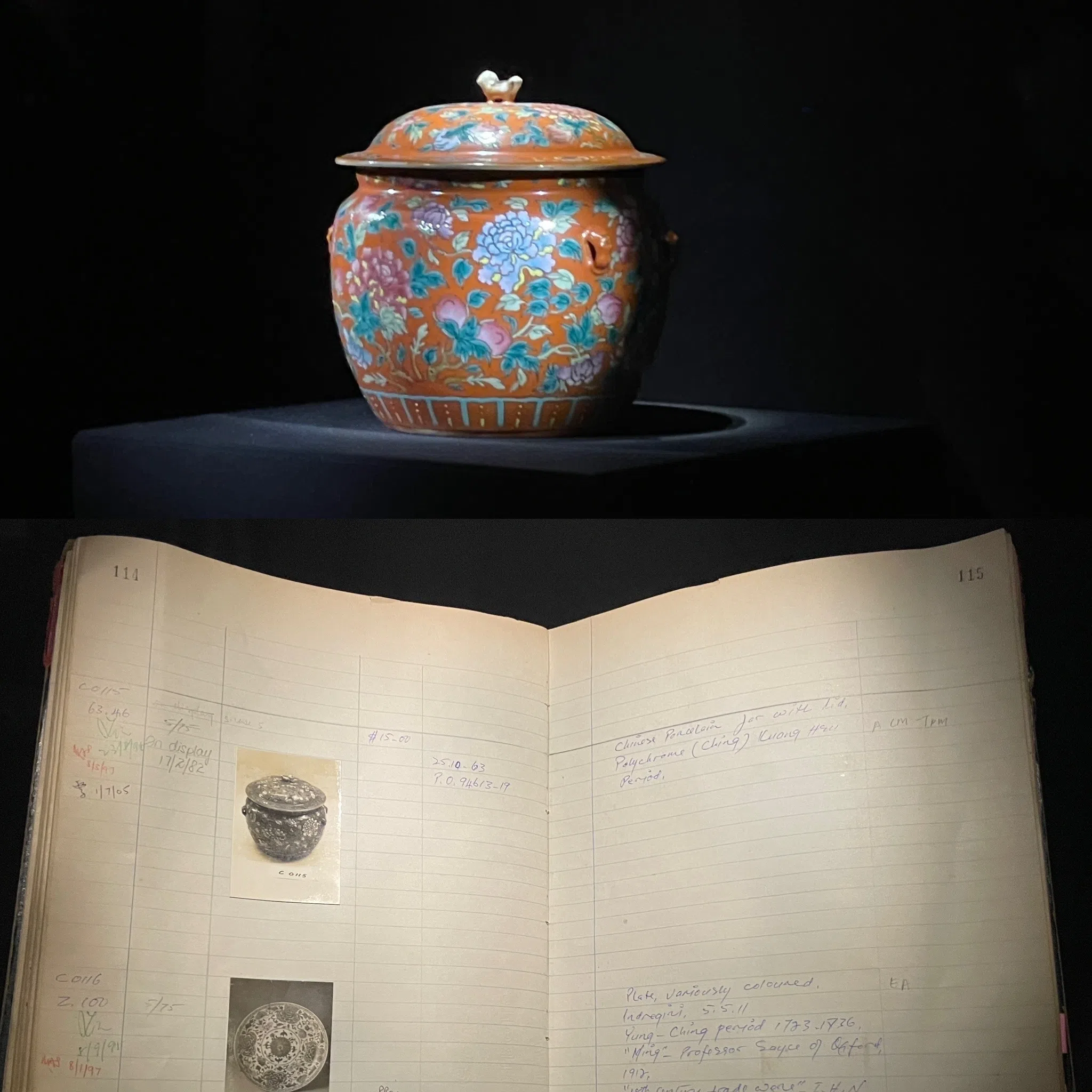
A handwritten collections catalogue held by Singapore’s National Heritage Board records the country’s first official acquisition of a Peranakan Chinese object: an orange porcelain covered jar, 17.3cm tall and 16cm in diameter, bought for $15 in 1963. Awareness of Peranakan Chinese culture was limited then, and the piece was listed simply as a “19th-century Chinese porcelain covered jar bearing a Kangxi reign mark”.
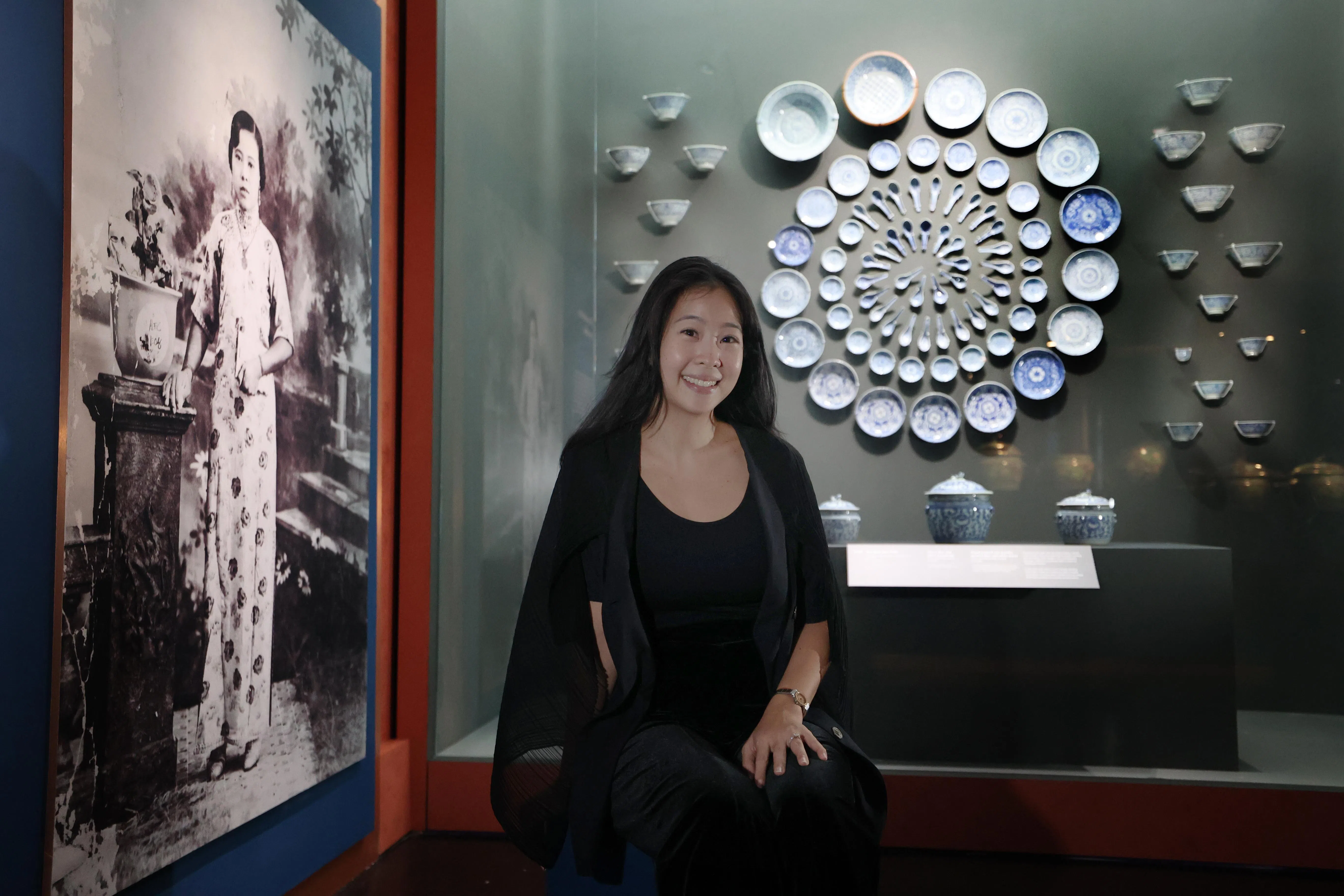
Fast-forward 63 years later, and Peranakan Chinese culture, food and aesthetics have become widely familiar. In 2024, the sarong kebaya was formally inscribed on UNESCO’s Representative List of the Intangible Cultural Heritage of Humanity. Singapore also has a dedicated, standalone Peranakan Museum, which collects, researches and displays Peranakan objects and historical materials on a substantial scale. Reviewing its acquisitions over the past five years, the museum found enough variety and volume to mount Exceptional/Everyday: New Acquisitions, New Perspectives, an exhibition running for almost a year. Naomi Wang, senior curator for Southeast Asia at the Asian Civilisations Museum and the Peranakan Museum, said the exhibition draws on 14 categories of objects. These include ancestral portraits, checkered sarongs, Chinese-style tunics and trousers, blue-and-white porcelain, ceramic covered jars, silver mourning jewellery, imported mother-of-pearl furniture, tiered food containers, ancestral altar cloths, wedding handkerchiefs, elaborate gold and diamond jewellery, and beadwork. It examines how distinctive, exquisite objects capture moments in Peranakan Chinese lives, and how seemingly everyday pieces reveal the community’s exceptional life stories.
Diverse wardrobes and wedding handkerchiefs
Everyone needs clothes. Clothing is a social and cultural medium shaped by individuals and the community, expressing both personal agency and collective attitudes. Through Chinese-style tunics and trousers, checkered sarongs, wedding handkerchiefs, and gold, silver and diamond jewellery, the exhibition explores Peranakan consumption across borders and connections across cultures.
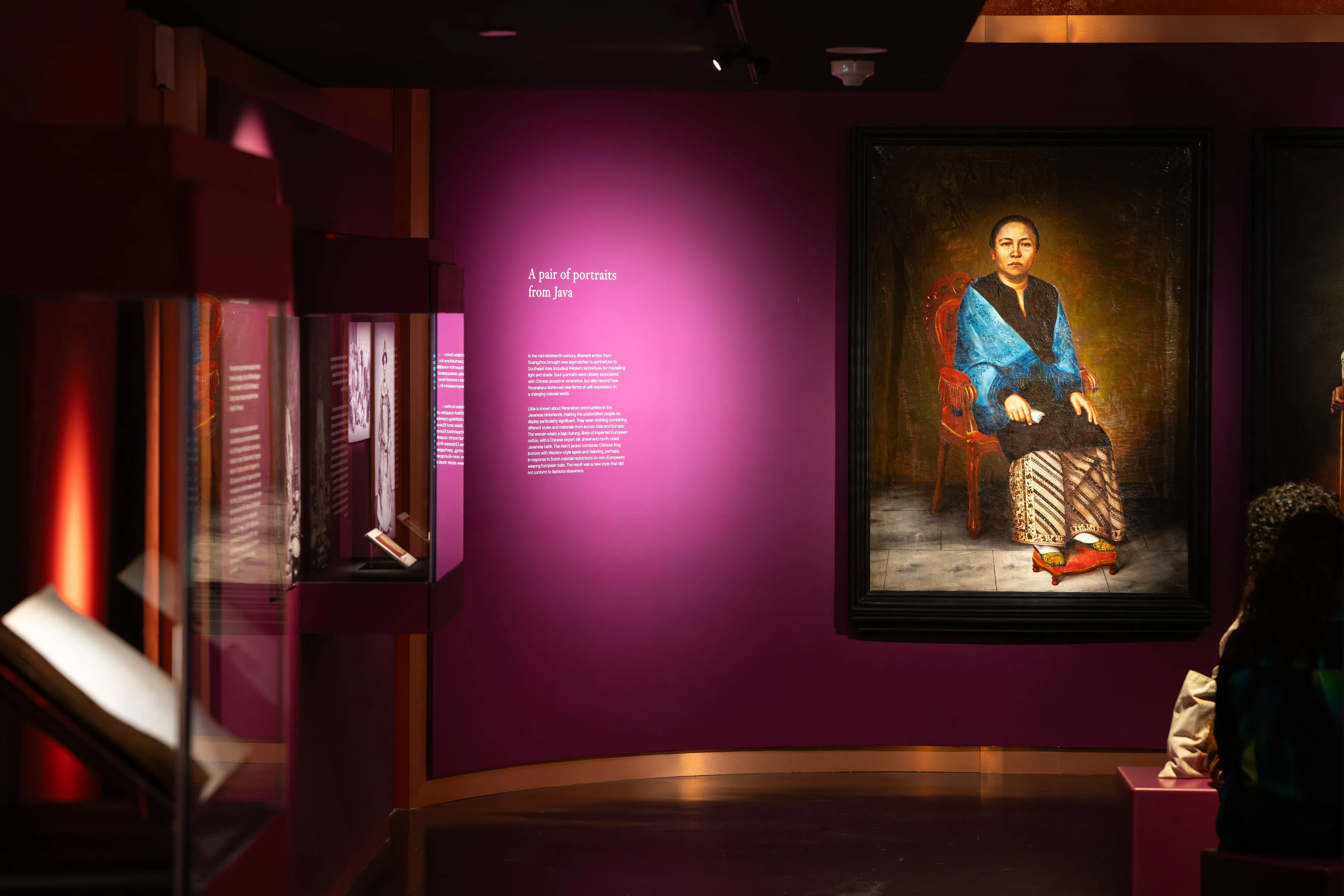
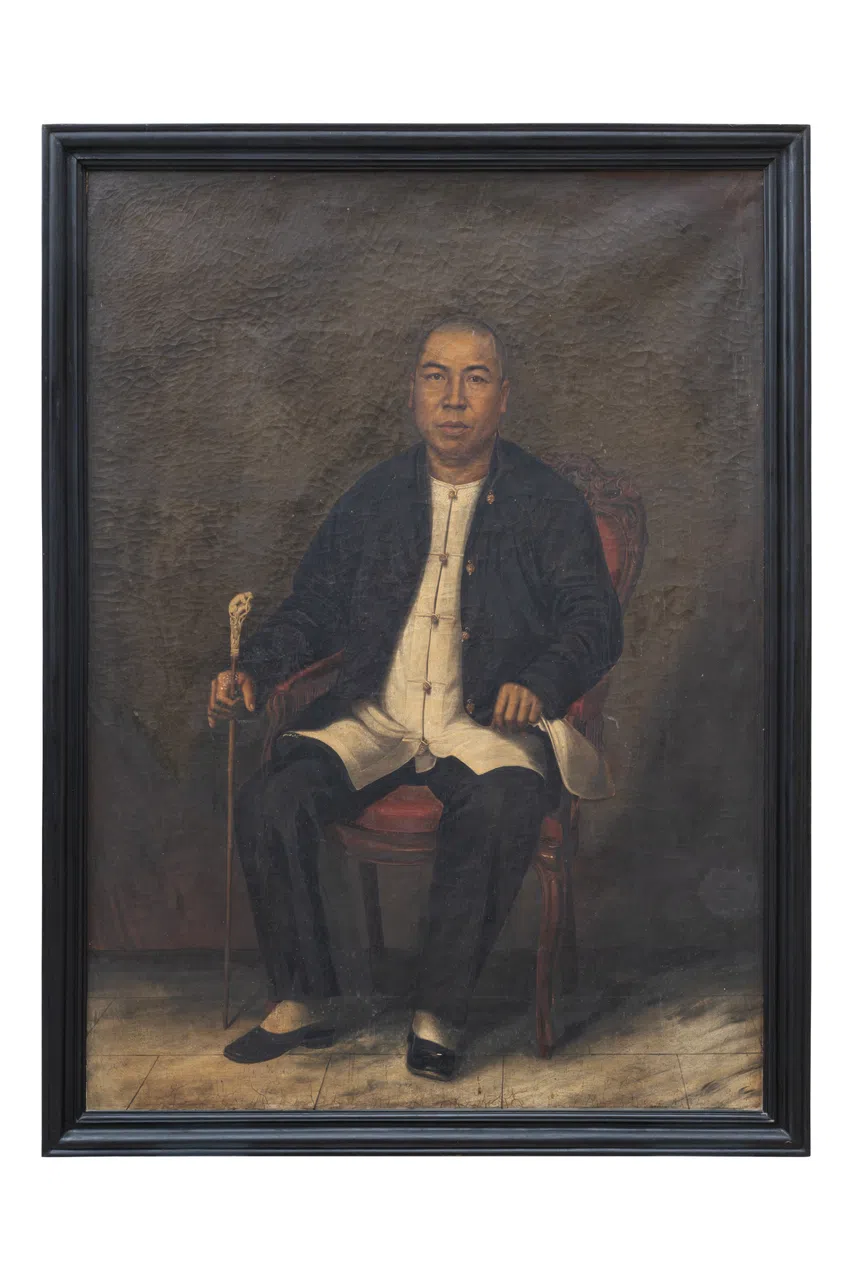
A pair of ancestral oil portraits of Peranakan Chinese from East Java, dating to the late 19th or early 20th century, measures 1.3m in length and is the largest of its kind in the museum’s collection. The woman wears a long-sleeved Malay blouse made from imported European cotton, a hand-drawn batik sarong from Java’s north coast, and a Western-style diamond ring. Wang notes that the Dutch colonial authorities had forbidden local people from wearing Western clothing. Footwear, however, was not covered by the rules. The man in the portrait wears Western leather shoes and had his tailor incorporate Western lapels into his Chinese tunic, complete with gold fastening buttons — an ingenious, defiant way around the restrictions.
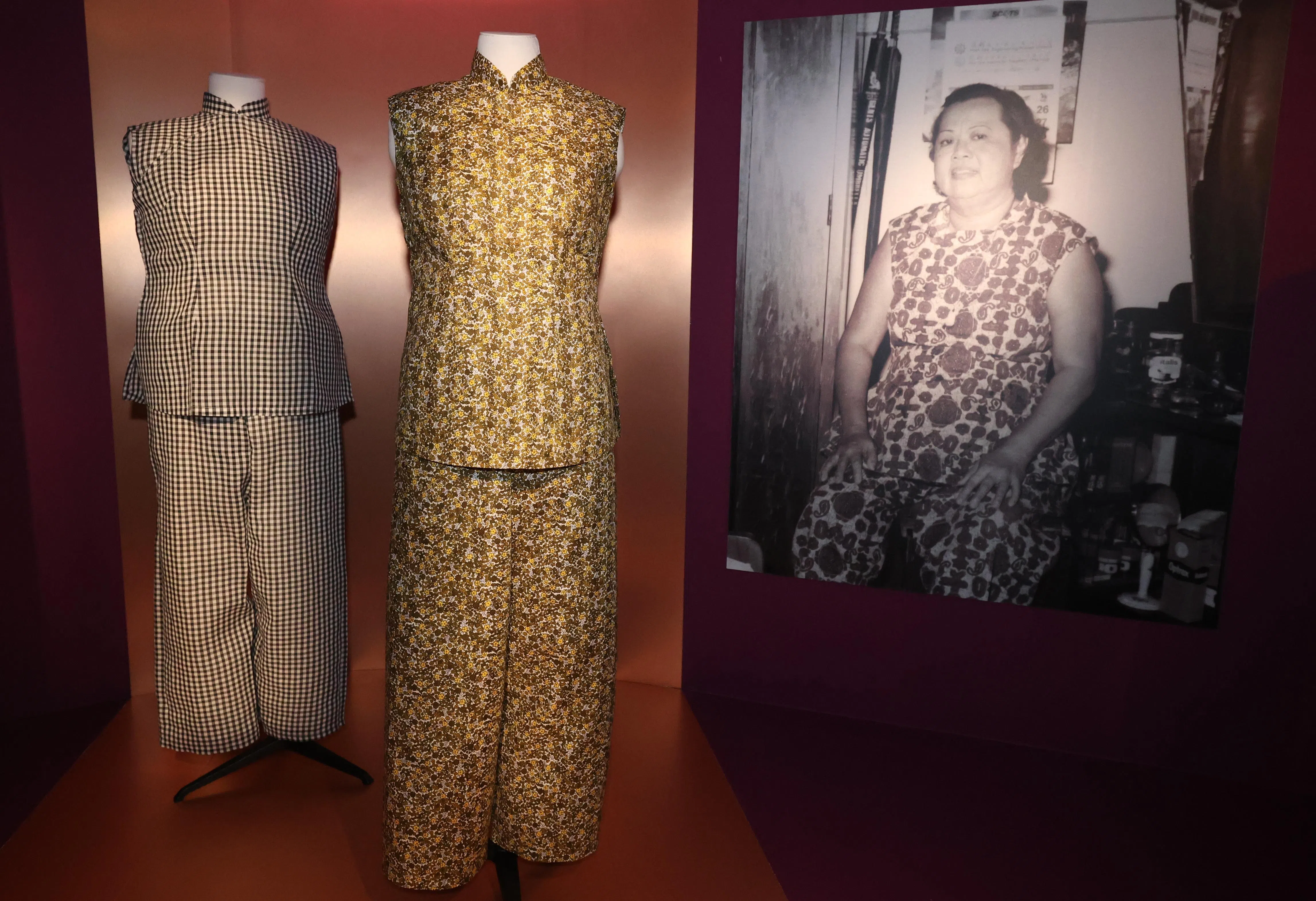
Today, we tend to assume rigidly that Nyonyas wore only the sarong kebaya. History, however, shows that their wardrobes were diverse and reflected personal choice. Several Chinese-style tunic-and-trouser ensembles on display belonged to Oei Seng Neo, the daughter of a gambier and rubber plantation owner who moved from the Riau Islands to Singapore. At home, she wore Chinese-style tunics and trousers, reserving the sarong kebaya or Western dress for formal occasions. “Nyonyas were not confined to a single style of dress — in her, we see agency and choice in clothing,” says Wang.
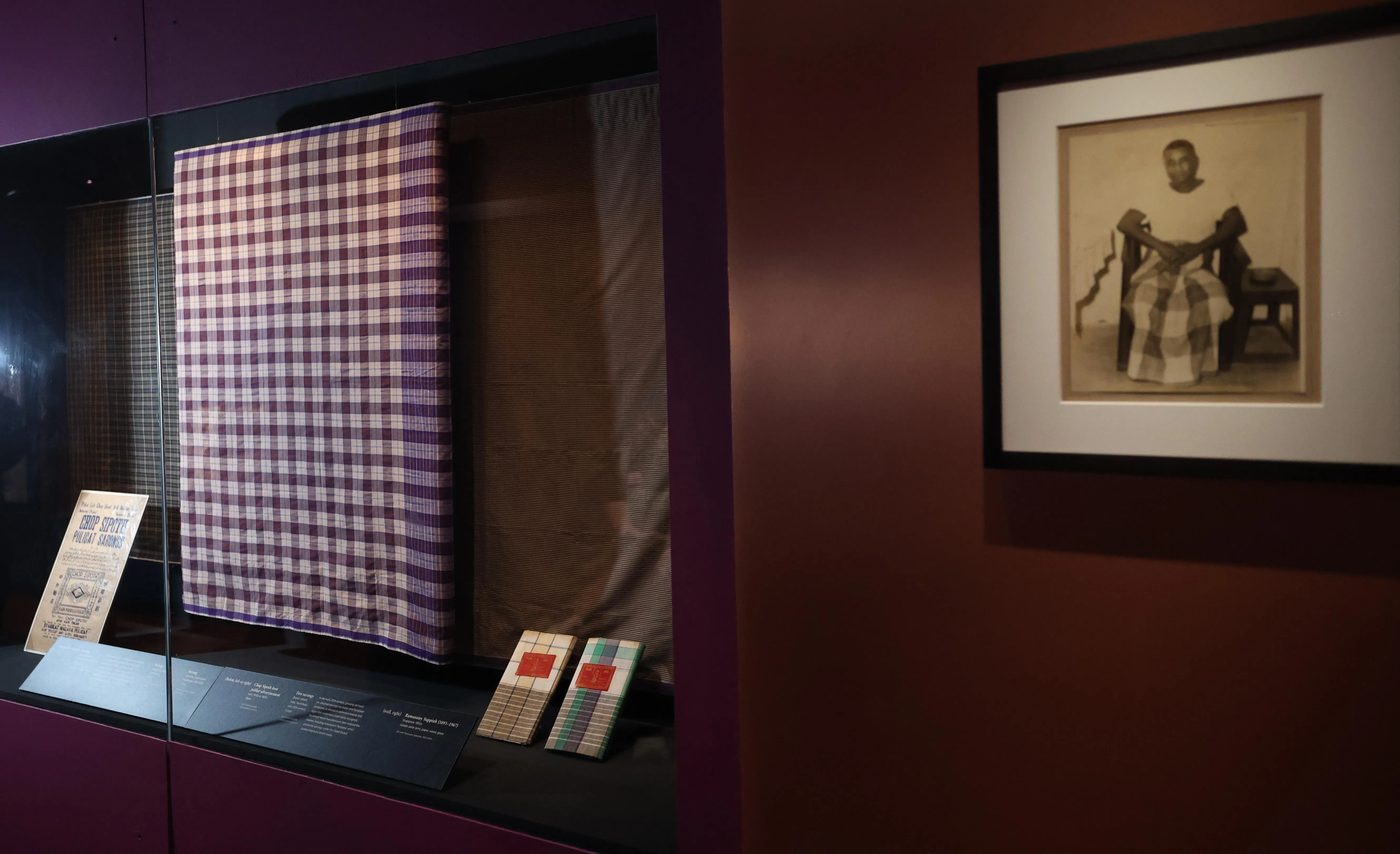
The checkered and striped Pulicat sarong connects men of different communities across Southeast Asia. Originating in Tamil Nadu, India, these sarongs reached Southeast Asia through maritime trade. Speaking at the media preview, Ponnosamy Kalastree, who donated sarongs worn by his late father, a former police officer, said Indians usually wore plain white sarongs. His family, however, belongs to the Chetti Melaka community — descendants of Tamil traders who came to Malacca in the 15th and 16th centuries and married local Malay or Chinese women. His father therefore wore these checkered and striped sarongs at home. Wang noted that Singapore is a port city that welcomes people from all over. Such sarongs were worn at home and outdoors not only by Chetti men, but also by men of different communities in Singapore, and even King Chulalongkorn of Siam in the late 19th century. They became characteristic attire for Southeast Asian men, particularly Malay men, and were also produced in the region. Little research has been done on this menswear, she says, and the exhibition has given the museum an opportunity to begin exploring it.
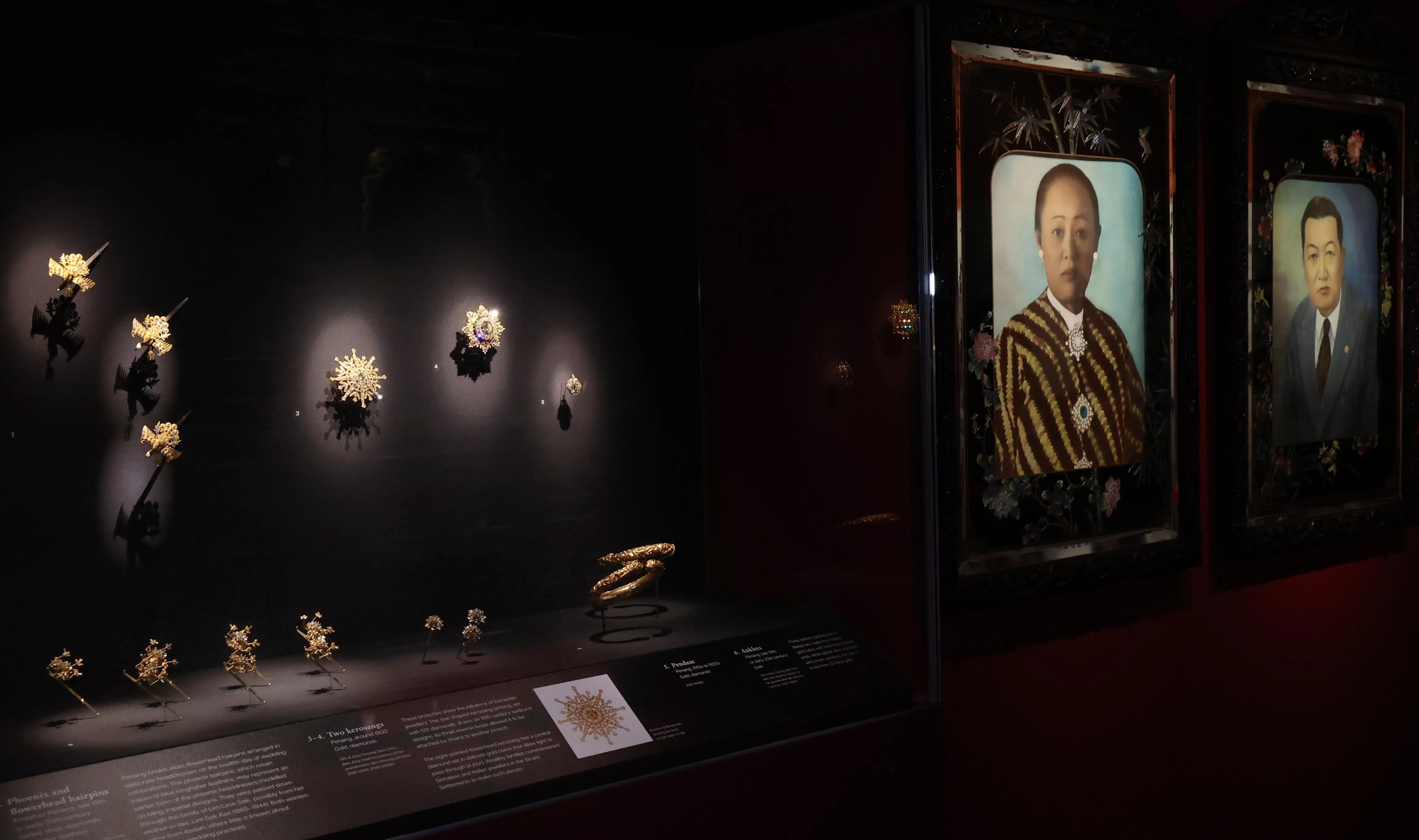
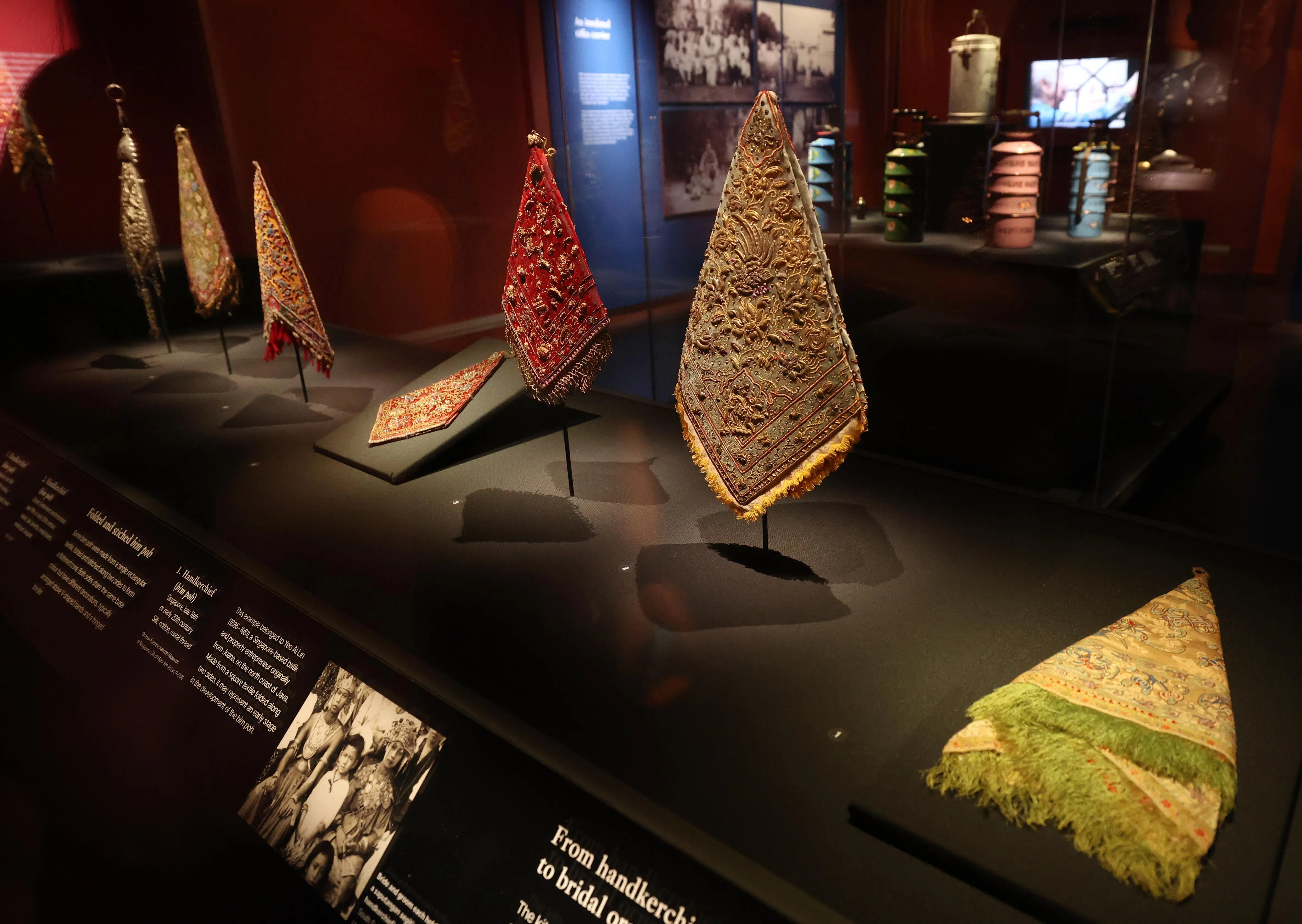
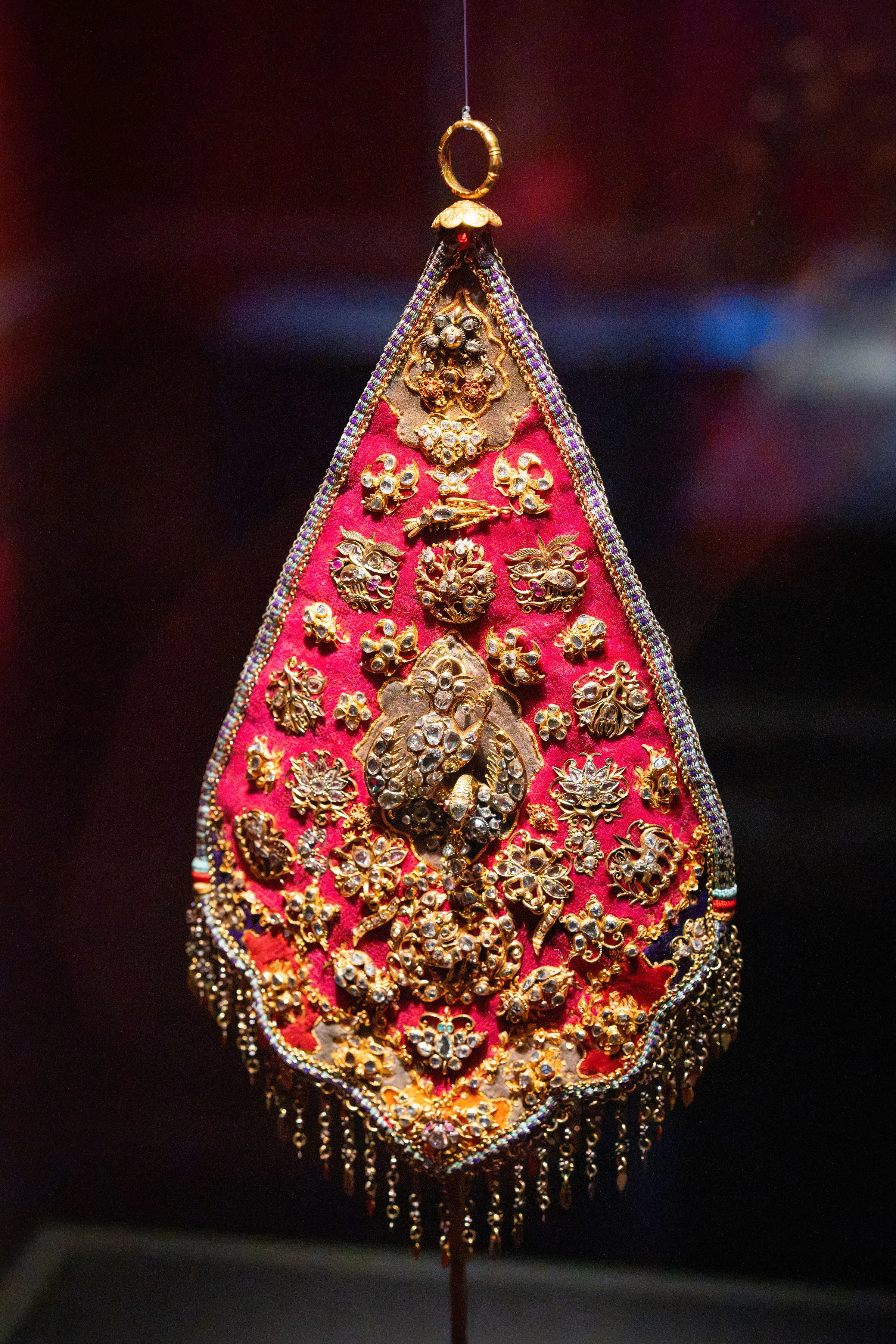
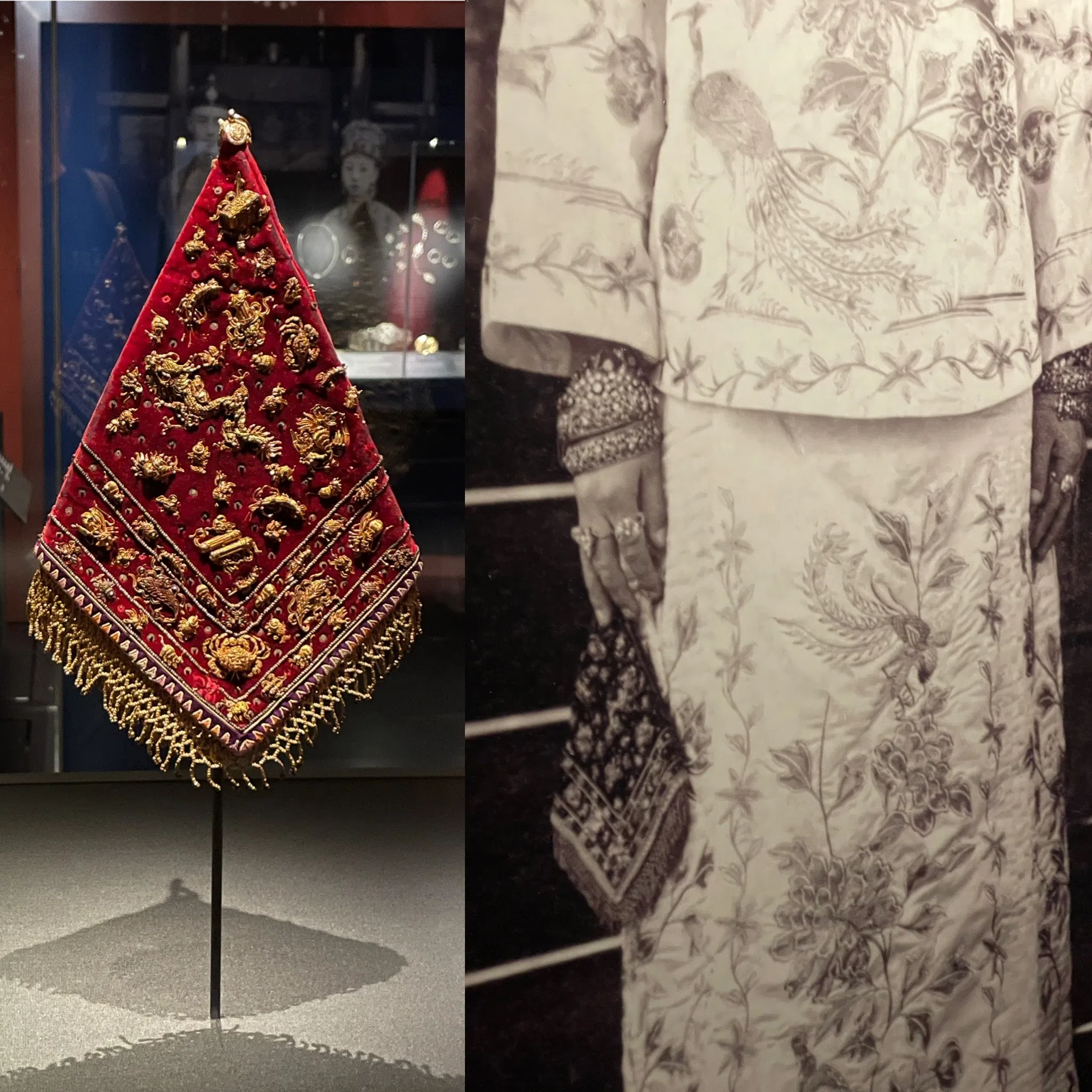
A group of Peranakan Chinese wedding handkerchiefs is among the exhibition’s most captivating displays. Carried by brides at their weddings, the bim poh kemanteng evolved from a cloth handkerchief folded into a triangle into an accessory with a finger ring at its tip, allowing it to hang down over the palm. These bridal handkerchiefs grew increasingly lavish, with intricate embroidery, gold-thread stitching, and floral and bird motifs fashioned from finely coiled and shaped gold wire. Some were even made entirely of silver, becoming bridal ornaments far removed from a handkerchief’s original function. The most extravagant example on display was donated in 2026 by descendants of pioneer merchant Ong Sam Leong. Used by his granddaughter Mary Khoo Gek Choo at her wedding in 1940, it is adorned with more than 100 delicate gold, silver and diamond ornaments depicting flowers, birds and butterflies. The diamonds are cut in different styles, and a single handkerchief required the work of several craftspeople — a remarkable feat.
Peranakan Chinese and Chinese porcelain
In January 2026, the Tun Tan Cheng Lock Trust donated $1.4 million to the Peranakan Museum, establishing Wang’s new position as the Tun Tan Cheng Lock Curator of Peranakan Art. The gift also provided funding to hire a full-time assistant curator of Peranakan culture to support her. She said research into Peranakan culture is still at an early stage. The origins of many objects remain to be uncovered, studied and presented to the public, which could in turn encourage more people with cultural expertise or first-hand experience to help fill the gaps. The intricate relationship between Peranakan Chinese and Chinese porcelain, for instance, still needs to be explored and clarified.
Peranakan Chinese used blue-and-white porcelain bowls, plates, covered jars and spoons imported from China, both in everyday life and for ancestral worship. Much of the blue-and-white porcelain they favoured was decorated with plump-petalled pea flowers and trailing vines. The finely painted designs reminded them of familiar hand-drawn batik motifs, leading them to call it “batik porcelain”.
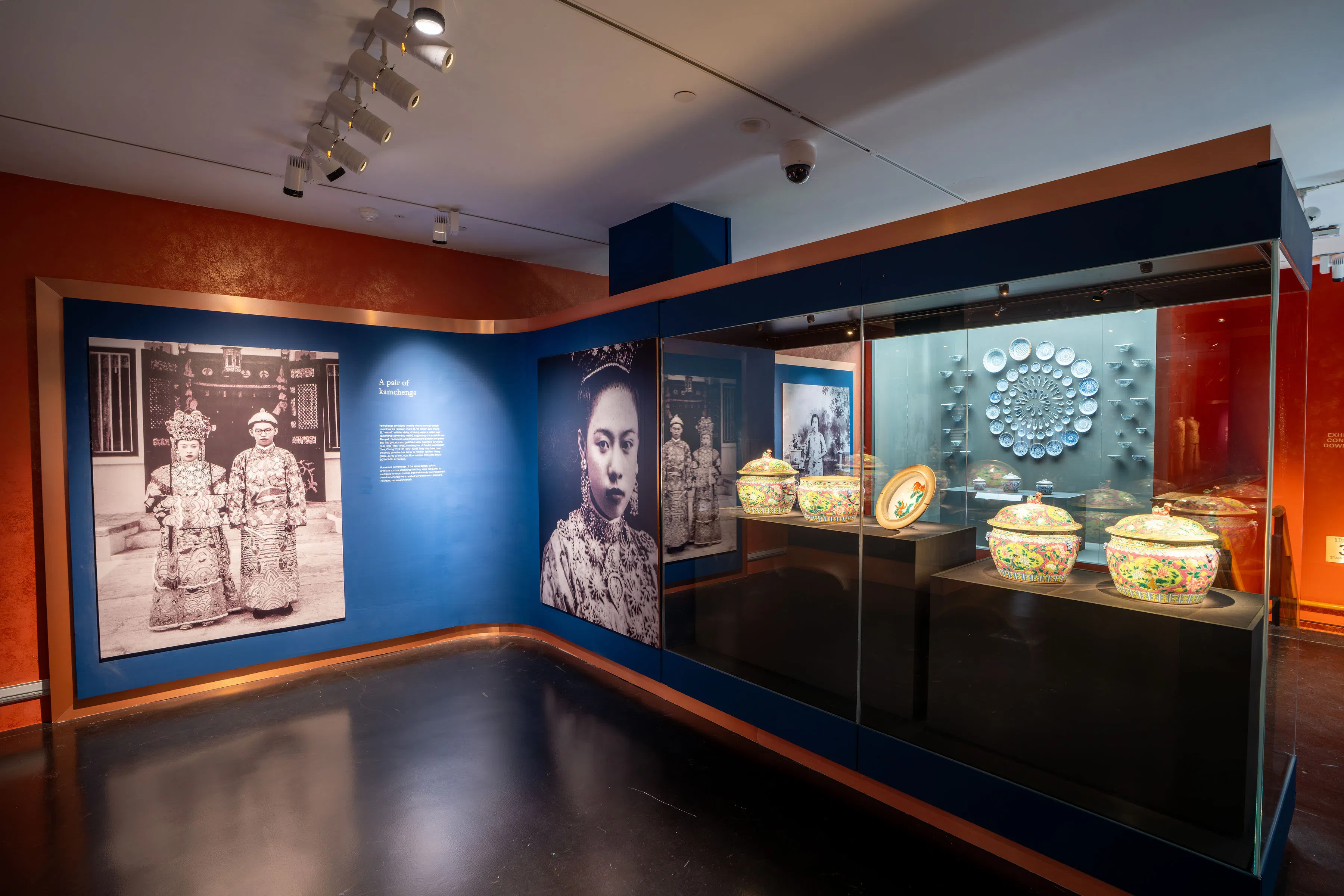
Wang says the kamcheng, a covered jar distinctive to the Peranakan Chinese, still warrants deeper research. Only when she discovered several almost identical large pink kamcheng in the National Collection did she realise she had mistakenly thought the example on display at the museum had been custom-made for a particular family. Decorated with coloured enamels and auspicious motifs such as peonies, spring flowers and phoenixes, these jars usually have a small lion finial on their lids. Their size and form are unusual in Chinese porcelain, and they are unmistakably distinctive to the Peranakan Chinese.
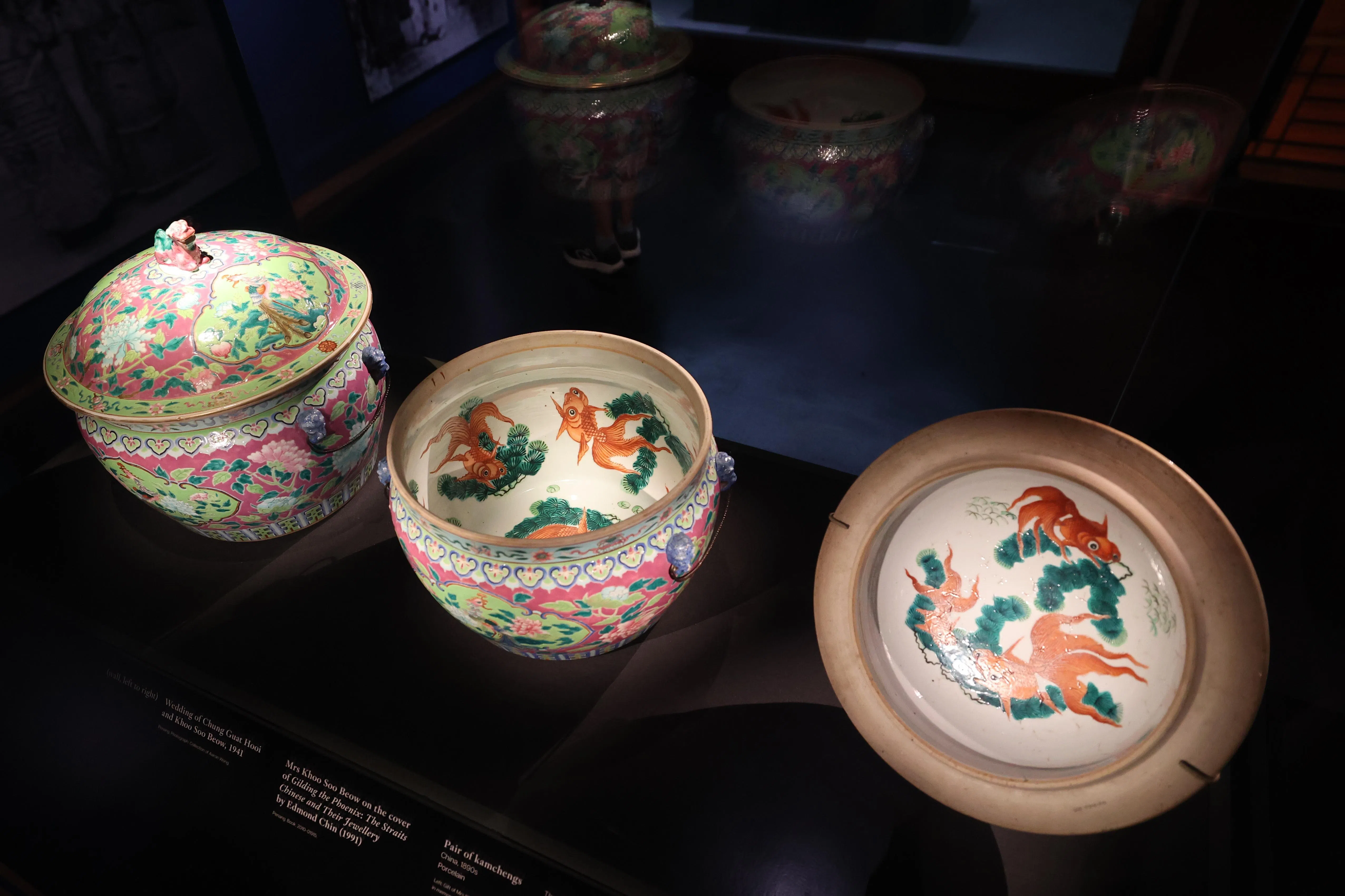
Over the years, the many customs and cultural practices of Peranakan Chinese became interwoven, taking root in daily life as accepted traditions. But as the Peranakan way of life was displaced by changing times, knowledge of their origins and the stories behind them disappeared, leaving today’s researchers with many unanswered questions. Wang says: “We still don’t know how the people who first placed these orders communicated their desired kamcheng designs to the kilns in China, or how those designs became the template for subsequent Peranakan Chinese orders. What practical uses did the kamcheng have in Peranakan Chinese life?” One theory is that the jars held sweets at weddings and, like large vases, also served as household decorations, with larger examples signalling greater wealth. Wang adds: “From the term ‘air kamcheng’ — ‘air’ means water in Malay — we can also surmise that they held water. What is interesting is how this imported object developed such a close relationship with the community that bought and used it, becoming part of Peranakan Chinese material culture.”
For people living in port cities, lives and consumer tastes that span geographies and cultures are inevitable. Returning to the questions at the start of this article, Peranakan cultural identities are, in fact, fluid. Wang says: “In a port city, where we encounter people of different ethnicities and consume goods from all over the world, it becomes harder to say that because I belong to a particular ethnic group, I use only things from that group. Peranakan communities occupy this liminal identity even more — rather than being preoccupied with where things come from, they tend to be open to sharing diverse cultures. We should approach cultural traditions with the same mindset. In this exhibition, we can see the connections between makers, objects and owners, and how objects from different geographical locations are eventually absorbed into local culture.”

▲Exceptional/Everyday
Venue: Peranakan Museum, 39 Armenian St Singapore 179941
On now until 29 August 2027
Opening hours: 10am to 7pm daily; 10am to 9pm on Fridays
