


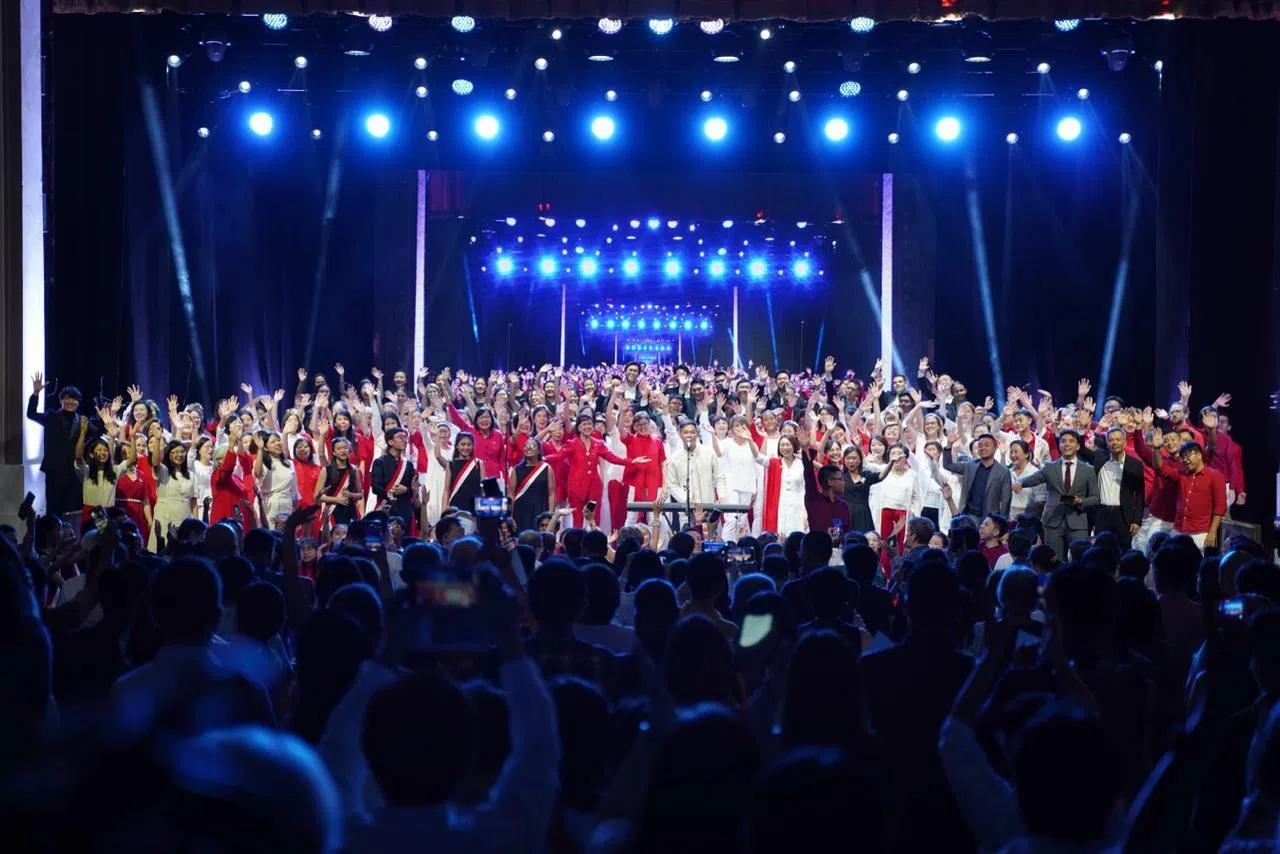
In December 2026, 375 singers from Voices of Singapore (VOS) will travel to Germany to take part in the Walking in Beauty concert series at the Berliner Philharmonie’s Chamber Music Hall.
Founded by Singaporean choral conductor and composer Darius Lim, VOS has 30 choirs and more than 2,000 members, including children, young people and seniors, as well as singers with special needs.
Berlin-based organiser CHORALSPACE initially invited only Lim. He will be the series’ first featured Asian composer, joining a roster of past featured composers that includes prominent figures in choral music such as Latvia’s Ēriks Ešenvalds, Norway’s Ola Gjeilo and the UK’s Bob Chilcott.
After receiving the invitation, Lim asked, “Instead of one Singaporean voice, can I bring three hundred-plus Singaporean voices?” The proposal reflected a belief that has guided him throughout his years of running choirs: “Everyone can sing.”
At the concert on 13 December, Lim will conduct VOS and a multinational Combined Choir in performances of eight of his own compositions.
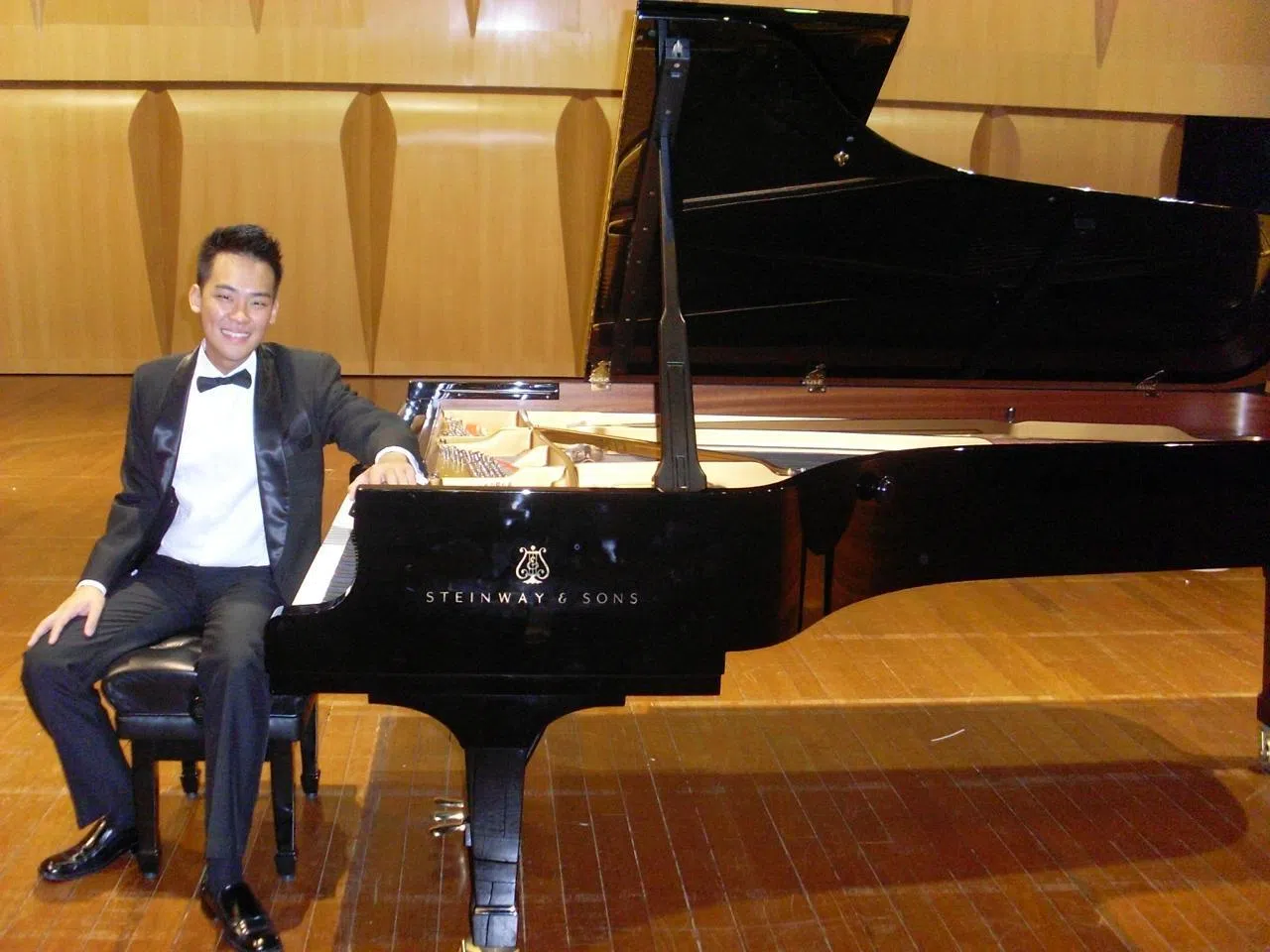
Lim joined his school choir in primary school and initially taught himself to play the piano, largely through trial and error. After his O levels, his mother took him to visit the former premises of her alma mater, St Anthony’s Convent, on Middle Road, which by then housed the Nanyang Academy of Fine Arts (NAFA).
Lim had not considered studying music, but during that visit he met Richard Adams, then head of NAFA’s music department. He played one of his own compositions and sang a song on the spot. Adams invited him to enrol, and Lim went on to pursue a double major in piano performance and composition, including music technology.
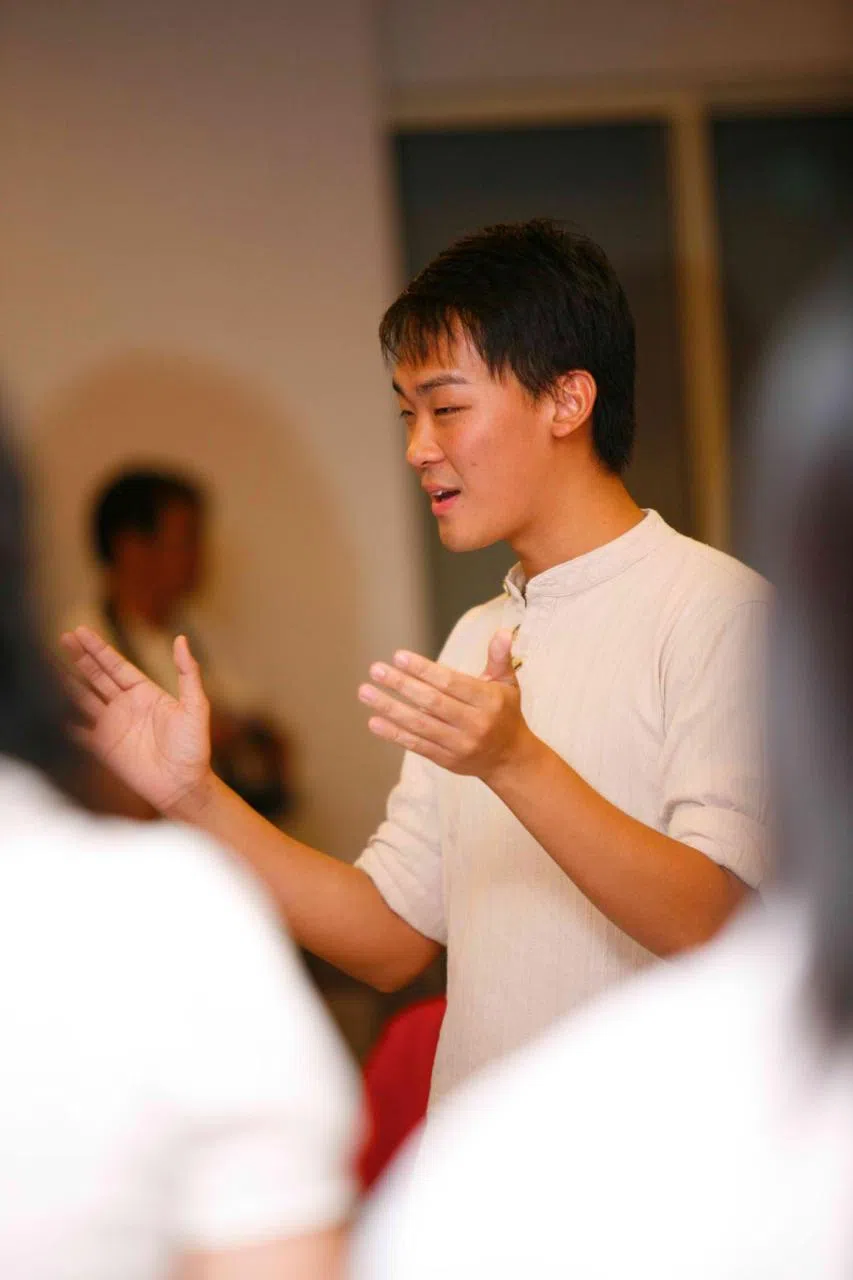
In 2004, at the age of 17, Lim formed a youth choir at his church and became its conductor. “That was when I found that I had a great passion,” he recalled. “I felt I had this gift: I could immediately hear things that many others couldn’t — harmonies, the blending of voices. It was such a part of me.”
Around the same time, his secondary school choir conductor also invited him to assist with school choirs.
Leaving the solitary practice room
Lim had won prizes in piano competitions, but during his studies he gradually realised that he did not want a career as a pianist. “I felt that piano was too solitary. I didn’t like practicing alone for eight hours.”
In 2009, he took over the National University of Singapore Society (NUSS) choir and gradually shifted his focus to choral conducting. He later pursued further studies at the Royal Welsh College of Music and Drama in the UK.
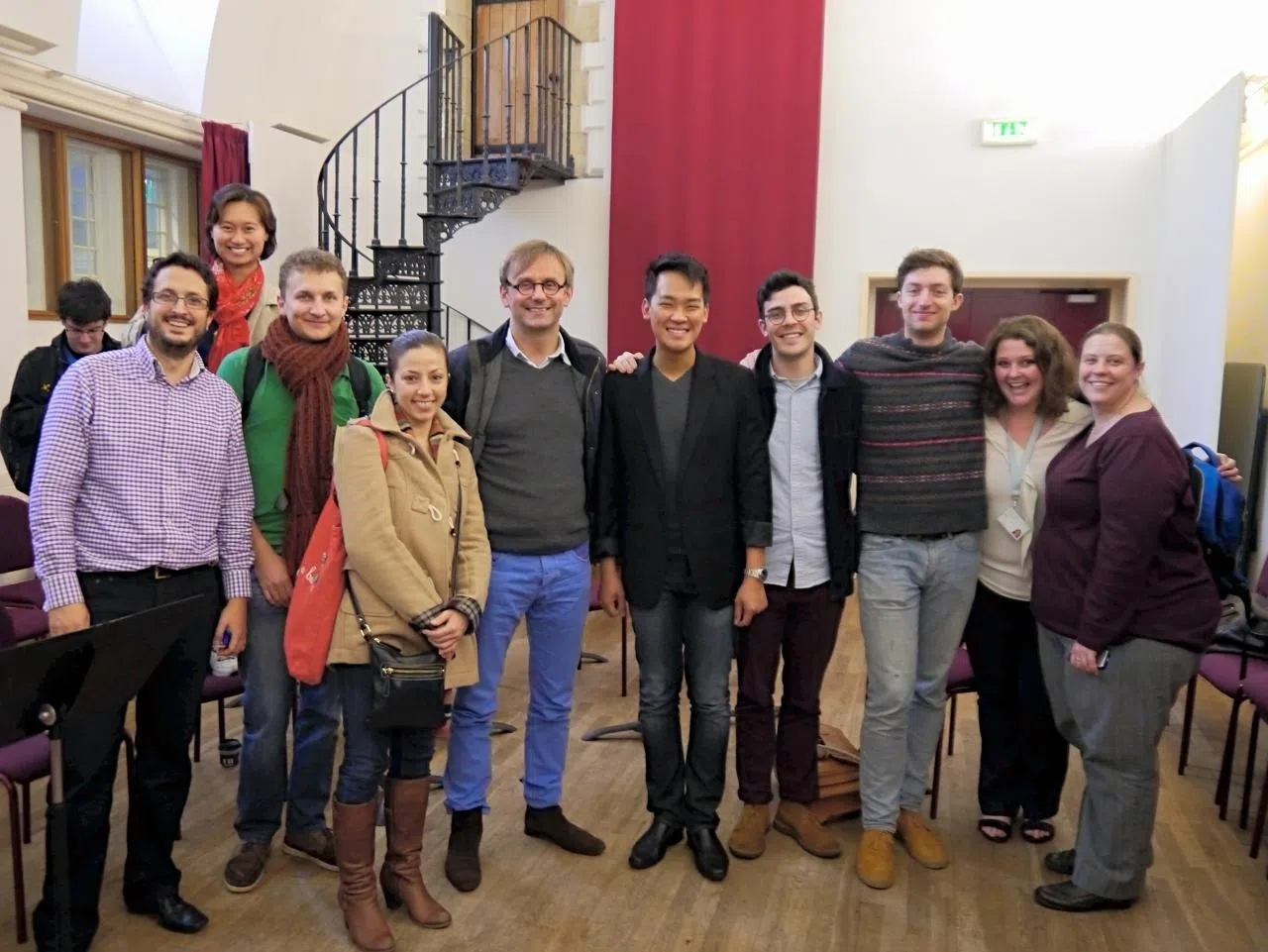
While studying in Wales, he attended a sports match and heard the entire crowd singing traditional songs together. Recalling the experience in a 2023 interview with Lianhe Zaobao (LHZB), he said, “I was moved by that musicality so deeply ingrained in the nation’s identity, and decided to establish Voices of Singapore.”
In 2014, Lim returned from Wales and founded the VOCO women’s choir. Two years later, he launched the Voices of Singapore Festival, giving dozens of school and amateur choirs a stage each year.
As the festival continued, he began thinking about how to give people who wanted to sing a choir they could join throughout the year. He formally launched VOS in March 2019, and VOCO was renamed the VOS Ladies Choir.
VOS started with S$50,000, of which S$15,000 came from Lim’s personal savings. The rest came from sponsorship funds and performance income that VOCO had accumulated over the years.
Through a friend in property, Lim rented an inexpensive space at 51 Waterloo Street on a short lease of just over a year.
Balancing charitable and commercial work
“Space is king in Singapore. Without space, you [can’t] do anything, especially for choirs, where they need a space.” In his search for a permanent home, Lim approached dozens of businesses, only to meet with rejection.
The breakthrough came through a partnership with Perennial Holdings, which had worked with him on the choral festival.
VOS began holding its choral festival at Perennial’s CHIJMES in 2016. The two sides later discussed moving VOS into Capitol Piazza, beside City Hall MRT Station.
In 2023, VOS secured a shopfront and rehearsal space at a concessionary rent. By then, it had more than 1,000 members, bringing substantial footfall to the mall each month. It also performed at the mall during Christmas and other festive periods.
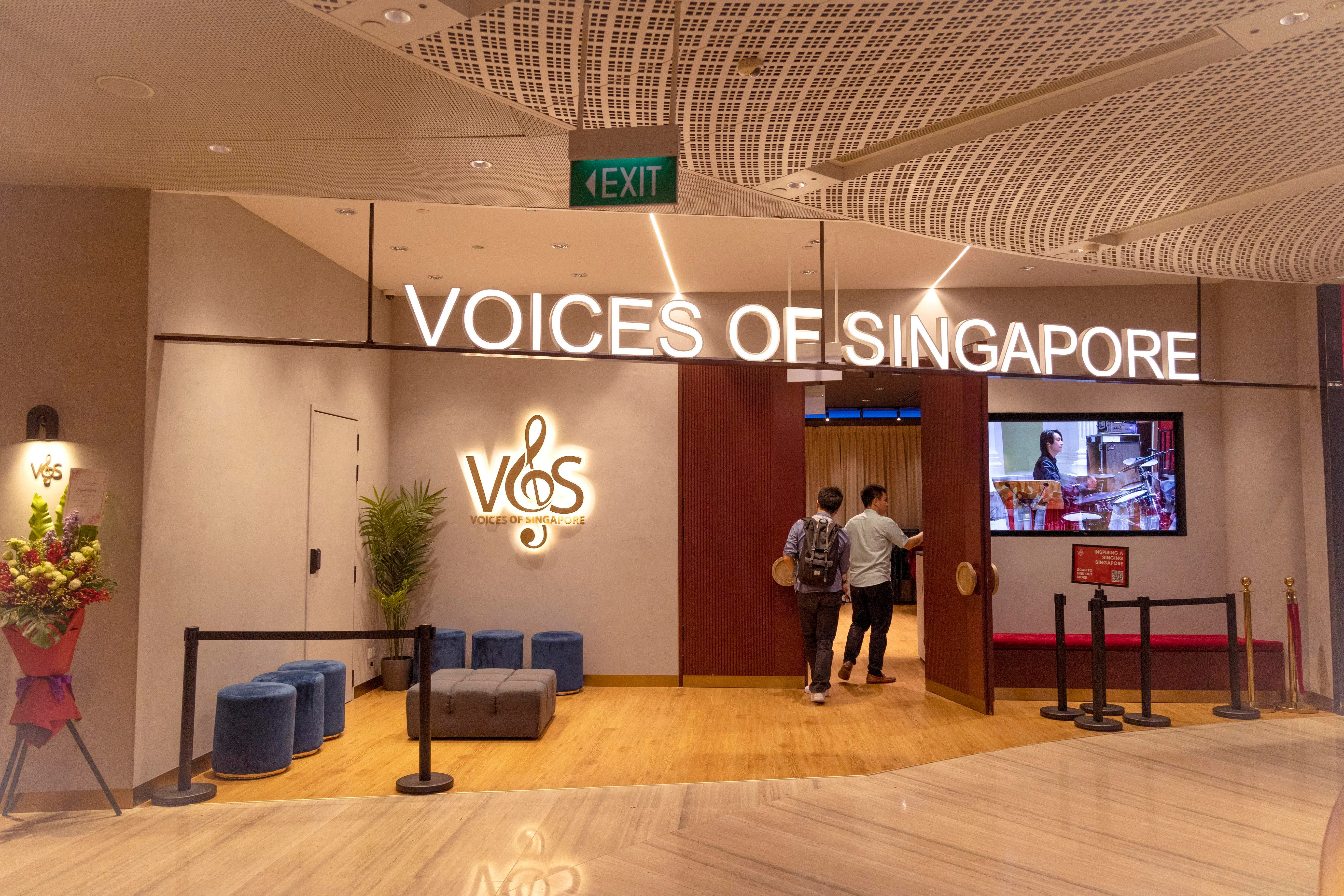
With a permanent rehearsal venue, children’s choral classes gradually became a steady source of income for VOS. The children’s choir follows the Ministry of Education’s school calendar, with four terms a year.
Under its 2027 fee schedule, regular training and performing groups cost S$650 to S$800 a term, or S$2,600 to S$3,200 a year.
For younger children, classes accompanied by a parent cost S$480 a term, while independent classes cost S$530. Adult choirs, such as the ladies, men’s and city choirs, charge S$225 a quarter.
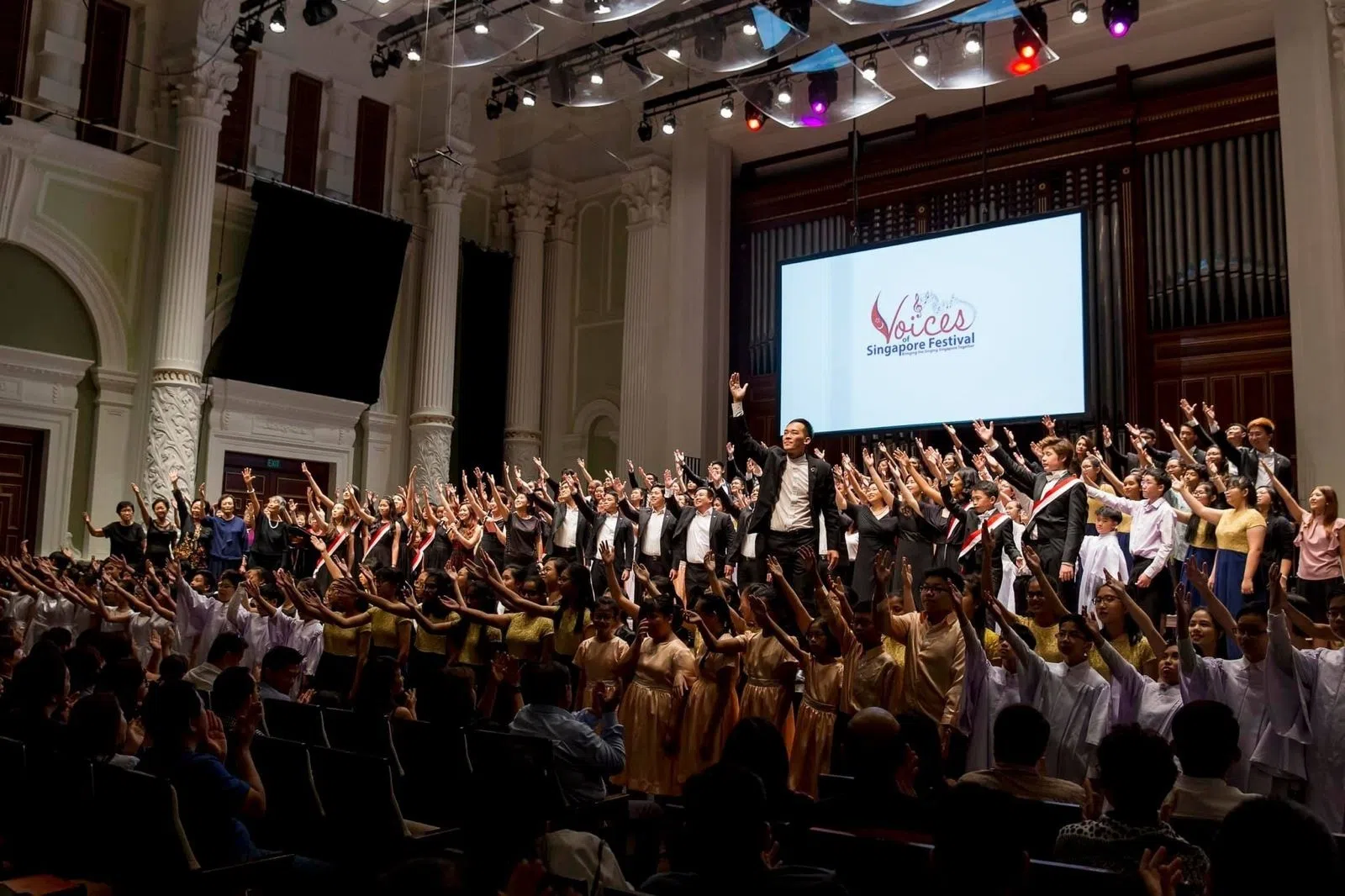
VOS also takes on corporate choral projects, providing choir training for companies. Income from these choirs, together with public donations, sustains its operations. Lim said: “With just the children’s choir alone, we would be profitable and sustainable, but that’s not my vision.”
He noted that VOS is a charity and cannot distribute profits as dividends. Donations may also be earmarked for specific purposes. For instance, money donated to support people with special needs can be used only for programmes such as Starlight Voices, a choir for children with special needs.
For the Berlin trip, some members are paying their own way, while others have applied for and received assistance from VOS’s Support a Singer Fund. Lim said some Starlight Voices members had received assistance, which also covers travel expenses for their accompanying caregivers.
Reaching children, seniors and people with special needs
In 2021, VOS brought in conductor Tham Pei Wen to launch Starlight Voices with funding support from Temasek Trust.
Initially, entry was by selection. Lim wanted to give these members the opportunity to receive training and build a choir capable of performing on stage.
After running the choir for a while, he found that other children wanted to join too. Some needed more time to train, whereas others could not express themselves verbally.
VOS therefore introduced a children’s training choir and open music activities. The training choir prepares children who hope to join the performing choir, while those attending the open activities can play percussion instruments or move to music.
Lim’s collaboration with SG Enable began when he wrote a theme song for the agency. SG Enable later helped support Starlight Voices, and the two sides went on to discuss establishing a permanent VOS space at Enabling Village in Lengkok Bahru, Bukit Merah.
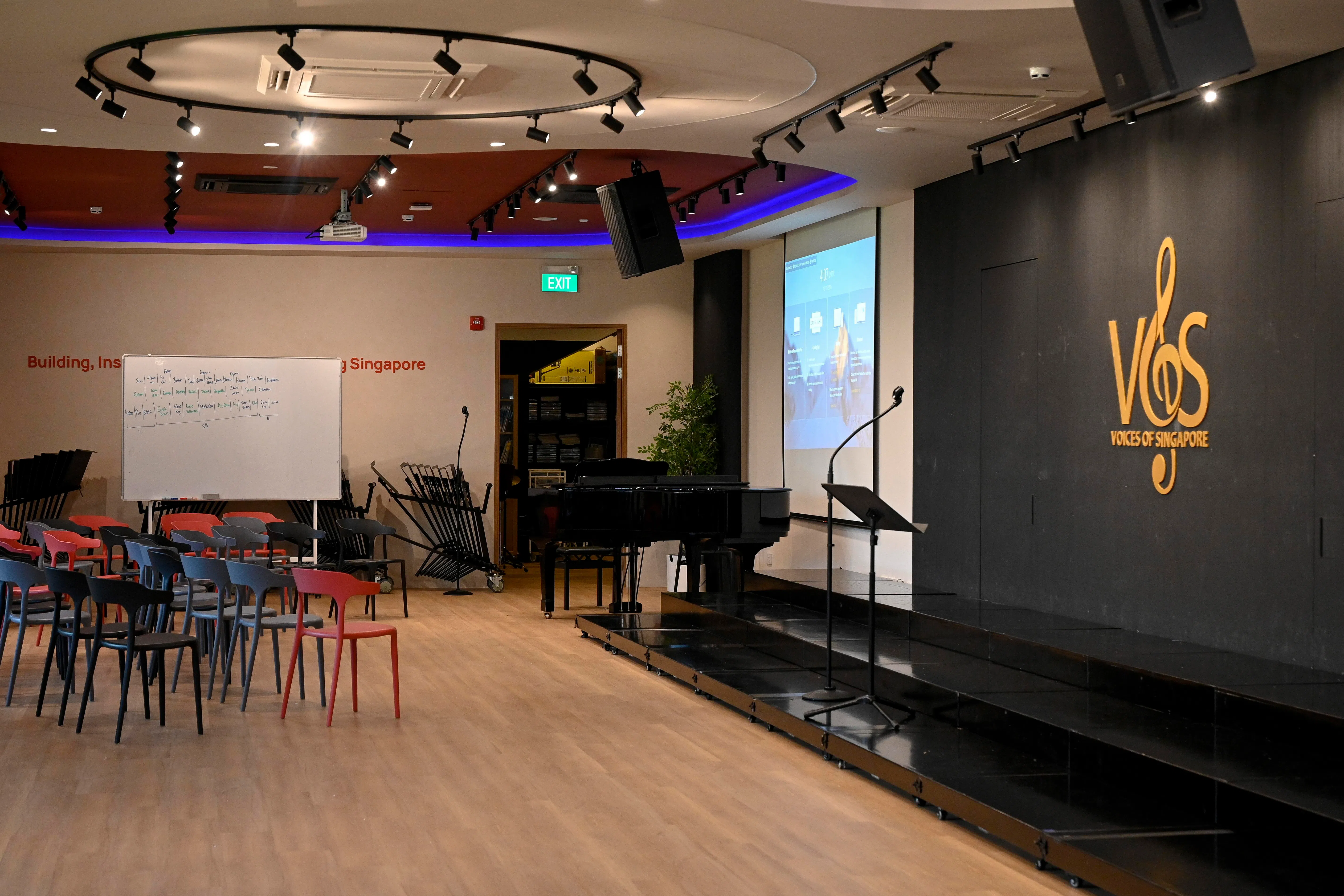
In September 2025, VOS moved into the third floor of the development’s new extension, which has a 200-seat concert hall, multipurpose classrooms and office space.
Community programmes such as Starlight Voices gained more room for rehearsals and performances, while the performing ensembles continued to mainly use the Capitol premises in the city centre.
In 2024, VOS launched Silver Voices, a choral programme for seniors. Working with about 20 Active Ageing Centres, it offers free neighbourhood choral sessions for older people and has drawn more than 1,000 participants to date.
“We have two narratives, which are excellence and that everyone can sing,” said Lim. “How do we marry these two narratives together? For every program, excellence means a different thing — the excellence of teaching, the excellence of singing”.
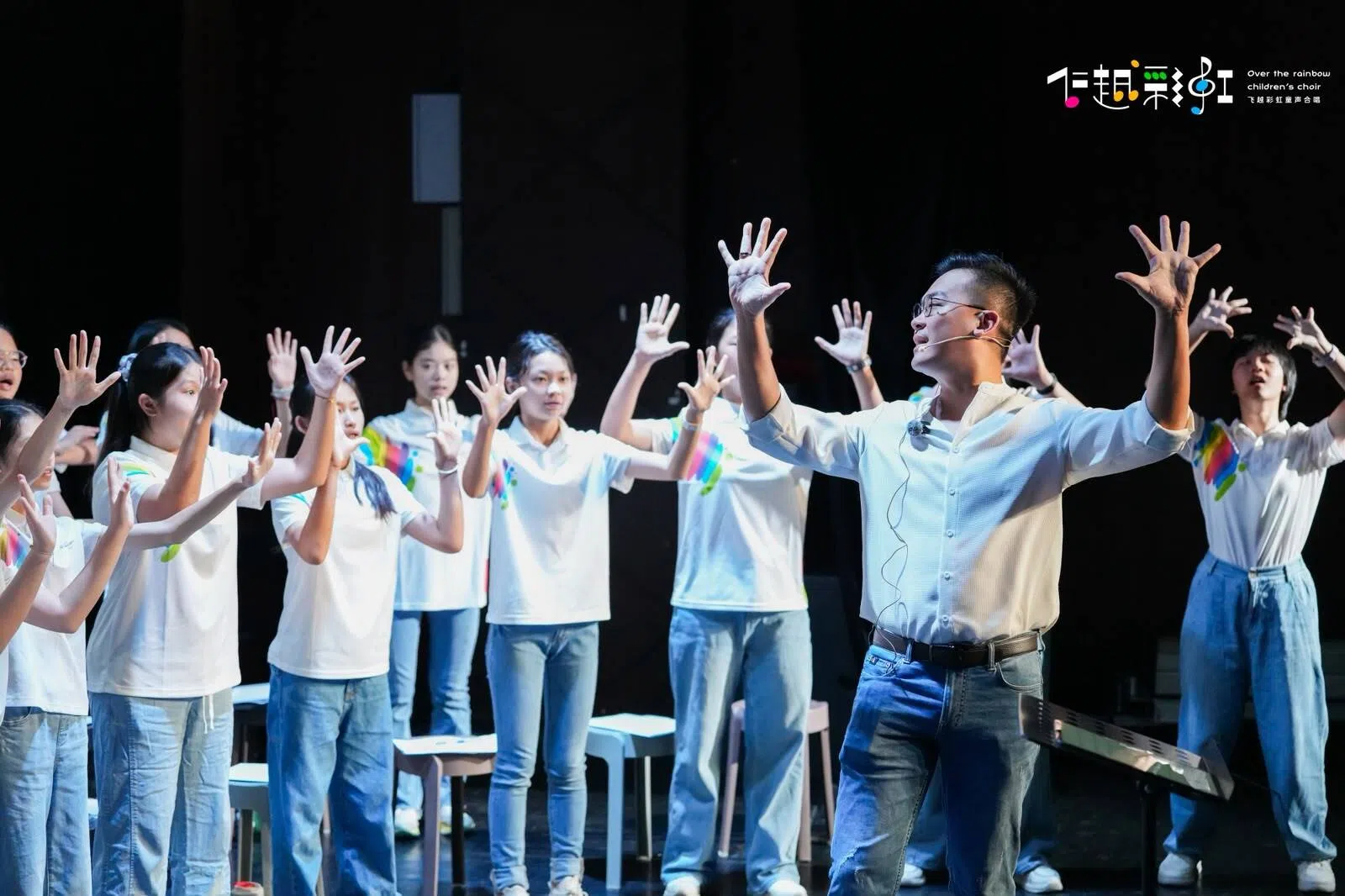
As for designing programmes for children, Lim said, “Three things I consider when I’m planning a program for children is what the parents want versus what the child needs and what I think they have to have. So these three things always have to be balanced.”
In his view, parents who pay for the classes want their children to have opportunities to perform, broaden their horizons and earn certificates that record their learning. Children care about whether the repertoire is fun and whether they have friends to perform with.
As a conductor, Lim wants them to sing well and develop character through rehearsals. He said artists designing programmes often start with what they want children to learn, overlooking what parents value and why children are willing to come and sing.
He cited the VOS festival as an example. Grading assessments and concerts are held on the same day, so parents can watch their children perform and gauge their progress through the assessments. Children also get to perform with friends and interact with other choirs.
Being a responsible arts leader
Fear of failure also drives me. With so many people now depending on me, that fear forces me to think outside the box, do more research and be a more responsible arts leader. — Darius Lim
How did an artist skilled in conducting and composition develop such a keen business sense? Lim said he had enjoyed bringing people together since his student days, and liked watching documentaries about business leaders and entrepreneurs.
He recalled taking an interest in Steve Jobs while studying at NAFA. “I think it also came from that want to start something of my own that I can call my own, but to also … make it belong to the people.
“But also that fear of failure that pushed me, right? With so many people now depending on me, that fear forced me to think out the box, research more and also [be] responsible as an art leader.”
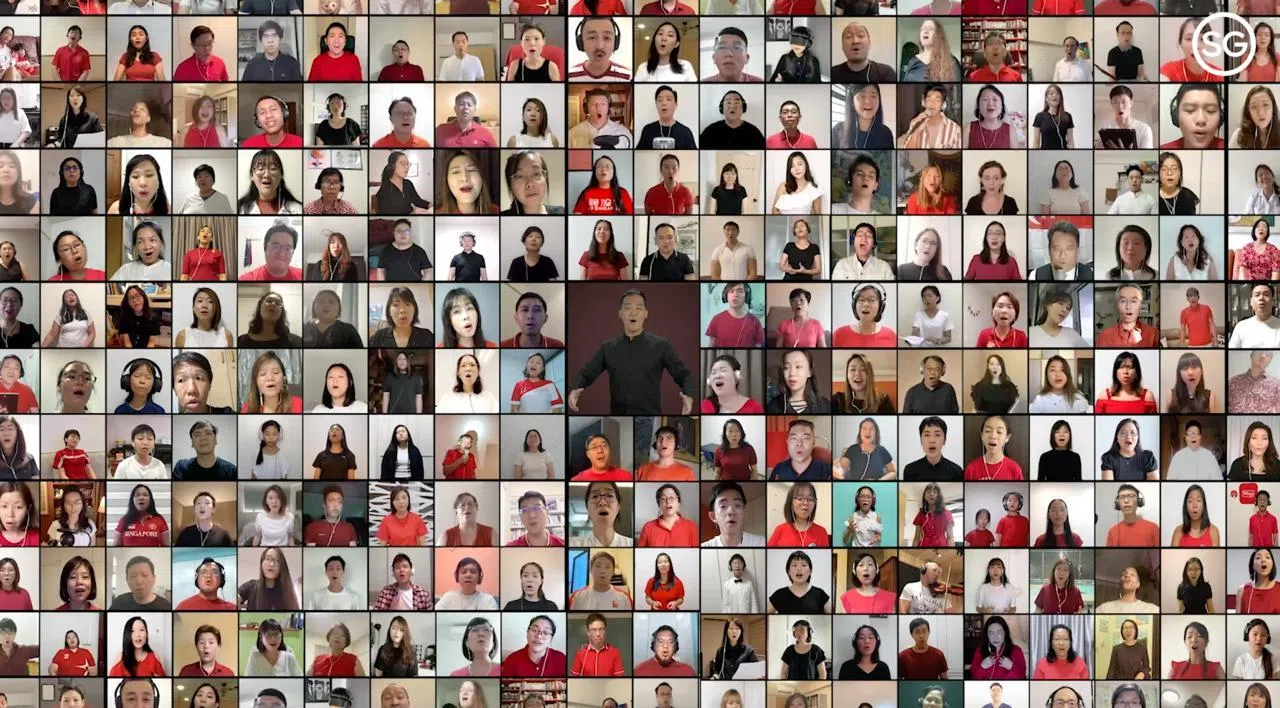
Lim said VOS receives about 150 performance invitations a year, ranging from Christmas carolling to corporate events. He still personally leads the ladies choir, the children’s choir performing group and the youth choir, and also conducts the adult community choir Chorus of the People.
When other music ensembles, music schools and arts organisations seek his advice, he readily shares his experience of running choirs and rehearsals. “We don’t expand to eat up everybody. We want to contribute to help the others, and I think that’s how we truly become colorful as an ecosystem.”
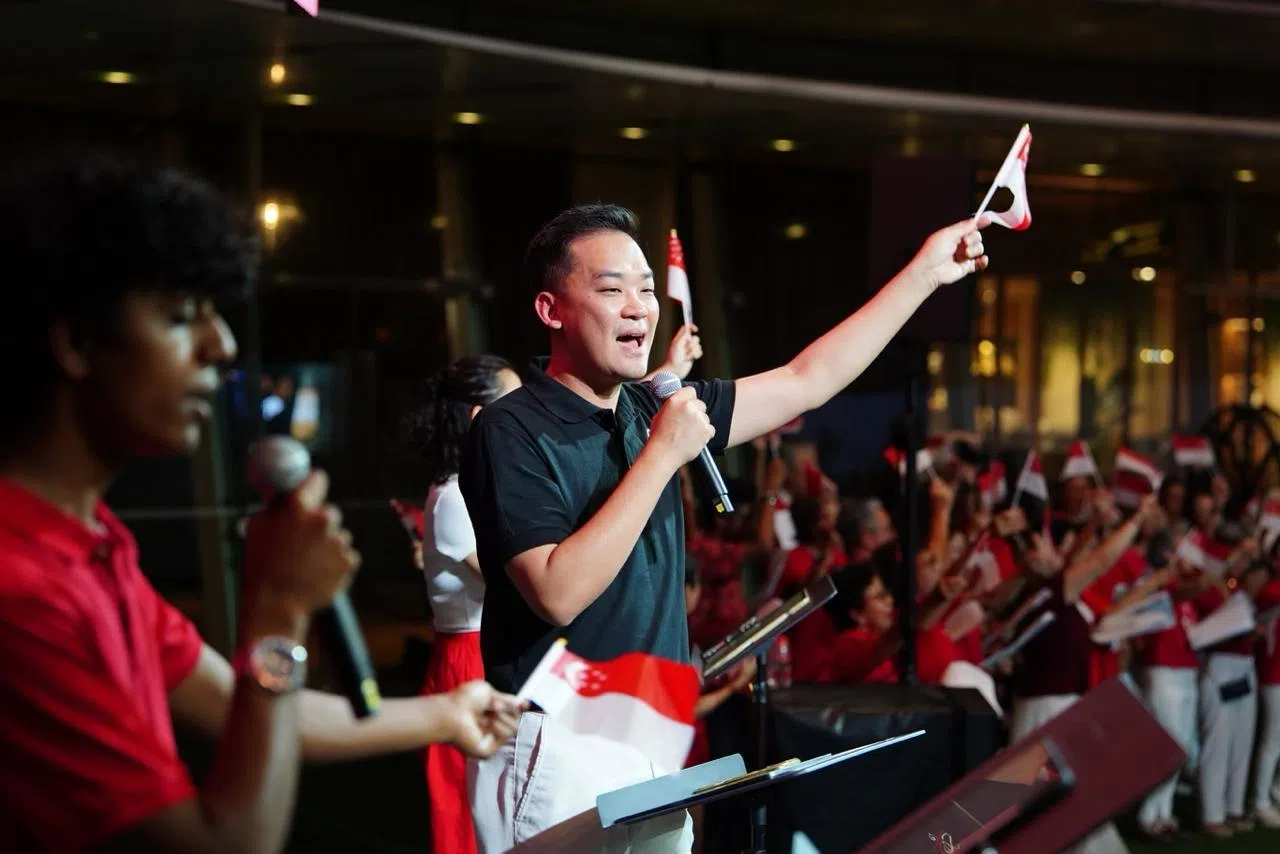
When asked about his workload, Lim said, “I’m always overworked.” He is currently looking for an administrative head and giving other conductors more responsibilities.
His greatest concern and “fear is that it ends with me.” He hopes that one day, even without him, VOS can continue operating as usual.
