


First, remember five delivery stops. Complete those, then memorise the next five. It is one way FedEx improves delivery efficiency, and a habit that 66-year-old courier Hung Thiem-Ryh has followed for years.
Hung Thiem-Ryh said that when he joined FedEx in 1986, there was no mobile navigation. He had to find his way using street directories and maps supplied by the company, gradually learning his assigned area.
Looking back, Hung said: “The difficult part then was not being familiar with the road names. I had to look them up in the street directory. Once I became acquainted with them, it got a little easier.”
Forty years on, technology has advanced, but the five-stop method still works. Hung continues to use it to plan his collection and delivery routes.
When asked why he remembers five stops rather than more, he laughed: “My brain isn’t that big. Five is enough! Besides, I have to watch the traffic. There are many things to think about, and safety is the most important.”
Witnessing Singapore’s growth and transformation
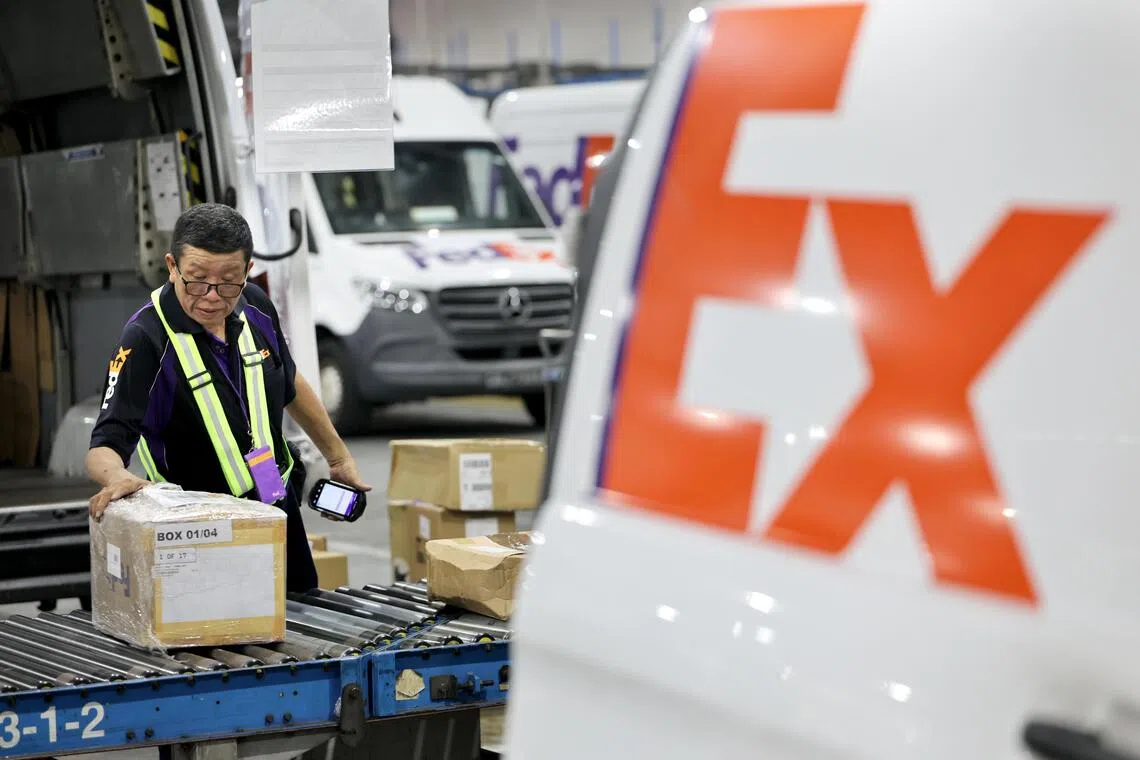
Before he knew it, Hung had spent four decades as a courier. Each busy day begins with preparations before he heads out.
At FedEx’s logistics facility in Changi, his eyes work like a scanner, carefully checking each parcel on the conveyor belt. Sorting, loading, collecting and delivering make up his familiar daily routine.
When he was younger, Hung never imagined he would stay with one company for so long. A cheerful and chatty man, he laughed: “If you hadn’t asked, I wouldn’t have counted. It turns out I’ve been working here for 40 years! I just enjoy each day as it comes.”
Hung, who previously worked as an apprentice electrician, joined FedEx through a friend’s recommendation. The friend was already working there and told him the pay and benefits were good. As Hung enjoyed driving and meeting new people, he decided to give it a try.
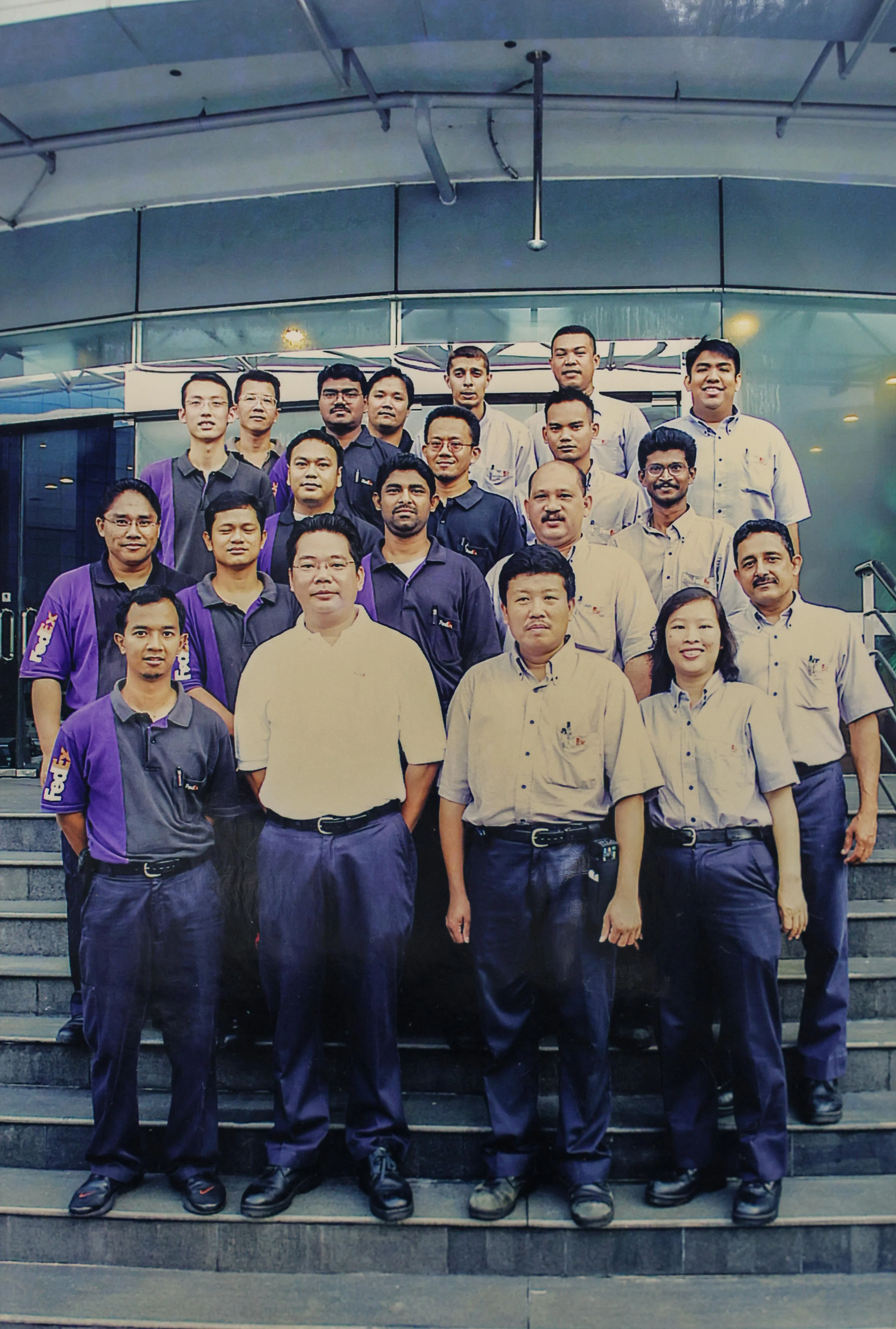
“I knew nothing about courier services when I came for the interview. They just said the work mainly involved delivering goods, so I thought I might as well give it a go and learn along the way.”
Recalling the employee numbering system in the early days, Hung said the company’s local operations were small then, and numbers were assigned in joining order. “It went from 1, 2, 3 and so on. I was number 61.” Touching on his age, he said: “I’m probably the oldest courier in the company.”
Through his years of collections and deliveries, Hung has witnessed Singapore’s growth and transformation. “The airport, for example, has been built bigger and bigger. It used to be in Paya Lebar; now it’s in Changi. The roads have changed a lot too, and high-rise buildings have gone up one after another.”
One to two hours on his feet just sorting parcels
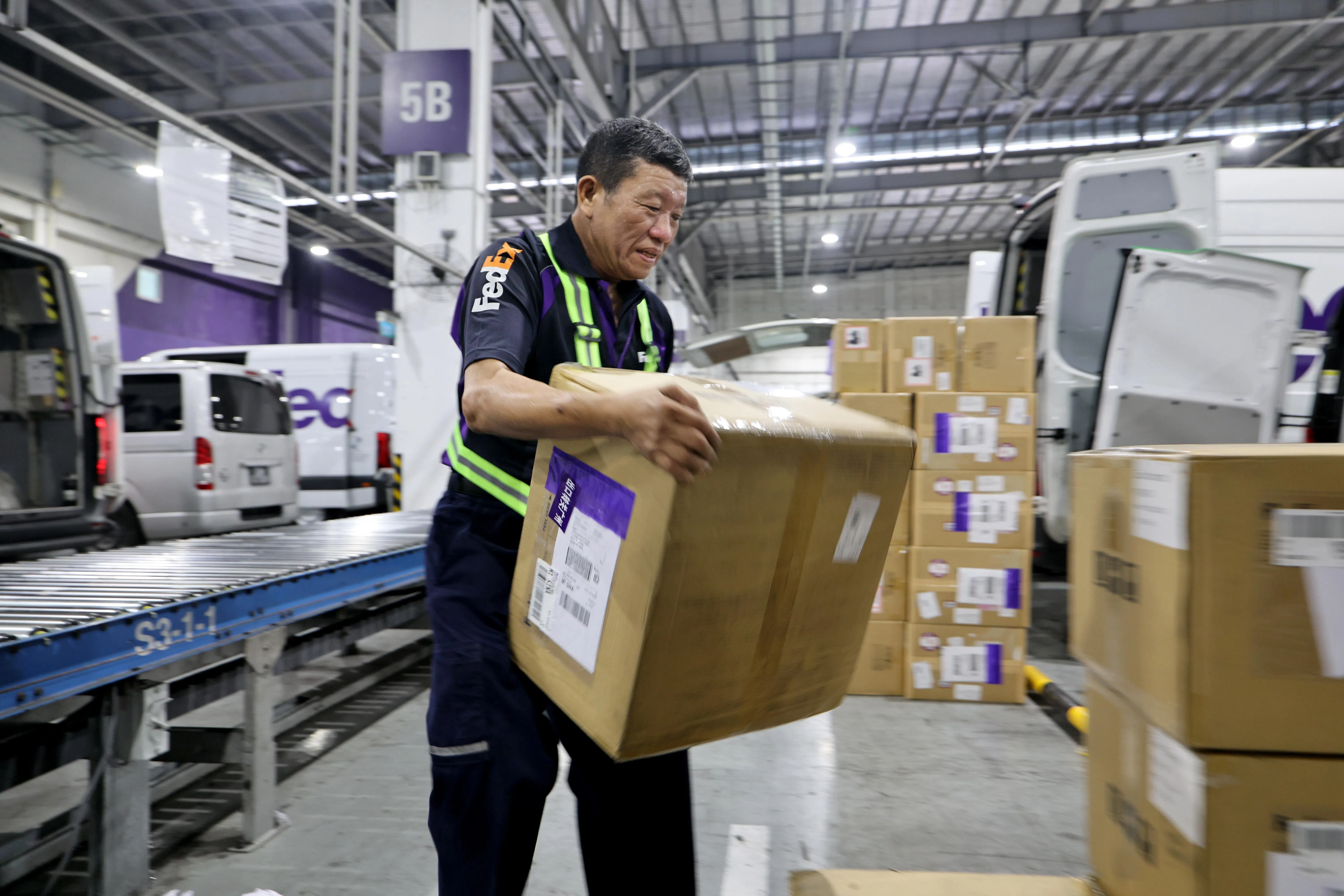
When talking about work, Hung repeatedly returns to the word “happy”. He said: “Pay is of course important. But coming to work every day, seeing colleagues and saying hello to everyone means I don’t dwell on things, and time passes quickly too.”
Over the years, he has gradually become friends with some customers. Sometimes, when they meet outside work, they take the initiative to greet him. But the job has its challenges too.
Hung usually leaves home at 6.15am. After arriving at work, he checks his vehicle, attends a pre-shift briefing and starts sorting parcels. Sorting alone keeps him on his feet for one to two hours. Once he has finished loading and scanning the parcels, he heads out some time after 9am.
Around 3pm, he returns to the company with shipments collected that morning for air freight. If there are more parcels to deliver, he heads out again, returning after 7pm. He visits more than 40 stops a day, collecting and delivering more than 100 items in total.
Hung acknowledges that he has slowed down a little with age, and sometimes finds heavier shipments difficult to lift.
“I’m in my 60s now, so lifting heavy things is a bit harder. But the customers are very kind. If I ask for help, they will help, and so will my colleagues. Sometimes, if something is too heavy, you shouldn’t force yourself to lift it and risk getting hurt. You have to know your limits.”
As technology advances, the tools used at work continue to change. Hung approaches new things with a belief in lifelong learning. “I’m not against learning. Learning is a good thing. It’s a way for us to improve too.”

Hung has been doing the job from his 20s through to his 60s. Although people recommended him other jobs over the years, he had children to raise at the time and felt that staying at FedEx was the more secure choice.
The income from his job has enabled him to support his family and pay for his two children’s education. Both have now married and have urged him to retire early or consider less demanding work. But Hung has yet to decide when to retire, saying he will see when the time comes.
Hoping for more time with his wife
He tries to go to bed early, eat healthily and use his days off to recharge. If time permits, he will plan a holiday abroad.
Because of his work, Hung has relatively little time for his family. His wife has not pressed him to retire, but when he thinks about the day he no longer has to work, what he wants to do the most is to spend more time with her and go on holidays together.
“I work long hours, so I mostly stay home with my wife at weekends. When I stop working one day, I’ll have more time to spend with her, and we can go away together to relax.” Hung ended with an affectionate remark that might make others envious: “My wife is waiting for me!”
