

As the Chinese Communist Party (CCP) gears up for its 21st national congress, official statements on arrangements for delegate elections have dropped wording used for the past 20 years: “There should be both party officials at all levels and party members on the front lines of production and work.” For the first time, they have also not directly disclosed the prescribed proportion of delegates who hold leadership positions.
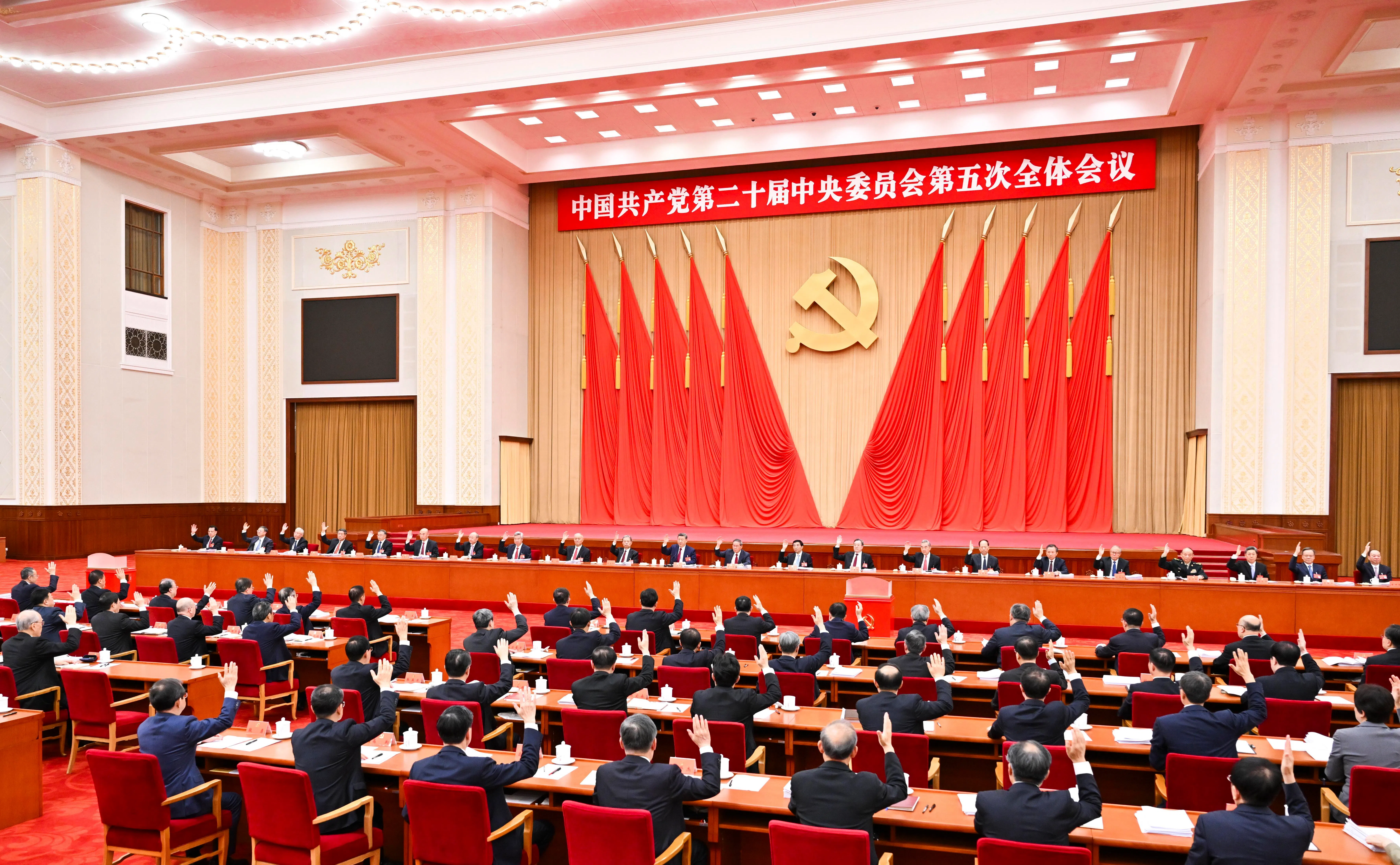
The fifth plenary session of the CCP’s 20th Central Committee, which closed on 29 October, decided that the party’s 21st national congress would be held in Beijing in the second half of next year. Following established practice, Xinhua reported last Saturday (7 November) that the CCP Central Committee had recently issued a notice on the election of delegates to the 21st congress. On Sunday (8 November), it published a question-and-answer briefing with a senior official from the Central Committee’s Organisation Department on the elections.
An election notice with room for “flexibility”
In its coverage of the CCP’s 18th congress in 2012, Phoenix Weekly noted that, since the 14th congress in 1992, neither the party constitution nor other internal regulations had provided detailed and explicit rules for electing delegates to national congresses. Instead, the elections could only be regulated through internal party notices issued before each congress. “This, however, has given the CCP room to adapt to circumstances and exercise flexibility in its operations.”
Some wording changes in the latest notice on elections for the 21st congress may be a concrete expression of such an effort to “adapt to circumstances and exercise flexibility”.
The notice states: “We must ensure the composition of delegates is managed appropriately and guarantee the proportion of delegates from the front lines of production and work.” The Organisation Department official further disclosed that the notice “sets clear requirements for the proportions of delegates who are party officials, frontline party members, women party members and ethnic minority party members”. Among delegates from provinces, autonomous regions and municipalities, as well as the central financial system and Beijing-based central state-owned enterprises, frontline party members should generally account for at least one-third. Among delegates from central party and state organs, frontline party members should generally account for at least 15%.
Although the official said the notice set a clear requirement for the proportion of party officials, the figure was not directly stated, unlike in previous years.
By contrast, the election notice issued ahead of the CCP’s 20th congress in 2022 stated: “The composition of delegates must be further optimised. There should be both party officials at all levels and party members on the front lines of production and work, and guarantee the proportion of delegates from the front lines of production and work.”
The notice for the 20th congress also stated that, among delegates from provinces, autonomous regions and municipalities, as well as the central financial system and Beijing-based central state-owned enterprises, frontline party members should generally account for at least one-third, while party officials and other leaders should generally account for no more than two-thirds.
The election notice ahead of the CCP’s 19th congress in 2017 stated: “The composition of delegates must be further optimised, with an appropriate increase in the proportion of delegates from the front lines of production and work... There should be both party officials at all levels and party members on the front lines of production and work.”
The notice for the 19th congress also made “three increases and three reductions” to the proportions of frontline party members and party officials among delegates. For provinces, autonomous regions and municipalities, as well as the central financial system and Beijing-based central state-owned enterprises, frontline party members should generally account for at least one-third — increases of 1.33, 13.3 and 1.33 percentage points respectively from the 18th congress. Correspondingly, party officials and other leaders should generally account for no more than two-thirds — decreases of 1.33, 13.3 and 1.33 percentage points respectively.
The Organisation Department official said at the time: “Adjusting the composition of delegates to include more frontline party members at the 19th congress will help better reflect the views of the wider party membership, consolidate the party’s class base and broaden its popular support base.”
By comparison, the publicly released information on the election notice for the 21st congress replaces “further optimise the composition of delegates” with “ensure the composition of delegates is managed appropriately”. Neither the standard wording that “there should be both party officials at all levels and party members on the front lines of production and work” nor a specific proportion for party officials is mentioned. This is a first since preparations began in 2006 for delegate elections to the 17th congress.
A shift in the trend towards fewer party officials?
Ye Duchu, a professor at the Party School of the Central Committee of the CCP, also known as the foremost scholar of the party constitution, once told the 21st Century Business Herald that before 2006, notices on delegate elections for party congresses were circulated only within the party or its organisational departments at various levels. The notice for the 17th congress was the first to be made public.
That year, the authorities explicitly stipulated that party officials should generally account for no more than 70% of delegates from provinces, autonomous regions and municipalities to the 17th congress, while frontline party members should generally account for at least 30%.
Southern Weekly noted at the time that the predominance of officials among party congress delegates and people’s congress deputies had long been widely debated among the Chinese public and academics.
Wang Guixiu, an expert on party-building at the Party School of the Central Committee of the CCP, once told the 21st Century Business Herald: “In the past, leading cadres could account for 70% to 80% of the total. This could easily turn a ‘party congress’ into a ‘party leading cadres congress’, or a ‘work conference’ attended by officials from various sectors and departments, which goes against the true purpose of a party congress.”
China’s official Xinhua news agency reported in 2012 that increasing the proportion of frontline party members and correspondingly reducing that of party officials had been a consistent trend at CCP congresses. The two figures were 22% and 78% respectively at the 14th congress in 1992, and 24.3% and 75.7% at the 16th congress in 2002. By the 17th congress in 2007, the proportion of frontline party members had risen to 28.4%.
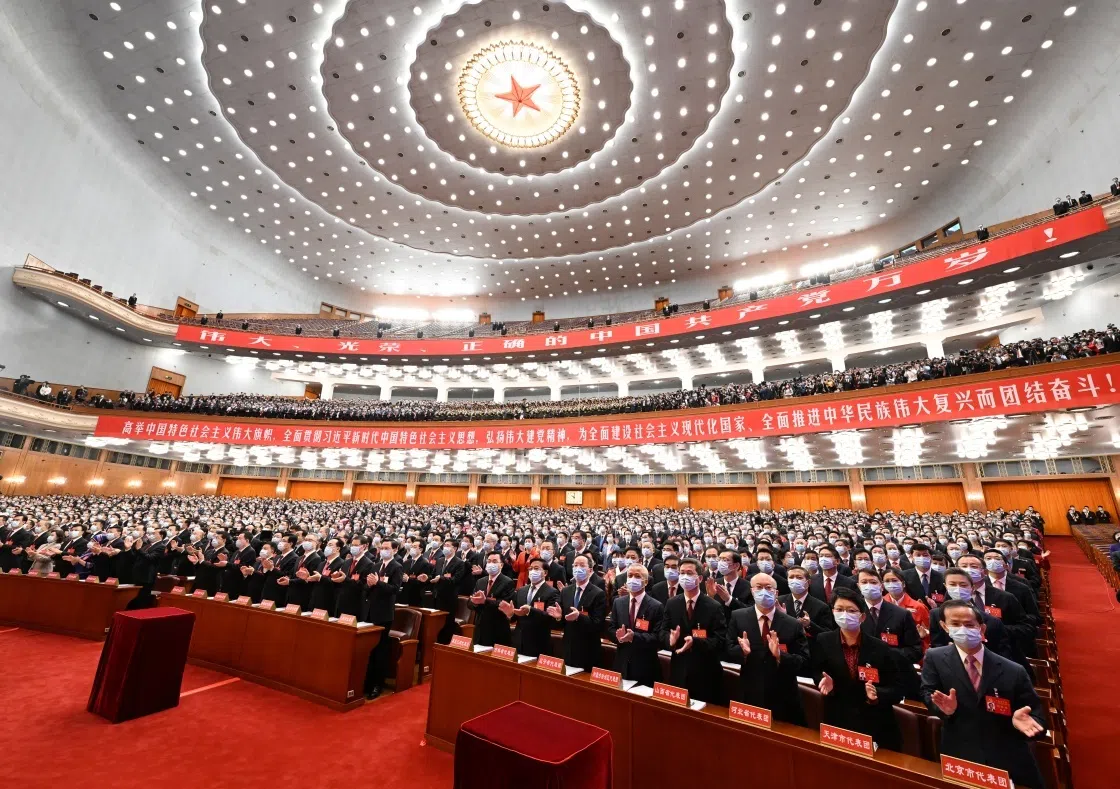
At the 18th congress in 2012, which marked China’s entry into what the authorities call the “new era”, there were 1,578 delegates who held leadership positions, accounting for 69.5% of the total, down 2.1 percentage points from the 17th congress. There were 692 frontline party member delegates, accounting for 30.5%, up 2.1 percentage points.
From the 19th congress onwards, official briefings issued after delegate elections no longer routinely stated the specific proportion of delegates who held leadership positions.
For the 19th congress, the official wording was: “The proportion of frontline party member delegates has risen significantly. Among the elected delegates, 771 are frontline party members, accounting for 33.7% — an increase of 79 people and 3.2 percentage points from the 18th congress.”
For the 20th congress, the official wording was: “The proportion of frontline party member delegates has been ensured. Among the elected delegates, 771 are frontline party members, accounting for 33.6%.”
Over the 25 years from the 14th to the 19th congress, the proportion of frontline party member delegates rose steadily from 22% to 33.7%. At the 20th congress, however, it slipped slightly to 33.6%, and the official wording changed from a proportion that had “risen significantly” to one that had “been ensured”.
Phoenix Weekly previously noted that China has more than 2,800 county-level administrative areas, exceeding the total number of national party congress delegates. On average, each county would have only one delegate’s seat at the national congress. “Under these circumstances, there is a dilemma over whether to elect the county party secretary or a worker or farmer who is a party member.” The continued expansion of the frontline share made it increasingly difficult to redistribute the fixed pool of delegate seats.
Against this backdrop, adjustments to the composition of delegates appear to be stabilising, hence changes to some customary wording for the 21st congress elections are less surprising.
There are other changes to the elections for the 21st congress. The Organisation Department official said that, in view of new circumstances in the development of the party’s work and changes in the size of its membership and number of party organisations, the congress would have 2,360 delegates — 60 more than the 20th congress and a record high.
In listing the sectors from which delegates will be drawn, the notice mentions “new employment groups” for the first time. Official figures show that China has 84 million workers in these groups, including food delivery riders, couriers and ride-hailing drivers, accounting for 21% of its workforce.
However, the margin by which the number of candidates must exceed the number of seats has not been increased for the 21st congress. It remains at “more than 15%”, the requirement since the 18th congress. This suggests that the CCP does not intend to introduce a greater element of electoral choice into delegate elections for the 21st congress.
As the world’s largest political party begins its once-every-five-years elections with “Chinese characteristics”, the approaching 21st congress will provide an important window for outside observers to assess the direction of Chinese politics over the coming year.
