


“Am I speaking to XXX? Your identity card number is XXX and your address is XXX, correct?”
If the person on the other end of the line could recite these details about you accurately, would you accept without question that they were an official or employee of an organisation?
This social engineering tactic uses personal information to win victims’ trust and make them more susceptible to scams. As more organisations suffer cyberattacks that expose large amounts of user data, more people could be at risk of being scammed.
According to the Cyber Security Agency of Singapore (CSA), the number of cybersecurity incidents reported to the authorities each month since September has been three times the monthly average for the first eight months of this year.
Over the past month, at least 13 cyberattacks involving multiple organisations and service providers have occurred in Singapore. Large amounts of users’ personal information, including names, contact numbers, identity card numbers and travel itineraries, have been exposed to varying degrees.
Organisations affected by data breaches include telecommunications company M1, Singapore Airlines, personal finance portal MoneySmart and Fullerton Health.
Although the leaked data does not include sensitive information such as personal bank account details or passwords, even basic personal information such as names, identity card numbers, dates of birth and home addresses could readily lead to more people falling victim to scams.
Such personal information does not directly allow anyone to break into an individual’s account, but it could be used by scam syndicates to gain victims’ trust.
Social engineering is the most common scam technique today. Rather than using hacking techniques to steal confidential personal information, it manipulates human psychology to trick victims into revealing confidential information so that the scam can be carried out.
In theory, the more personal information scammers can accurately recite about their victims, the more likely victims are to believe that the person on the other end of the line is a purported official or authority figure with access to those details.
Scammers use this information to keep the conversation going for as long as possible, probing for vulnerabilities and pressing their advantage until the victim takes the bait.
Compounding the problem, handing over personal information has become almost unavoidable in daily life.
Besides providing such details to essential services such as telecommunications companies and hospitals, consumers may now have to download mobile apps and submit personal information to register accounts for many commercial services. Even buying a cup of coffee from a vending machine may require them to download a particular app and hand over personal data before they can place an order.
Yet the organisations holding this personal data may not have sufficient technical expertise or funding for information security.
A 2024 CSA survey found that nearly 60% of businesses and non-profit organisations in Singapore said they lacked the knowledge or experience needed to implement cybersecurity effectively.
Meanwhile, as artificial intelligence (AI) becomes increasingly sophisticated, hackers can use it to find and exploit vulnerabilities, accelerating attacks and leaving organisations less time to patch security flaws and ward off attacks.
In other words, the technical barriers to stealing personal information, and the costs involved, have fallen.
Similarly, AI means scammers need less human intervention when using social engineering to deceive victims, bringing their costs down too.
This means that more personal information could be leaked in future, while scam syndicates will find it easier to use that information to defraud people.
After more than ten organisations in Singapore reported cybersecurity incidents in succession, CSA chief executive Gwenda Fong urged businesses in a LinkedIn post to speak to colleagues responsible for IT systems and business operations, review whether their systems were adequately protected, and rehearse their response to disruptions to critical systems.
The authorities have also informed operators across all critical information infrastructure sectors about the situation and engaged major chambers of commerce and trade associations to help businesses understand evolving threats and take appropriate precautionary measures.
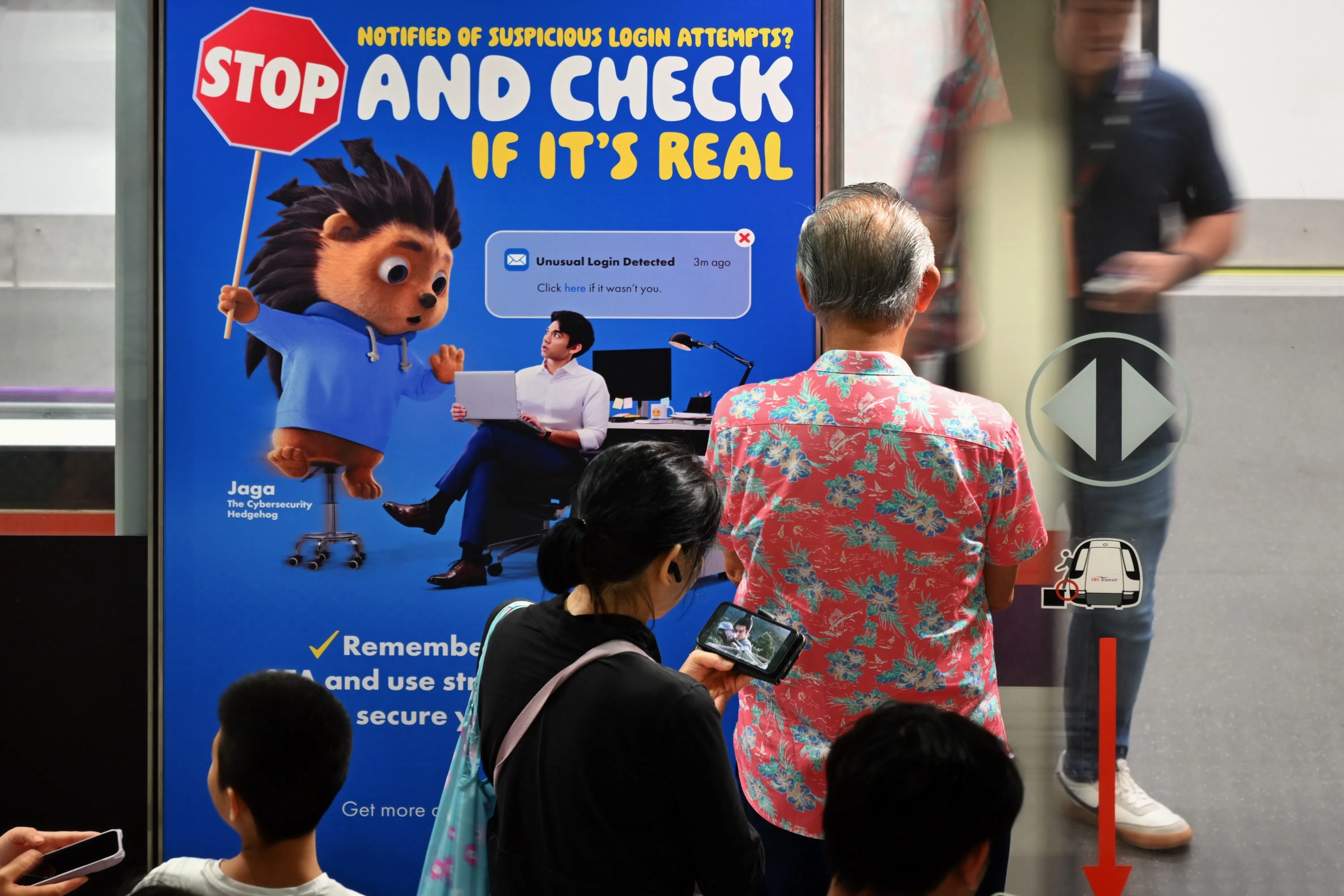
Beyond requiring organisations that manage users’ personal information to strengthen their firewalls, the growing risk of scams makes more intensive anti-scam education for the public urgently necessary, especially for those with weaker digital literacy.
The police and the National Crime Prevention Council have repeatedly stressed that people receiving suspicious calls should not believe callers are who they claim to be simply because they can recite their full names and identity card numbers.
When scammers use victims’ personal information to win their trust, they often also deliberately create a sense of urgency, causing victims to panic and act before they have time to think carefully.
According to official guidance, the safest response in such situations is to hang up immediately and verify the matter through official channels.
This advice needs to reach more people.
As personal data leaks become more common, scam syndicates will find it easier to obtain such information and use it to increase their “success rate”. The public therefore needs help to become more vigilant before they are targeted, so that a suspicious call immediately sets off alarm bells, even if the caller accurately recites their name, address and identity card number.
