

Ley Choon’s mainboard bid set to be a price catalyst

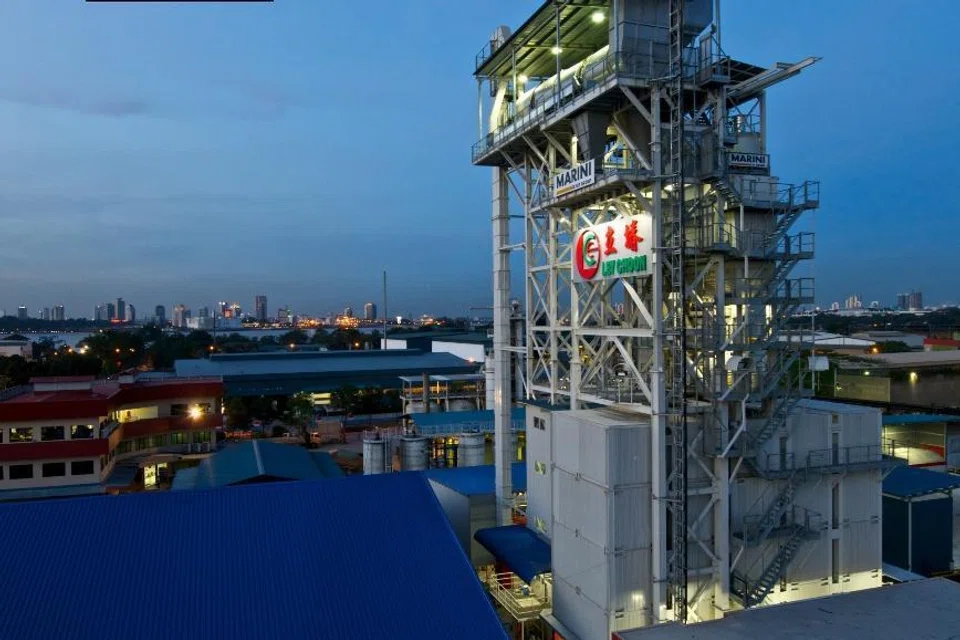
[SINGAPORE] In January 2025, I wrote that Ley Choon Group might be a stock to watch, as the provider of underground utilities infrastructure construction and road works services had repaired its finances, and stood to ride on Singapore’s infrastructure boom.
Post that commentary, its share price rose a staggering 73.3 per cent over the course of the year. In comparison, the blue-chip barometer Straits Times Index booked an increase of 22.7 per cent in 2025.
The higher share price likely has its foundation in Ley Choon’s better financial performance.
Net profit for FY2025 ended March rose 32.8 per cent year on year to S$14.5 million. It improved its dividend per share to S$0.003, from S$0.0027 for FY2024.
Although the counter has made a spectacular rise in the past year, trading was low on some days, making it tough to buy or sell its shares when liquidity is low.
But this could change, should Ley Choon’s bid to transfer its listing to the mainboard get the green light from the bourse operator.
On Monday (Jan 5), the company announced that it had applied to the Singapore Exchange for a transfer from the Catalist board back to the mainboard.
Formerly part of the mainboard, Ley Choon has been trading on the Catalist board since 2017, after it entered into a debt restructuring agreement with its lenders in September 2016 and voluntarily sought the transfer.
The company has since repaid all its debts, and exited the debt restructuring programme in 2024, It now believes a listing on the mainboard will enhance long-term value for shareholders and is aligned with its long-term strategic positioning as a mature and profitable player.
Notably, Ley Choon’s net profit has risen over the past five years – even as it was repaying its debts – from under S$900,000 for FY2021 to S$14.5 million for FY2025.
However, net profit for H1 FY2026 slid about 17 per cent year on year to S$6.1 million, amid a lower profit margin and higher expenses.
As at Monday, its order book stood at about S$325.6 million, up from S$220.1 million in November 2024.
It noted in a regulatory filing posted on Monday that a mainboard listing would broaden its access to institutional capital, as certain domestic and international institutional investors are mandated to invest exclusively in mainboard-listed companies.
This expanded investor base is expected to deepen market engagement and enhance the company’s capacity for future fundraising, it said.
A mainboard listing would not only possibly attract institutional investors, it would also qualify Ley Choon shares for inclusion under the Central Provident Fund (CPF) Investment Scheme.
The scheme allows investors to invest their CPF savings in various instruments, including shares. One of the requirements considered for share inclusion is that a counter must have a primary listing on the mainboard.
The announcement of a proposed transfer to mainboard triggered a 20.5 per cent surge in its intraday share price on Tuesday, before the counter closed 16.7 per cent higher at S$0.091.
According to investment portal SGinvestors.io, the last analyst report on Ley Choon was one by CIMB Research in 2018. Phillip Securities’ research team comments on the stock occasionally from the perspective of technical analysis.
The lack of analyst attention could be attributed to low investor interest.
Few companies make it from Catalist to the mainboard. Hopefully, Ley Choon is successful.
If the company’s bid to transfer its listing to the mainboard is approved by the bourse operator, this might be the start of a virtuous circle, where it could attract institutional and retail investors, which in turn could result in improved analyst coverage, better trading volumes and ultimately, better valuations.
TRENDING NOW

Malaysian king buys stake in Singapore-listed mining firm expanding into rare earths

Family offices ‘kept captive’ by relationship managers turn to independent advisers, direct deals

Once staunchly pro-China, Malaysian Chinese businesses are now distancing themselves from Beijing

Could stablecoins be the future of money?

