

MAS to simplify framework for single family office fund tax scheme
Move is ‘timely’ given evolving landscape, rising competition from Hong Kong, Dubai, observers say

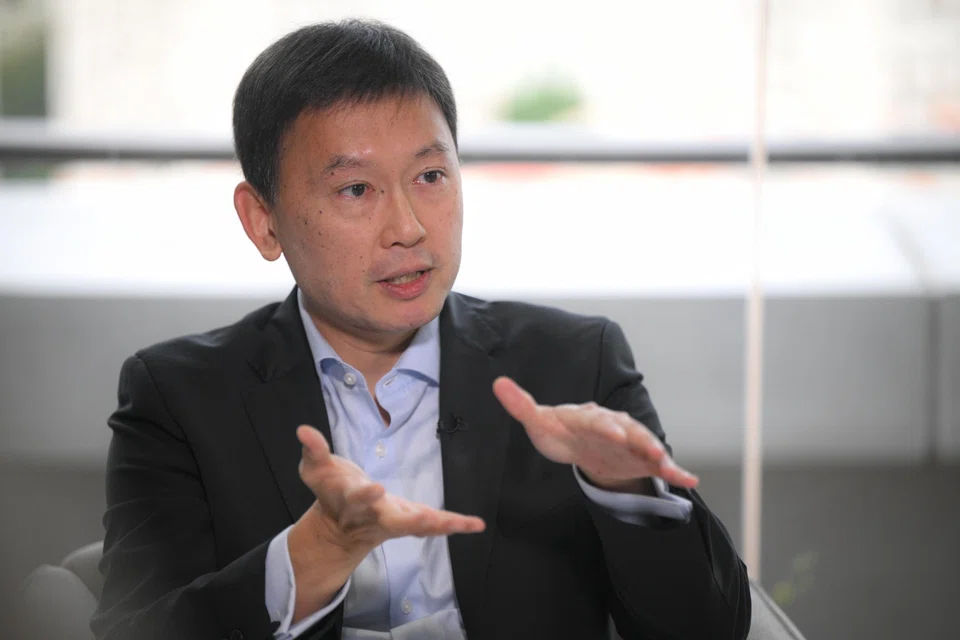
[SINGAPORE] The Monetary Authority of Singapore (MAS) is looking to simplify the framework for its single family office (SFO) fund tax scheme, to better align it with industry needs.
The streamlining would entail reducing the documentation needed for applications, easing reporting requirements and expanding the types of investments eligible for the fund tax scheme, said Minister for National Development Chee Hong Tat, who is also deputy chairman of MAS.
He was speaking on Monday (Sep 29) at the Global-Asia Family Office Summit organised by the Wealth Management Institute (WMI).
Industry players and observers said the move was timely, especially given the rapidly evolving family office landscape.
“The family office landscape has matured rapidly, and what were once appropriate thresholds and processes may no longer fit today’s market realities,” said Chester Leong, corporate adviser to an SFO.
Leong noted several trends that MAS may be keeping an eye out for: the family office ecosystem reaching critical scale; more intense global scrutiny on tax and anti-money laundering compliance; and rising competition from other regional wealth hubs such as Dubai and Hong Kong.
Lim Kexin, a partner specialising in tax and entrepreneurial and private business at PwC Singapore, also said other competitor locations are constantly refining their frameworks.
She noted feedback that the Singapore regime has been tightening for SFOs and related fund programmes, which may turn away some families that will ultimately still make decisions that benefit their business the most.
“The field is very dynamic… so I think that the Singapore regime needs to be able to respond to that,” said Lim.
Industry players and observers also said the move will likely be welcomed by families and advisers.
Kevin Teng, chief executive officer of Wrise Private Singapore, expects to see measures such as reducing time-consuming legal requirements in favour of standardised declarations.
He also hopes MAS will cover modern asset classes, such as venture debt and blended finance structures, when expanding the types of investments eligible for the tax scheme.
“Doing so will enable family offices to participate in shaping the future of capital markets, beyond traditional equities and bonds, while supporting Singapore’s ambition to be a hub for sustainable and innovative finance,” he said.
In his speech, Chee noted that Singapore has been looking at ways to remain relevant as a wealth management hub.
At the industry level, MAS is co-leading a private banking working group to improve account-opening efficiency.
Chee said the group will share best practices for streamlining processes, adopting artificial intelligence and automation, and improving regulatory clarity to reduce unnecessary second-guessing.
He also noted that MAS has shortened the waiting time for SFO tax incentive applications, which used to take over a year.
“MAS recognises that this is not the standard of efficiency that we should provide to our clients,” said Chee. Applications are now approved within three months.
This comes as Singapore has grown to be one of the fastest-growing wealth management centres globally.
In 2024, private-banking client assets grew by 19 per cent, with about half of this growth coming from net new inflows.
Singapore’s financial sector also expanded by 6.8 per cent in 2024, more than double the pace of the previous year, with broad-based growth across banking, insurance, capital markets, asset management and wealth management.
“I think all of you chose Singapore because we have high standards,” said Chee.
“We have a regulatory environment that you can trust, and we won’t shift away from that. At the same time, we will ease the process: make it less tedious, quicker and more efficient.”
He expects businesses to be able tap Asean’s growth momentum from Singapore through the “Singapore+” model, under which companies anchor their high-value functions in the city-state as they scale their operations to nearby markets.
This is why half of South-east Asia’s top family businesses have chosen Singapore as their base, he said.
Said PwC’s Lim: “Singapore recognises that we are not just a local investment destination. Though that is very welcomed, it’s also how families could use Singapore as a flexible springboard, to partner, co-invest and amplify across the region and globally.”
The WMI will also partner the Singapore Law Society to launch a specialised programme for legal professionals serving family offices.
Commenting on Singapore’s plan to revitalise its stock market, Chee said he expects to release the remaining recommendations of the review committee by the end of this year.
“Our focus is not to go for quick wins, which is not sustainable,” he said.
“We want to address the fundamentals of our ecosystem to enhance Singapore’s equity market, such that the momentum can be sustained.”
MAS previously announced tweaks to the tax incentive scheme for SFOs in 2023. Back then, most of the changes related to the types of investments that would count towards the assets under management (AUM) requirement, and how that requirement is met.
In 2023, MAS also launched a consultation paper for a proposed framework for SFOs in Singapore. It included qualifying criteria for class exemption from licensing under the Securities and Futures Act, as well as requirements for notification and annual reporting.
Guo Jiawen, head of family office and structuring solutions at Bank of Singapore, said simplifying the framework is a positive step that shows Singapore’s commitment to staying competitive and business-friendly.
Lim added that Singapore’s SFO numbers have “grabbed the headlines and the space that we have”, though she noted that the Republic has “never been just about the absolute number”.
“It’s really about how impactful and how integrated we could be, for a smaller number of high-quality, big families who are able to have outside collaboration.”
TRENDING NOW

Philippine power giant First Gen rebuffs foreign offers, plans up to US$2.6 billion in expansion
Cliff Tan has 7 million followers and a 4-month waitlist. Why won’t he expand his business?

Could stablecoins be the future of money?

From finance aspirant to Asean CEO: TUV SUD’s Jonas Strahberger on finding people who believe in you

