

Tiger Balm maker Haw Par should show its stripes, hunt for growth in alternative segments
The company’s smaller segments include investments and leisure-related services

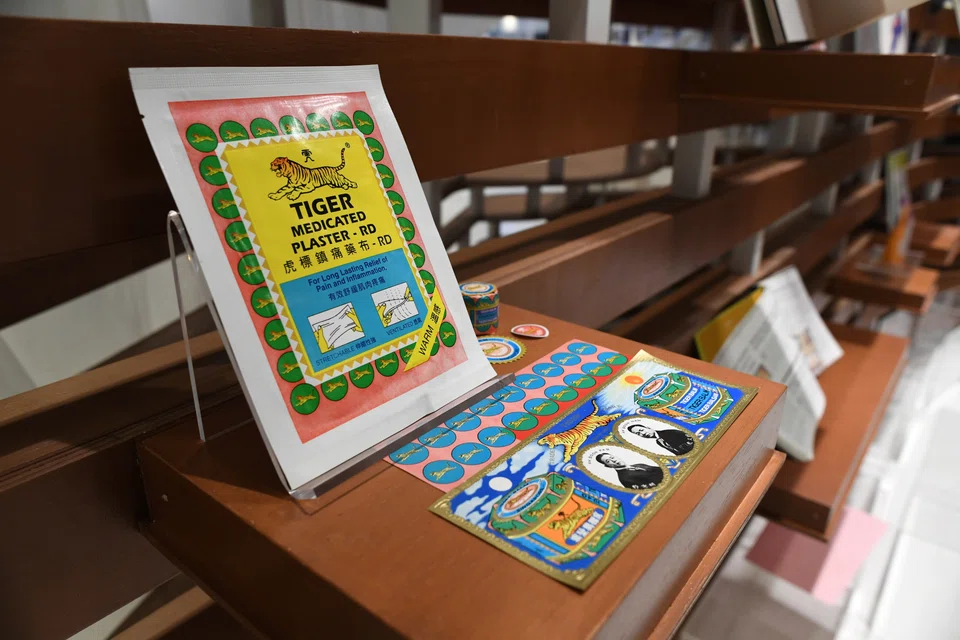
TIGER Balm ointment manufacturer Haw Par Corporation ’s business is roaring, with a resurgence of consumer sentiment for its healthcare products. Unlike its improving financials, however, its stock market performance has been skittish.
One problem for the mainboard-listed company is that it has no medicated oil peers on the local bourse.
While Haw Par is often grouped with healthcare counters, its focus on analgesic products for pain relief makes it inappropriate for investors to compare its metrics to “peers” in the sector, which include healthcare providers, healthcare equipment makers and pharmaceutical distributors.
For the latest full year ended Dec 31, 2023, Haw Par’s net profit jumped 46 per cent to S$216.6 million, from S$148.3 million the previous year.
Its full-year top line increased 27.4 per cent to S$232.1 million, fuelled by sales recovery in its key Asian markets for healthcare products. The healthcare products segment was up 30.1 per cent to S$213.5 million.
The group added that more than 90 per cent of its revenue for the second half, which rose 39.7 per cent to S$120.9 million, was generated by this segment.
Yet, the group’s stock market performance has been muted.
Shares of Haw Par have fallen 0.9 per cent year to date. With dividends reinvested, it has generated total returns of 1.1 per cent.
In comparison, Singapore’s benchmark Straits Times Index has recorded total returns of 3.7 per cent over the same period.
At its share price of S$9.66 as at Monday (May 6), the counter is trading at a discount of about 38 per cent to its net asset value (NAV) per share.
Haw Par’s improvement in earnings, however, has resulted in a better price-to-earnings (PE) ratio of 9.9 times – down from around 12 times previously.
Iconic brands
Should investors be expecting more from the Singapore-listed group?
The performance of Haw Par’s closest peer in the region – Pak Fah Yeow International, which manufactures and distributes the Hoe Hin White Flower ointment – could offer some points of comparison that are more insightful.
Both the Tiger Balm and Hoe Hin White Flower ointments are iconic brands, and seen as direct competitors.
While Pak Fah Yeow’s market capitalisation, at HK$670 million (S$116 million), is significantly smaller compared to Haw Par’s market value of nearly S$2.2 billion, the Hong Kong-listed company is trading closer to book value.
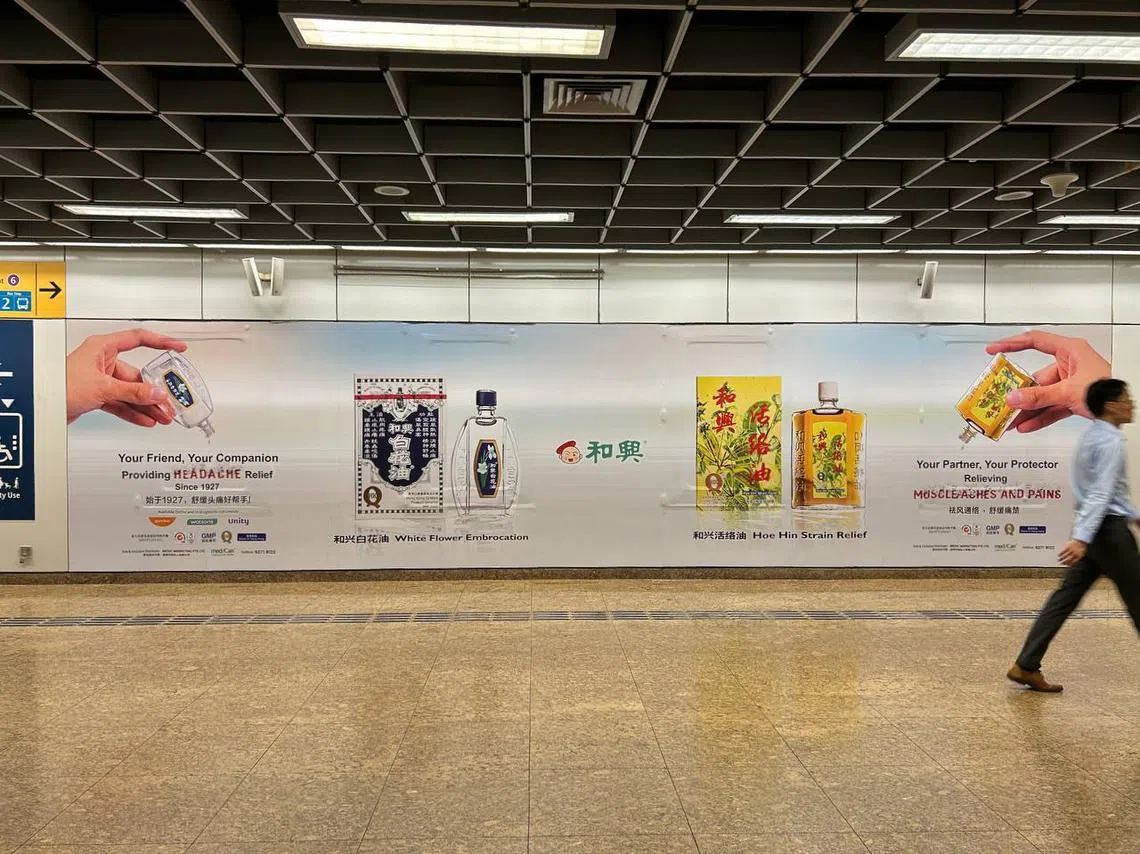
According to Bloomberg data, Pak Fah Yeow is trading at a price-to-book ratio of 0.88 times, or a 12 per cent discount to its NAV per share. The counter closed at HK$2.15 on Monday.
Since the start of the year, it has generated total returns of 21.5 per cent, outperforming the benchmark Hang Seng Index’s 9.5 per cent total returns.
Compared to Haw Par, Pak Fah Yeow is also trading at a lower PE ratio of 6.4 times.
Like its Singapore-based competitor, Pak Fah Yeow attributed profit growth to higher sales from its healthcare products segment.
For its full year ended Dec 31, 2023, Pak Fah Yeow’s revenue leapt 76.1 per cent year on year to HK$259.2 million.
Its reported profit more than trebled to HK$105 million from HK$30 million; underlying recurring profit surged 195.9 per cent to HK$119.1 million.
The group said this was on the back of improved performance in its healthcare products business, particularly in China.
Hunt for inorganic growth
Although Haw Par’s healthcare products make up its largest segment, it could also turn to its other businesses to rev up growth – similar to what its Hong Kong-listed peer has done.
Pak Fah Yeow’s businesses now include property investments in Hong Kong and London, as well as treasury investments into equity and debt securities.
The group noted both segments posted positive underlying recurring results, with the property segment propped up by increased rental income in the UK from letting all its retail units.
As for Haw Par, its smaller segments include investments, where it has long-term strategic investments in UOB and UOL Group.
It also operates leisure-related services such as the Underwater World Pattaya oceanarium in Thailand.
In a January interview with The Business Times, chief executive Wee Ee Lim said the group did not rule out finding other locations to “reignite the leisure segment”.
He added that it was also on the lookout for “meaningful acquisitions at a reasonable valuation”.
Meanwhile, Haw Par’s war chest has grown further. As at end-December, its cash and cash equivalents stood at around S$573.6 million, up from S$275.8 million in June 2023.
If the Tiger Balm maker goes on the hunt for acquisitions to boost its growth, perhaps investors would be more willing to bite into the stock – which would help soothe its market valuation pains.
TRENDING NOW

Malaysian king buys stake in Singapore-listed mining firm expanding into rare earths

Grab CEO’s wife Chloe Tong on life with Anthony Tan and finding her purpose

Once staunchly pro-China, Malaysian Chinese businesses are now distancing themselves from Beijing

Longer wait times expected as S’pore healthcare institutions report system disruptions

