Once ‘the world’s factory’, China now builds global brands
In the 6th of a 7-part BT-Lianhe Zaobao series on China and Asean, we look at how brands from China are going international, particularly among Gen Z consumers in South-east Asia

AS A global manufacturing powerhouse, China has churned out goods for international brands big and small, making “Made in China” truly ubiquitous. But its image as the factory of the world has evolved. No longer just a manufacturer, China is moving from its backstage role into the limelight, as it creates brands for the international market.
South-east Asia, with its vast population, is an attractive prospect for many Chinese brands, which have come into prominence in areas such as technology products, fashion, tourism, and food and beverage (F&B). In this digital age, these brands are casting off earlier negative connotations of the “Made in China” label, and turning truly international.
Going global
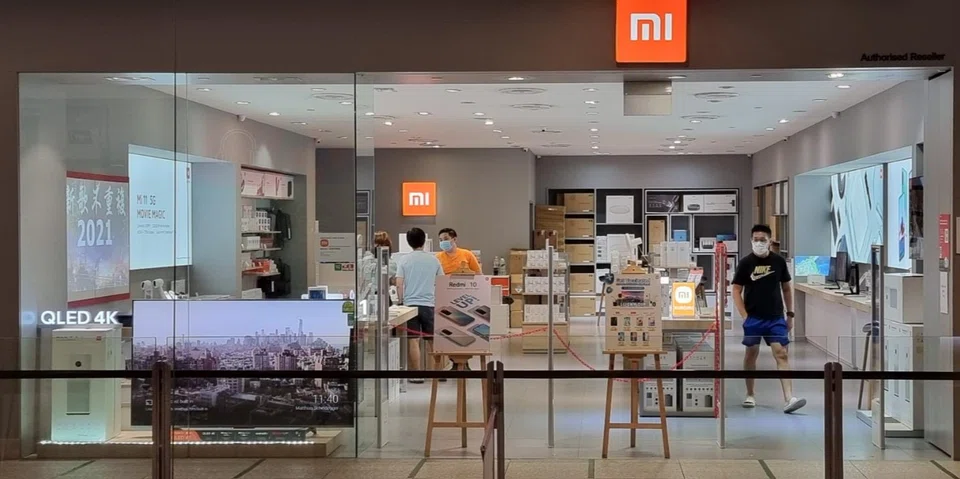
For many consumers, the Chinese technology brand Xiaomi brings to mind affordable smartphones. A report by market research firm Canalys puts the average price of a Xiaomi phone at 40 per cent and 75 per cent cheaper than Samsung and Apple phones respectively.
Xiaomi is enjoying growing popularity in South-east Asia. In the second quarter of last year, it overtook Samsung to become the market leader in the region. South-east Asia is one of Xiaomi’s key markets, as well as the first destination when it first ventured abroad in 2014.
Leong Kah Mun, Xiaomi International’s general manager for South-east Asia, told Lianhe Zaobao that the company is “glocal” – a portmanteau of “global” and “local”. The concepts may seem to be at odds, but at the tech brand, they come together to spark something new.
“Global” describes the company’s ambition to become an international leader in consumer electronics and smart technology, while “local” describes its aim of being deeply rooted in each of its markets by adopting localised strategies.
“One difference between the strategies deployed in South-east Asia and China would be that we would explore and understand the unique cultures of the South-east Asian markets, before introducing products and services that best suit their demands and needs,” Leong said. “We would also adopt the local language in our communications for greater relevance.”
He pointed out that South-east Asia’s economies are among the fastest growing in the world, with both gross domestic product and income levels rising steadily. The region also has a large population of over 650 million. Furthermore, telecommunications infrastructure is developing rapidly and smartphone adoption is high - all factors contributing to the digital technology boom.
Xiaomi employs more than 200 people across the region, with offices in Singapore – its first South-east Asian market – as well as Malaysia, Thailand, Vietnam, the Philippines, Cambodia, Laos and Indonesia.
In addition to mobile phones, the company has adopted a more comprehensive strategy in recent years, promoting a lifestyle concept that brings together smartphones, artificial intelligence (AI) and the Internet of Things (IoT). Its product catalogue includes robot vacuum cleaners, smart cameras, air purifiers and more. Last year, the company also announced its foray into electric vehicles.
Gen Z, e-commerce fuel overseas forays
The rise of the digital-age Gen Z consumer has helped Chinese brands shed old baggage, bringing new opportunities. From Xiaomi’s smart products, to TikTok, to Tencent’s online games, Chinese brands are making their presence felt in both hardware and software.
According to Guan Chong, associate professor of marketing at the Singapore University of Social Sciences, targeting Gen Z consumers has helped brands overcome the “Made in China” stigma, as this generation pays less attention to the origin of products and values innovation and affordability instead. Compared to older generations, Gen Z has a more positive perception of “Made in China”.
One advantage of Chinese brands is that they offer “good value for money”, said Dr Guan, with products “of comparable quality and novel conception” but price differences that range from 20 per cent to as high as 50 per cent.
They also offer “services beyond imagination and freebies”, he added, such as extra services at Haidilao and fashion retailer Shein’s 30-day return policy.
KPMG China’s strategic consulting director He Ying and partner for strategy consulting, consumer and retail Willi Sun pointed out that in comparison with the increasingly mature European and American markets, South-east Asia is an emerging market with immense potential. The region is not merely a key supply chain and trade partner for Chinese brands, but also a key overseas market.
However, the markets in the region are more dispersed, with each country’s culture and business environment differing greatly from the others. As a result, one of the greatest challenges that Chinese enterprises face is localising their products and services, and having specific business strategies for each market. This includes maintaining a stable sales network and supply chain, and attracting local talent.
In their view, some time is still needed to cultivate the new generation of South-east Asian consumers: from becoming aware and purchasing, to building up familiarity with Chinese brands.
Well-known hotpot chain Haidilao already has branches across South-east Asia, proving that Chinese brands can become a top-tier consumer name abroad.
When Haidilao ventured abroad in 2012, its first stop was South-east Asia: Singapore, followed by Malaysia, Vietnam and Indonesia. The hotpot chain is known for fresh ingredients and outstanding service, making for a dining experience like no other for regional consumers, who showed their approval by opening their wallets.
A good brand story is critical, added Dr Guan: a narrative “that weaves together the facts and emotions that position them as unique, forging an emotional connection with the customers”.
Tan Chee Yun is a correspondent with Lianhe Zaobao Business News Desk. This article is part of a collaboration on a series of weekly features translated from the Chinese daily. The original story first appeared on July 17. The next package on Aug 1 will look at Vietnam’s post-pandemic emergence as an alternative to China's role as the factory of the world.