


Can Bali swop beach capital for global capital without the skyscrapers?
The island’s global appeal could lure financial institutions, but its congested landscape poses challenges

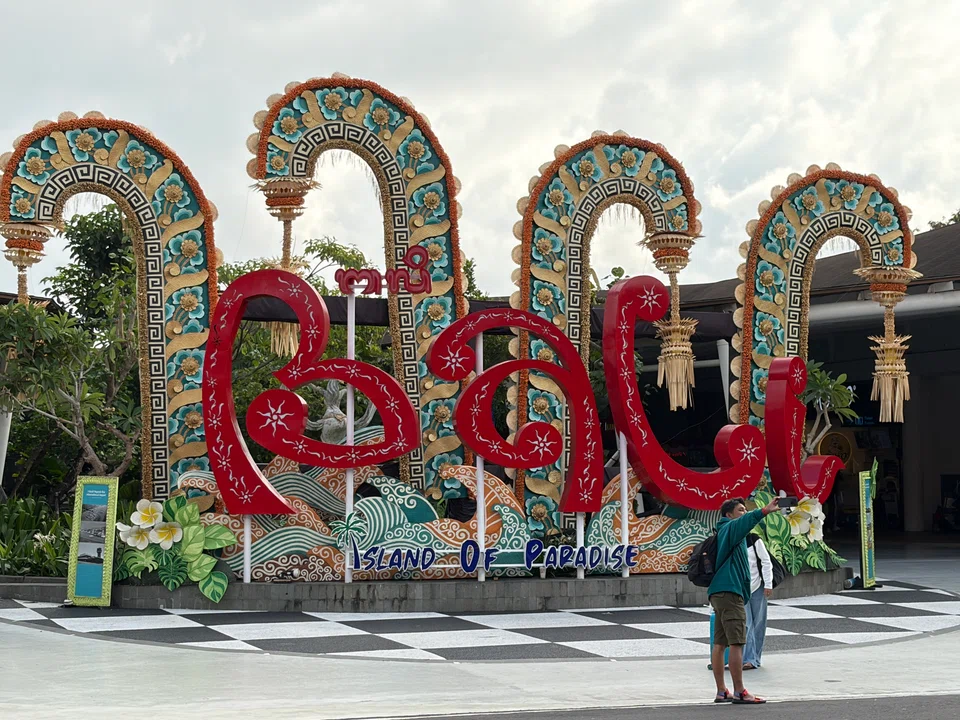
South-east Asia is building a new generation of financial centres to draw global capital. This three-part series begins with Indonesia’s ambitions for Bali.
[BALI] For Jakarta-based investment banker Roland Sihombing, the prospect of watching a spectacular sunset over Bali’s Kuta Beach shortly after market close is an easy sell.
The 35-year old executive has been eagerly following updates since learning that his employer, a state-owned investment bank, could be among the early batch of companies to support the government’s proposed international financial centre (IFC) in Bali.
The trade-off is enticing: Swop Jakarta’s long, traffic-riddled commute and glass towers for ending the trading day by surfing.
He said, gleefully: “If the opportunity to relocate to Bali comes up, I’d be more than willing to volunteer.”
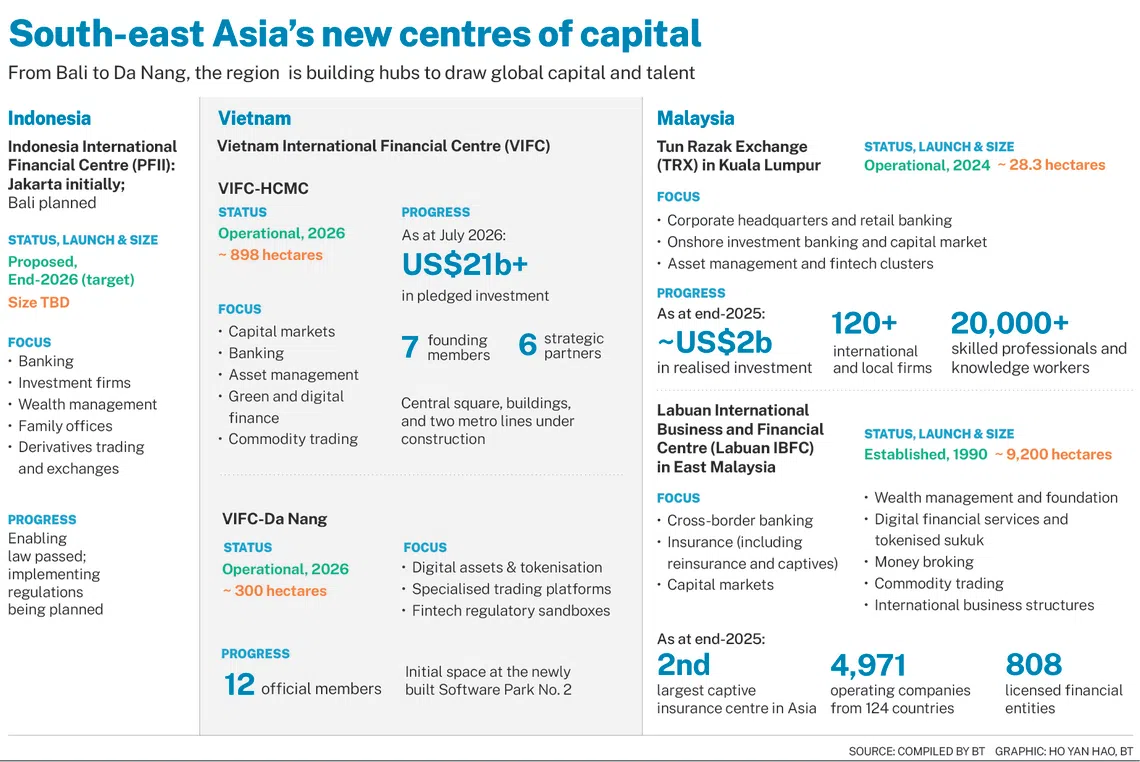
Indonesia is proposing to turn the tourism-dependent island, famed for its world-class beaches, into a new IFC under the Pusat Finansial Internasional Indonesia framework.
The initiative is part of President Prabowo Subianto’s broader push to pull capital back into South-east Asia’s largest economy and establish a regional hub for wealth management and financial services.
The government estimates it could attract as much as US$28 billion in investment, including that from foreign banks and other financial institutions.
Sovereign wealth fund Danantara, which recently took over about US$9.5 billion in assets from four state-owned investment management firms, has been tasked to lead the project to develop the country’s first IFC.
The plan is to launch the IFC in Jakarta first, where it will operate during a two to three-year transition period before being expanded to Bali.
The phased approach would let the government build out the regulatory framework and financial infrastructure in Jakarta, while giving Bali time to develop the talent and ecosystem needed to become an international financial hub.
Beyond the skyline
Turning Bali’s tourism appeal into a financial hub capable of competing with Singapore or Dubai may require a very different model. Nowhere will that contrast be more visible than in its skyline.
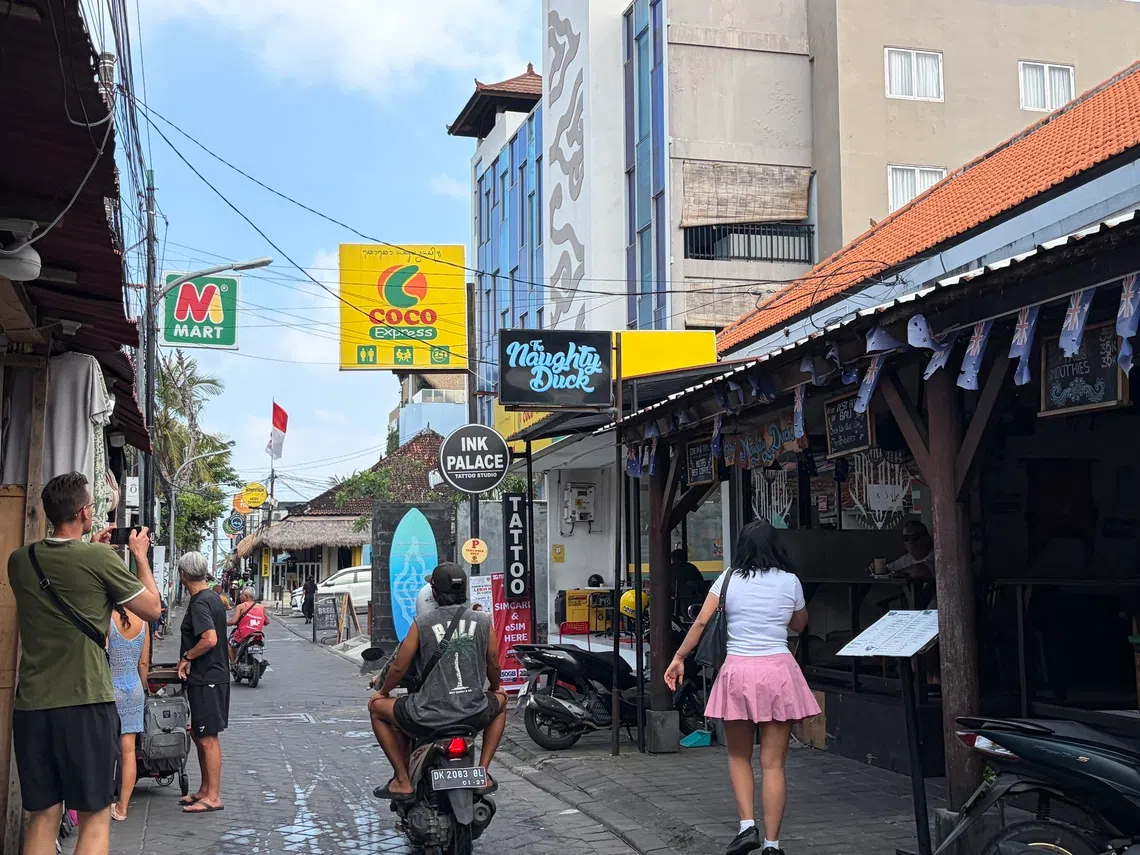
The Hindu-majority island generally caps buildings at 15 metres, reflecting a traditional principle that structures should not rise higher than a coconut tree or obstruct views of sacred temples and mountains.
For an industry synonymous with glass towers, trading floors and dense central business districts, Bali’s height restrictions appear to be a constraint.
Panji Aziz, senior director at JLL Indonesia, said: “Rather than skyscrapers, the island could develop lower-rise, campus-style offices surrounded by housing, schools, retail and other amenities.”
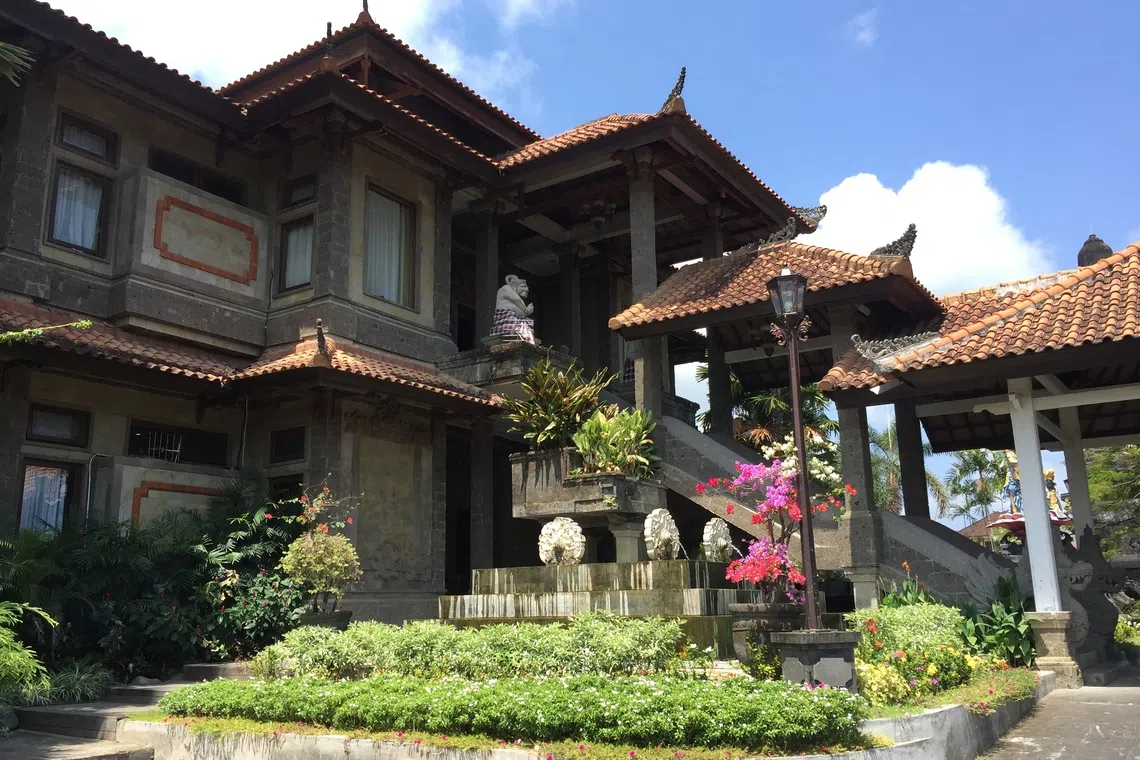
Unlike Jakarta, where financial institutions cluster in the central business district, Bali has relatively little Grade-A office space, and many of its banks still operate from shophouses and smaller premises.
Aziz said an IFC could spur demand for premium office space in Bali, but its buildings and surrounding district would need to take a different form from Jakarta’s.
JLL, giving an idea of the scale of premium office demand Bali would need to support a financial ecosystem, noted that financial institutions in Jakarta typically require 2,000 to 9,000 square metres (sq m) of office space; larger players take up to 20,000 sq m.
A globally established brand
Bali’s strongest case for becoming a financial hub may lie in the global network it has built through decades of tourism. The government is also banking on Bali’s lifestyle appeal, which could be a key draw for global investors and financial-services professionals.
Anu Gupta, director of APRW and vice-chair of the Singapore Chamber of Commerce (SingCham) Indonesia, said Bali already has many of the ingredients that emerging business hubs spend decades building – from its global brand, large foreign visitor base and international connectivity to its hospitality, creative and entrepreneurial ecosystem.
“There is also an interesting generation of established family-owned businesses becoming more sophisticated and open to international partnerships and capital,” she said.
That expanding business base could offer investment firms, wealth managers and other financial-services providers a deeper pool of potential clients.
It is noteworthy that SingCham Indonesia recently opened a Bali chapter, becoming the first foreign business chamber to establish a presence outside Jakarta.
The island attracted 25.6 trillion rupiah (US$1.4 billion) in foreign investment in the first half of the year, accounting for more than half of total investment, going by data from Bali’s statistics agency.
Edward Gustely, co-founder and managing director of Penida Capital Advisors, said Bali’s draw is its access to Indonesia’s growing economy and an international lifestyle, alongside potential incentives such as tax breaks, easier capital repatriation, golden visas and international commercial dispute resolution.
“The precise legal, tax, licensing and institutional framework remains the critical variable for investors and high-net-worth individuals,” he said.

Infrastructure issue
The plan to establish an IFC was enshrined in law in July, but key details are still being worked out, including the most basic one – the venue.
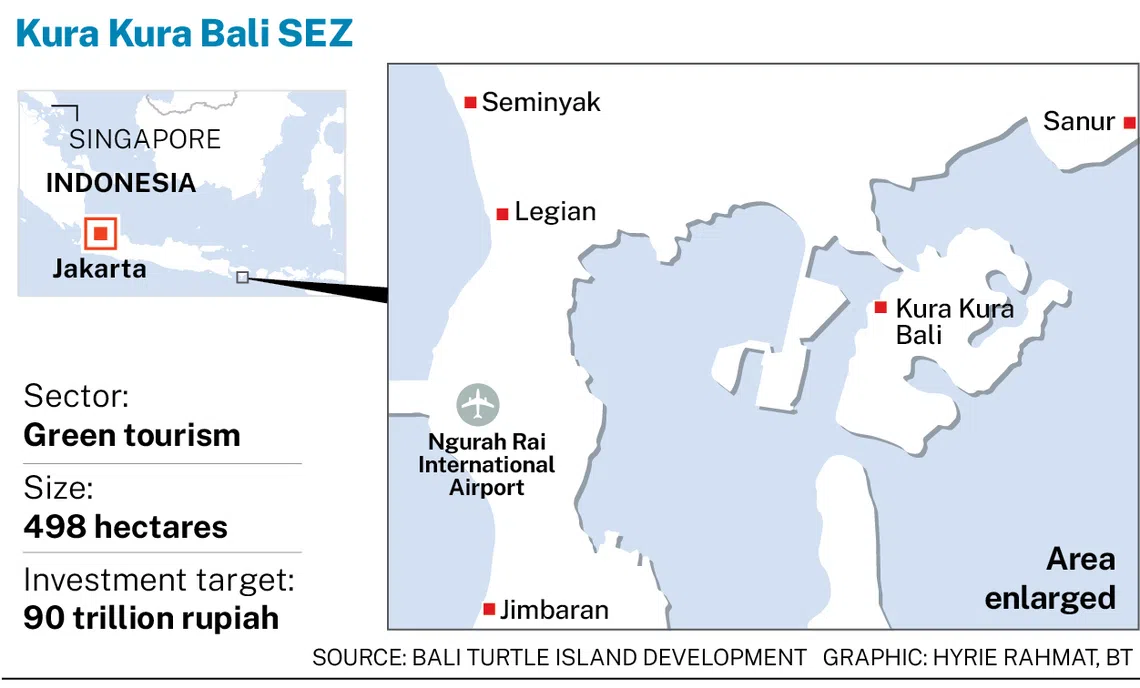
In May, Coordinating Minister for Economic Affairs Airlangga Hartarto said the government was accelerating development of Kura Kura Bali, a 498-hectare special economic zone on Serangan Island in southern Bali as a potential financial services hub.
As many residential areas are 10 to 15 km from the island, the proposed hub could mean long commutes on Bali’s already congested roads, adding to its infrastructure challenge.
Workforce dilemma
Singapore, Hong Kong and Malaysia’s Labuan have spent decades developing pools of professionals familiar with international finance.
On the other hand, with a population of about 4.5 million, Bali’s economy and workforce remain heavily concentrated in tourism, trade and agriculture.
Professor Azril Azahari, a tourism lecturer at Trisakti University, said Bali would likely need to rely heavily on specialist talent from Jakarta and overseas, raising questions of the extent to which the financial centre would build Indonesia’s domestic capabilities.
“If we are not ready, we could end up simply moving talents from overseas to Bali, while the people running and managing it remain foreigners,” he said.
A more realistic ambition is to carve out a niche for Bali as a gateway for global capital into Indonesia, versus trying to become another generic offshore financial centre, said Ravi Varanasi, founding partner at SPRV Consultants.
Property ripple effects
Turning Bali into a financial hub would no doubt reshape the island’s property market as more companies and high-income workers will drive demand for housing and hotels.
Bali’s property market has already been on a tear since the pandemic, with the tourism rebound and strong foreign demand driving prices higher.
Property prices in prime areas such as Canggu and Seminyak have risen by 12 to 18 per cent a year since 2022, raising concerns that a new financial centre could pile on further pricing pressure.
Creating a fresh narrative
Bali is blessed with abundant clean energy. The island has an estimated 22 gigawatts (GW) of renewable energy potential, including about 21 GW from solar, wind and geothermal resources.
That could be its differentiator – and an advantage as multinational companies face growing pressure to cut emissions in their operations.
The government is preparing a phased roll-out of 100 GW of solar power, with the first stage planned for Bali.
Fabby Tumiwa, chief executive of the Institute for Essential Services Reform, said Bali could become Indonesia’s first province to run entirely on renewable energy, potentially reaching that milestone 15 years ahead of the national 2060 target.
“If that potential is developed alongside a modernised grid and energy storage, Bali could offer something established financial centres would find harder to replicate – a financial hub powered by low-carbon energy,” he added.
TRENDING NOW

Companies still in search of AI use cases with worthwhile ROI, says Broadcom’s CEO

Malaysian king buys stake in Singapore-listed mining firm expanding into rare earths

Once staunchly pro-China, Malaysian Chinese businesses are now distancing themselves from Beijing
Singapore’s wealth management success should extend to everyday families

