Malaysia’s 8th richest man Jeffrey Cheah wants Sunway business to last 10 generations
Having weathered two crises, the founder pairs professional management with slow-burn succession to keep the business and family intact

Inside Asia’s family empires: How they are transforming to seize the next stage of growth
[HO CHI MINH CITY] Sunway Group’s founder and chairman Dr Jeffrey Cheah was running out of cash and options when help arrived from Singapore.
Twice, the business he built came close to collapse.
The first was in 1985, when a brutal economic recession in Malaysia pushed his fledgling business to the brink. The second was worse: During the Asian financial crisis in the late 1990s, his borrowings swelled to what he now calls “stupid” levels – gearing hit 200 per cent, while interest rates spiked as high as 28 per cent.
Undercapitalised banks that had eagerly extended credit in the good times suddenly wanted their money back “when the storms came”. Cash flow dried up, and Sunway was on the brink.
“If the banks pulled back, you’d be finished, you’d be liquidated,” Cheah said in a recent interview with The Business Times in Ho Chi Minh City, where a 16-member Sunway team visited to explore new partnerships and development opportunities beyond its home market.
“The most important thing was to get enough cash to pay my staff,” he said. “Without paying them, they would go, the ship would sink.”
Cheah was then doubling down on a principle he still adheres to in leading Sunway: show up, be upfront, and deliver.
He called his lenders before they called him, and he laid out recovery plans because “the last thing you do is run away”.
The resilience bought him time for a lifeline from Singapore in 1999. GIC, the city-state’s sovereign wealth fund, took strategic stakes in Sunway’s property assets, helping the group recapitalise and restructure into what would become the modern Sunway Group.
“If you’ve seen ghosts before, you’re scared,” Cheah recalled. “Keep your gearing at a certain level, it will not happen again.”
That fear – of overreach during a time of easy credit and of cycles turning – now defines one of South-east Asia’s most tightly-run family conglomerates.
It also frames a new challenge: ensuring the Sunway empire can outlast its founder, now aged 81.
From tin mines to property empire
Today, Cheah is Malaysia’s eighth-richest person, with a net worth of about US$5.3 billion as at April, according to Forbes.
His wealth has surged roughly 76 per cent in a year, lifted by corporate moves that show how far Sunway has come since its tin-mining beginnings in 1974.
The most visible was the March listing of its healthcare arm, Sunway Healthcare Group, on Bursa Malaysia, which raised RM2.86 billion (S$921.3 million) in Malaysia’s largest initial public offering in nearly a decade.
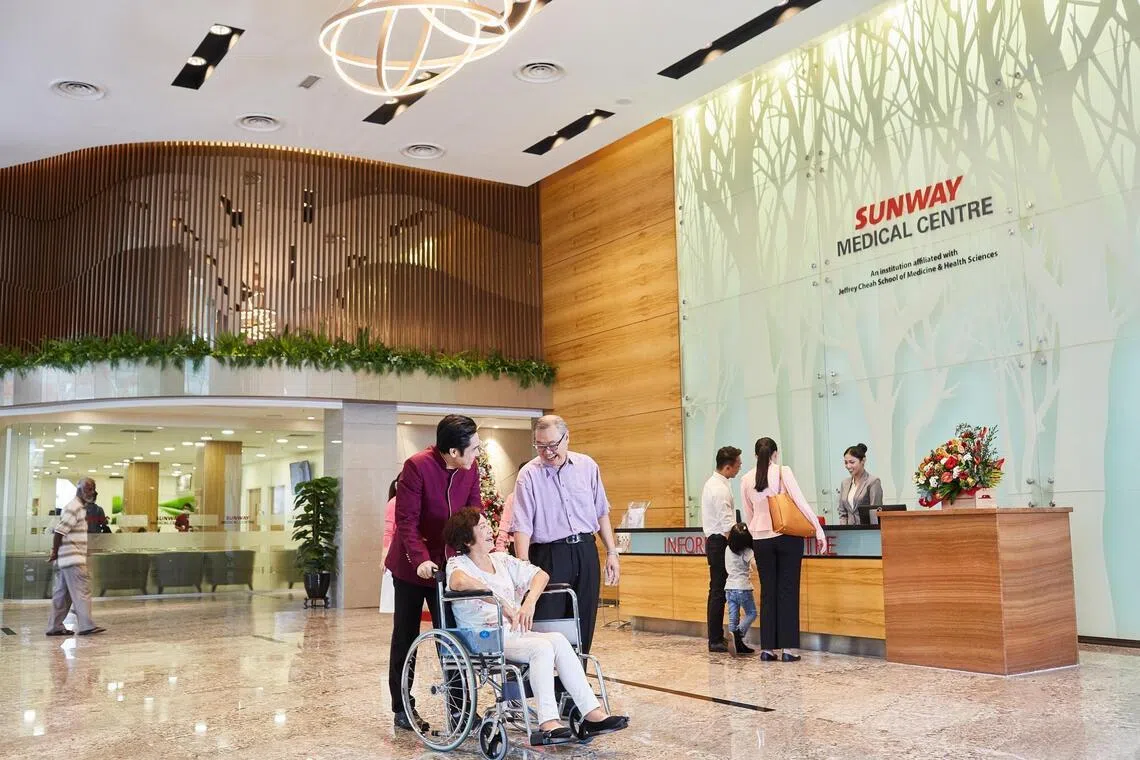
He described Sunway’s push into healthcare as a space “many wouldn’t dare enter”, citing the sector’s “high barriers to entry”. The group builds its own hospitals, trains its nurses in-house and integrates these facilities within its townships.
About one-fifth of patients at Sunway Healthcare’s five hospitals now come from overseas, drawn by lower costs compared to Singapore and a steadily improving regional reputation.
The healthcare arm became the fourth listed entity in Sunway’s ecosystem, alongside Sunway Group, Sunway Construction Group and Sunway Real Estate Investment Trust (Reit).
At market close on Friday (Apr 24), their combined market capitalisations stood at more than RM76 billion.
Yet, the group’s sprawling empire still rests on property – the engine that funds everything else.
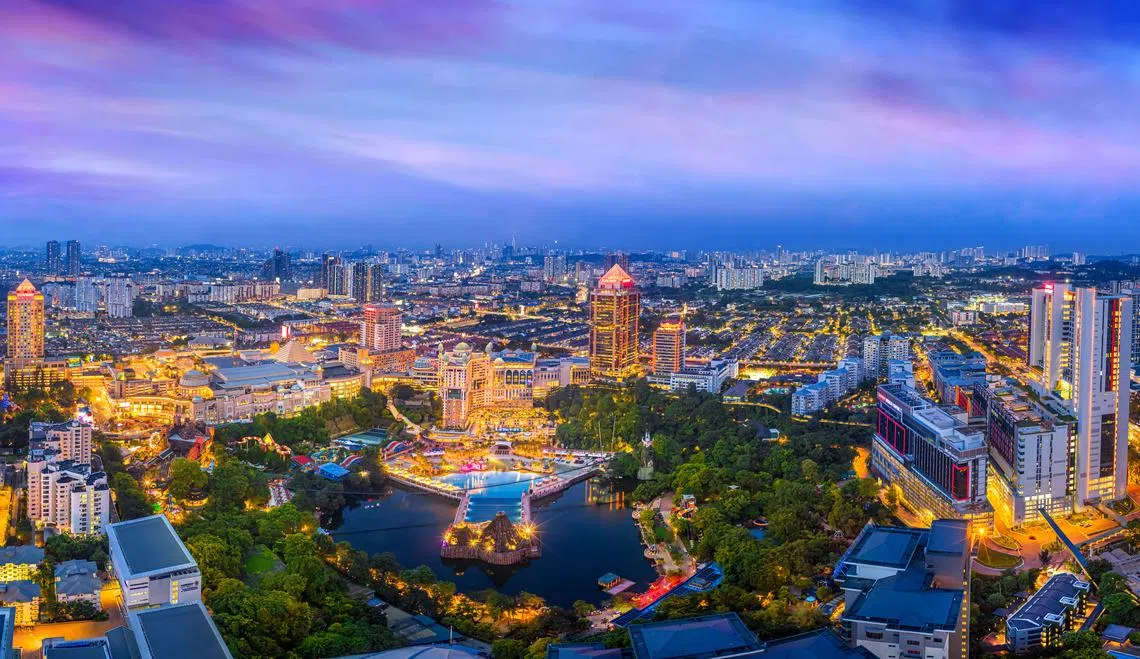
Sunway’s defining idea is not just development, but integration. Its flagship “Sunway City” townships – located in Kuala Lumpur, Iskandar Puteri, near Singapore, and Ipoh in Cheah’s home state of Perak – are master-planned, self-contained ecosystems that layer housing with commercial, education and leisure components within a single urban fabric.
Retailers, tenants and partners are drawn in by what Cheah calls a “two-way flow”: Sunway creates the ecosystem; businesses help fill it.
The group’s financial architecture lies deeper and has been decades in the making. Sunway operates on a capital-recycling model that hinges on Reits – listed vehicles that own income-generating assets and distribute most of their earnings as dividends.
For Cheah, they are less an end-point than a funding mechanism. The group develops malls, corporate towers, hotels, education campuses and industrial assets within its integrated townships, generating recurring income streams, and selectively divests mature properties through affiliated vehicles such as Sunway Reit, one of Malaysia’s largest Reits.
That process unlocks capital tied up in bricks and mortar, returning cash to the parent company while allowing it to retain operational control through management contracts and leasing agreements.
“Without the Reits, it is difficult because the business is capital intensive,” Cheah said. “You build, you inject into the Reit, you recycle the money – and then you can expand again.”
Expanding the ecosystem
Sunway’s ecosystem today spans 13 interconnected industries, anchored by a vertically integrated model that links property, construction, education, healthcare, retail and hospitality into its township developments.
Its engagement in sunrise industries – particularly in data centre construction in southern Malaysia – has also gathered momentum, with exposure to major US-based hyperscalers and global technology firms.
Sunway is now looking beyond its home turf.
Nowhere is that model more visible than along the Malaysia-Singapore corridor, where Sunway is betting on cross-border demand to drive its next phase of growth.
In Iskandar Puteri, just minutes from the Second Link to Singapore, the group is developing a 2,000-acre township anchored on the idea that Singapore’s spillover – workers, capital and consumers – can be captured across the border.
“Without Singapore next door, I don’t think I would have come. It’s a green field. It’s not easy,” Cheah said. “Now I’m making it very vibrant. Singaporeans will be our customers.”
The strategy is extending to transit-linked developments. Near the upcoming Johor Bahru-Singapore Rapid Transit System, Sunway is positioning projects around commuter flows expected to reach 10,000 per hour, effectively turning infrastructure into a demand engine for real estate.
That ambition now reaches across the Causeway. In March, the Sunway arm in Singapore and its local partner Hoi Hup Realty launched a residential project in the city-state that sold more than 90 per cent of its units over the launch weekend, at an average selling price of S$2,546 per square foot.
“We are now ready to look at opportunities elsewhere. I see potential in Vietnam, but I need a local partner,” he said. He added, however, that land price in Ho Chi Minh City is “very expensive” currently, and he expects that it “won’t last”.
He is not worried about being a “late comer” since “what we do is unique because of our domain knowledge and experience,” he said.
Hunting for value
Organic growth is only part of the playbook.
As Sunway has scaled, Cheah has become increasingly opportunistic on acquisitions, particularly where he sees underperforming and undervalued assets that can be plugged into the group’s ecosystem and run more efficiently.
“When you reach a certain size, you start ‘sniffing around’,” he said, noting that he looks for companies with solid attributes in sectors where Sunway has domain expertise. “If we know we can do better than they can, they become our targets.”
Integration, in turn, is cultural.
Following acquisitions, Sunway typically retains staff, embeds its operating discipline and installs leadership only where needed. Its S$738.7 million takeover of a Singapore-based developer, MCL Land, for instance, was followed by a full staff integration rather than layoffs, Cheah said.
Still, not every bet lands. Sunway’s S$3.5-billion acquisition attempt for IJM Corp lapsed this month after failing to secure majority shareholder support.
Analysts now expect investor attention will likely return to the group’s core fundamentals, which should remain intact and resilient.
Sunway achieved a record revenue of RM9.81 billion in 2025, a 24.5 per cent increase from RM7.88 billion a year earlier. Net profit rose over 13 per cent to RM1.3 billion, driven by strong performance across most business segments.
Grooming the next generation
For Sunway’s corporate management, Anuar Taib, a non-family executive, currently serves as president – a role Cheah believes must be anchored in skill, integrity and sound temperament. Sunway has institutionalised what once depended on his personal oversight, embedding a culture of integrity, humility and excellence.
“In our culture, people respect each other. They work as a team,” he said. “That makes a lot of difference.”
For all the investment in human capital, Cheah’s most delicate project is looking within his family for succession planning.
Unlike many Asian family conglomerates, where heirs are rapidly elevated, he has taken a slower route. His daughter, Sarena Cheah, now 51, spent three decades in the business before being named executive deputy chair last year.
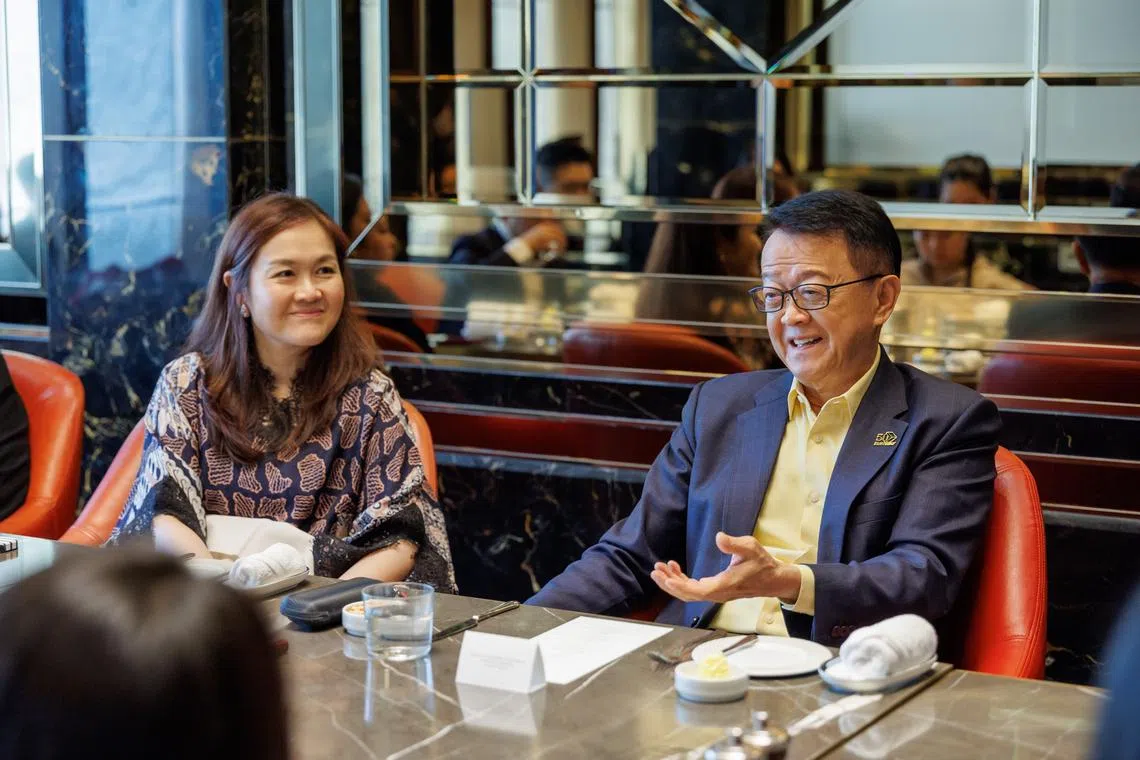
His son, Evan Cheah, 46, recently became deputy president after a similarly long apprenticeship. His youngest, Adrian Cheah, 32, is also involved in the family business, overseeing business development at Sunway Reit.
“You must give them enough rope to show their ability,” he says. “You can’t be teaching them how to walk or breathing down their neck every day.”
The approach reflects both pragmatism and caution. Cheah has seen family businesses fracture after founders step aside, often as sibling rivalries widen into disputes between branches of the family. He speaks about it with unusual bluntness. “Your kinship is most important,” he said he told his children.
At 81, Cheah acknowledges his energy is no longer what it was. International expansion, he said, will increasingly be driven by the next generation.
But he is determined to defy the old Chinese adage that wealth rarely survives three generations.
“I say that’s wrong. It should be 10 generations,” he said, half-joking, before adding: “I hope that after me, they won’t fight. But you never know. It’s human.”