


Too little, too late? Manila’s billion-dollar bid to ignite its sputtering EV industry
A late start and an underdeveloped supply chain could blunt the Philippines’ EV ambitions
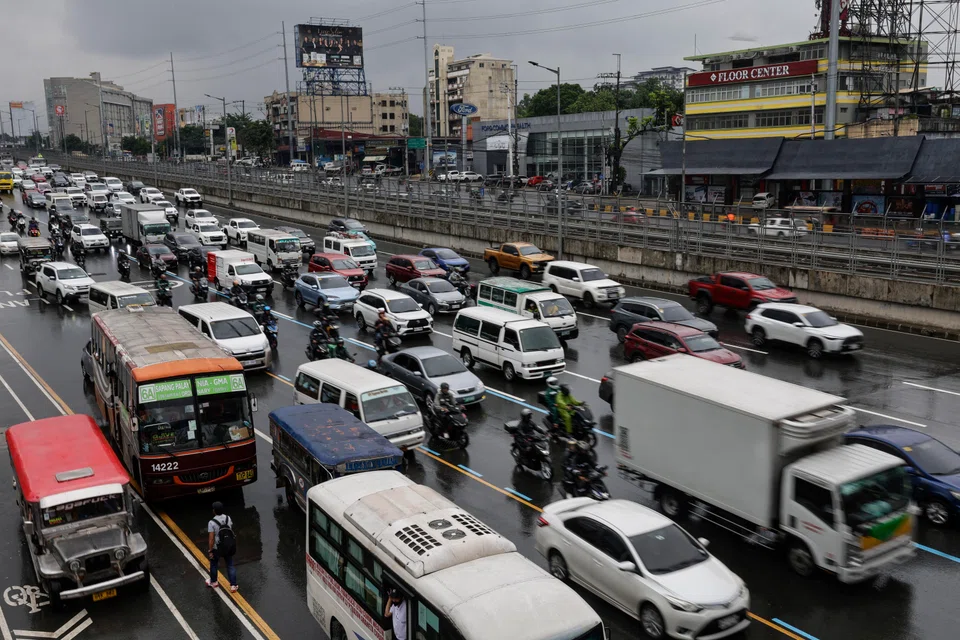

[MANILA] After decades of falling behind in automotive assembly, the Philippines is mounting an aggressive bid to break into South-east Asia’s electric vehicle manufacturing arena with an incentive plan designed to de-risk high upfront capital expenditure for global automakers.
President Ferdinand Marcos Jr signed an executive order on Jul 29 for the Electric Vehicle Incentive Strategy (Evis) – a 60-billion-peso (US$1 billion) fiscal package to incentivise EV makers to build new factories and hit higher production targets in the Philippines.
The plan, it is hoped, will bolster the country’s standing against industrial juggernauts such as Thailand, Vietnam and Indonesia.
But investors are watching not just the size of the incentives, but also the consistency of their delivery.
For Jerreson Cabalde, managing consultant at EV infrastructure advisory group Zeee Green, it is no longer a question of whether the Philippine EV market will grow but “whether (the country) can build the right infrastructure quickly enough, in the right locations, and under commercially sustainable business models”.
The new policy arrives just as Asean’s EV market is set to accelerate from US$4.6 billion in 2025 to US$23.6 billion by 2031, according to market research firm Mordor Intelligence.
Evis will provide up to four EV models with as much as 15 billion pesos each in fiscal support, in the form of tax payment certificates to help businesses offset income taxes, value-added taxes, excise duties and import tariffs.
To qualify, companies must invest at least five billion pesos or commit to an annual local output of 10,000 units within three years.

The stakes are high: as the EV market quintuples by 2031, Manila is betting that these targeted tax credits can offset a 30 to 40-year industrial head start enjoyed by its regional counterparts.
With a fragile manufacturing ecosystem, low industry-readiness scores and only one company to date committing to local assembly, can the country move past being just a consumer market for EVs to become a reliable manufacturing hub?
“The Philippines should not only use EVs – we should (also) build them,” said Energy Secretary Sharon Garin, who estimates domestic production could cut retail prices by up to 200,000 pesos per unit.
Industry experts questioned whether Manila’s strategy offers enough financial firepower for it to catch up with the most dominant hubs.
The intervention may prove too little, too late.
So far, only Japanese automaker Mitsubishi Motors Philippines has publicly signalled intent to register for Evis after it announced its seven-billion-peso plan to assemble hybrid EVs at its plant in Santa Rosa, Laguna – a major industrial hub south of Metro Manila and the capital of automotive manufacturing in the country – by mid-2028.
Other market players remain hesitant.
China’s BYD, which commands a 70 per cent share of the local EV market through Ayala’s ACMobility, has opted out of local assembly under Evis. “It is not part of our vision at this point,” said Bob Palanca, managing director of BYD Cars Philippines.
Toyota Motor Philippines, the country’s dominant automaker by volume, has also taken a cautious stance. While open to participating in Evis, Toyota said any decision will hinge on the programme’s final benefits and local supply chain economics.
Fragile domestic market
The new incentives land on an industrial base that has long struggled to compete on cost and scale.
Even before the shift to electric, the Philippines had already been grappling with supply chain bottlenecks that hampered its capacity to produce vehicles domestically.
An underdeveloped parts-and-components ecosystem, combined with low production volumes, would make locally made EVs significantly more expensive than foreign-made alternatives, the Philippines’ Department of Energy said in a 2023 policy note.
Businesses such as Yazaki-Torres Manufacturing and Asian Transmission manufacture parts and components in the Philippines, but full-vehicle production is handed off to overseas hubs with more established capacity and market share.
In contrast, manufacturers in Thailand – dubbed the “Detroit of Asia” – produce vehicles whose parts are 80 to 90 per cent locally made.
Without this overreliance on imported materials, they can slash up to US$2,000 off the production costs of a full unit, the Chamber of Automotive Manufacturers of the Philippines said.
On top of this, Philippine industrial electricity rates rank among the highest in Asia, with prices nearing 15 pesos per kilowatt-hour. Vietnam and Indonesia offer subsidised power at about half that price.
Deep industrial gaps
These domestic weaknesses are magnified when measured against neighbours that started building automotive ecosystems decades earlier and have since matured.
Thailand boasts multiple EV-dedicated or EV-capable assembly lines, with Chinese brands leading investment and output. In 2025 alone, the country produced 70,914 battery-electric cars, a year-on-year surge of more than six times.
Indonesia leverages its massive nickel reserves to capture US$346 million in localised assembly and supply chain commitments, and keeps an annual production capacity of over 150,000 electric cars.
Meanwhile, Vietnam produces some 200,000 EVs annually through its home-grown brand VinFast.
Unlike its peers, the Philippines remains heavily dependent on imported, completely built-up units.
In PwC’s Asean-6 eReadiness 2025 report, which looked at the pace and scale of EV adoption across key regional markets, among other things, the Philippines scored the lowest. The country had particularly weak ratings for its supply chain (1.8) and infrastructure readiness (1.1).
Finding a niche
Some analysts argued Manila’s best approach is not to copy its rivals, but to define a new role for itself in the regional value chain.
“The Philippines can carve out a strategic niche as the regional hub for commercial and light-duty EV assembly, while leveraging its position as one of the world’s largest nickel producers,” said Akshay Prasad, principal at management consulting firm Arthur D Little South-east Asia.
Prasad said the Philippines could position itself as a midstream processor in the nickel-to-battery value chain to attract US$1 billion to US$2 billion in foreign direct investments for cathode plants.
Early signs of this transition are emerging. Australia’s StB Giga Factory recently opened the country’s first EV battery plant in New Clark City in Tarlac province – a state-developed smart city and high-tech manufacturing zone 100 km north of Manila – targeting an annual output of two gigawatt-hours by 2030.
Demand surges, but barriers remain
While the supply side inches forward, demand on the domestic market front is moving faster than many expected due in large part to high global fuel costs.
In the first half of 2026, EV sales in the Philippines jumped 132.7 per cent year on year to 31,381 units, even as traditional internal combustion engine sales dropped 11.4 per cent.
“In my own experience, (for) the total cost of ownership... I only pay a little over one to two pesos per kilometre as compared to an internal combustion engine, which costs about seven to eight pesos,” said Enrique Severino, founder and president of the Philippine EV Community.
But rising fuel prices and relatively low operating costs alone may not be enough to overcome adoption barriers.
“A forced transition to new energy vehicles places a disproportionate burden on low and middle-income consumers already struggling with the cost-of-living crisis to purchase expensive new EVs,” said Abhishek Sinha, founder of e-mobility consultancy WeBeliev.
“Consumers understand the potential savings... but they remain sceptical because the three biggest challenges persist – namely, charging infrastructure, ease of repair, especially for batteries, and resale value,” he added.
TRENDING NOW
S$8 billion wiped off OCBC value as shares slide 5.8% in heavy trade

Grab CEO’s wife Chloe Tong on life with Anthony Tan and finding her purpose

Brookfield denies accusation it cut Soilbuild out of Mapletree deal
8 public officers referred to police over property buys near unannounced MRT stations: Chan Chun Sing

