

Are developers over-optimistic with bullish housing land bids?
Mind the risks to new condo demand from potential job market weakness, higher home loan rates and property cooling measures

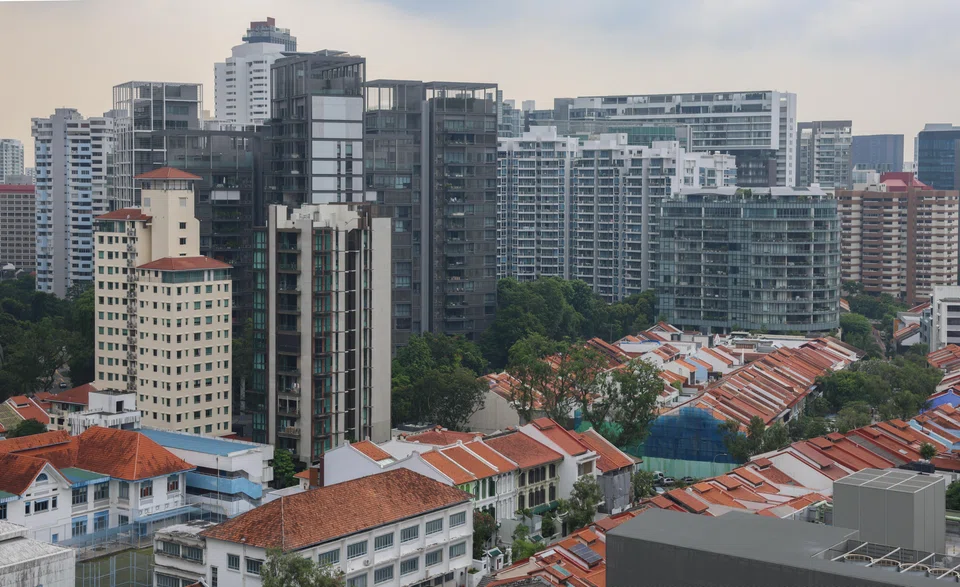
An open-bid auction process can make for good drama. Imagine a group of developers gathering in one place at a specified date and time, and openly bidding against one another for a prime land parcel.
However, bidding for government land sale (GLS) sites in Singapore is done differently. Typically, several months after a GLS site has been launched for sale, interested parties submit their sealed bids by noon on the closing date of tender.
While developers submitting sealed bids for land parcels may involve little fanfare, there can be much drama when the details of the tender bids received are released.
Attention will invariably focus on how many bids were received, who participated and of course the identity of the top bidder and its tender price. Generally, sites are awarded based on price.
Post Covid pandemic, various major new condo launches have posted strong sales rates at bullish prices per square foot (psf). And developers need to replenish their housing land banks to maintain a strong residential development pipeline.
Perhaps, it’s hardly surprising then that recent tenders of GLS housing sites have drawn strong top bids.
Bullish land bids
While the tender for a condo plot on the former Keppel Club site which closed on Aug 4 drew only one bid, the winning bid by a tie-up between Hong Leong Holdings unit Intrepid Investments and GuocoLand was a bullish one.
The winning bid of S$576.78 million for the 99-year leasehold site in Berlayar Drive, which can yield an estimated 415 homes, works out to S$1,515 psf per plot ratio (ppr).
The land rate of S$1,515 psf ppr is a record for a 99-year GLS pure private residential site in the city fringe or Rest of Central Region (RCR) and closer to the top end of the S$1,100 psf ppr to S$1,600 psf ppr that analysts had forecast as the top bid in a poll conducted by The Business Times.
Meanwhile, the tender of a 99-year leasehold site at New Upper Changi Road, near Bedok MRT station that can yield an estimated 1,010 homes, which closed on Sep 1, drew four bids. A tie-up between UOL Group and CapitaLand Development (CLD) was awarded the site, with a top bid of about S$1.43 billion or S$1,537 psf ppr. The winning bid exceeded the next-highest bid from City Developments Ltd and Hong Realty by S$173 million or 13.8 per cent.
Based on a land rate of S$1,537 psf ppr, future selling prices of homes at the New Upper Changi Road site might need to average over S$3,100 psf – far higher than current eastern-region launch benchmarks – to give the developers a meaningful return.
In the above cases, might Hong Leong-GuocoLand and UOL-CLD be over paying for land?
If an open-bid auction process were used, possibly less bullish top bids might have been submitted for the Berlayar Drive and New Upper Changi Road sites. Could the winning bidders in the tenders of these GLS sites have miscalculated how much others would bid for the sites?
Perhaps UOL-CLD could have secured the New Upper Changi Road site by paying say about S$150 million less for the site, which translates into a cost saving of around S$150,000 per unit.
Developers buying housing sites at bullish prices should be mindful of the risks of softer demand causing projects to generate weaker than projected returns or even struggle to break even.
Jobs and interest rates
One, a developer may launch a condo project for sale about 15 months after being awarded a GLS site. For example, a developer who secured a site recently may launch sales of the homes that are being built on the said site in early 2028 assuming it avoids launching the project during the year-end school holidays.
Private home buying sentiment in late 2027 and early 2028 might be much softer than today as the global economy could weaken amid heightened trade tensions and geopolitical conflicts.
As it is, while Singapore’s economy grew strongly from a year ago in H1, the pace of growth could slow in H2, and the economy may expand more slowly in 2027 compared with 2026.
If economic growth moderates and various sectors face greater disruptions, be it from deglobalisation or rising adoption of artificial intelligence, the number of job retrenchments might pick up.
In addition, with inflation being stubbornly high in many places, interest rates could rise. Might home loan rates, which are currently low, climb over the next 15 months?
Today, the 3-month compounded Singapore overnight rate average (Sora) has inched up slightly compared with early May. Sora is commonly used to price home loans.
Could possible job market weakness and higher home loan rates help cool demand for new condo units?
Cooling measures
Two, even more worryingly, ever higher new condo prices, especially if these are not supported by economic fundamentals, could trigger fresh cooling measures.
Amid a sharp rise in new executive condominium (EC) prices, the government unveiled measures to cool the EC market in May. This included imposing a longer minimum occupation period on buyers of new EC units and scrapping the deferred payment scheme for buyers purchasing uncompleted EC homes from developers.
Might cooling new condo home prices be on the radar of a government which actively intervenes in the housing market to ensure stability in the market?
Sure, developers and buyers of private homes already face stringent measures. Still, the government has numerous levers in its tool kit that it can use to cool private housing demand. For one thing, borrowing limits could be tightened.
Any fresh cooling measures might quickly result in buyer sentiment in the new condo market turning negative, with potential buyers switching from buying for the fear of missing out to sitting on the fence and adopting a wait-and-see approach.
As it stands, while a large catchment of residents living nearby might aspire to buy a new condo unit in Bedok, especially if the homes are well-designed, finding buyers who will pay S$3 million for a unit of around 950 square feet could prove challenging.
With possible job market weakness, higher home loan rates and property cooling measures, developers could come to regret paying high land prices for housing sites. Ultimately, as land cost is the largest cost component of a new condo project in Singapore, getting that wrong can spell disaster for a project’s financials.
TRENDING NOW
Singapore updates renewable energy certificate standard to tackle greenwashing; unveils new solar efforts

Director of PR firm sacked for secretly recording internal meeting loses wrongful dismissal claim

Indonesia says gas export cuts to Singapore remain within contract terms

Time for MAS, SGX to scrutinise issue managers

