

Can Singapore GP keep its crown as F1 night race challengers loom?
From Abu Dhabi to Las Vegas, new night races have emerged. Here’s how Singapore stacks up against the rest
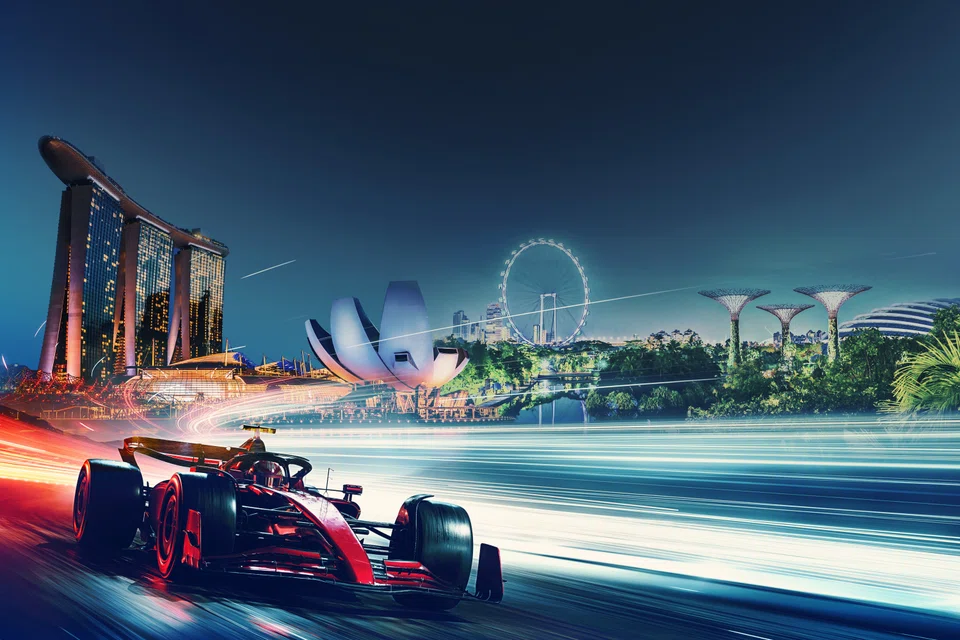
[SINGAPORE] When the inaugural Singapore Grand Prix lit up the Marina Bay circuit in 2008, few could have foreseen how it would reshape Formula 1.
That September evening marked the championship’s first night race, dazzling spectators with the city-state’s bejewelled skyline and festival atmosphere. More significantly, it became the first to demonstrate how the event could be more than just a sporting contest, with concerts featuring global stars, a clubbing stage and a showcase of local cuisine.
At the time, F1 was a very different business. It was under the iron grip of Bernie Ecclestone, before the ownership of the media-savvy Americans at Liberty Media and Netflix’s documentary series Formula 1:Drive to Survive helped propel it into the mainstream. Some F1 teams even struggled to pay the bills.
Yet, Singapore was determined to make the race a success. The government paid 60 per cent of the total reported cost of about S$150 million, with S$33 million going towards the construction of the pit building. In recent years, the number has come down to S$135 million to S$140 million.
This big bet seems to have paid off. Seventeen years on, Singapore remains one of the most prestigious races on the calendar. F1’s chief commercial officer Emily Prazer described Singapore as “one of the most revered Grands Prix” earlier this year. Motorsport.com’s Europe, Middle East and Africa president James Allen said in 2018 that Singapore was the only venue besides Monaco that “does more for Formula 1 than Formula 1 does for the venue”.
But with Abu Dhabi, Bahrain, Saudi Arabia, Qatar and, most recently, Las Vegas now vying for the limelight with their own night races, the question is whether Singapore can continue to hold its crown.
How Singapore lines up
“Singapore was among the first races to truly kind of crack the fact that your race ticket also includes premium concerts and other activities,” says William Saunders, vice-president, sponsorship consulting and head of F1 at sports and entertainment marketing agency MKTG.
He adds that it has maintained its “pre-eminence” as a night race, despite the introduction of five other F1 night races since 2008.
Abu Dhabi was hot on Singapore’s heels with its evening-to-night season finale in 2009. The Bahrain race switched to a night format in 2014; Saudi Arabia and Qatar’s night races joined the calendar in 2021, and Las Vegas’ race debuted in 2023 with a 10 pm start time.
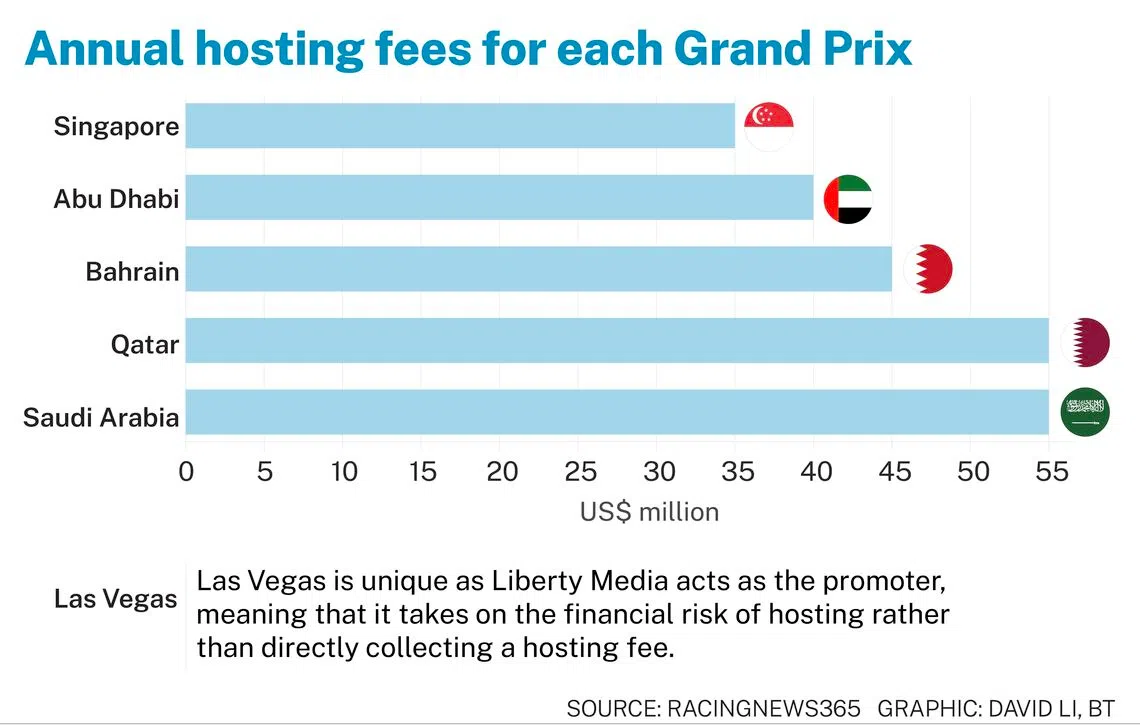
But each venue’s hosting fees differ from circuit to circuit.
Singapore is estimated to pay US$35 million in hosting costs to F1, according to industry publication RacingNews365. Abu Dhabi and Bahrain fork out about US$40 million and US$45 million, respectively, while Qatar and Saudi Arabia pay about US$55 million each.
Las Vegas is unique as Liberty Media acts as the promoter, meaning that it takes on the financial risk of hosting rather than directly collecting a hosting fee.
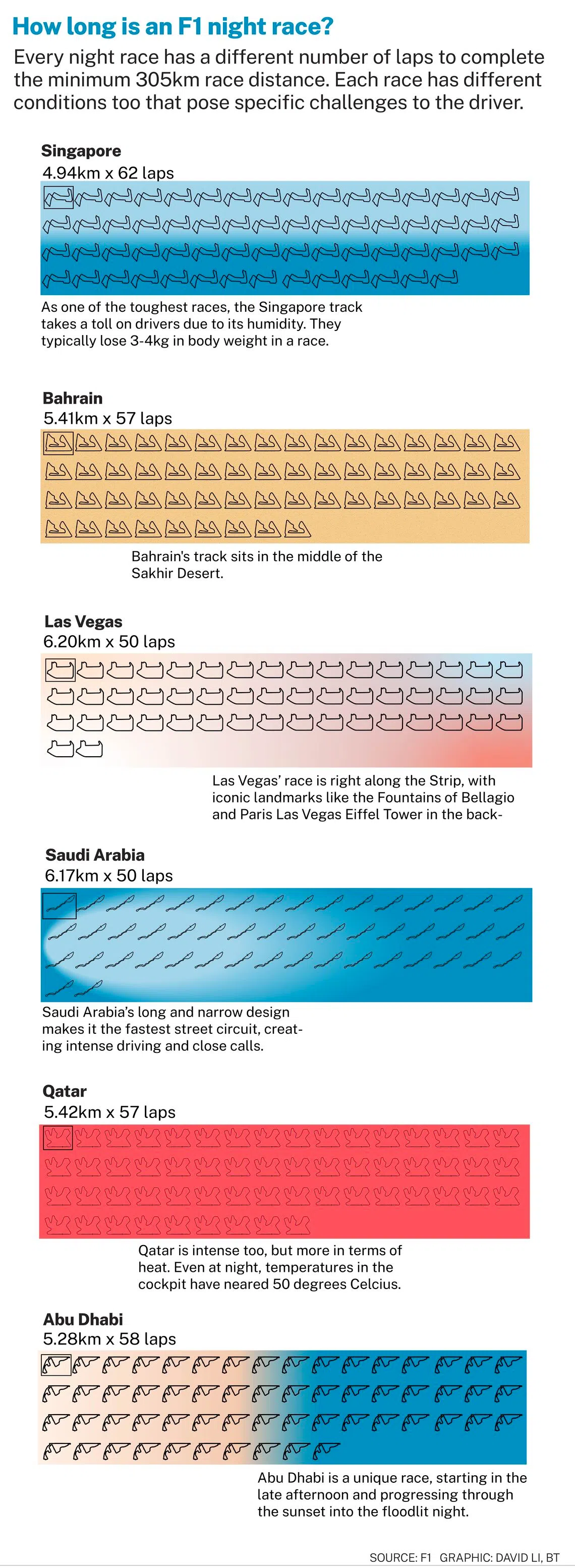
Singapore’s race has the shortest race distance among the six night races at just over 306 kilometres, but is usually the longest one when calculating the race duration by elapsed time.
By comparison, Bahrain has the quickest race by elapsed time.
In terms of Paddock Club tickets, which is F1’s premier hospitality offering, tickets are most expensive in Las Vegas and Singapore, followed by Abu Dhabi at a lower tier and then Bahrain, Saudi Arabia and Qatar being the cheapest among the night races.
The price tag did not seem to deter fans. Danny Chong, co-chair of the Digital Assets Association (DAA) Singapore, recalls his first time attending the Singapore race in 2008. Many people he knew from around the world were “rushing” to book hospitality suites, he shares.
As for attendance, Singapore weighed in at about 269,000 fans last year, compared with 306,000 for Las Vegas, 190,000 for Abu Dhabi, 155,000 for Qatar and 100,000 for Bahrain. Saudi Arabia does not publish its attendance figures officially, though BlackBook Motorsport estimated it to be 150,000.
Raking in the dough
Singapore’s model has become the blueprint, with many other night races incorporating similar elements, particularly with the addition of concerts to the race weekend. Abu Dhabi, Saudi Arabia and Las Vegas had them integrated from their first races, while Bahrain and Qatar added them around 2014 and 2023, respectively.
F1 itself has enjoyed an immense popularity boom, which has translated into almost a 250 per cent rise in its share price since Liberty’s takeover in 2017. It now trades at around US$100, compared to under US$30 at the time of F1’s sale.

Singapore and the other night races have enjoyed a strong boost alongside it. The race weekend alone in the Republic brings in about S$130 million annually in terms of net spend, said the Ministry of Trade and Industry (MTI) in 2022, with S$2.2 billion collected from about 720,000 international visitors across 2008 to 2024.
McKinsey & Company also estimated that the 2019 race generated S$70 to S$75 million in global media exposure.
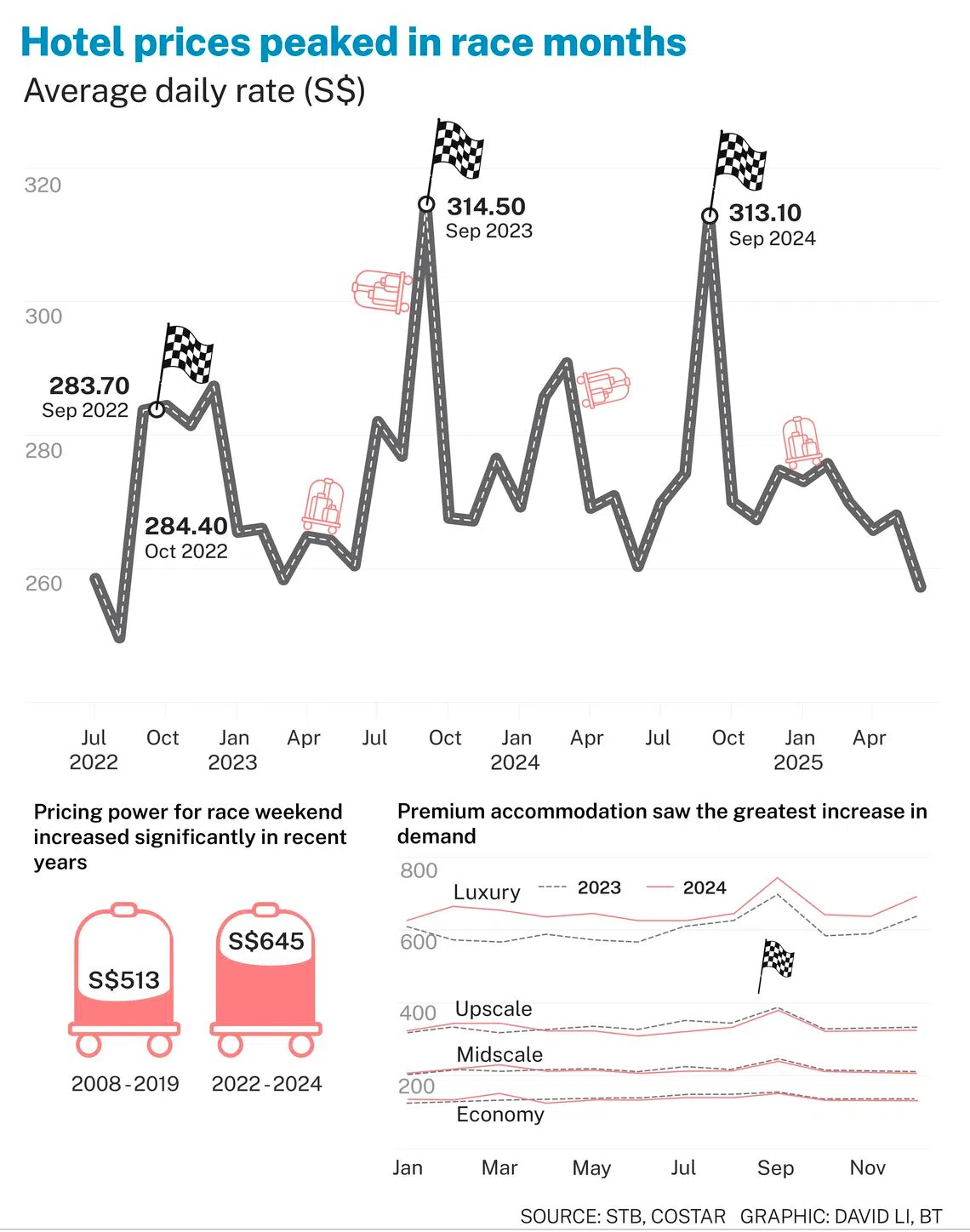
The hospitality sector saw a similar bump. Data from commercial real estate information company CoStar showed that Singapore hotels’ revenue per available room (RevPar) increased to S$557 on race weekends from 2022 to 2024, up from S$448 from 2008 to 2019. The average daily rate also rose from S$513 to S$645, even as occupancy dipped from 87.3 per cent to 86.4 per cent.
“Over the years, the Singapore Grand Prix has consistently driven strong hotel performance,” says a CoStar spokesperson, in response to queries from BT. “F1 remains a very popular event for inbound travellers.”
For 2025, the company said current occupancy on the books is nearly 20 per cent higher than last year, signalling “much stronger” demand at an earlier stage. Marina Bay hotels are tracking ahead, in line with expectations, while Orchard is showing the most notable improvement, but also helped by a softer 2024 base.
CoStar data showed that RevPar around F1 weekends was highest in Abu Dhabi, followed by Singapore, Saudi Arabia, Bahrain, Las Vegas and Qatar.
By comparison, Abu Dhabi reported that its 2023 race generated 1.16 billion AED (S$420 million) for the local economy via attendee spend, while Applied Analytics estimated net visitor spend for Las Vegas’ 2024 race to be US$336 million. Bahrain’s race brings in an average yearly revenue of US$100 million, according to estimates by Al Yamamah University associate professor of economics Dr Yaseen Ghulam.
Recent figures for Qatar and Saudi Arabia were not available, with such figures “difficult” to quantify due to a complex web of knock-on economic effects, according to NUS Business School Senior Lecturer Dr Samer Elhajjar.
Dr Simon Chadwick, Professor of AfroEurasian sport at the Emlyon Business School in Paris, also points out that sporting venues and commercial partners tend to only look at the positives when conducting economic impact research.
“Commercial partners, investors, sponsors, broadcasters and so forth do not want their products to be tarnished in any way,” he says.
Las Vegas, in particular, has enjoyed roaring success, despite a rocky inaugural race in 2023 where attendees were kicked out at around 2 am before the second practice session, following a delay of nearly three hours. That year, net visitor spend weighed in at a whopping US$501 million.
“Obviously, Vegas has come in and tried to deliver a similar entertainment proposition, but in my mind… Singapore has retained that position as the leading race event,” says Saunders.
But competitors such as Las Vegas still encounter hiccups, say analysts. According to an Applied Analytics report in 2023, the Vegas race had a lack of advanced planning, as well as problems around utilities and hospitality.
Saunders notes that the Las Vegas race at times “feels like it’s happening to the city, rather than with and for it”. More teething issues will likely be sorted out for this year’s race as it “learns from Singapore”, including a larger focus on business-to-business events rather than business-to-consumer events, he says.
“It’s a smaller market (for Singapore), it’s more tightly controlled,” said Saunders. “I do think it’s made easier for Singapore to perhaps… cut through red tape in a way Vegas can’t.”
The tighter control also means that the Singapore race weekend is extremely efficient, says DAA’s Chong – something that other race hosts will likely struggle to replicate.
Dr Chadwick also sees Singapore’s race as “integral to the national sport strategy” of the country. He describes the four Gulf night events as “trinkets” in comparison, noting that their circuits and races do not integrate into the city the way Singapore’s does, particularly in terms of transportation.
Azhan Shafriman Hanif, chief executive of the Sepang International Circuit (which hosted the Malaysian Grand Prix from 1999 to 2017) this year also praised Singapore’s hosting and integration between various stakeholders, noting that the collaboration between the ministries, corporate sector and hotels would be crucial to the Malaysian Grand Prix’s success if it were brought back.
Over the years, international business events have been organised around the F1 race in Singapore to take advantage of the occasion for high-level networking and meetings. Some examples include the TIME100 Leadership Forum, the Forbes Global CEO Conference and Token2049.
In 2022, the MTI counted 25 meetings, incentives, conferences, and exhibitions events clustered around the F1 weekend, with about 90,000 delegates in attendance.
The Singapore brand
The “industrial clustering effect” seen in Singapore around the F1 race also helps the country improve its international branding, says Dr Chadwick. He adds that this helps to push the race beyond measures of revenues and costs.
Dr Elhajjar echoes this sentiment, saying that the perception of Singapore as a “vibrant”, “safe” and neutral city that is “full of energy” is an important intangible factor adding to its appeal as a race venue in the eyes of sponsors and investors. The city-state’s geopolitical stability stands in contrast, for instance, to regions such as the Middle East.
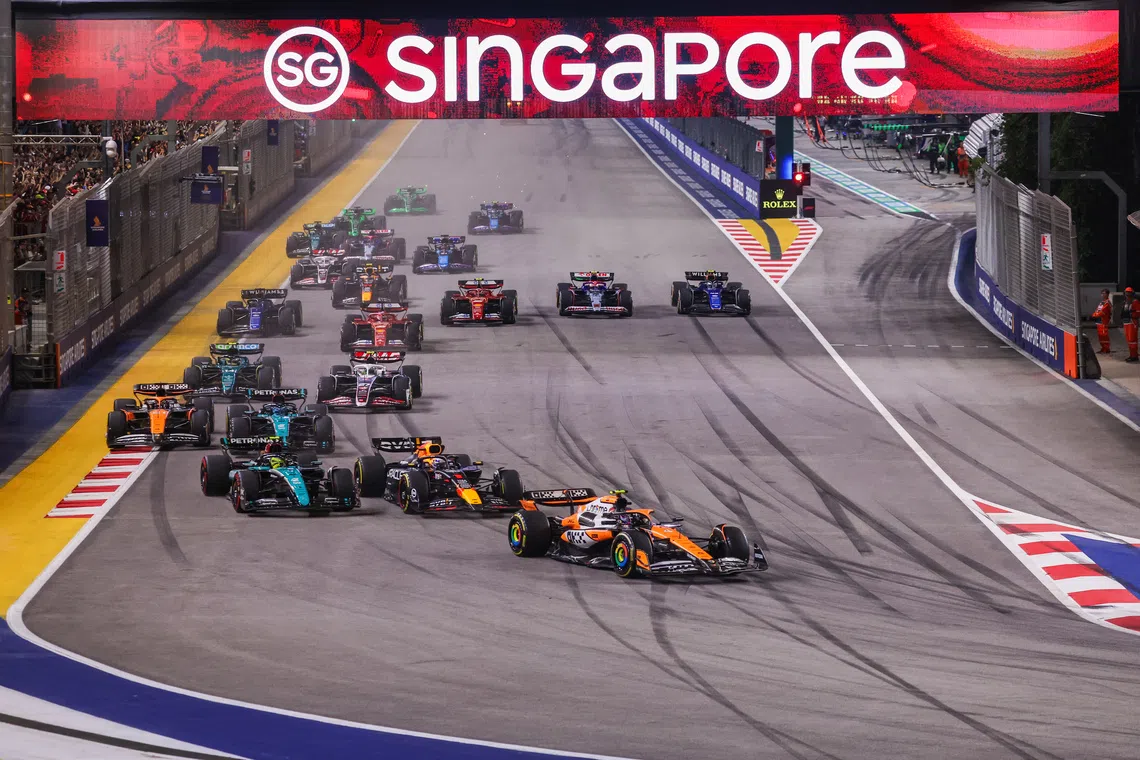
Saunders adds that the city-state also draws more spectators than its Middle East competitors due to the Asia-Pacific region’s deeper history with motorsports. Singapore itself used to host the Singapore Grand Prix at a track in Thomson Road (albeit not for F1), while Japan has had an F1 race since 1963, and Australia has had a race since 1986.
He notes that the Singapore race has always felt “ahead of its time” in terms of successfully drawing a younger and diverse demographic that Liberty has been pursuing since its takeover of F1 in 2017.
Dr Elhajjar expressed a similar belief, stating that the Singapore F1 race aligned well with the nation’s brand image.
Racing into 2025 and beyond
This year’s “Grand Prix Season Singapore” will go on for 10 days, starting on Sep 26 and running until race day on Oct 5. It will feature pop-ups such as premium-retail outlet Performa, e-sports racing, tours and events from the mainland to Sentosa. Performers at the race this year also include big names such as Elton John, Foo Fighters and G-Dragon.
The current Singapore Grand Prix contract runs until 2028, having been renewed in 2022, with the 2025 race weekend set to take place from Oct 3 to 5.
Next year, the race weekend will also feature a sprint race – a shortened race that takes place on Saturday, Oct 20. It will replace the third practice session that day, with the sprint’s qualifying session to take the place of the second practice on Friday.
Saunders believes that given the race’s success, both Singapore and F1 will likely be keen to renew their deal. Miami has already signed a 16-year contract extension – a sign, he suggests, of what may lie ahead for Singapore.
TRENDING NOW

DBS, OCBC, UOB rout lops billions off STI as inflation, rate concerns spook investors

Grab CEO’s wife Chloe Tong on life with Anthony Tan and finding her purpose
OCBC sheds S$8 billion in value as shares close nearly 6% down; analysts cautious on banks
Deal between tycoon friends sparks scrutiny of Philippine power sector

