

Are Singaporeans tightening purse strings as they tie the knot?
Wedding party sizes are shrinking, but couples are not necessarily spending less – merely smarter

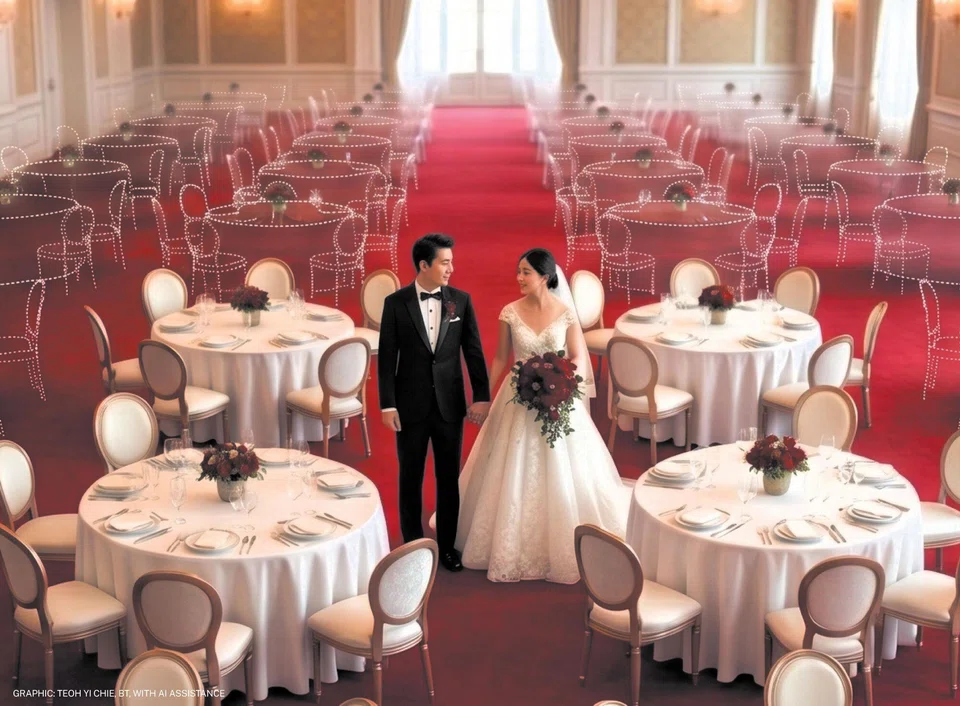
[SINGAPORE] Here comes the bride – all dressed in a gown from Taobao, walking through her modest gathering of 50 guests, with an iPhone-wielding content creator filming her trip down a restaurant aisle.
This is one face of the modern wedding in Singapore, with couples being more particular about spending; smaller party sizes; and emerging new services.
These shifts come amid a broad decline in marriages. There were 24,687 marriages in 2025, according to preliminary data – down 6.2 per cent from 2024’s 26,328, in the third straight decline since 2022’s post-pandemic high of 29,389.
Granted, marriage data may not completely determine the fortunes of the wedding industry. Weddings may take place quite some time after a marriage is registered, and some who get married may choose not to hold one at all.
The Chinese zodiac year also influences the number of weddings, with some years being more popular, says Jesmine Hall, director of commercial marketing at Raffles Hotel Singapore. “This makes a year-on-year comparison multi-faceted.”
2025 was the Year of the Snake, traditionally seen as less auspicious.
In any case, falling marriages do not have to mean a declining wedding industry, particularly as spending power rises.
“For those who do get married, their weddings are a significant milestone in their lives, and they want to make it as memorable and extraordinary as it can be,” says Siok Kuan Tambyah, associate professor of marketing at the National University of Singapore Business School.
“This motivation may be heightened for older couples,” she says, noting that they may also have more spending power.
There is therefore demand for wedding service providers that can “curate” weddings, she adds.
Keeping it small
One trend is the continued decline of blowout ballroom banquets in favour of smaller, more intimate weddings.
“In the past, weddings, especially the traditional Chinese banquet, have been used as a platform for signalling social status, capital building or social networking,” says Prof Tambyah.
“Now, couples may be less inclined to give in to social expectations and pressure on what the ‘ideal’ wedding should look like.”
The Covid-19 pandemic was likely a key driver of this trend, says Mohamad Rasid Arsad, managing director of wedding services provider Glamz Gallery.
Smaller functions were mandatory then – and younger generations found that they enjoyed this new norm, he says.
Wedding solemnisations and receptions were suspended from April 2020 during circuit breaker restrictions. Receptions only resumed via a pilot in August, for up to 50 attendees – including the couple.
This cap fluctuated through 2020 and 2021, with pre-event testing required for weddings with more attendees.
Today, on booking platform Venuerific, many venues find that a significant majority of weddings are for fewer than 70 to 100 guests, says founder and managing director Ricardo Sentosa.
He notes: “The traditional large hotel ballroom banquet, with its minimum of 150 to 200 guests and standardised format, is losing ground to restaurants, boutique venues, gardens and rooftop spaces.”
At Mount Faber Leisure Group’s Angsana Glasshouse ballroom, 80 per cent of weddings in 2026 so far were for fewer than 70 guests. This is up from around 65 per cent in 2023 and 2024, says senior manager for marketing and business development Yong Qiao Qing.
Similarly, Artyzen Singapore is seeing more requests for “micro-weddings” of 50 to 70 guests.
Wedding planner Rose & Revel’s smallest wedding was for 14 people. Recently, it even received an enquiry to plan a wedding for two – just the couple alone, says Joanna Tan, founder and creative director.
She has seen fewer bookings so far this year, compared with the year-ago period.
As wedding parties shrink, so might the number of couples who want a planner.
Planning company The Wedding Concepteur can handle 20 to 24 weddings annually, but has only been booked for 13 this year, with perhaps one or two more to be added.
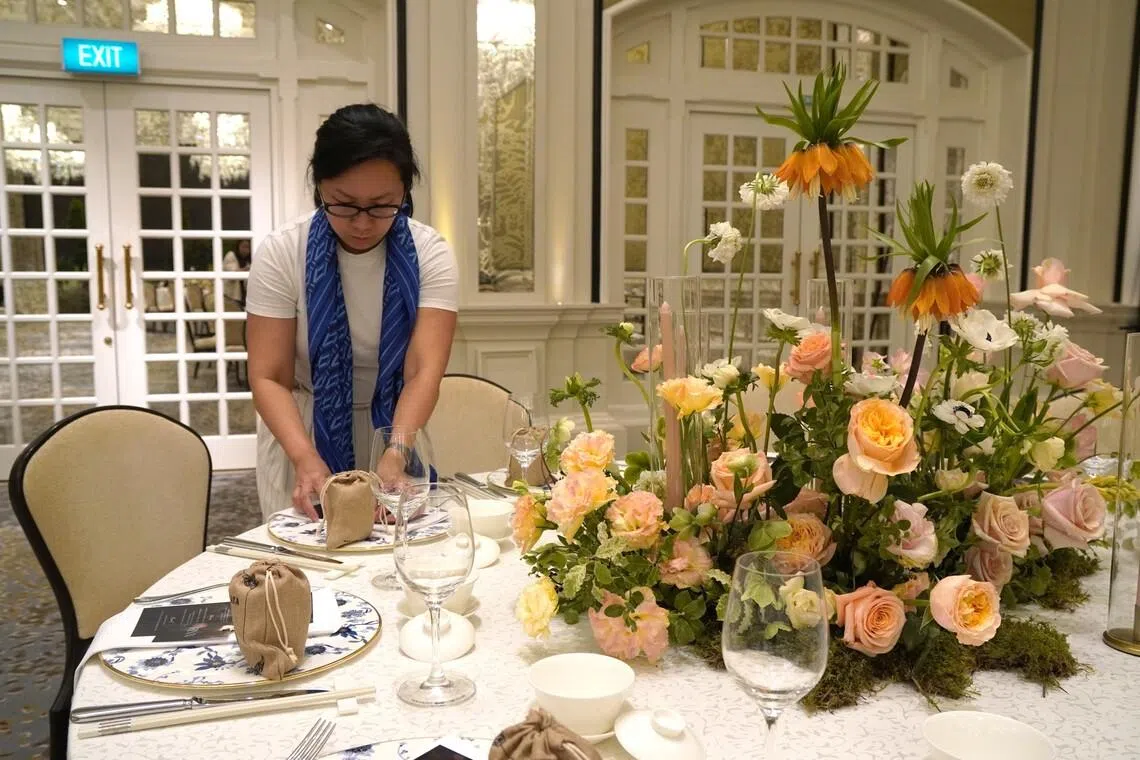
Founder Cheryl Tan believes that couples who engage planners are likely those looking at larger weddings. Most of her customers host celebrations with upwards of 150 guests.
Choosing where to spend
Smaller weddings may allow more to be spent per guest. Venuerific’s venue partners observe that spending per guest seems to be “holding firm or rising at the premium end”, even as guest lists shrink, says Sentosa.
For hotels, hitting the minimum revenue to “even out” operating costs could mean demanding a higher price per head.
Some high-end hotels charge more than S$350 per head for smaller crowds, she says. To command these rates, they might provide free-flow wines, individual menu cards and more lavish dishes topped with truffles and caviar.
Says Artyzen Singapore: “Couples are not necessarily spending less overall; they are spending more selectively.” (* see amendment note below)
Smaller weddings may also be more unique. Mandai Wildlife Group sees growing demand for “intimate (weddings) focused on unique and experiential celebrations”, such as its Evening in the Wild package, which includes animal encounters and curated meals in the parks.
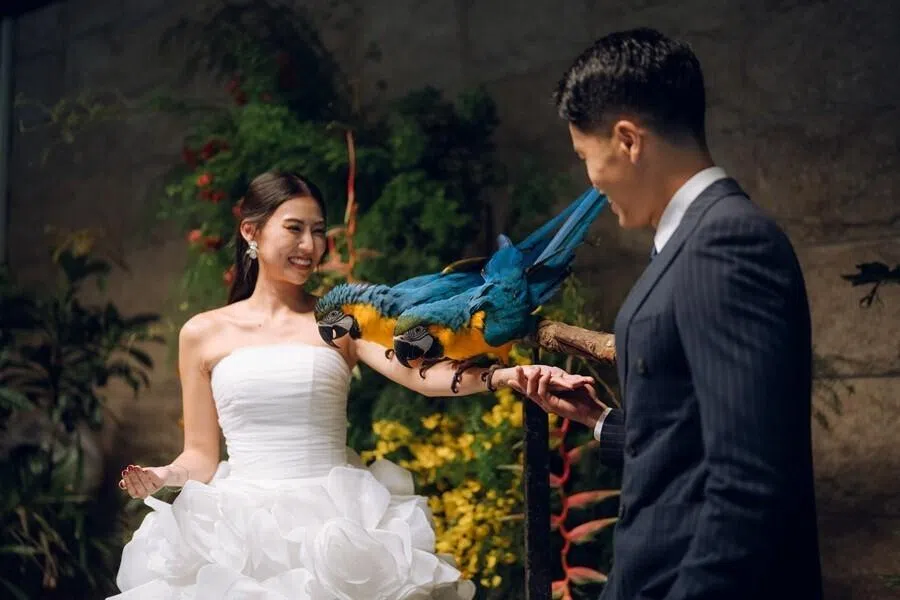
Rather than cutting costs across the board, couples are being “more intentional” in spending, focusing on quality and personalisation, say industry players.
Before, couples tended to inquire about prices and then save up for that goal – but today, they often set a budget first and work within it, says Glamz Gallery’s Rasid.
Alan You, founder of photography studio Orin, says: “Between hotels, styling, photography and videography, creating a visually polished wedding here is inherently expensive.”
But weddings are becoming more streamlined, he notes. Take the Chinese tradition of the “gate crash”, where the groom’s party has to get past the bridesmaids so the groom can meet the bride.
This “used to feel almost standard” – and was often highlighted in the wedding video – but is now often simplified or skipped entirely, he says.
Rose & Revel’s Tan has also seen this change, even as “meaningful traditions” such as the tea ceremony are kept.
Vendors across the industry note that couples are focused on value.
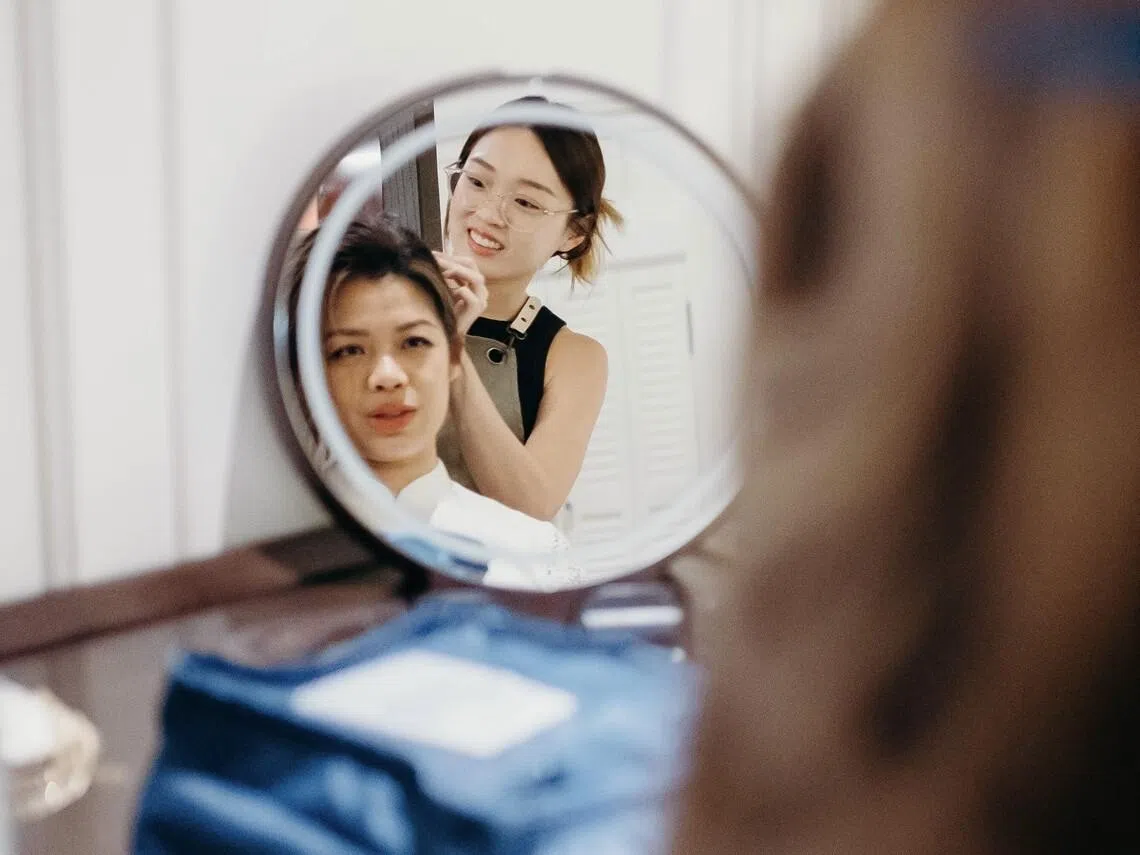
Seet Shu Zhen, founder of makeup service provider Canvaseety, observes that couples may inquire with multiple vendors to assess the market rate – not spending less, but “making sure that what they’re getting is of value”.
“They take a longer time to convert as well,” she adds.
Kelly Kwa, director of designer gown boutique Frieda Brides, says: “Brides today are very value-conscious but not necessarily looking for the cheapest option,” adding that they expect “a strong combination of quality, service and experience”.
They are also selective in spending, she says, with some allocating more to makeup and others to outfits.
Odelia Bridal Studio provides full packages including attire, makeup, photography, videography and florals – but has seen a doubling in demand for a la carte services.
For gowns, some are willing to splurge to play out the “princess stories” in their heads, says Odelia director Julynn Tay. But others may place less emphasis on a one-time rental item they might not remember.
The studio occasionally sells older or “not-so-ideal” gowns at lower prices. Rather than renting these, brides can buy them and rework them into regular wear after the wedding.
Social media and DIY
With an abundance of wedding content across social media, couples are more well-informed than ever – and may have more specific requests.
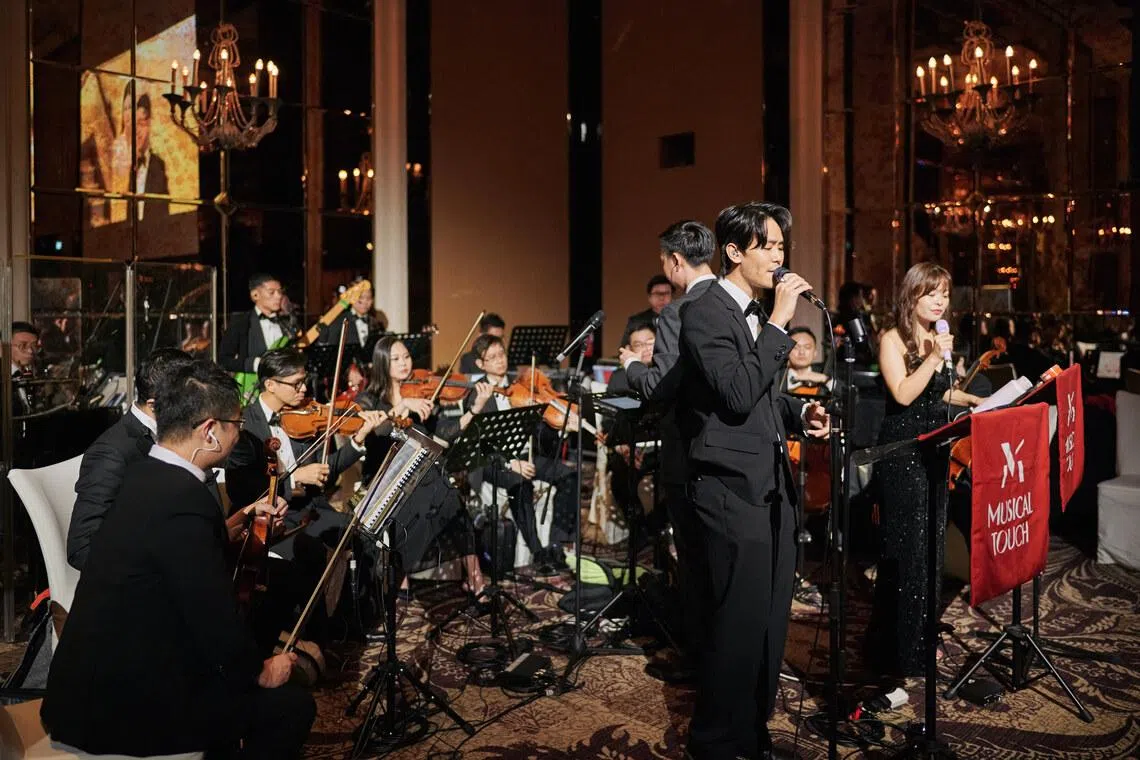
Weddings have featured live music for decades. But social media may be boosting the popularity of this, says Alvin Khoo, whose company Musical Touch supplies live music for events, from duos to a 16-piece orchestra.
Videos of live music are increasingly shared on social media, influencing couples to consider them, he says.
While some wish to keep costs low for this additional experience, a growing number are willing to spend big bucks, he adds.
Years ago, Musical Touch saw only two or three bookings per year for the most expensive 16-piece orchestra option, at S$19,800 before GST. Today, it gets 20 to 30 such bookings annually.
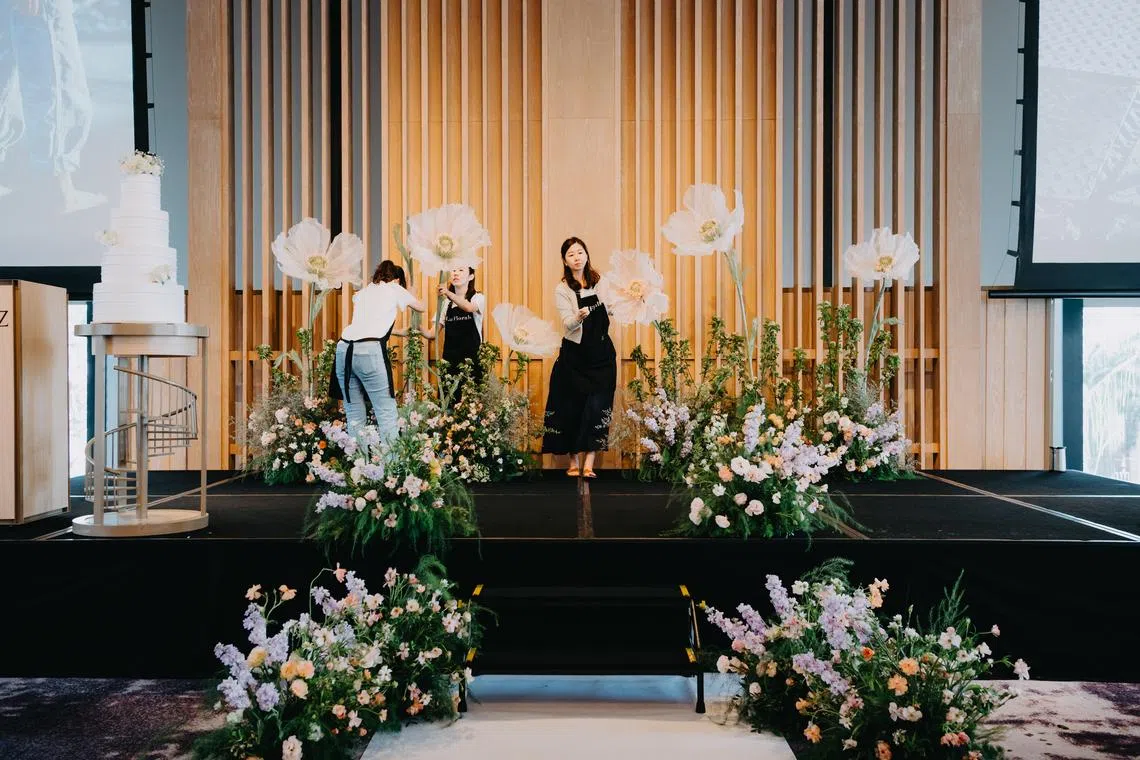
For floral displays, customers have long created “mood boards” or collections of images to show what they want. But with the rise of social media, customers increasingly seek specific flowers and arrangements, say florists.
It can be difficult to fulfil these requests, as flowers are seasonal, says Mente Floreale founder Delia Tan.
Lim Ching Ying, who runs 5AM Flowers, says that more couples are looking beyond flowers to moss, trees and landscaping. Willow trees have been particularly popular.
But sourcing can be tough, especially with supply chain disruptions. There was a month in which no flowers arrived from Kenya – a major supplier – due to the “whole fiasco with the Strait of Hormuz”, she notes.
One upsetting trend is a rise in requests for recreations of artificial intelligence-generated bouquets, says Liz Florals founder Elizabeth Chew. Such images often set unrealistic expectations, showing flowers in sizes or colours that do not exist, she explains.
With couples becoming more particular, Odelia Bridal Studio now shares vendors’ portfolios so that couples can find someone that suits them. In the past, customers were simply assigned a makeup artist or photographer.
Some brides also buy gowns from cheaper retailers, often via e-commerce platform Taobao, says Tay. “These are things that they can live with, because they find more value in the experiences.”
5AM Flowers’ Lim notes the rise of resourceful “DIY brides” who tear down floral displays on their own. She used to charge a minimum of S$2,000 for floral set ups – but now allows orders starting from S$1,000 if tear-down service is not included.
“If I don’t have to tear down, I’m able to do more weddings in a day,” Lim adds.
Apart from usual displays along the aisle, many couples now want flowers to go with other “stations” such as photo booths.
This shift towards customisation is also seen in wedding favours, which are becoming less cookie-cutter.
“(Couples) would rather customise something to make it more personal, something that they want to share with their guests,” says The Wedding Concepteur’s Tan.
One wedding that she is planning will feature blind boxes, containing tokens that are practical yet tell the couple’s story – for example, a bottle opener that represents their shared love of wine.
As couples like to give guests flexibility, Raffles Hotel allows guests to pick from a curated selection of gifts, including kaya, chocolate dragees, enamel mugs and tea towels.
Working with vendors, Odelia Bridal Studio offers tea bars and candle-making as activities for bachelorette parties – or for couples to design tea blends and scents that can be mass-produced as wedding favours.
New experiences for new lives
There is a “budding industry” for new experiences at weddings, says Hannah Chong, founder of Heaven’s Gift, a wedding planner that also works with hotels to stage wedding shows.
Audio and video “guestbooks” provide an alternative to the traditional physical guestbook, with guests being able to record messages at the venue.
Leave Your Message, which offers a choice of voice-only or video phone set-ups, saw about 300 bookings for 2025, up from 179 in 2024.
Founder Jessica Tay believes this is due partly to an increased interest in “innovative and engaging wedding reception activities”.
Venuerific’s Sentosa noted a “significant and growing trend” of requests for pet-friendly venues, with couples wanting to include their pets in the celebrations.
For some, smaller weddings mean more space, as well as more opportunities to spread out their spending. Dance floors and lounge areas – with furniture rented directly or through the venue – are increasingly common in ballroom weddings, says Chong.
Another common sight is the wedding content creator who provides short-form content for social media, often ready within the day.
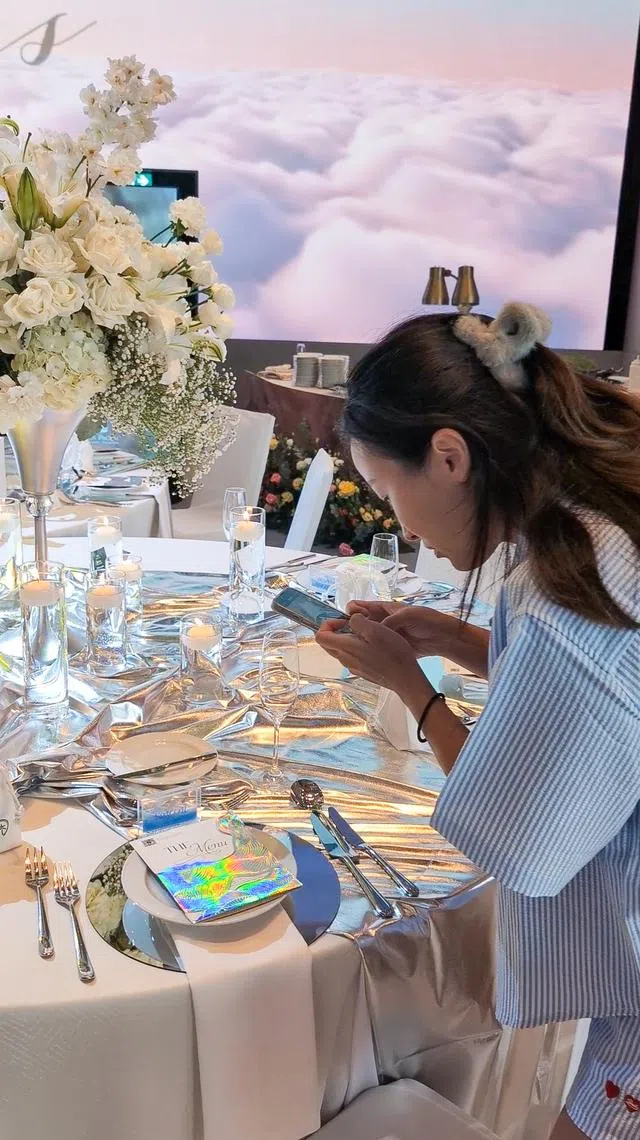
Couples today desire weddings that “genuinely reflect their personalities, relationships and communities”, says Joy Wang, co-founder of wedding content creation company Cloud Nine Stories.
This creates space for services such as content creation, which focus on “authenticity, emotion and storytelling rather than just documentation”, she adds.
As this approach is relatively new to Singapore, awareness and demand is still growing, she says.
Founded in 2024, the company saw a “major shift” in 2025 as more couples have become familiar with “the value of fast-turnaround, candid storytelling”.
Less than halfway through 2026, Cloud Nine Stories has already shot more events and earned more revenue than in all of 2025.
Wedding videography service Eaglelastic Weddings has seen bookings for regular videography – where footage is edited after the fact – moderate from an post-Covid spike, but rising interest in live video feeds. (** see amendment note below)
The company started offering wedding livestreams during Covid-19, when pandemic curbs meant that few guests could attend in person.
In smaller-scale weddings in restaurants and non-traditional venues, sightlines can be blocked, explains founder Lloyd Loo. This has boosted demand for live feeds, which allow every table to get a view of the couple.
Eaglelastic has also received requests for kiss cams – cameras that settle on members of the crowd to encourage them to kiss – through fellow vendors. With these having gone viral abroad, Eaglelastic intends to offer them as a package add-on.
In an increasingly digital world, some couples find value in analogue services.
Art company Bycraft Studio’s founder Yeo Weiying recently began offering live painting services for weddings, where she creates portraits of guests.
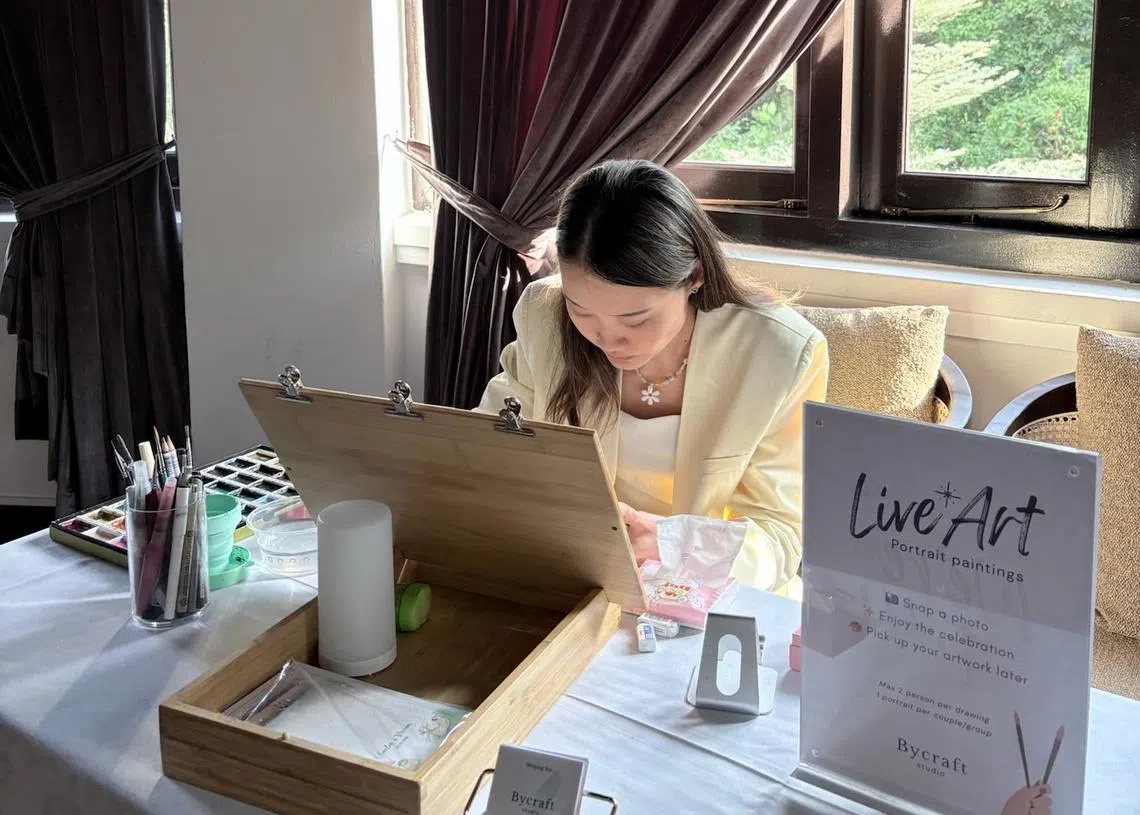
Live painting creates both a memorable experience and a unique keepsake, she says. Yeo sees this more as entertainment than an alternative to wedding favours, as there is rarely time to paint every attendee.
These experiences become a talking point that adds value to a wedding, she says. “For me as a business, I’m not selling art, I’m trying to make their events more memorable, more interesting, not only for the couple, but for the guests.”
Says Frieda Brides’ Kwa: “Rather than following the traditional wedding template, couples are working their celebrations to reflect their personal identity.”
* Amendment note: An earlier version of this story misattributed a quote. The story has been amended to reflect this.
** Amendment note: An earlier version of this story said that bookings for regular videography have fallen. Eaglelastic has clarified that they have moderated from high following the pandemic. The story has been revised to reflect this.
TRENDING NOW

Malaysian king buys stake in Singapore-listed mining firm expanding into rare earths

Grab CEO’s wife Chloe Tong on life with Anthony Tan and finding her purpose

Once staunchly pro-China, Malaysian Chinese businesses are now distancing themselves from Beijing

Longer wait times expected as S’pore healthcare institutions report system disruptions

