

Governments must implement reforms before the next big financial crisis
Tackling public debt, ensuring price stability and implementing structural changes are critical
DESPITE recurring geopolitical shocks in 2026, the global economy has remained resilient – a fact highlighted by institutions including the International Monetary Fund (IMF) and World Bank.
At the same time, they are cautioning that this strength may be fragile and needs reinforcing by policymakers before the next major economic crisis strikes.
One recent warning was issued by the Bank for International Settlements (BIS), which serves as a coordinating body for central banks worldwide.
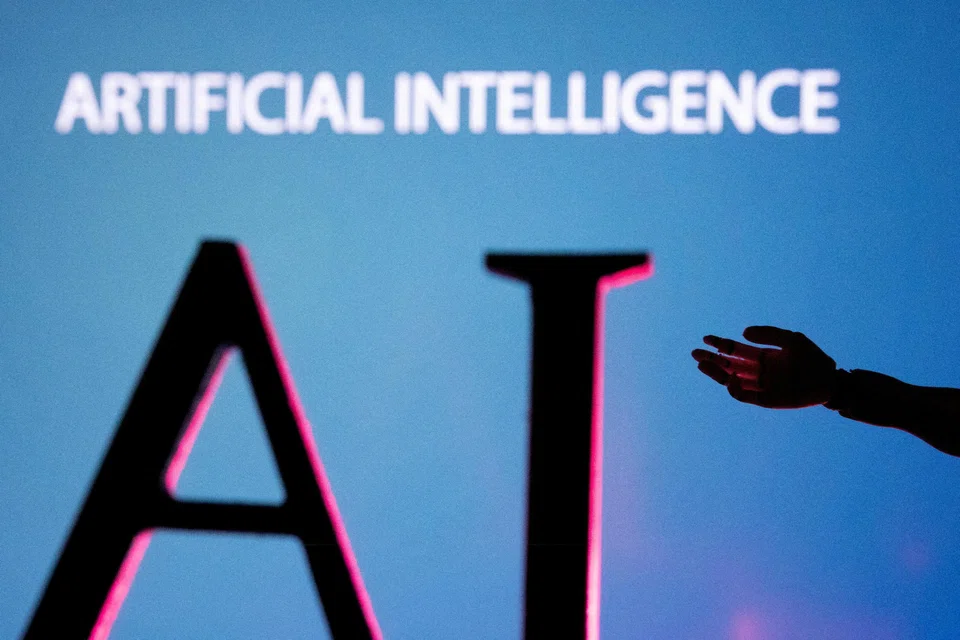
In its annual report released on Jun 28, it named skyrocketing investment in artificial intelligence as a potential stress point.
The five largest hyperscalers are set to spend more than US$1 trillion on AI-related capital expenditure in 2025 and 2026.
Already, US investment in AI last year accounted for at least 40 per cent of gross domestic product growth, estimated Financial Times.
That sum is masking, to a large degree, the forecasts that the global economy in the 2020s has been on track to be the weakest since the 1960s.
Any vulnerability in the sector, then, may undermine the unexpected economic resilience we are experiencing today.
In fact, if AI disappoints in the long run, it could trigger an economic downturn akin to previous collapses induced by technology bubbles, such as the electrification boom of the 1920s and the dot-com one of the late 1990s and early 2000s.
An AI-driven stock market crash in the late 2020s could have an even larger economic impact than these prior tech collapses. This is because household equity exposure has, in recent decades, grown relative to both total wealth and income, based on the BIS report.
A big market correction in current times, therefore, could affect consumer spending more drastically than previous meltdowns.
Given the possibility of a big AI-driven shock, the US and China could be the most vulnerable.
For instance, Massachusetts Institute of Technology Professor and Nobel Laureate Daron Acemoglu forecasts that such a crash in the second half of this decade could lead to a wider unravelling of US power, intensified by the decline of key American institutions under the second Trump presidency.
Little wonder that a growing number of commentators indicate an AI bubble is growing.
New York University Professor Gary Marcus asserted that current levels of spending are “sheer insanity” and the “greatest capital misallocation in history”.
Strengthening resilience through reform
Even so, the global economy has, so far, withstood wide-ranging challenges, including the Ukraine and Iran conflicts to tariffs by US President Donald Trump.
But the World Economic Forum highlighted in a May 28 report that these tariffs are just part of a wider range of economic policies that could slow the world’s GDP expansion, while contributing to inflation that might easily escalate even more if US-China tensions grow.
In this context, institutions are emphasising the importance of withstanding such shocks.
IMF Managing Director Kristalina Georgieva, for instance, said: “A better balanced, more resilient world economy is within reach” and that “all countries must redouble efforts to put their own houses in order”.
First and foremost is the need to cut public debt to boost future fiscal firepower – which proved crucial in supporting the economy during the 2008 financial crisis and in 2020 because of the Covid-19 pandemic.
However, one of the obstacles faced by nations in tackling future challenges is that overall government indebtedness is forecast by the IMF to rise to an average of around 100 per cent of global GDP before the end of the 2020s.
So, many countries may simply lack the money to fully counteract a big economic slump.
To boost fiscal buffers, governments will need to be prudent and efficient in spending, and potentially raise taxes. Fiscal support, outside of major crises, also needs more targeting, and should be funded by existing rather than future revenue.
Second, governments need to preserve price and financial stability. This is a point underlined by the Iran crisis, which has already led to higher inflation in much of the world – especially in Asia, which was highly dependent on Middle East oil before the war.
Third, the independence of institutions, including central banks, must be defended. The politicisation of such bodies is growing in some nations, including the US, where Trump has repeatedly called for the Federal Reserve to lower interest rates and tried to oust Fed Governor Lisa Cook.
Last is the importance of implementing structural reforms, especially those that help unwind high domestic and external imbalances.
The IMF, for example, recommends deeper coordination between nations to achieve stable economic diplomacy, with clear, long-term policy frameworks that are well communicated.
While few, if any, countries would disagree with this policy prescription, it will be hard to realise in practice.
This is especially so when the current approaches of the world’s two largest economies, the US and China, risk reinforcing what IMF Chief Economist Pierre-Olivier Gourinchas recently warned could be a “spiral of escalation” that undermines economic growth.
It is likely that the world will experience further crises in the coming years. The clock is, therefore, ticking, for governments and policymakers to implement strategies that will help their countries withstand such shocks.
The writer is an associate at LSE IDEAS at the London School of Economics
TRENDING NOW

DBS, OCBC, UOB rout lops billions off STI as inflation, rate concerns spook investors

Grab CEO’s wife Chloe Tong on life with Anthony Tan and finding her purpose
OCBC sheds S$8 billion in value as shares close nearly 6% down; analysts cautious on banks
Deal between tycoon friends sparks scrutiny of Philippine power sector

