

How merchant states are reshaping global business connectivity
Singapore and the UAE show that resilience, connectivity and institutional agility can outweigh market size
NOT long ago, in a conversation with a senior executive overseeing Asia operations, based in Abu Dhabi, I asked what concerned him most about the next five years. His answer came without hesitation: predictability, where the business could still operate with confidence as the global environment becomes more uncertain.
That concern is now widely shared.
For much of the past two decades, global business strategy was built around efficiency. Supply chains were concentrated to reduce cost, production was optimised across fewer hubs, and scale was the main source of advantage. That model is now under pressure.
Geopolitical tensions, regulatory divergence and shifting trade routes are forcing companies to rethink not just where they operate, but how they structure themselves across markets.
A different set of priorities is emerging: trust, connectivity and optionality.
Trust in systems that are predictable and enforceable. Connectivity to more than one market or region. And optionality, the ability to shift capital, supply chains or operating models when conditions change.
This shift is already visible. Some manufacturers are no longer relying on a single production base in Asia, instead splitting operations across Vietnam, India and Mexico to reduce exposure to regulatory or geopolitical shocks.
Financial institutions are distributing trading, compliance and operational functions across multiple jurisdictions so they are not dependent on a single regulatory centre.
Even in technology supply chains, firms are building redundancy into sourcing for semiconductors and critical components, accepting higher cost in exchange for resilience.
Across Asia, this shift is particularly visible in how certain jurisdictions are being used.
Singapore has long represented one model. Its strength lies in legal certainty, regulatory clarity and its role as a trusted hub for capital and financial services.
For many multinational companies, Singapore functions as a regional operating base, where capital is structured, compliance is coordinated, and exposure across South-east Asia is managed in a stable environment. It is less a market than an operating platform.
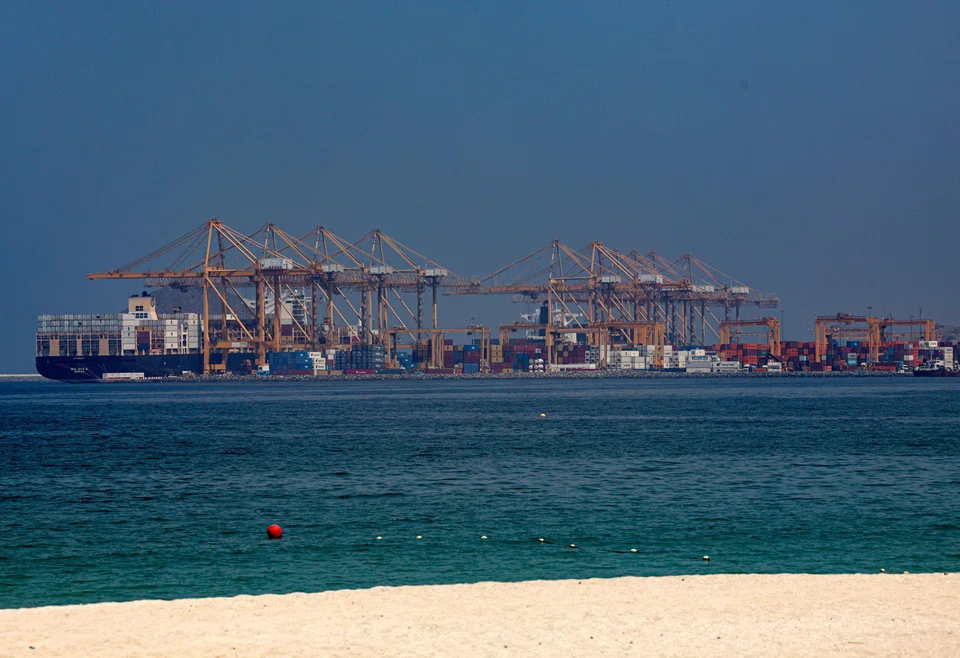
The United Arab Emirates represents a different but complementary model. Its role is built on physical connectivity and infrastructure. Ports such as Jebel Ali, global aviation connectivity and sovereign capital platforms have made the UAE a node linking Asia, Africa and Europe.
For energy and trade flows, alternative pipeline and logistics routes have also increased resilience against disruption in key maritime corridors.
Disruptions affecting transit through the Strait of Hormuz have underscored the value of diversified export routes and overland connectivity in sustaining energy and trade flows. The UAE’s Abu Dhabi Crude Oil Pipeline to Fujairah, for instance, enables exports to bypass the strait.
Enabling continuity amid growing fragmentation
Taken together, Singapore and the UAE – with its financial and policy weight anchored in Abu Dhabi – illustrate two different ways of achieving the same outcome in a fragmented global economy.
One reduces friction through institutions and rules. The other reduces friction through infrastructure and scale. Both allow flows of capital, goods and talent to continue even when parts of the system are under stress.
Merchant states matter not because of size, but because they sit within the movement of global flows across regions that are becoming more disconnected from each other. Their value lies in enabling continuity rather than controlling outcomes.
This is closely aligned with how companies are adapting. Supply chains are being diversified. Capital is being allocated across multiple jurisdictions. Corporate structures are becoming more distributed with firms building operational resilience across several centres rather than relying on a single headquarters model.
In such a world, location decisions are becoming more strategic.
Businesses are not only choosing where growth is strongest, but also where operations can continue without disruption. That is why jurisdictions that offer stability, connectivity and policy predictability are gaining importance even if they are not the largest markets. For example, some commodity traders now route increasing volumes through the UAE not only for efficiency, but also because it provides alternative access when certain maritime routes are under pressure.
Routing flexibility and diversified logistics corridors have taken on renewed strategic importance in the light of recent disruptions around the Strait of Hormuz.
More broadly, influence in the global economy is shifting. It is increasingly defined by the ability to keep systems functioning when conditions become unstable.
That is where merchant states matter most. They sit between systems rather than within a single bloc. They connect rather than concentrate. And in doing so, they allow globalisation to persist in a more fragmented form.
For business leaders in Asia, the implication is direct. The question is no longer only which markets to enter, but where to build operational foundations that can withstand uncertainty.
In a less predictable world, the most valuable jurisdictions are those that make risk manageable in practice.
That is the role merchant states now play, and why their relevance will only deepen as fragmentation becomes a defining feature of the global economy.
The author is an international lawyer, a distinguished fellow at UCLA, a governor of the Helsinki Geoeconomics Society, and a former senior multilateral diplomat at the United Nations in Geneva
TRENDING NOW

S$8 billion wiped off OCBC value as shares slide 5.8% in heavy trade

Grab CEO’s wife Chloe Tong on life with Anthony Tan and finding her purpose

Brookfield denies accusation it cut Soilbuild out of Mapletree deal
8 public officers referred to police over property buys near unannounced MRT stations: Chan Chun Sing

