

The new age of chokepoints
Why global commerce depends on too few places and too little governance
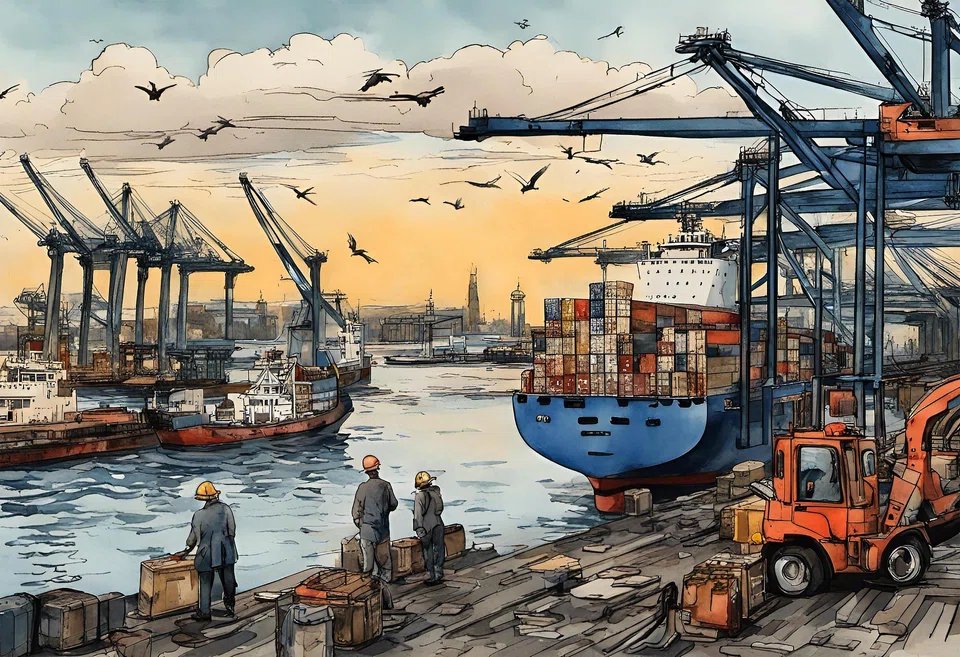
IRAN’S recent partial closure of the Strait of Hormuz has once again exposed how vulnerable global commerce remains to disruption at a handful of narrow passages.
Roughly a fifth of the world’s oil and a significant share of maritime trade pass through Hormuz alone. When tensions constrict such arteries, energy prices, freight rates, insurance premiums and corporate balance sheets react almost immediately.
Hormuz is not an anomaly. The global economy runs on a small number of critical passages, including the Suez Canal, Panama Canal and Strait of Malacca, that together carry more than half of global maritime trade.
These arteries of commerce operate under fragmented governance and remain exposed to geopolitical pressure, environmental stress and regulatory intervention.
A system long optimised for efficiency is now revealing how fragile that optimisation has become.
For decades, policymakers treated chokepoints as neutral infrastructure. That assumption no longer holds. Today, chokepoints function as leverage points in a world where states increasingly prioritise strategic advantage over systemic stability.
Yet, the rules governing these passages remain scattered across national jurisdictions, outdated conventions and ad hoc arrangements, none designed to manage the convergence of geopolitical rivalry, climate risk and volatile demand.
The multiplication of chokepoints
The chokepoint problem is no longer confined to maritime geography. Traditional passages remain critical, but new chokepoints are emerging across physical, regulatory and political domains.
Physical vulnerabilities include the Taiwan Strait, the Dover Strait and major port infrastructure in Europe and Asia.
Regulatory chokepoints are becoming equally consequential. Scrutiny of flag state competition and maritime regulation could reshape vessel deployment and operating costs in the coming years.
Geopolitical chokepoints extend into critical inputs such as advanced semiconductors and rare earth elements, where dominant producers use export controls to extract concessions. Even political relationships can function as chokepoints when trade access becomes a tool of leverage.
This multiplication reflects a broader shift in state competition. The US-China trade conflict has evolved from tariffs to targeted control over critical dependencies. Both sides are mapping vulnerabilities and exploiting them.
Global commerce is increasingly routed through narrow passages that are not only congested, but also strategically contested.
Governance gaps are not accidental
The world’s most critical trade routes are governed by the least-coordinated institutions.
Suez operates under Egyptian sovereignty with limited international oversight. Panama’s canal is shaped by domestic politics and great power competition. Malacca is jointly managed by states with divergent interests and limited enforcement capacity. Hormuz remains exposed to regional instability without a binding governance framework.
This fragmentation is often described as a coordination failure, as though governance has simply failed to keep pace with interdependence. In reality, some governance gaps persist because fragility itself generates leverage, rents and strategic optionality.
Control over chokepoints confers bargaining power, and ambiguity can be useful. In such settings, resilience-enhancing reforms are redistributive and contested rather than technical upgrades.
As a result, chokepoint governance is likely to remain uneven and selective, shaped by power and alignment rather than universal coordination. Transparency and diversification, where they emerge, function less as cooperative norms than as disciplining or hedging mechanisms.
Diversification hedges against not only physical disruption, but also governance failure itself.
Concentration without resilience
At its core, the chokepoint problem is one of concentrated dependency.
More than half of maritime trade flows through four passages. Ports in Asia and Europe face rising political and climate risk.
Shipping capacity is abundant globally, yet congestion persists at specific nodes. Freight rates are increasingly driven by geopolitical uncertainty rather than fuel or demand fundamentals.
The system is simultaneously overbuilt and brittle. Alternative routes exist, but they are longer, more costly and subject to their own constraints.
Small shocks therefore cascade across the system. Regulatory ambiguity, political escalation or legal uncertainty can reprice trade even without a physical blockade. Ambiguity alone is enough.
Adaptation is taking a risky turn
Markets are already adapting. Insurance premiums have risen. Inventory levels are higher. Firms are shifting from “just in time” to “just in case” logistics and shortening supply chains where possible.
There is, however, a less-examined adaptation path.
Rising risk premiums may act as a selection mechanism, pushing weaker firms out and enabling a subset of large and geopolitically sophisticated players to internalise risk through scale, diversification and self-insurance.
In this scenario, resilience emerges not through public governance, but through private hierarchy.
Dominant logistics, shipping and financial intermediaries begin to control routing, continuity and access. Chokepoints migrate from fixed geography to mobile service layers, where the withdrawal or reprioritisation of services can exert more coercive power than territorial control.
This may reduce disruption, but at the cost of concentration, exclusion and private control over systemic continuity.
That outcome would resolve chokepoint fragility endogenously, but not benignly. It would replace public coordination failures with private ones, shifting power rather than dispersing risk.
What resilience actually requires
Resilience will not arise automatically from markets, nor from idealised global coordination. It requires deliberate choices.
First, critical chokepoints need coordinated governance mechanisms that set baseline standards for access, continuity and crisis response – even if they operate through clubs or aligned coalitions rather than universal rules.
Second, redundancy must be treated as a strategic investment rather than an inefficiency. Alternative routes and infrastructure need to remain viable even if they are more expensive in normal times.
Third, regulatory decisions with systemic impact require transparency and coordination. Export controls, maritime regulation and trade enforcement now reverberate across supply chains within weeks. Advance notice and impact assessment would not eliminate competition, but would force governments to internalise the systemic costs of their actions.
Singapore’s exposure is structural
For Singapore, chokepoint risk is structural rather than episodic. As a maritime trading hub and financial centre, its prosperity depends on open sea lanes, reliable port throughput and predictable trade governance.
Disruption at Hormuz affects energy costs and shipping insurance. Instability in Malacca would directly affect transhipment volumes and supply-chain reliability. Regulatory shocks that alter shipping patterns or trade finance conditions can reprice flows through Singapore within days.
The city-state’s exposure is therefore multidimensional, spanning physical routes, regulatory regimes and geopolitical alignment.
The window is closing
Global trade growth is expected to slow, with chokepoint risk and tariff uncertainty among the main drivers. Rates, premiums and inventories remain elevated.
The system is absorbing shocks through cost and inefficiency rather than through genuine resilience.
The choice is not between competition and cooperation. It is between governing chokepoints deliberately now, or allowing fragility to be resolved through concentration, exclusion and private control later.
Resilience is not a market outcome. It is a collective decision. The longer it is deferred, the more costly and unequal it becomes.
Both writers are editorial leaders of the Helsinki Geoeconomics Monitor. Lubna Qassim is an international lawyer, a distinguished fellow at UCLA, and a former senior multilateral diplomat at the United Nations in Geneva. Jens Hillebrand Pohl is a lawyer, economist and president of the Helsinki Geoeconomics Society.
TRENDING NOW
LTA proposes combining car COE categories, adding rebate-surcharge system

StarHub to acquire MyRepublic’s mobile business amid ongoing telco consolidation

DBS, OCBC, UOB rout lops billions off STI as inflation, rate concerns spook investors

Grab CEO’s wife Chloe Tong on life with Anthony Tan and finding her purpose

